Search This Blog

Thursday, August 31, 2023

"Another World: Ballet Lessons from Appalachia" by Edwina Pendarvis

I suspect that when most people in the world hear the name Appalachia, they do not think of ballet, ballet dancers or teachers, or people whose lives have been transformed by ballet.  I have to admit, as a native Appalachian who is well versed in most topics about Appalachia, that I also knew little about ballet in the home region to which I have devoted a great deal of my professional career and nearly all of my writing career since my late teen years.  But I did know that the father of the famous television actor Richard Thomas had grown up in Paintsville, Kentucky, and had become a professional ballet dancer in New York City where his more famous son Richard Thomas the younger grew up. I had even attended one performance of "The Nutcracker" in Lexington, Kentucky, in order to expose my young daughter to the experience.  But I was not widely aware of the role ballet has played in Appalachia for hundreds of young women, and a few young men, until my good friend Edwina "Eddy" Pendarvis told me a couple of years ago that she was working on a book about ballet in Appalachia.  That book is now in print and I had written on this blog earlier in late July about having attended a reading and book signing in Huntington, West Virginia, where Edwina Pendarvis read  afew selected passages from this book and some of her earlier poetry in a joint reading with another of our mutual friends, Kirk Judd.  

At that reading, Eddy was gracious enough to gift a copy of her book to my wife Candice although we would gladly have paid full price for it based on our previous readings of Eddy's work in other areas including both poetry and Appalachian Studies.  The book was published by the Jesse Stuart Foundation in Ashland, Kentucky, where Eddy has been an avid and frequent contributor to the work of the foundation as both an author and sometime editor.  My wife Candice & I decided to read the book together as we often do with books on subjects or by authors who interest both of us.  Reading the book has been a joy and a fountainhead of information about a subject in which my prior information was deficient.  We learned a great deal about both ballet and ballet in Appalachia. I can happily recommend the book to you whether you are a student of either ballet or Appalachian Studies.  

Eddy interviewed and wrote about the ballet experiences and wider lives of twenty-four women who have been involved in ballet in Appalachia and, in some cases, in the wider world of ballet.  All of the women either live or have lived in Appalachia in the past although not all of them are native Appalachians and some did not experience their involvement with ballet in Appalachia.  But the common factors in all their lives have been the paired experiences of ballet and life in Appalachia.  All of the women have taken ballet lessons and, at some time, have lived in the region.  A small number of them have gone on to professional careers in ballet either as dancers or in other areas of ballet promotion and production including Eddy's only sister.  
 
The book also examines ballet in comparison to martial arts and it should be stated for the record that Edwina Pendarvis took ballet as a child and studied Taekwando in which she holds a black belt.  This is an interesting comparison to make and fortuitously tied in with another recent experience of mine in which several people, including myself, became engaged in a social media exchange about having taken typing in high school.  Several of us in that discussion were male and nearly all of us males stated that we had received lifelong benefits from having taken the class.  All the subjects in Eddy's book stated the same thing about having studied ballet even if they had not gone on to pursue careers in the art of ballet.  It is my considered opinion that most people who pursue some difficult subject, art, or recreation for an extended period do receive such benefits especially if our pursuit of it is lengthy, the pursuit involves a subject which requires a great deal of work and discipline, or if we have to make some form of sacrifice to pursue that subject.  Such efforts teach us discipline, compliance, and persistence.  

Nearly all of the subjects in Eddy's book have gone on to become markedly successful women and a few of them have succeeded in multiple fields of endeavor.  As I said earlier, more than one of these women went on some form of profession involving ballet.  Several others became educators at a high level including a few who received doctoral degrees and taught college.  Others became social activists working on a daily basis to help make the world a better place.  In fact, I need to correct myself about that previous sentence and say that, in one way or another, all two dozen of these women have made the world a better place.  They are also a diverse group with at least two who were born and/or raised outside the USA and later moved to America and Appalachia.  They are also racially and ethnically diverse with a few African Americans, one biracial person, and several who practice some form of spirituality which could be said to be outside the American mainstream.  

There is one chapter in the book which is devoted to a brief examination of the statistical data about the women, their upbringing, and some of the responses they have had to their ballet experiences.  Unlike most statistical analyses I have seen this short chapter is informative and well worth the brief amount of time it requires to read.  The concluding section of the book is devoted to brief biographical sketches of all the women and is one of the most satisfying sections to read since it brings into full focus just how successful the women have been in their lives both in and apart from their involvement in ballet.  I recommend this book wholeheartedly to anyone, and especially to anyone who is mired in the sadly erroneous opinion that Appalachia is a backward place lacking in both the arts and sophistication.  It actually informs the reader of several instances when individuals from Appalachia have not only improved their lives with ballet but have gone on to become important contributors to the greater world of ballet outside Appalachia. 

Monday, August 28, 2023

An Unusual Sight In Nature In My Backyard!


Yesterday, August 27, 2023, I had one of the instances of being in the right place at the right time to see a very unusual, at least for me, sight while I was in my backyard.  For several years, we have fed birds at our house and have a fairly large flock of ruby-throated hummingbirds ever year.  This  year we have two feeders out for them and regularly need to fill one of them every two days and the other about every three days.  I have known for a while, maybe two weeks, that the young humming birds had fledged based on the sudden increase in numbers on the feeders.  

We have several Rose of Sharon trees around our house which the humming birds love when they are in bloom.  I was standing in the yard yesterday and saw a humming bird feeding on the large Rose of Sharon behind our house.  I knew the bird was either  female or a juvenile but it totally surprised me when it left the flower it was feeding on and flew to within about 3 feet of me and literally fell out of the air into the grass near me.  I knew instantly that it had to be an immature, freshly fledged hatchling, probably on its first day of flight and I was wondering if it would get airborne again.  But, after just a few seconds of lying in the grass, it was in the air again and back on the Rose of Sharon.  I had never seen this happen before although I see unusual events with wildlife at my house fairly frequently.  In February 2021, I opened my back door on an unusually cold night to see a mourning dove just sitting in the dark on my driveway.  That bird managed to fly when I walked close to it and started to bend over and pick it up in what would have been an attempt to get it to survive.  Once recently in what was a driving and freezing rain which turned into an ice storm, I saw, through my family room window,  a mink chase a rabbit around the corner of my house and into my front yard just out of my line of sight where the mink killed the rabbit brought it back across the driveway  headed back to its den.  I have had both red foxes, coyotes, and coons on my property in broad daylight and I have photographs of both deer and wild turkeys on my driveway eating bird seed.  But I had never seen a humming bird literally fall out of the sky at my feet.  This was a highly unusual sighting and well worth seeing. 

Friday, August 25, 2023

This Year's Shucked Beans--August 2023


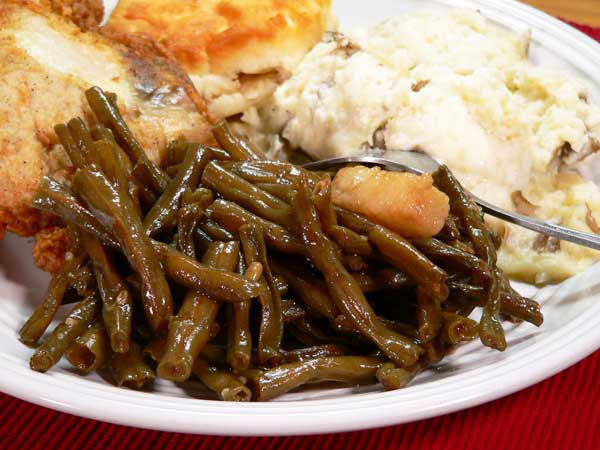
The photo above is not great but it is the best I got at the time, about a week ago, near the middle of August 2023, when I was close to completing making shucked beans from two bushels of White Half Runners I had bought at what has become a relative deal of $30.00 per bushel in Floyd County Kentucky.  In past bad years, I have paid as much as $60.00 a bushel for good, clean Half Runners.  In the past, I have written on this blog about making and eating shucked beans which some people refer to as Leather Britches.  In recent years, I have been blessed to develop friendships with both Bill Best and Frank Barnett, two of the most experienced heritage bean experts in all of Appalachia.  I grew up eating and helping raise and make shucked beans in Knott County Kentucky.  Since I met both Bill and Frank, I have written a few other bean based blog posts including one about The Dog Eye Bean and The Eagle With Spreading Wings Bean, two of the most unique and colorful heritage beans in the region.  I also wrote another post called "Lazy Wife Greasy Beans, A Lesson In Appalachian Nomenclature", a post which I owe Bill Best for since he was the first to introduce me to the Lazy Wife Greasy Bean which has become one of my favorite beans at the supper table.  Also, indirectly from learning from Bill Best about the Cherokee Purple Tomato, I wrote a post about "Multi-Cropping In The Appalachian Garden", a post which was deeply rooted in my own childhood during which I helped my parents in our one acre garden to raise Irish Potatoes, Hickory King Corn, White Half Runner Beans, and Cushaws all in the same ground with the potatoes being planted, hoed twice and then having the corn and beans planted between the potato hills, and scattering Cushaw seeds here and there among the other three crops.  In short, I have always been interested in the traditional Appalachian food items on which I was raised.  But knowing Bill and Frank has increased both my knowledge and interest in traditional Appalachian Heritage Crops even though I stopped raising a garden several years ago due to both my intense work schedule as a substance abuse and mental health therapist and the serious health problems from which my wife Candice suffers.  Even though I don't garden currently, I buy traditional food stuffs any time I can, freeze quite a few items for winter consumption, and strive to learn as much as I can about those heritage crops.  Which brings me back to my freshly made shucked beans for 2023.  

I always make my shucked beans by stringing and breaking them and then drying them on a white sheet on my blacktop driveway until they rattle when I pick them up in the sheet to bring them into the house at night to be placed on an empty bed with a ceiling fan on the lowest setting circulating air over them at night.  This year, our 13 year old nephew, Connor Nehlson from Sheboygan Falls, Wisconsin, was visiting with us for a week and got his first lesson in how to string and break beans.  He did work consistently on two occasions for about an hour which might have been his best work performance of his life.  The average Appalachian child of my youth would have had some dressing down if that had been their production for a day but training a child to work is a work in progress and I think the hour's performance might have been close to a record for Connor.  We got a bit of rain on two of the days when the beans were drying and I had to bring them in the house on those days for time under the fan instead of in the sunshine. I can't prove it empirically but I firmly believe that  drying in the sunshine, as opposed to being dried in a food dehydrator or by some other means gives them a far better flavor.  And I told someone who responded to my post on a Facebook post about drying beans that "there is no sweeter sound on earth than that rattle when you pick up a sheet full of shucked beans off the driveway to bring them into the house to be individually packaged in freezer bags for winter storage.  There is also no better taste on earth than a pot of shucked beans which have been soaked overnight to re-hydrate them and then cooked slowly with a nice chunk of smoked hog jaw thrown in for extra flavor.  


Monday, July 31, 2023

Book Signing And Reading, Kirk Judd & Edwina Pendarvis, Huntington, WV, July 28, 2023


On July 28, 2023, my wife Candice & I spent a long, rewarding day in Huntington, West Virginia, part of which I wrote about in this earlier blog post regarding our visit to the Huntington Museum of Art.  But our primary reason for visiting Huntington was to attend a joint book signing and reading by two of our friends at Cicada Books on 14th Street West.  The two friends are Edwina "Eddy" Pendarvis and Kirk Judd who have both been very active in the West Virginia literary scene for many years.  Both are excellent poets and Eddy has also produced several excellent works of nonfiction both in the field of Appalachian Studies and in her professional academic career in the field of education.  I have known Eddy for about 6 years and known about Kirk and his work for probably forty years although we had never met face to face before this reading.  Kirk and I had both participated in an online reading to promote the posthumous book "Milky Way Accent" by Bob Snyder, one of my early mentors and one of the best poets West Virginia has ever produced.  We have maintained an intermittent Facebook communication pattern ever since but this was our first meeting. 

Kirk and his wife, Eddy, Candice and I all arrived at the book store about an hour early for the reading and were able to converse awhile before others arrived for the event.  We talked about a wide ranging series of topics as most people do in such settings and at least hit the high spots concerning Appalachian Literature, poetry in general, the art museum, and God only knows what else which is the very kind of conversation which I enjoy.  The reading had a very sizeable attendance by the standards of such events in small venues and the room was soon filled with a wide variety of aficionados of literature.  We were able to meet and talk briefly with several others whom we had never known, most of whom were friends of either Eddy or Kirk and his wife.  

The reading began with Eddy reading some from both her historical body of poetic works and some short selections from her new nonfiction book "Another World: Ballet Lessons from Appalachia" which is available from the Jesse Stuart Foundation in Ashland, Kentucky. Although I can't say that I knew this book in its embryonic stage, I had been aware of it in a limited way as Eddy had worked on the manuscript and had eagerly anticipated its arrival in the world since I have enjoyed literally every word of Eddy's work I have ever read.  "Another World..." is based on interviews which Eddy completed with 24 women who took childhood ballet lessons in Appalachia and discusses various aspects of ballet and how it affected the lives of these women.  I am certain that the book is and will forever be a thorn in the sides of those perpetual detractors of Appalachia who live under the misconception that this is a region without both culture and cultured people.  It is an unusual topic for an Appalachian book and I admit that I have never seen another book about ballet in Appalachia.  Like myself, you may find this to be your introduction to the topic within the region.  I must say that this makes me justifiably proud as does any other occasion when I see those detractors set back on their heels.  But I must also say that for several years I had been aware that the father of the actor Richard Thomas, of "The Waltons" television fame, grew up to become a New York ballet dancer during his childhood in nearby Paintsville, Kentucky.  I will report more fully on the book after I have completed reading it.  

Eddy's poetry reading was and always has been a fulfilling experience.  Her imagery is crisp, both human and humane, and always reflective of her highly productive life as a successful Appalachian woman, professor, poet, and educator.  She read a limited number of her fine poems and both Candice and I thoroughly enjoyed hearing her once again.  


Kirk Judd's reading was somewhat longer than Eddy and came, in part, from a new book of poetry which he coauthored with three of his long term female poet friends, Susanna Connelly Holstein, Cheryl Denise, and Sherrell Runnion Wigal.  He says that the four of them frequently take a shared writing period together at a cabin retreat in West Virginia.  The book, "Porch Poems" and its title reflect their long lived practice of sitting, talking, and writing poetry on the very porch which is pictured on the cover of the book which is available from Sheila-Na-Gig Editions.  Kirk has a wonderful reading style which is as much performance as it is some more tame form of "reading poetry".  Both his vocal style and poetic rhythms are geared and polished over years of writing and reading in public to function best in this environment.  His work is the product of a lifetime of honing, fine tuning, and perfecting a style and a body of work which is best suited to such a delivery technique.  I have seen other lesser poets attempt to utilize such a delivery and rarely seen it succeed.  With Kirk Judd, the writer, the poetry, the delivery, and the pleasure therefrom are melded into exactly what such a style should be.  Kirk often performs his reading with the accompaniment of an old time fiddler and his earlier book, "My People Was Music", was published in its original edition with an accompanying CD of such an accompanied reading of some of the poetry.  The current second edition of that book is published with a computer code on the cover so the purchaser can access the recorded versions online.  

 The reading was a success both in terms of the pleasure the audience obviously received from both poets and based on the sizeable attendance in a small bookstore located in a somewhat seedy section of West Huntington,West Virginia.  All the books mentioned in this blog post from both authors are well worth purchasing by the student of Appalachian Literature.  I recommend the work of both authors without reservations not because they are my friends but because I respect both them and their work. 

Sunday, July 30, 2023

Minnie Adkins Exhibition, "Story Carvings", Huntington Museum Of Art, Friday, July 28, 2023


                                                       Photo By Huntington Museum of Art 

On Friday, July 28, 2023, my wife Candice & I traveled to the Huntington Museum of Art in Huntington, West Virginia, to see the fairly recent exhibition of the work of famed Kentucky folk artist Minnie Adkins which the museum has titled "Story Carvings".  The exhibition is composed of several hundred small, painted carvings which Minnie created to illustrate several books which she produced with writer Mike Norris.   The books involved were called "Sonny the Monkey", "Bright Blue Rooster", "Mommy Goose: Rhymes from the Mountain" and "Ring Around the Moon: Mommy Goose Rhymes". The muse um website states:  "This collection of carvings is a seamless blend of wood and words reflecting Appalachian culture and covering an enormous range of subjects—from humor to anger, coal mining to creativity, bullying to the might of words."  

                                                Roger Hicks & Minnie Adkins July 15, 2023
 

 I have known Minnie is a superficial way for several years and have written about her and her work on this blog most recently after attending the annual "Minnie Adkins Day" in her hometown of Sandy Hook, Kentucky, on July 15, 2023.  I have a great deal of respect for Minnie and her work, especially those larger pieces which are often seen in museum collections or the homes of well funded collectors.  But this exhibit is composed almost entirely of pieces which are less than 6" and were intended to be utilized in photographic tableaux for the books mentioned above.  They are wonderful work and, if  you know Minnie and her work, they are easily recognized as coming from her hands, paint brush, and pocket knife.  Minnie is now just past her 90th birthday but still going strong as she demonstrated at the recent Minnie Adkins Day.  I suspected that she might not be keeping the same heated pace she did in her earlier years but she still had a great deal of works on display for sale at that Minnie Adkins Day, still posed for photographs with every admirer who asked, and took time to speak to every person who came seeking a little of her time.  I regret that I was not present at the grand opening of this exhibition to see her in her natural element holding court in a museum in front of a crowd of art loving admirers.  

The museum also has a sizeable collection of American Folk Art in their permanent collection and much of it is also currently on display at this time in an adjoining gallery under the title Folk Art: Eclectic Expressions from the Collection.   The museum in their description of the general folk art exhibit quotes their Senior Curator/Exhibition Designer John Farley about that exhibition in this manner: “This exhibition reminds us that living creatively and expressively is not reserved for those with specialized artistic training or academic education, Making things with our hands, our hearts, and our minds is the province of all people." "It is an excellent exhibition, especially if the viewer is one seeking an overview of American Folk Art or folk art of the Southeastern United States.  The first piece most likely to catch a visitor's eye entering the gallery is a wonderful quilt of about 20 individual squares made by Minnie Adkins about 30 years ago.  The top corner squares on each side are of Minnie and her late husband Garland Adkins.  The remaining squares are fabric reproductions of many of Minnie's familar carvings of local animals, both domestic and feral.  Another remarkable piece in that exhibition is by Howard Finster, who was arguably one of the best known of all American Folk artists.  For me personally, a favorite piece and one I had never seen in person despite having represented the artist, Donny Tolson, for a time is called "Dan'l Boone Kilt A Bar".    

It is a phenomenal carving of several separate pieces which have been fitted together to create a composite on a large, rounded wooden base of Daniel Boone in buckskins, knife in hand, in mortal combat with a large upright bear in a small grove of trees.  One of those trees even contains a small carved squirrel spectator.  The entire piece is about 2' x 12" x 16" roughly.  It is masterpiece of the woodcarver's art.  There are also numerous other pieces in this exhibition both of carvings and paintings.  This overall collection is well worth seeing any time you are in the area of Huntington, West Virginia.  The Minnie Adkins exhibition will be available until November 5, 2023.  The overall folk art exhibition will close on September 24, 2023. 


Thursday, July 20, 2023

A Wonderful, Early, Unintended Political Birthday Present!


Yesterday, July 19, 2023, we spent most of the day in the general area of Morehead, Kentucky, and got home late, about 5pm after I had hiked for an hour and ten minutes at the Minor E. Clark Fish Hatchery which sits just below the spillway of Cave Run Lake; then we went to Wal Mart and Kroger to stock up on groceries, etc. I had already had a good day for several reasons.  I had spent time with my wife, Candice, and I had hiked to the hatchery from the spillway area in the company of the man who supervises the transportation of the fish they raise there to about half the state of Kentucky.  We had a good talk and hike on his way to work and my way to hike.  He answered several of my perpetual questions about the operations of the hatchery including telling me that they raise a lot of gold fish to feed the muskellunge they breed for stocking lakes.  I had previously seen goldfish in some concrete holding tanks on the property but had never understood exactly why they had them there.  I had thought that since they are a form of carp they might have been keeping them to help keep tanks clean.  But actually, they are just another version of the fattening hog for the muskellunge.  Then I hiked on around several of the 84 growing ponds the hatchery uses to finish the fish they produce.  I saw a lot of bird during that time which I don't always see there because I am hiking constantly and not paying attention to the tree lines and sometimes flush birds before I can clearly identify them.   I saw a flock of about 24 Canada Geese, about 18 American Crows, 6 Killdeer which are actually one of my favorite birds, and I was able to identify my first Green Heron.  

Then when I got home, I found a small envelope in my mail box with the return address of Betty Lynn on it which I had known was coming in some form or other since Betty had told me on Facebook that she was sending me something she had found in her large collection of memorabilia from a long career at Berea College where she worked as a secretary for many years.  I opened the envelope and quickly realized that Betty knows me well and had chosen to give me a perfect birthday gift. It was a single sheet of aged, yellowed, frazzled paper with a poem written on it in blue mimeograph ink and the letterhead of Berea College on the other side.  It is a rhyming poem of 7 stanza each composed of 2 rhyming couplets by an unknown author who was most likely an employee of Berea College in the 1950's when it was written.  I will include it at the bottom of this blog post but let me say in advance it if funny and well located at this time in American History because it puts our current political problems in a good perspective and shows us that while the Republican party never had the best intentions in mind for the majority of our citizens they were surely not the absolute criminals in 1952 that they are today.  The man who is the primary topic of this poem was definitely not anywhere near the level of pond scum that TRAITOR Trump is and always has been.  


Here is the poem in its entirety: 

THE REPUBLICANS

The Republican's seed sprouted and grew, 

In the simple minds of quite a few.

Some are nuts about whom they like

And made up their minds to vote for Ike. 


They've promised a lot and they'll promise more

Let's look and see what they did before.

Twenty years have passed, and yet,

Those Hoover Days I'll  never forget.


When Hoover was in I lived on the farm.

A dollar bill looked as long as my arm.

I never saw a ten dollar bill, 

And, if Ike is elected, I doubt if I will.


When Hoover was in, things were really tight. 

The rabbits were scarce and the fish wouldn't bite.

The men too ragged to go anywhere,

And the women wore flour sack underwear.


Remember me when you cast your vote.

If you vote for Ike, you'll cut your throat.

Would you rather have a life of ease

Or water gravy and black-eyed peas?


Since nineteen hundred and thirty-two

The Republican party has been in a stew.

They've called the Democrats nasty names, 

But the banks stay open just the same.


If Ike is elected, I'll move to the farm.

I'll plant some taters behind the barn; 

I'll steal my neighbor's roasting ears, 

I'll try to get by for four more years.

Author Unknown, Berea College, 1952

While this might not be great poetry, it is above average political doggerel and it points out the very clear differences between the Republican Party of President Dwight D. Eisenhower and the Right Wing Radical Repugnican Party of TREASON, hatred, criminality, and disgust it has become since 1952.  While Eisenhower was not anywhere near the best, or even one of the best, presidents we ever had, he was a patriot, was a major player in winning World War II and was elected twice.  His most important achievement was beginning what became the interstate highway system which he envisioned while fighting across Europe against Adolf Hitler.  No, Eisenhower was not perfect.  But he was also not perfectly imperfect as TRAITOR Trump proves on a daily basis that he is.  While the country did not prosper as it should have during the administration of Eisenhower, it was never in mortal peril as it has been every day since TRAITOR Trump listened to his Russian master Vladimir Putin and consented to be the TREASONOUS beneficiary of as stolen US election.  While Eisenhower accomplished little in the White House other than the interstate highway system's birth, he never engaged in the kind of crime spree his vice president Richard Nixon did you just a few short years later. Dwight D. Eisenhower was a man of honor, a general of great military achievements, a man who could have been trusted to be in a room alone with a teenage girl.  TRAITOR Trump can not point to any actual achievements other than having become the greatest TRAITOR in the history of the world. America must realize that there is some truth in the little poem above.  But the most valuable thing in that poem is a chance to compare the last decent Republican in America to the worst TRAITOR in the history of the world, TRAITOR Trump.  We must learn from the comparison and we must send that TRAITOR to federal prison for his crimes against America, the American people, and the world.  


Sunday, July 16, 2023

Minnie Adkins Day, July 15, 2023, Sandy Hook, Kentucky

 
Roger D. Hicks & Minnie Adkins
My wife Candice & I traveled to Sandy Hook, Kentucky, in neighboring Elliott County for our second visit to Minnie Adkins Day, an annual one day event which is named for the great Kentucky folk artist Minnie Adkins, whom I have known casually for somewhere near twenty years.  We are  not close friends but whenever I encounter Minnie she always remembers me and refers to me as "the auctioneer".  Minnie Adkins Day is a combination folk art show and sale which draws somewhere in the neighborhood of 75-100 artists and probably close to 1,000 visitors, cum customers, on a good dry day.  Yesterday did not turn out to be a good dry day. Candice & I arrived at about 11am and stayed for about two hours before leaving to go on to Grayson, Kentucky, in neighboring Carter County for lunch at Tres Hermanos Nunez, a pretty fair Mexican restaurant chain in Eastern Kentucky and Southern Ohio.  We decided to leave the event just as we saw ominous clouds moving in from the west and were told by some artists who were watching their cell phones that the weather was headed our way from the Lexington area.  
 
But considering the short time we were there, we  had a most excellent day. I got to see Minnie, converse with her for a short while, (there is always a line to see Minnie, say a few words, and get a photo with her if you want one)  got the photo together which I had never done in our many encounters.  Just in front of me in line to see Minnie was a couple whom I did not recognize but I heard someone refer to the man as Randy Yohe which was a great serendipitous meeting.  Randy is now retired from WSAZ-3 TV in Huntington, West Virginia, and works for West Virginia Public Radio.  I had seen Randy in 1996 when he did a story about me when I was chosen as an Olympic Torch Bearer for the 1996 Summer Olympics in Atlanta.  I had carried the torch in Covington, Kentucky, and Randy and his camera person had filmed footage with me at Morehead State University, where I was a non-traditional student at the time, and in Covington where I carried the torch in a driving rain at 10pm.  I had liked Randy a lot at the time, followed his work in a limited way while he was still working at WSAZ, and lost track of him when he retired from there.  I introduced myself to Randy and his wife as soon as I had my brief time with Minnie and we reminisced about the Torch Run, caught up on what both of us had been doing in the past 27 years, made a plan for a possible meeting at another event I will be attending in West Virginia next year, and moved on.  
 
Then I checked in with my friend folk artist Brent Collinsworth who lives in nearby Wolfe County and is also a well respected Kentucky folk artist.  I have several pieces of Brent's work in my collection of folk art and we converse fairly regularly.  But it is always good to make contact with him anytime.   He had a few new pieces which I had not seen but, since I had bought a few from him not long ago during a visit to his home, I never bought any of his work yesterday. The crowd at Minnie Adkins Day is generally too large for old friends to converse with the artists except for a few brief words and I quickly moved on to other encounters with a couple of people I knew and a few I  had never met.  

I also made a point to find another local Elliott County folk artist, Tim Lewis, whose specialty is carved and painted wooden birds.  I had seen one of Tim's birds in a visit to Brent's house a few months ago and, due to having had a flock of relatively rare evening grosbeaks at our house for about two months from early March to early May, I had decided to ask Tim is he would accept a commission to carve and paint me an evening grosbeak.  We worked out the gist of the details but I still need to send Tim some photos of the grosbeaks and pay him for the carving which I will do in a visit to his house in a few days.  Tim's work is fairly well known across Kentucky and the adjoining states and he has a few pieces in regional folk art museums.  

Then I had another very serendipitous meeting with someone I have known on Facebook only for quite a while. Candice had moved around on her own in her power wheelchair and was talking to two women at their booth. They are a mother and daughter from the Elliott County area and do work primarily using found objects. Candice had found a piece she wanted, a nesting hen made from a folding cardboard fried chicken box.  We decided to buy that piece and while I was writing the check for it to the mother, I asked what name I needed to put on the check and the daughter said, "Use mine, Misty Skaggs."  I turned and realized that she was my Facebook contact and said, "My name is Roger Hicks.  Does that mean anything to you?"  Of course it did since we share the same liberal politics in general and have often been found on the same side of Facebook discussions of the seriously destructive problems in the country which have been perpetrated over the last several years by TRAITOR Trump and the Right Wing Radical Repugnican party.  Misty's mother's name is Bonita Parsons and she was the creator of Candice's chicken.  Candice then decided to stay and spend some time talking with Misty and Bonita while I went around to see what else I could see and whom I might meet.  

Then, as I was walking across the field toward more artist's booths, I met a man walking toward the food booths who recognized me from last year at the event where Candice & I bought a piece from him which hangs in our dining area.  Scott McQueen is his name and he is retired from several years as a minister before retiring and becoming a folk artist.  He lives in Alabama and always comes to the Minnie Adkins Day events.  

Then I ran into Tom Clark from Lexington, Kentucky, who used to run a large gallery there and whom I had encountered at several auctions or folk art events.  He was selling a part of his large collection and we talked for a while about several artists and an art dealer we had known in the past. Someone had also heard Minnie refer to me as an auctioneer and pulled me aside to tell me that a young artist at another booth was in the process of becoming an auctioneer and would like to talk to me.  We conversed for a while and I told him what I could about my experiences in running an auction house, conducting several good estate auctions in several Kentucky counties, and one or two firmly held beliefs I have about how auctions should be run, how a good to great auction crew is put together and my favorite little bit of wisdom that "at every auction someone is in charge, either the crowd or the auctioneer and it should never be the crowd."  Then I realized that bad weather was moving in and hurried over to get Candice and leave.  We just got into the van when the rain started coming down and went to Grayson for lunch. Misty Skaggs communicated to me by Facebook today and told me that most of the artists and late staying customers got really wet in a driving rain after we left.  All together it was a great day!