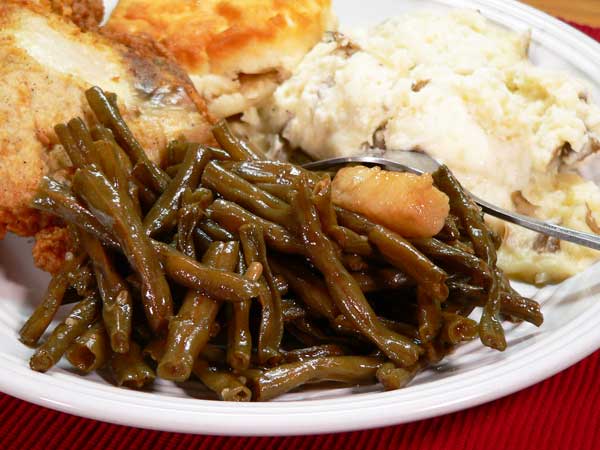
The photo above is not great but it is the best I got at the time, about a week ago, near the middle of August 2023, when I was close to completing making shucked beans from two bushels of White Half Runners I had bought at what has become a relative deal of $30.00 per bushel in Floyd County Kentucky. In past bad years, I have paid as much as $60.00 a bushel for good, clean Half Runners. In the past, I have written on this blog about making and eating shucked beans which some people refer to as Leather Britches. In recent years, I have been blessed to develop friendships with both Bill Best and Frank Barnett, two of the most experienced heritage bean experts in all of Appalachia. I grew up eating and helping raise and make shucked beans in Knott County Kentucky. Since I met both Bill and Frank, I have written a few other bean based blog posts including one about The Dog Eye Bean and The Eagle With Spreading Wings Bean, two of the most unique and colorful heritage beans in the region. I also wrote another post called "Lazy Wife Greasy Beans, A Lesson In Appalachian Nomenclature", a post which I owe Bill Best for since he was the first to introduce me to the Lazy Wife Greasy Bean which has become one of my favorite beans at the supper table. Also, indirectly from learning from Bill Best about the Cherokee Purple Tomato, I wrote a post about "Multi-Cropping In The Appalachian Garden", a post which was deeply rooted in my own childhood during which I helped my parents in our one acre garden to raise Irish Potatoes, Hickory King Corn, White Half Runner Beans, and Cushaws all in the same ground with the potatoes being planted, hoed twice and then having the corn and beans planted between the potato hills, and scattering Cushaw seeds here and there among the other three crops. In short, I have always been interested in the traditional Appalachian food items on which I was raised. But knowing Bill and Frank has increased both my knowledge and interest in traditional Appalachian Heritage Crops even though I stopped raising a garden several years ago due to both my intense work schedule as a substance abuse and mental health therapist and the serious health problems from which my wife Candice suffers. Even though I don't garden currently, I buy traditional food stuffs any time I can, freeze quite a few items for winter consumption, and strive to learn as much as I can about those heritage crops. Which brings me back to my freshly made shucked beans for 2023.
I always make my shucked beans by stringing and breaking them and then drying them on a white sheet on my blacktop driveway until they rattle when I pick them up in the sheet to bring them into the house at night to be placed on an empty bed with a ceiling fan on the lowest setting circulating air over them at night. This year, our 13 year old nephew, Connor Nehlson from Sheboygan Falls, Wisconsin, was visiting with us for a week and got his first lesson in how to string and break beans. He did work consistently on two occasions for about an hour which might have been his best work performance of his life. The average Appalachian child of my youth would have had some dressing down if that had been their production for a day but training a child to work is a work in progress and I think the hour's performance might have been close to a record for Connor. We got a bit of rain on two of the days when the beans were drying and I had to bring them in the house on those days for time under the fan instead of in the sunshine. I can't prove it empirically but I firmly believe that drying in the sunshine, as opposed to being dried in a food dehydrator or by some other means gives them a far better flavor. And I told someone who responded to my post on a Facebook post about drying beans that "there is no sweeter sound on earth than that rattle when you pick up a sheet full of shucked beans off the driveway to bring them into the house to be individually packaged in freezer bags for winter storage. There is also no better taste on earth than a pot of shucked beans which have been soaked overnight to re-hydrate them and then cooked slowly with a nice chunk of smoked hog jaw thrown in for extra flavor.