Two separate incidents over the last week or so have led me to write this post which I find interesting whether you readers do or not. On a Letcher County Kentucky Facebook buy, sell, trade group, I saw a person offering to sell what they were calling "Turkey Crawl Beans". Although I have not seen Turkey Craw Beans to my knowledge, I knew instantly that this person had made a common mistake by either not understanding what they had been told about these beans when they got the seeds or they had just not bothered to learn their real name. In my childhood, I heard hundreds of older Appalachian people sit in our country store and talk about thousands of different subjects and I learned an awful lot about the native Appalachian dialect. So I did some research on the internet and found a website called "Local Harvest" which has a pretty good description of Turkey Craw Beans and some excellent photographs of them. Not only was my first guess substantiated but the story got even better because there is some belief that the person who found the beans in the gizzard of a turkey was also a slave. The photos I have attached to this post are also from that website and, if you use them, you should also give Local Harvest proper photographer credit. I also sent an e-mail to two of my friends, Bill Best, who is the author of two very good books about heritage Appalachian food crops, and Frank Barnett, who is also an expert on Appalachian food crops and an expert on Appalachian Heritage beans. Both responded and both have Turkey Craw Beans in their collections. Frank has this to say in his response:
One of the most common words in the Appalachian dialect is "craw" which is used as a synonym for several words including gizzard, throat, gullet, esophagus, etc. A common use of the word when the user is upset is to hear them say "that sticks in my craw" which translates to "that upsets me" and is analogous to becoming choked on something which is difficult to swallow. In fact, some of the very same people who use the previous expression, "that sticks in my craw", might also use the similar expression "that was a little hard to swaller". So when I saw the mistaken use of "Turkey Crawl Beans", I knew instantly that the person was actually trying to sell Turkey Craw Beans. And, without any extensive knowledge of Turkey Craw Beans, I also instantly knew that the original person who recognized and named these beans had either found them the first time in the gizzard of a turkey they had killed or that some portion of the beans, at some time in their development, was shaped a bit like a turkey gizzard. So I went looking for some answers on the internet and found a website called "Local Harvest" which has an excellent, but brief,description of Turkey Craw Beans. The story got even better when I learned that Local Harvest believes the person who found and named Turkey Craw Beans was a slave sometime before the Civil War. There are several other seed saver and seed sales sites which carry some version of the same story about a turkey gizzard although all of the sites do not mention the possible connection to slavery. Bill Best responded to me in a second e-mail regarding the possible slavery connection:
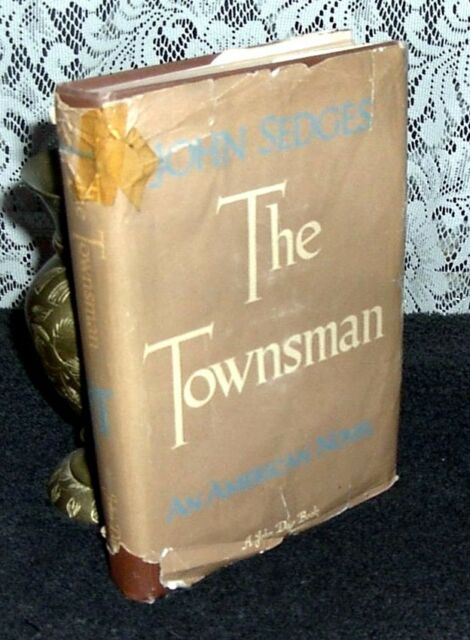
In the other incident which triggered this post, my wife and I have been reading a Pearl S. Buck novel called "The Long Love" which I will write about in a few days. It is one of the five novels which Buck wrote and published under the pseudonym John Sedges. I have written earlier on this blog about two of those novels, "The Townsman" and "Voices In The House". I actually like "The Long Love" a bit better than either of the other two although they are also good novels. Also, I recently published a memoir piece called "Christmas On Beaver Creek" in a book from the Jesse Stuart Foundation called True Christmas Stories From The Heart Of Appalachia". In that memoir piece, I talked about hiding behind a stand up Coca Cola Santa Claus in our store as a child in order to listen to older people talk about subjects like Old Christmas and the Biblical story of Christmas along with any other topics I could hear discussed. And, to complete the loop back to the Turkey Craw Beans, I had learned enough about Appalachian dialect in those nights in the country store to know that the person trying to sell the beans had not known the actual name of the beans. In other words, it pays to pay attention especially when you are young.
The tie in between the Turkey Craw Bean story and "The Long Love" lies in the fact that in one fairly long section of the book Pearl S. Buck has a character who is a novelist who grew up in the town in which her novel is set and he talks at length about all the things he learned about the town and its people by listening to them talk in their homes and other settings during his childhood. I laughed out loud as I was reading that section because it ties in closely with my previous mention of the memoir piece "Christmas On Beaver Creek" which was published as a chapter in the aforementioned book from the Jesse Stuart Foundation called "True Christmas Stories From The Heart Of Appalachia". In that memoir piece, I talked about hiding behind a stand up Coca Cola Santa Claus and listening to older Appalachians talk about hundreds of subjects including Old Christmas and the Christmas story from the Bible. I also learned enough while listening behind that Coca Cola Santa Claus to have sufficient knowledge about Appalachian dialect to know that the person trying to sell the beans did not know what they were talking about. I realize I repeated the account of the Coca Cola Santa Claus in two slightly different versions here but I wanted to make absolutely clear the connection between that incident and the Turkey Craw Beans.
This little experience has been educational for me and I hope it has for at least a few of my regular readers.
Roger,
Yep,
we both have the Turkey Crawl (sp) bean. It is not an uncommon bean in the
area.
The
seed I got was from Bill and I only raised it one year. However, in Lincoln
County, WV the bean goes by the name of Harts Creek which I also raised. Same
variety but a much better story about Harts Creek. I was underwhelmed by both.
This is what Bill Best had to say:
Roger, I don’t remember who first gave me the Turkey Craw
bean but I believe it was Eugene Parsons of Lee County, Virginia.
Had he lived he would be a hundred years old this year but a (sic) died of
Alzheimer’s several years ago. There is a story about Eugene in my first
book on heirlooms. What to me is significant about the bean is that it
seems to be the dominant bean in all three states of the Cumberland Gap
area. I remember as we walked through his garden Eugene had bean vines
running up into nearby trees. The Lee County ag agent, Harold Jerrell, took me to meet him at his
home and in his garden. Harold is also featured in the first book because
of his seed saving and tree grafting.
I do think that turkey craw is the original name of the
bean.
As you can see, I still listen to other older Appalachians, especially those who are experts on some narrowly focused subject such as heritage food crops or simply Turkey Craw Beans.
 |
| Turkey Craw Beans, Photo by www.localharvest.org |
One of the most common words in the Appalachian dialect is "craw" which is used as a synonym for several words including gizzard, throat, gullet, esophagus, etc. A common use of the word when the user is upset is to hear them say "that sticks in my craw" which translates to "that upsets me" and is analogous to becoming choked on something which is difficult to swallow. In fact, some of the very same people who use the previous expression, "that sticks in my craw", might also use the similar expression "that was a little hard to swaller". So when I saw the mistaken use of "Turkey Crawl Beans", I knew instantly that the person was actually trying to sell Turkey Craw Beans. And, without any extensive knowledge of Turkey Craw Beans, I also instantly knew that the original person who recognized and named these beans had either found them the first time in the gizzard of a turkey they had killed or that some portion of the beans, at some time in their development, was shaped a bit like a turkey gizzard. So I went looking for some answers on the internet and found a website called "Local Harvest" which has an excellent, but brief,description of Turkey Craw Beans. The story got even better when I learned that Local Harvest believes the person who found and named Turkey Craw Beans was a slave sometime before the Civil War. There are several other seed saver and seed sales sites which carry some version of the same story about a turkey gizzard although all of the sites do not mention the possible connection to slavery. Bill Best responded to me in a second e-mail regarding the possible slavery connection:
One comment on Turkey Craw beans: I had never heard
about the slave story and I’m wondering how it came to be. Since the
variety is located mostly in the Cumberland Gap area, and since that area was
not known for having slaves, I’m wondering how that might have come to
be. I’m also wondering if many slave owners would have trusted their
slaves with guns. As a tiny kid I asked my mother how the Goose Bean came to
be. She told me that her grandfather had shot a wild goose and when she
was cleaning it for cooking, she found the seeds in its craw and the bean had
been part of our family collection since that time. I later learned that
thousands of children in the Southern Appalachians had been told the same
story. The Goose Bean is also called the Goose Craw Bean in many areas.
Bill's comments about slavery being relatively rare in the Cumberland Gap area is dead on and so is his suspicion that few slave owners would have trusted a slave with a gun. But it strikes me that on rare occasions with an older, trusted slave a slaveholder might have taught them to use guns and allowed them to hunt at times since one of the primary reasons many people in that area did not own slaves was related to necessity to provide slaves with at least a basic subsistence. However, it is also possible that some slaves might have hunted with sling shots or even thrown rocks at game which was less flighty two hundred years ago. There is also the well known fact that slaves performed most of the undesirable jobs on a farm such as cleaning all types of fowl whether wild or domestic and such a slave could have simply found the beans while cleaning a turkey (or goose as Bill Best mentioned) for their slaveholder. Slaves also frequently did the great majority of work in tending plantation gardens and a slave could well have had sufficient leeway to plant a few seeds they found.
In the other incident which triggered this post, my wife and I have been reading a Pearl S. Buck novel called "The Long Love" which I will write about in a few days. It is one of the five novels which Buck wrote and published under the pseudonym John Sedges. I have written earlier on this blog about two of those novels, "The Townsman" and "Voices In The House". I actually like "The Long Love" a bit better than either of the other two although they are also good novels. Also, I recently published a memoir piece called "Christmas On Beaver Creek" in a book from the Jesse Stuart Foundation called True Christmas Stories From The Heart Of Appalachia". In that memoir piece, I talked about hiding behind a stand up Coca Cola Santa Claus in our store as a child in order to listen to older people talk about subjects like Old Christmas and the Biblical story of Christmas along with any other topics I could hear discussed. And, to complete the loop back to the Turkey Craw Beans, I had learned enough about Appalachian dialect in those nights in the country store to know that the person trying to sell the beans had not known the actual name of the beans. In other words, it pays to pay attention especially when you are young.
 |
| Turkey Craw Beans, Photo by www.localharvest.org |
This little experience has been educational for me and I hope it has for at least a few of my regular readers.