An ever growing site of non-fiction,flotsam, fiction,memoir,autobiography,literature,history, ethnography, and book reviews about Appalachia, Appalachian Culture, and how to keep it alive!!! Also,how to pronounce the word: Ap-uh-latch-uh. Billy Ed Wheeler said that his mother always said,"Billy, if you don't quit, I'm going to throw this APPLE AT CHA" Those two ways are correct. All The Others Are Wrong.
Search This Blog
Tuesday, July 7, 2026
"Mysteries Of Winterthurn" by Joyce Carol Oates, Some Responses to Reading It!
Tuesday, August 26, 2025
"The Unvanquished" by William Faulkner, A Wonderful Novel of The Civil War And Reconstruction!
Thursday, July 24, 2025
"Nowhere Else On Earth" by Josephine Humphreys, One Helluva Novel!
Tuesday, July 8, 2025
"Pink Flamingoed" Book 1 Aylesford Place Series by Steve Demaree
Wednesday, February 12, 2025
"This Proud Heart" by Pearl Buck
Monday, May 24, 2021
"A Place To Come To" by Robert Penn Warren--Book Review
When this novel was first released a reviewer in "The Harvard Crimson" had this to say about it:
"In his latest novel, Robert Penn Warren combines a Southern preoccupation with the past with a typically modern concern with selfhood and alienation. His protagonist literally revels in his aloneness, his rootlessness, his inability to love. Nor is he content with a mere demonstration of his problems; instead, he explains them to us, over and over again, in a style that mixes the lofty literary references of academic--Jed is a medievalist at the University of Chicago--with Faulknerian neologisms and strings of appositives." (Julia Klein, "Harvard Crimson", April 23, 1977)
In the end, Ms. Klein did not write a positive review of Robert Penn Warren's novel and I firmly believe she erred by doing so. While this novel is not another "All The King's Men", Warren's best novel, it is a markedly good novel by a great writer and deserves to be read and appreciated just as much as anything else Warren ever wrote. But, I suppose when you have won three Pulitzer Prizes, one for "All The King's Men" and two for a pair of his books of poetry, you are expected to write stupendously great literature even if your intent was only to produce a grocery list. It seems to me that simply because Robert Penn Warren was never invited to join the group of American winners of the Nobel Prize for Literature some critics and general readers think he can be forgotten, left by the wayside of mass marketed literature, and ignored. The list of American Nobel winners which includes Saul Bellow, Isaac Bashevis Singer, Joseph Brodsky, Sinclair Lewis, Eugene O'Neill, Pearl S. Buck, William Faulkner, Ernest Hemingway, John Steinbeck, and now even Bob Dylan, is a prodigious list and I do not mean to belittle or question the credentials of Bob Dylan by adding him to list as the last person. But I do believe that Robert Penn Warren was just as deserving of a Nobel Prize as any American writer who was ever awarded one and a bit more than a few on that list. When I make a list of the greatest American writers, the names I put on that list are Hemingway, Steinbeck, Faulkner, Buck, Warren, and Flannery O'Connor who also never lived long enough to accumulate a body of literature sufficient to earn the Nobel. I also find it interesting that three of those writers are southern writers, Warren, Faulkner, and O'Connor.
And that last statement brings me to one of the most important misconceptions about Robert Penn Warren. He is sometimes thought of as an Appalachian writer and he definitely was not. He was indisputably a Southern writer. He was a self-avowed member of The Fugitives at Vanderbilt and lived much of his life, especially his academic life, at Vanderbilt University and Louisiana State University neither of which is Appalachian. And his retirement was spent in New England. Yes, Robert Penn Warren was born in Kentucky, Western Kentucky, which is not in Appalachia, not even in the ever expanding political definition of Appalachia used by the Appalachian Regional Commission and the congress which is a purely political definition based totally in pork barrel politics and not remotely culturally based. Warren was born and raised in Todd County Kentucky on the Tennessee border in Western Kentucky far outside both the political and cultural boundaries of Appalachia. He never referred to himself as Appalachian and rightly so. He never wrote Appalachian Literature. He wrote Southern Literature and wrote it just as well as Faulkner and O'Connor, even better at times.
Now that I have made one more diligent attempt to murder the myth of Robert Penn Warren as an Appalachian writer, let's talk about this book which is a damn fine novel about a southern college professor, raised in Alabama, living in Nashville and teaching at a college which we can assume is based loosely on Vanderbilt. The writer and professor moves to Chicago to pursue a doctorate, has an affair with a young Jewish woman there, then marries a young woman from the Dakotas who eventualy dies of cancer. He returns her to her homeland to be buried near her relatives and after her death returns to Tennessee to teach. The novel is filled with very unique, very human, very well written characters who move in and out of the protagonists life which is often centered around a group of friends which his wealthy lover and her husband have collected on their southern farm. The protagonist is drifting loosely along in life, attempting to abandon and deny his youth in the deep south and at times filled with ennui. The death of his wife and her burial in the Dakotas where she grew up is part of the source of that rootlessness but the character is much deeper than one source of ennui. He is drifting through a group of friends and acquaintances who ride fancy horses, attend fancy parties with their fancy friends, and also seem to drift from moment to moment without aim or purpose.
But this is a fine novel filled with excellent character development, precise plotting, and tension which must always seek resolution. It is, admittedly, not "All The King's Men" and it was never intended to be. Warren intended this novel to be "A Place To Come To" and it is. He intended this protagonist to be Jed Tewksbury whose father died drunk falling from a wagon box while attempting to urinate on the hindquarters of a mule only to be found graveyard dead on a dirt road in Alabama with his penis out of his pants. That graphic image haunts Jed Tewksbury throughout the novel and a great deal of his ennui can be said to be rooted both in his childhood poverty and his father's ignominious death and drunken lifestyle along with his mother's eventual love for and marriage to a stepfather whom Jed Tewksbury does not really like and, yet, Jed finds in the end that his little hometown in Alabama is "A Place To Come To". The novel is filled with the characteristic, powerful writing of Robert Penn Warren. He moves through the novel like a world champion boxer scattering a combination of literary left hooks, body blows, and precise three and four words jabs into the mind of the astute reader. If you love good to great literature, southern literature, you need to read this book, and remember as you read it that it was never intended to be "All The King's Men".
Friday, March 27, 2020
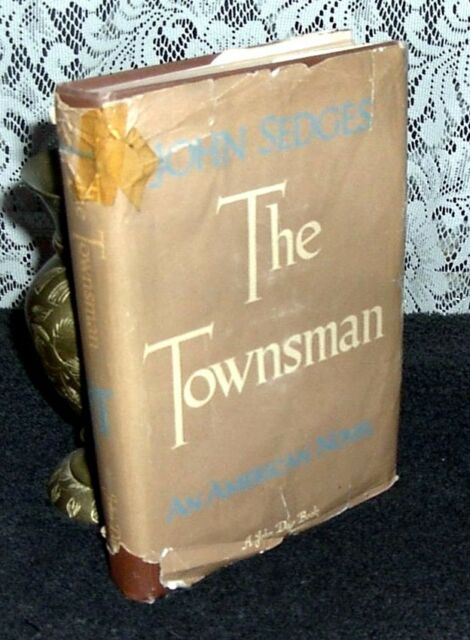
"The Townsman" by Pearl S. Buck--Book Review

Friday, August 30, 2019
Reflections On Reading "For Whom The Bell Tolls" by Ernest Hemingway
![]() |
| Ernest Hemingway--Photo by Getty Images |
Wednesday, August 28, 2019
Reading And Defending "Tom Sawyer" and "Huckleberry Finn"
![]() | |
| Mark Twain--Photo by Ebay |
Wednesday, August 7, 2019
"Under The Juniper Tree" by Emily Steiner--Book Review
![]() |
| Emily Steiner--Photo by the Steiner Family |
Monday, July 8, 2019
"Reading Lolita In Tehran" by Azar Nafisi--Book Review
Sunday, July 7, 2019
"While Earth Still Speaks" by Nancy Werking Polling--Book Review
Now, let's talk about the book itself. The protagonist is a woman of middle to late middle age who has spent her life in a very conservative and restrictive religious sect which devalues and restricts women to something not quite a beast of burden but far less than an equal to their male counterparts. She is the mother of two essentially grown children, a son and a daughter. The book is broken into segments which include the family life on the farm, the protagonist's eventful month or so with her daughter in a revolutionary environmental group which kidnaps the head of the North Carolina environmental agency, and interspersed visions which come to the woman from Mary Surrat and the Virgin Mary and can be loosely connected to the main story line. For those of you who have never heard of Mary Surrat, she was a boarding house operator who was arrested, convicted, and hanged for taking part in the Booth plot to assassinate Abraham Lincoln. She was the first woman executed in the United States. Mary Surrat is seen, by the author, as an example of the fact that dying for a cause is not always virtuous. The author states in her acknowledgements section that several people who had read the manuscript had suggested that she remove Mary Surrat from the book. I agree with those people. But there are hundreds of stories of highly successful authors who resisted strong opposition to their first drafts from editors, family, friends, and the unsuspecting strangers upon whom they foisted their unpublished work in public places. However, in my life, I have known quite a few well known and successful writers who often doubled as mentors, professors, and friends. I like to believe that I learned at least one or two things from every one of them. One of the most important things I ever learned was voiced by many of them. That truth is the overly simplistic admonition to write about what you know best. I also found that truth to be wonderfully expounded upon in the classic motivational book "Acres Of Diamonds" by Russell H. Conwell although his discussion of the subject applied to life and personal achievement instead of writing. It could be that I have already or will in the future learn something from Nancy Werking Poling. She has already reinforced a concept for me that many others have expressed in the past: Writers should write every day and avoid the naysayers. Ms. Poling has published five books and this is her second self-published book while I have only accumulated a couple of dozen publications in three different genres and a book chapter or two while approaching the grave without a published major work while diligently eschewing the vanity presses. But I am not certain that Ms. Polling was writing about what she truly knows in this book. I do sincerely believe that she is fully and deeply committed to the environmental and the women's rights movements just as is her protagonist. But I doubt that Ms. Polling has ever joined or even had personal knowledge about a deeply secretive environmental activist group. I doubt that she ever engaged in a kidnapping to prove a political point as her characters do. And, in spite of the validity of Stockholm Syndrome and the shining example of Patty Hearst, I doubt that she ever fell in love with a hostage or hostage taker. I believe her book would have been stronger if she had stuck to the things she knows best in her heart of hearts and written an activist environmentalist book without kidnappers, their victims, or their implausible love affairs. I believe she could do a much better job of writing non-fiction on this subject. She has actually written one non-fiction book, "Before It Was Legal: A Black-White Marriage (1945-1987)", which I have not read but would like to do so before I make any all encompassing blanket judgments about her skills as a writer.
Speaking of Ms. Poling's skills as a writer, this book is well written but not exceptionally so. The linguistic skill is above average but the plotting and character development of most of the characters other than the protagonist is thin. Many of these characters other than the protagonist and her daughter are one dimensional. They do not live and breath in the highly credible manner which the best writers have developed. To go beyond what I said earlier about having learned at least one thing from many, if not most, of the writers I have known, I have, for many years, held firmly to two of my own beliefs and theories about good writing. The first of these ideas espouses a comparison of good to excellent writing as being similar to human DNA.
I have always thought that in the best books I have read in my life plot is a lot like the double helix spiral structure of human DNA as discovered by Drs. Crick and Watson. The double helix spiral of DNA is a twisting spiral of two long strands which wrap around each other and twist from one end to the other much like a pair of snakes or two strands of ribbon. Along each of these strands, there are chromosomes and genes for the entire length of the spiral which serve to make up the multi-faceted contents of the DNA structure. An above average plot also works in much the same way. In the plot we have parallel plots and subplots which progress for the length of the novel. Along each of these “strands” of plot and subplot we also have characters, characterizations, key pieces of information, human interactions between characters, individual and group actions, and other elements and portrayals which advance the major plot or subplots throughout the length of a novel. "While Earth Still Speaks" is not such a well plotted book. It does not contain that double helix style of writing. But I will not say that I believe it is the best writing Ms. Poling is capable of producing. It could well be within her grasp to develop that level of writing. She has not fully developed what I believe to be her best potential in this book.
My second idea about good writing is a comparison to good boxing. Superficially, it seems to be illogical to compare a purely mental vocation such as writing to what many people consider to be a fully physical vocation like boxing. But good boxing is not purely physical. It requires a great deal of thought both before entering the ring and definitely inside the ropes against a worthy opponent. A good to exceptional boxer must think on their feet, constantly assess their opponent and his actions, swiftly adjust to changes in the opponents style, and always counter with both the best defense and offense for fifteen rounds. A good boxer has an arsenal of several different punches and styles which they use as the circumstances require. They have jabs, uppercuts, roundhouse blows, body pounding short punches, and every now and then a few kidney punches. Good writing combines long, complex, well structured sentences. But it becomes boring if every sentence is ten, twenty, or fifty words long. Good writing must also have some jabs, short sentences composed of, at most, a subject, object, and verb. When these combinations are used in writing it is a lot like watching Larry Holmes box during his streak of 48 consecutive wins. In such novels, there are jabs, roundhouse punches, uppercuts, and a few kidney punches, and the total load of such writing literally knocks the reader out. "While Earth Still Speaks" does not have that kind of arsenal. It moves along successfully from the scene in which we meet the protagonist to the scene in which she and her co-conspirators are arrested for their crimes. But it is not holding you on the edge of your seat. You are not striving to literally lean on the outside of the ropes to see that knockout blow delivered. It is functional but not dazzling. It is readable if you are committed to the environmental or women's rights movements. But it doesn't leave you asking "OK, what happens to these characters after they were arrested?"
This is a book which you might want to read. You might enjoy it. But you are not likely to return to it every few years to remind yourself of what role Mary Surrat played in the story or to remember just why the protagonist divorced her husband to become an environmental activist. But it did leave me wishing I could read Ms. Poling's non-fiction book, "Before It Was Legal: A Black White Marriage (1945-1987). Keep writing and watch a lot of good boxing, Ms. Poling.
Wednesday, March 28, 2018
"The Good Earth" by Pearl S. Buck---Book Review
![]() |
| Pearl S. Buck, Photo By Arnold Genthe |


