Search This Blog

Showing posts with label Civil War. Show all posts

Tuesday, August 26, 2025

"The Unvanquished" by William Faulkner, A Wonderful Novel of The Civil War And Reconstruction!

"The Unvanquished" by William Faulkner was originally published in 1934 and has been a staple of many college classes in Southern Literature, Civil War Literature, and general American Literature ever since. It is one of Faulkner's Yoknapatawpha County novels and features several key figures in the saga of his mythical county: John Sartoris, John Sartoris Jr., Ab Snopes, and others. The novel covers both the period of the Civil War and of early Reconstruction. The protagonist is John Sartoris, Jr. who is about 12 years old when the novel begins and a full grown adult at the end. His slave Ringo is also a major figure in the novel. The two are just a few months different in age and literally grew up together much like brothers, but clearly also a slave owner and a slave. Their relationship is a major key to everything in the novel. They are inseparable, literally bound at the hip. That relationship, as Faulkner portrays it, is both an indictment and an apologia for the entire slave holding culture of the south. The two work together to attempt to murder the first Union officer they ever see using a musket which resides on most occasions over the mantel in the main room of the Sartoris mansion. They are still together at the end of the novel as young Sartoris goes to confront his father's former business partner and killer. The novel is the basis of a strong argument about the much vaunted code of honor of southern gentlemen, and parts of it are said to have been a fictional portrayal of some events which took place in the life of an actual Faulkner ancestor. The individual chapters of the novel, seven in all, were originally published as short stories and the book is sometimes drawn into the perpetual argument among students of literature about just where a collection of short stories with common characters ends and a novel begins. In my opinion, it is a novel and that argument should have been ceased many years ago. For an example of a collection of such short stories with common characters fails to fulfill the requirements of a novel I suggest that you read "The Hawk's Done Gone" by Mildred Haun which is a fine book but not quite a novel. You could never find two better books to read in order to fully comprehend that argument, and to help put an end to it also. As the book progresses, John Sartoris, Jr. and Ringo progress from being two boys playing war in the dust near the slave quarters to become two young southern men, both black and white, who have survived both childhood and the Civil War to become very typical white slave holding and black slave men who are still, at least in their own eyes, brothers. John Sartoris, Sr. looms over the entire novel as a larger than life Colonel in the Confederate Army and as the head of the Sartoris family although he is not present on the plantation most of the time as the novel progresses. He is both a patriarch and a symbol of the failed Confederate effort. He is a role model for his son in the most traditional of senses, and is the axis on which much of the novel moves. His mother-in-law, Granny is a major character of the novel, maintains order at home while the elder Sartoris is off at war, and is dearly beloved by her grandson, the Sartoris slaves, and most of their neighbors. She concocts a plot to use a letter signed by the commanding Union officer in the area to confiscate over two hundred head of mules, disburse them to the poor, both black and white, in the area of the plantation, and is eventually caught in the scheme along with her grandson and Ringo. Ringo is both the brains of much of the operation and a loyal servant and man Friday to his young master and companion. Drusilla, a young female distant cousin of the elder Sartoris is a young woman who loses her fiancee to the Union forces and seeks to avenge his death by utilizing her talents with both guns and horses to assist the elder Sartoris and his troops in their doomed war. Her mother uses the old southern mores about what "good women" are supposed to do and be in order to force her to marry the elder Sartoris because she has spent many weeks riding, fighting, and hiding in the woods with him and his troops as a young single woman. This is a powerful novel of the Civil War and Reconstruction by a man who lived his life in the shadow of his own ancestors who had fought and lost in the effort. It addresses multiple issues which have arisen for several hundred years in the south: slavery, male and female relationships, rich versus poor whites, Union versus Confederate, young southerners living in the oversized shadows of their elders, and the dominant question since Lee surrendered, "just how do southerners go on living after the war?"

Thursday, July 24, 2025

"Nowhere Else On Earth" by Josephine Humphreys, One Helluva Novel!

This is a tremendous novel! This is one of the best novels I have ever read! This is, by far, the best novel I have read since I read "Wilderness" by Robert Penn Warren. I haven't had enough time to read everything I have ever wanted to or should have read. But it still amazes me that I never heard of Josephine Humphreys until I blundered into this novel by accident. The novel is a story of the late Civil War and Reconstruction just as is "Wilderness" and a couple of other things I have read and written about on this blog lately. But I have not set out on any conscious effort to read a lot of novels about the Civil War. It just happens by accident when I am not deliberately reading for a research based purpose. But I have never been more pleased to find a great writer by accident. Humphreys novel is a masterpiece of southern literature. Her plot work is astounding in this book. Her character development is tremendously detailed, written into the flow of the novel with purpose and without visible intent. It just happens which is what great writers do when they are writing at their best. The novel is set in the late years of the Civil War in coastal North Carolina and the heroine is a daughter of a Lumbee Indian woman and a Scotsman. She is intelligent, hard working, committed to her family and her place in the world. She is in love with a fellow Indian man who is becoming the leader of the local resistance to both the Union and the Confederacy in a community which they call Scuffletown. Scuffletown is one of the great names ever created for a place where poverty is king, starvation common, discrimination a daily reality, and the development of what we victims of discrimination like to call "backbone" is the one essential quality which will keep you alive. In those ways,Scuffletown is a sister to every impoverished coal camp in Appalachia, every row of slave cabins on every plantation in the Deep South, and every ghetto in a northern metropolitan area. The people of Scuffletown know how to survive, how to adhere to each other in tough times which are guaranteed to get tougher, and how never to mistake collusion with an enemy as cooperation. Most of the people in Scuffletown live in one room cabins scattered throughout a pine woods swampy world where turpentine making from pine trees is the one way to make a living in a better way than just being a hunter gatherer or scavenger or robber. Scuffletown is located not far from Hell but always has a bit of Heaven in it. It is a place where Love of Place, loyalty to your peers, and generosity no matter how poor you are is a fact of life.
Rhoda, the heroine, falls in love with Henry Lowrie, a young man her own age who grows up to lead the local resistance to both the Union and Confederate forces neither of which has any respect for the locals. As the war degenerates toward Lee's surrender, times just keep getting harder and Henry and Rhoda's two brothers become key members of the resistance with Henry assuming the top position. They are opposed by a local sheriff, his top deputy, and a group of their henchmen who will stop at nothing to maintain control of the populace and pillage as much as they can. The resistance fighters leave home to live in the swamps and strike whenever and wherever they can in order to feed both themselves and those who are dependent upon them. The novel is regularly improved by an event of such striking oppression, suppression, and sometimes resistance to the other elements just mentioned that the reader is spellbound. It is realistic and true of nearly every war of oppression ever waged in the world. In the end, Henry is branded as an outlaw and a reward of $20,000 is placed on his head with the production of himself or his dead body as necessary to collect the money. The war ends before the novel but it does not improve conditions in Scuffletown. Bad goes to worse! One of Henry's loyal men is hanged and Rhoda takes her children to proceedings where she stands in front of the gallows with the condemned man's mother as he falls to his death. But that is not the end of the story. I have never seen a novel I am more happy to recommend. It is a beautiful and often chilling piece of work. This author, Josephine Humphreys is a tremendous writer. I realize full well that one novel is not sufficient platform on which to build monuments to a writer, but this novel is a fine start of the foundation. If her other work is as strikingly wonderful as this novel, she deserves to have her name mentioned in the same breath as Flannery O'Connor, Hemingway, Pearl Buck, and Steinbeck.

Monday, June 16, 2025

"Kentucky Pride" by Gene Markey, A Civil War Reconstruction Novel From 1956

"Kentucky Pride" is a 1956 novel by Gene Markey who for many years was the husband of Lucille Markey Wright, the owner of famed Calumet Farm in Lexington, Kentucky. Before he married the widow Wright, Markey was a Navy Reserve Admiral, a Hollywood screen writer, and a well known Hollywood ladies man. But he became a devoted student of Kentucky history and produced several novels which were set in Kentucky, most of which were actually set in Lexington, Kentucky. This novel is best described as a Civil War/Reconstruction novel whose protagonist, Aidan Kensal, is former Confederate Major who owns a Lexington thoroughbred farm. His two associates who figure heavily into the novel are a jockey from the mountains of Kentucky, and a second Lexington Confederate both of whom have served with Kensal in the Confederate unit commanded by John Morgan. The three are attempting to return to Central Kentucky after the Civil War has ended, and the novel seems to be somewhat sympathetic to the Lost Cause. The primary villian is a Union Major Veach Doucain who has grown up near Aidan and has always hated him because of his families wealth, large farm, and outstanding Thoroughbred breeding program. Doucain is assisted by several lesser villians, four of whom form the other members of what is known as The Counsel of Evil which is a committee which has been sanctioned by the Union government to run the affairs of the area from an anonymous shield of power and silence. The other key member of The Council of Evil is a banker, Bowen Slaidrick, who is both a member of the council and the legal guardian of his neice Lacey who is the legitimate owner of another large farm which adjoins Aidan's. Doucain is obsessed with owning Aidan's property and destroying him at any cost. Lacey would have been called a tomboy in today's parlance and the opening of the novel involves an attempted stage coach robbery which is foiled by Aidan, Link, and Fid, the jockey, along with Lacey who is riding beside the driver atop the stage coach. When the driver is wounded, Lacey takes the rains, uses a whip to lash at least one of the highwaymen, and drives the stage away in a gallop as Aidan and his friends send the robbers packing. Action like this pops up in almost ever chapter of the novel and is offset by one after another action by The Council of Evil to rob Aidan of all he owns. If you can accept the fact that the good guys in this novel are returning Confederal soldiers and a few other Confederate sympathizers who are friends of Aidan in Lexington, it is well worth reading. It is loaded with good or better character development, a strong plot which flows smoothly, great conflict and conflict resolution, and a story which I am certain happened several times in the years immediately after the Civil War, especially in the Confederate states and border states. Gene Markey could write or he would never have been a major Hollywood script writer. Yes, I know it isn't popular in today's world to write novels about protagonists who are Confederate soldiers being pilloried by Union officers and supporters. But this novel is well worth reading if you can set your prejudices aside.

Wednesday, May 28, 2025

"Wilderness" by Robert Penn Warren, A Novel Of The Civil War and Early American Immigration
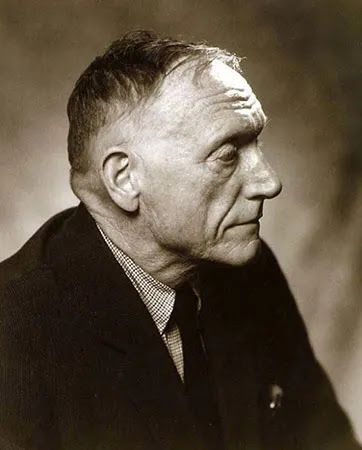
"Wilderness" is a 1961 novel by Robert Penn Warren. The protagonist is a Jewish immigrant from Germany who has been born with a club foot but desires to immigrate to America and "fight for freedom". The story begins in his native country where he decides to leave for America after realizing he has little hope for a good future at home. His father was killed in riots in Berlin while fighting against government troops. He has been supported and assisted by an uncle who is also a rabbi. As Adam Rosenzweig prepares to leave, he is given several religious objects by his uncle which he carries, but uses little, during the length of the novel. The uncle also provides Adam with the address of an old friend who had previously emigrated to America and become wealthy as a businessman after beginning his life as a pack trader. Pack traders, many of whom were Jewish, traveled the roads of America carrying and selling a multitude of common household items in large backpacks. In order for Adam to get to America, he signs on with a human trafficker who is providing immigrants to both sides of the Civil War to fight as soldiers. The most important object Adam owns is a very well made leather boot which a cobbler friend made for him to help compensate for is club foot. While on the ship to America, the other men learn of Adam's disability and he becomes the "least of the least"on the ship since he is now known as being very unlikely to be accepted as a soldier. He is now forced to do the most menial chores aboard ship to compensate for his passage and the captain intends to actually prevent him from leaving the ship and retaining his as slave labor for the return voyage to Germany. But one of the crew gives Adam some advice just before the ship comes to port in New York which allows him to escape the vessel. He lands in New York with nothing and a very powerful scene ensues in which Adam, lost, alone, and hungry, finds the body of a black man hanging from a lamp post where he has been lynched in ongoing race riots. Adam finds himself the next day being dragged into one of those riots which is engaged in the murder of another black man. Adam finds himself being pursued by some of the rioters but manages to escape by running into the door of what turns out to be a house in which several black people are hiding. The rioters break in and Adam finds himself in the basement hiding in the dark where no one's race or color can be recognized. The rioters flood the basement and Adam finds himself being pulled above the waterline by a black man who turns out to be an employee of the man Adam was told to seek out when he got to New York. When the rioters disappear, the black man takes Adam, who is very ill, to the home of their benefactor, the rich Jewish trader. The trader has had a son killed in the Civil War and offers to make Adam his adopted son. Adam refuses the offer and is, instead, placed with a very abusive and coarse trader who needs a wagon driver to drive a wagon load of supplies south to sell to whichever troops of either side they might contact. The group consists of Adam, the trader Jed Hawksworth, and his black employee Mose who is actually an escaped slave as the book reveals in the long run. The three characters make a slow trip south to connect with fighting troops and are a truly odd collection of equally damaged characters who have simply fallen into each other's company. Mose, who has been savagely beaten by previous owners, becomes a friend of Adam but eventually kills Hawksworth and runs away. Adam, fearing that he will be blamed for the murder, buries Hawksworth in the woods, takes one of the wagons, and heads out to find Union troops which he can join to live out his dream of "fighting for freedom". I won't spoil the ending for you by fulling disclosing what happens from here on out. I will say that I have read several of Robert Penn Warren's books and this is just as good a novel as any the man who won two Pulitzer Prizes ever wrote. It addresses issues of war, racism, hatred, segregation, immigration, disability, and discrimination as well as any novel I have ever read. It is a powerful book which has fallen by the wayside of American Literature even though it is a fine piece of work by a man who should have been another of America's Novel winners. Robert Penn Warren is, in my opinion, just as great a writer as Hemingway, Steinbeck, Buck, or any other American who has ever been described as great. If you read the book, be forewarned that the novel does use the language of the time in which it was set and you will encounter several of the epithets which are not allowe in polite society today. But the novel is far greater than any of its detractors claim it to be simply because they are prejudiced against the language of America in the 1860's. Read it and you will see that I am correct.

Sunday, October 20, 2024

"Band Of Angels" by Robert Penn Warren, A Wonderful Old Novel And Still Worth Reading!


"Band Of Angels" is a 1955 novel by Robert Penn Warren, one of the handful of American writers who was never awarded a Nobel Prize and probably should have been.  But he was awarded two Pulitzer Prizes, one for his novel "All The King's Men", and the second for his poetry.  He was also a Rhodes Scholar and taught at both Vanderbilt University and Yale.  He also worked as a Consultant In Poetry for the Library of Congress.  He was an amazingly prolific writer and produced 12 novels, 15 non-fiction books on a variety of subjects, 3 children's books, 2 major dramatic versions of his novel "All The King's Men", 1 short story collection, and 21 collections of poetry.  


"Band Of Angels" was made into a 1957 movie which starred Clark Gable, Sidney Poitier, and Yvonne de Carlo.  The heroine and narrator of the book is Amantha "Manty" Starr, a woman who was raised by her father on a Central Kentucky plantation in the years preceding the Civil War.  Her mother is dead and buried near the house instead of in the plantation cemetery some distance farther away.  Her father who pampers her, apparently loves her deeply, and regularly takes her to Cincinnati to meet his friends there.  He also enrolls her in Oberlin College in Oberlin, Ohio.  But he never tells her much about her mother, and the primary female influence in her childhood is an older slave woman.  The father dies suddenly while Manty is still in college and, when she returns to the plantation just in time to see the end of his funeral proceedings in the cemetery, she learns that her mother was a slave, that she was never freed by her father, and is seized, as part of his personal property, at the graveside by a local loan shark who has loaned her father large sums of money.  She is shipped to New Orleans to be sold as a slave in the slave market there and bought by an older man who pays $2,000 for her to keep her from falling into the hands of a young southern ne'er do well.  She becomes the mistress of her owner who turns out to be a former slave trading ship's captain.  He also owns a unique male slave who is the actual overseer of his plantations but has been raised much like his son and holds a great deal of power over the other slaves.  

This book is full of one surprise twist after another and flows with wonderful prose which is the trademark of Robert Penn Warren.  Modern readers, especially readers of color, are likely to be deeply offended to the prolific use of racial slurs in the book which are not just limited to the "N" word.  But it is an accurate book for the times which it describes in the slave holding south both before and after the Civil War.  Manty is eventually set free, marries a former Union Army captain, and lives for a time in New Orleans high society.  She also eventually joins her husband in a long westward migration as he seeks a career as a lawyer but finds one reason after another to fail in town after town.  There is a great deal to love in this book along with a somewhat sizeable portion of things some readers will hate.  But it has survived, as every word Robert Penn Warren published has and should have survived.  It's arguable weaknesses are clearly overcome by its powerful strengths.  Put aside any negative emotions you might have for Warren's broad usage of language which is historically accurate but despised today and read the book.  In fact, I would say that any reader who likes to read broadly of the best writers in the world would be remiss to avoid reading Warren as broadly as possible.  He is one of America's great masters of literature.  


Tuesday, June 25, 2024

"Night Watch" by Jayne Anne Phillips--Notes On Reading A Pulitzer Prize Winner


I have for many years made a practice of reading prize winning books in fiction, nonfiction, and juvenile fiction.  I don't read every prize winner every year or even most of them in some years.  I chose to read this one because someone I know on social media recommended it, and it is a 2024 Winner of the Pulitzer Prize.  The brief description of the novel on the official website of the Pulitzers says this about the book: 

From one of our most accomplished novelists, a mesmerizing story about a mother and daughter seeking refuge in the chaotic aftermath of the Civil War—and a brilliant portrait of family endurance against all odds.  (Pulitzer Prizes website 2024) 

The novel is set primarily in West Virginia's Trans-Allegheny Lunatic Asylum which was one of the earliest such mental institutions in America beginning shortly after the states of Maine and Kentucky built the first two such institutions.  The novel is set in the times shortly before, during, and after the Civil War, and is centered on three women in the mountains of West Virginia, and the Civil War sharpshooter who is the son, husband, and father of the three women respectively.  The sharpshooter has been seriously injured during the war and has no memory of who he is, his name, or personal history.  But he has become skilled in caring for the mentally ill while in a hospital in Alexandria, Virginia, and has been referred to the asylum as a night watchman and general aide to the doctor.  The man's mother is a root woman, an herb doctor, or healer. The man's wife and daughter, along with the older woman, are living high in the mountains of West Virginia while he is away in the war and are the victims of marauders from both sides of the conflict at times.  The antagonist in the novel is a Rebel sympathizer who is wandering the countryside alone preying on whomever he can find who is too weak to defend themselves against him.  He moves in with or on the young woman's mother, victimizes the two of them in every way possible and finally drops off the girl and her mother, who has become nonverbal as a result of his rape and abuse of her, at the Trans-Allegheny Lunatic Asylum and disappears before returning as an inmate of the institution.  The girl has been ordered to tell the asylum staff that the mother is not related to her, and she is simply a teenage orphan who has been caring for the woman.  The ruse works and the mother is admitted as a patient while her daughter is taken in as an unpaid aide for her mother.  

Eventually, the mother begins to talk and continues the lie their attacker has forced them to tell.  But she also becomes enamored of the doctor in charge of the institution and the feelings are mutual. Her daughter is eventually made a full time nurse, a position which did not require formal educational training or a degree in the 19th century.  When their attacker is brought to the asylum, he is in a violent rage and placed in a locked ward from which he eventually escapes.  The novel comes to a violent climax with the building on fire, the attacker returned to try to murder the women, and, in the meantime the night watchman's wife has recognized him and they have come to tell the doctor they are married and intend to leave to go back to the mountains.  The attacker climbs through the window of the doctor's office as that conversation has begun and attacks the group.  The sharpshooter is shot and killed just as he manages to throw the attacker out a third story window to his death.  All the loose ends are quickly tied up and the girl's mother marries the doctor, the grandmother takes the girl back to the mountains, and all is well that ends well.  

This is a good novel but not a great novel.  It does contain the bones of what could have been a great novel.  But after years of reading many winners of the Nobel, Pulitzer, and other literary prizes, for me the novel is a disappointment.  It is poorly organized, leaves far too many issues hanging at times, and could have been a far better book with a serious rewrite.  I realize when I say such things about a book which others rave about, I have set myself up for anything from a mild sneer of derision to outright claims of ignorance on my part.  The author has a fine resume both as a writer and a trainer of writers.  This is her sixth novel and twelfth book.  It is also the first of her books I have ever read and it is possible that I am not giving her enough credit.  But I really do believe that she, her agent, her editor, and the Pulitzer committee all accepted less than what could have become her best work and a worthy prize winner.  I'd love to have seen this book in a better form after another month or two of work from the author and her editor.  But you might also read it and rave. Don't take my distaste for the book as a total red flag.  If you like the sound of the plot, read it, and form your own opinion. 

Thursday, April 18, 2019

"...And Ladies Of The Club" by Helen Hooven Santmeyer--Book Review

When this epic novel was published in 1982, the author Helen Hooven Santmeyer was 87 years old and living in an assisted living facility in her southern Ohio hometown.  The book made Santmeyer an overnight success at a time when most of her childhood friends were long dead. It covers life in a small,fictional Ohio town from 1868 to 1932.  The book rocketed to the top of the New York Times bestseller list and made Santmeyer famous long after her previously published four books had amounted to almost nothing in sales or public acclaim.  One other book was published posthumously and one biography has been written, "Early Promise, Late Reward" by Joyce Crosby Quay. 

Helen Hooven Santmeyer Photo by G.P. Putnam Publishers
I initially bought but never finished a copy of the book in the 1980's after it made the best seller lists.  At the time, I read a few chapters and thought "this is a well-written book but it is just a women's book" which is nowhere near the truth.  I finally read it this time, nearly forty years after it was published, following a conversation with my wife and we read it together.  The book is a sweeping story about the fictional town of Waynesboro, Ohio, and begins shortly after the Civil War.  It follows the lives of the town and its people until the Great Depression.  It is filled with the members of nearly a dozen families who figure prominently in the life of the town and the characters are woven around and into the life of the Waynesboro Womens Club which is formed in the first chapter and continues for the life of the entire novel.  The families live in close proximity in a small Midwestern town and intermingle, intermarry, live, reproduce, die, and generally accomplish admirable lives.  Only one or two characters ever fail to amount to something useful and nearly all of them are striving to become somebody the world would be proud to know.  This is truly an epic novel in every sense of the word and is just as important in the overall story of American Literature as "The Grapes Of Wrath", "East Of Eden", or Frank Norris' Wheat Trilogy of "The Octopus", "The Pit", and "The Wolf".  At the last possible moment, Santmeyer managed to take a well deserved place in that group of American novelists including Frank Norris, Ernest Hemingway, and Pearl S. Buck who have produced great epic novels by grinding on day after day, week after week, year after year in the pursuit of an epic. 


When we ask ourselves "what is an epic novel", we sometimes come up with wide ranging and contradictory opinions of exactly what the term means.  After a diligent search on the Internet, I still wonder exactly what the term means.  One definition I found and like says that "an epic novel [is] one that is epic in scope and theme -- a text that covers a vast expanse of space and time in its quest to uncover answers to the deepest questions of human existence".  In fact, most definitions of epic seem to revolve more around poetry than novels.  It actually appears that even literary people cannot pin down a precise definition of an epic novel.  In my mind, an epic novel must cover a large span of time, let's say at least fifty years, and be centered around the lives of a fairly sizeable group of characters who go about the daily business of living.  Santmeyer's novel definitely fits that definition. 

The primary characters are the members of the Waynesboro Women's Club, their husbands, children, grandchildren, and even a few great-grandchildren.  The two most important families in the novel are the Gordon's, with Anne Gordon as the matriarch, and the Rausch's with Sarah "Sally" Rausch as the matriarch.  By the end of the novel, nearly every major character has lived and died.  Some of the deaths, including one suicide of a minor character, are  notable.  Some are ordinary and as simple of falling dead over an unlit kerosene heater due to a heart attack.  The Rausch patriarch, Ludwig, is a German immigrant and Civil War veteran.  His best friend, John Gordon, is the patriarch of the Gordon family.  If there is a major hero in the story, it is Ludwig Rausch although other characters live somewhat heroic lives, both male and female.  The story flows naturally through marriages, unrequited love affairs, adultery,  childbirth, epidemics, floods, and fires.  There is rarely a dull moment and the novel is well worth the number of hours the average reader will need to commit to completing it.

I tend to believe that many, if not all, of the female characters are partial presentations of Santmeyer herself who never married and worked most of her life as a librarian in a small private college.  Some of these women marry and produce long lines of progeny which Santmeyer never did.  But each of them tends to show some aspect of the life of a well-read, intelligent, self-assured, working woman which Santmeyer was to the very end of her long and productive life.  There is a young female writer working to produce good books.  There are more than a few female librarians and one or two spinsters.  The males are generally well respected and the only real villain is a woman.  At times, the novel does use some archaic terms to depict African Americans and yet one of the few women who survives the entire epic is a black housekeeper who has been totally devoted to her employing family all her life.  Ludwig Rausch is also quite loyal to his black employees just as he is to his white workers. 

This novel is well worth reading and has even led me to believe that, if I ever  find the time, I would like to read more of Santmeyer's books.