
Showing posts with label immigration. Show all posts
Showing posts with label immigration. Show all posts
Sunday, June 29, 2025
On Friday, June 27, 2025, I Spent Some Time With Some Of My Favorite Immigrants
On Friday, June 27, 2025, we traveled to Lexington to finally get new batteries in my wife's power wheelchair. They had been dead for about two weeks and it was a bad time. We needed a break and, for a while we got one. After spending time with the technician and his wife at the wheelchair company, getting the batteries installed, and then moving on to our favorite Vietnamese restaurant where despite living about two hour away we are regulars. We love the food, we really like the manager and his entire staff. We got done eating and then traveled to a little Asian food store for one item of a chile paste which we cook with sometimes. I will no longer name any immigrant, immigrant owned business, or other identifying characteristics of a business due to the danger which is being presented on a daily basis to ALL IMMIGRANTS by TRAITOR Trump and the Criminal Syndicate which poses as a "cabinet". We spent little time in the business and, it is my impression, that the family which owns it are American citizens. I chose the one item I was searching for, looked around the store and figured I didn't need anything else. When I walked to the counter to pay, the wife of the family was working in the store area away from the counter. Immediately, her young son who is about 7 or 8, in my estimation, moved from another spot behind the counter to the register and rang up my purchase, took my debit card and, with some help from his mother, completed the transaction, thanked me in perfect English. I was instantly taken back to my own childhood growing up in a country store in first Floyd County Kentucky and then another in Knott County Kentucky. I had also been trained to work in the store from a young age as soon as I could count change. I was flooded with memories and instantly told the little boy that I had also grown up in a store with my parents, how much I had enjoyed working in the store, and I tried to let him know, in no uncertain terms, that it is a good thing to be a young boy working with your parents in a family owned store. Yes, it is summer and school is out of session. I have no knowledge that the boy is ever in that store on a school day, or that he is ever working in any dangerous capacity, or that he is ever doing anything that makes his providing help to his parents is illegal. It is a parental choice they have and should always have to bring their children to the store with them, teach those children to work as young as they are capable of doing whatever job the parents choose to have them do. It is valuable training to help a child become a contributing citizen in the world and a worker who is committed to being a part of the working class. It is a damn fine thing to be a young boy working in a family store and I am an expert on that subject. When I was three days old, my parents carried me home from the Lackey, Kentucky, hospital and placed me on the counter in our store and, as I lie about sometimes, told me to "greet customers until you are big enough to do something else. I am proud of that boy and I am proud of his parents.
 The photograph above is of my father Ballard Hicks sitting in our family owned country store at Dema, Kentucky.


Wednesday, May 28, 2025
"Wilderness" by Robert Penn Warren, A Novel Of The Civil War and Early American Immigration

Tuesday, May 25, 2021
"Same Sun Here" by Silas House and Neela Vaswani--Book Review

This is an adolescent book by Silas House and Neela Vaswani which has been widely applauded for several reasons. It is a cooperative work by Silas House, who is the Director of The Loyal Jones Appalachian Center at Berea College, and Neela Vaswani, who has written several other books in a couple of genres including short stories and memoir. This is the first book I have read by either author. I read it primarily because my wife and I bought it to possibly give to our 11 year old nephew in Wisconsin and wanted to review it before sending it to him. The book is written in the form of pen pal letters between a 12 year old Appalachian coal miner's son, River Dean Justice, and an Indian immigrant girl, Meena Joshi, of the same age in Chinatown in New York City. Obviously, each of the authors wrote the letters for the child of their own heritage and I am willing to assume the book was produced primarily through e-mail exchanges between the authors. The two children are both bright, quite emblematic of each of their native cultures, and have grandmothers who are very important parts of their lives. River's "Mamaw" is his primary caregiver due to health and/or mental health problems of his mother who spends most of her time in bed and, for most of the book, takes little active part in his parenting. Each of the children is facing and attempting to deal with personal and family problems which are common in their cultures and geographic areas. River's father is an unemployed coal underground coal miner who has gone to South Alabama to find work and comes home only when he can. Meena's father works in a catering company in New Jersey and comes home only on his days off and both father's are forced to stay near their work at times instead of returning home. Meena's parents and older brother have immigrated to New York when she was quite young and left her in the care of her grandmother, Dadi, in India for several years due to problems related to money. Both children love their grandmother's deeply.
As the book progresses, a coal company opens a mountain top removal mine on Town Mountain overlooking the town near which River's family lives and also overlooking his school where he is a member of the middle school basketball team. Meena's family live in an illegally sublet rent controlled apartment in Chinatown and they are very close to the elderly Chinese woman whose son is actually the legal tenant of the apartment in which they live. They are always in fear of being evicted because landlords can sell such apartments for high dollar if they can get rid of the tenants. River's grandmother is an active member of an anti-strip mining group and fighting to stop the mountain top removal project. Eventually, Meena's gradmother dies in India, River becomes more actively opposed to strip mining and mountain top removal, and Meena's family continues to live in fear of eviction and homelessness. The book is loaded with current hot button political issues in both locations with environmentalism, rent control tenant's rights, immigration, and the economic issues related to the low end working class.
As the book nears its climax, River's basketball team is practicing in the school gym when a massive rock slide caused by the mountain top removal strikes the school and injures several of the players. Meena's family and all of the other tenants are evicted and become homeless. River and his grandmother join a protest in Frankfort, Kentucky, and River accidentally becomes a media darling with a planned trip to New York to appear on television and hopefully to finally meet Meena. The book is well written, especially in light of the fact that is uses the authorial techniques it does. The social issues discussed are timely and important in America. This book has a great deal of merit and is well worth buying for an adolescent reader, especially such a reader in a liberal leaning family. It says a great deal about inclusivity, environmentalism, immigration, Appalachia, tenant rights, and discrimination against both the Appalachian poor and immigrants. I would suggest that, for the average adolescent reader, it would be a good idea for a parent or grandparent to read the book either before or with the child and have a structured discussion of the social and political issues it raises. It is a very unique book and well worth placing in your child's private library.
Saturday, June 6, 2020
A Cultural Encounter In The Middle Of The Covid Crisis

On Thursday, June4, 2020, I had an appointment in Lexington and my wife, Candice went with me. I stopped, as I often do, on the way there to hike for an hour plus in Hood's Branch at Natural Bridge State Park. Then we headed on to Lexington for my mid-afternoon appointment. We have been absolutely religious about social distancing and complying with the Covid 19 guidelines and directives from Kentucky Governor Andy Beshear, who is, in my opinion, the best governor in America; but, we had also discussed possibly going to eat lunch at one of our favorite ethnic restaurants because we like the setting, the food, the employees, and the owner. But, now that restrictions are loosening up a bit, and Kentucky has done such a good job of handling the situation under the strong, competent, decisive, and compassionate leadership of Governor Beshear, we had decided we would be willing to eat lunch in this restaurant. That decision was influenced strongly by the fact that the room is large, open, well ventilated, clean, and run by an owner with common sense and professionalism.
I am not using the name of the restaurant, the particular ethnicity of the food or the owner, or any other identifying data and you will understand that choice better a bit later in this post. When we arrived, we decided that I would go into the restaurant first, appraise the situation, and make a decision if we would go through with the lunch in light of the fact that Candice has serious health issues and has been in a wheelchair for twenty years. I got out of the van and as I was walking to the door I realized that the owner was still only serving pickup customers. The particular food we like to eat in that restaurant is served very hot and Candice particularly likes their soup which is not made to be eaten in a vehicle by a person with mobility and dexterity issues. As I approached the door, the owner came out to bring food to go to another customer. I said something or other to effect of "I see you are only serving pickup" to which he replied in his heavily accented speech, "Yes, but I be open tomorrow for dine in. You can come tomorrow." I responded, "I live two hours away and I won't be here tomorrow" and started to leave when he recognized me and said, "If you want, I will open for you today. You can come in." I agreed to do it and told him I would be right back with my wife.
When I returned from the vehicle pushing Candice in her wheelchair, the owner held the single door he was using open for us to enter and seated us at a table in the dining room which actually had three men ranging in age from probably early twenties to middle seventies who were all of the same ethnicity as the owner and all speaking their native language. The dining room was all set up for the opening the next day with one row of table eliminated and all the other tables marked in alternating spots to honor social distancing. There were multiple hand sanitizer stations and all the usual multi-use items and utensils had been removed from the tables. The owner and one other employee were the only people working so there were five natives of the country in question speaking their native language and Candice and I speaking English. The owner brought us a stack of paper napkins and served us our usual dishes. As he was rushing around covering two, or possibly three different positions, he managed to stop by our table, give us excellent service, and we shared some stories about our previous visits to his business and a story I often tell others about the first person I ever knew from his country. We had a leisurely lunch which was excellent, had great conversation, and most of the feeling that we were being treated as special customers, regulars, aficionados of the place. He gave us the schedule of how he will be open in the future including the days he will be closed and then added, "if you come when I'm not open, knock on the door, I'm usually here and I will feed you if you show up when I'm closed."
After I got home, I told a relative about the incident who agreed with me that it was a special and memorable treatment from a person who probably works more hours in a week than many do in a month; a man who is open, friendly, humorous, and caring; and a fine example of how much this country has and can, in the future, benefit from welcoming immigrants forever just as we always have.

Monday, July 22, 2019
This Is The Battle I Was Trained To Fight!

America is in the midst of the worst constitutional crisis in the history of the country. I had considered saying that we are in the worst constitutional crisis since April 12, 1861, the day the Civil War began. But after careful consideration, I realized that even during the Civil War, the forces which were fighting against the United States of America were not controlled by a foreign power. They were not fully committed to destroying Democracy in North America. They were not fully committed to destroying the US Constitution. Today, we are in a battle in which the individual who illegally occupies the White House is fully committed to destroying America, American Democracy, the US Constitution, and everything they all represent as he works to support his Russian master and the ideas of his heroes such as Adolph Hitler, Benito Mussolini, Adolph Eichmann, and every other Fascist and dictator who ever lived. These are the worst days in the history of the country, worse than the Civil War, worse than World War I, worse than World War II, worse than the Great Depression. We are literally engaged in a battle which will decide if this country will survive as the greatest democracy in the history of the world.
So the question becomes what will each of us do in response to this widespread Fascist attempt to destroy America. I don't know about you but I will fight it to my dying breath. Just as the title of this blog post says 'This is the battle I was trained to fight'. I have been incredibly lucky to be born in the greatest democracy on the face of the earth and so were most of you. And, of course, some of you were born in other countries and chose to immigrate to America for a better life in a better country. I applaud each immigrant in America and know that the great majority of you are also deeply involved in this battle for the country you loved enough to leave everything and everyone you had ever known to become Americans. Each immigrant citizen in America is under attack today and living in fear of seeing the destruction of the constitutional process which made you an American. I was incredibly lucky to have been born into a family which was composed of intelligent, politically aware people who were able to understand an attack on our country and to train me to understand it also along with being able to see and understand any future attacks long after the people who raised me were dead. I have been incredibly lucky to have found, wandered into, or been divinely guided to other teachers, mentors, heroes, and friends who expanded on that early education I received at the feet of my elders. Collectively and individually these people gave me a base of knowledge, morals, values, and resources which make it not only suggested but mandatory that I stand up for what is right in the face of any attacks which occur to destroy that which is valuable to and life sustaining for a democracy. I sincerely hope each of you who read this has also had some level of the same type of mentoring, instruction, and moral training to teach you the same things. At this time of incredible crisis in America, it is necessary that every American citizen with enough intelligence and morals to understand the nature of the intensifying attack on our country and its sacred institutions must be willing to stand up, stand out, speak up, and speak out on a daily basis to confront the incredibly Fascist and anti-American ideas which are arising from the Radical Right and from Russia and their minion in Washington.
I have often written on this blog about some of the people I have encountered in life who have reinforced the democratic and patriotic values which my parents instilled in me. Probably the first such person I met was William Howard Cohen when I was about 14 years old in Upward Bound on the campus of Alice Lloyd College. Bill Cohen became my professor, mentor, and friend and taught me both by example and by didactic methods to stand up for what is right. Bill Cohen went out in Eastern Kentucky to strip mines and lay down in front of coal trucks in his fight against strip mining and eventually lost his job at Alice Lloyd College because of it. But because he was right, he never stopped speaking out against wrong. At about the same time, I met Albert Stewart who also taught at Alice Lloyd College but fought his fights in a much quieter but just as firm a manner. In his effort to save his family farm on Yellow Mountain in Knott County from destruction by strip mining, he eventually willed it and gifted it to the University of Kentucky to prevent that destruction.
A few years later, I became a member of a group of people in Beckley, West Virginia, who have gone on to become some of the most respected writers, teachers, and social activists in all of Appalachia. The Southern Appalachian Circuit Of Antioch College in Beckley was created and directed by Robert "Bob" Snyder one of the best poets and most brilliant minds Appalachia has ever produced. He also put together a tremendous group of professors and students at that time in the early 1970's who are often spoken of as a group when Appalachian writing and social activism are discussed. In that group of professors was Don West, P. J. Laska, Rod Harless, and William C. "Bill" Blizzard. Each of those people further reinforced my commitment to do the right thing no matter the circumstances or the opponent. I learned valuable lessons from each of them along with several of the other students in that group.
Don West had been born in North Georgia as the son and grandson of poor mountain farmers. He grew up to write, teach, preach, do social action work, and to influence dozens of other American social activists. He co-created Highlander Center in New Market, Tennessee, with Miles Horton. He and his wife Connie Adams West created the Appalachian South Folklife Center in Pipestem, West Virginia. Don fought for the UMWA in Harlan County Kentucky in the 1920's, worked in the defense of Angelo Herndon in Georgia in the 1930's, and saw himself fired from Oglethorpe University due to his social activism. He was run out of Georgia under a death warrant for his defense of Herndon, saw two homes burned out from under him, and was ostracized in many ways in many places. But Don West never stopped fighting for social justice. He also never stopped working to teach anyone he met about the importance of doing the same thing and never stopping in a fight for the good, just, correct thing in a crisis. By the time Don West died in 1992 at 86, his battles had earned him an obituary in the New York Times and a biography in the encyclopedias of two states, Georgia and West Virginia.
Roderick Mansfield "Rod" Harless was also one of those professors at the Southern Appalachian Circuit of Antioch College. Rod had grown up in a large family which produced both him and a brother who was a long term official in the United Mine Workers of America. Rod was quiet, low key, and a wonderful writer. His "Prince of New Rock" satire series about the candidacy of Jay Rockefeller for governor of West Virginia is an unknown and unrecognized classic. He was a social activist who was deeply committed to always doing the right thing in all circumstances and passed that commitment on to those who knew him.
William C. "Bill" Blizzard was also a member of the faculty at the Southern Appalachian Circuit of Antioch College after having spent most of his life as a writer at the Charleston Gazette which fired him for refusing to cross a press men's picket line at the paper during a strike. Bill Blizzard would likely have chosen to die rather than cross a picket line. He was the son of William Blizzard, the leader of the United Mine Workers at the Battle of Blair Mountain in Logan County, West Virginia. Bill Blizzard published a book, "When Miners March" about the West Virginia unionization effort late in life and devoted his life and much of his free lance writing to passing on the socially active values his father and the United Mine Workers had passed on to him as a child.
P. J. Laska was also a key member of the faculty at the Southern Appalachian Circuit of Antioch College and has been my professor, mentor, and friend since we met in the 1970's. He is the one living member of that incredible group of teachers and activists who came together in Beckley along with a sizeable group of their students who have continued the good fight in nearly all causes we have encounter. Laska was a finalist for the National Book Award in Poetry in 1976. I have been blessed to have known all of these people I have listed so far in this blog post. But I have been especially blessed to have had P. J. Laska as a friend and mentor for the past forty plus years. Today, at 80, he is still fighting the good fight just as many of his former students are. After knowing and having been mentored by this group of people, how could I do anything except keep up the good fight until it is won just as the American Revolution was won, just as the Civil War was won, just as all of our greatest challenges such as the Great Depression have been won?
I have also been blessed to know several immigrants who have influenced me deeply over the years. I have written about some of those people and their contributions to America in this blog and I will continue to do so. Recently, I have met two new immigrants who work in two of my favorite restaurants who are also inspirations to me. After having known people like Dr. Elif Arioglu-Oral, Dr. Daya Singh Sandu, Dr. Surjit Dhooper, Dr. Noor Loynab and his wonderful wife, Amena Loynab, all of whom are immigrants, how could I not continue to fight the good fight to keep the open door of America open to all who are willing to come and work to make this country better? But I have also been influenced by many other immigrants who came to America, became citizens, and spent their lives working as horsemen, waiters, laborers, and other jobs which make a country function successfully? And, of course, how could any loyal citizen of this country not fight to their dying breath against the nameless TRAITOR who now lives illegally in the White House based on his TREASON with Russia? I call upon every person who reads this blog post to join in this greatest fight in American history and to continue unflinching until the battle is won. Do not allow our country's greatest enemy to destroy the US Constitution, American Democracy, and America herself as they are working daily to do?
 |
| Statue Of Liberty--Photo by Ellis Island |
So the question becomes what will each of us do in response to this widespread Fascist attempt to destroy America. I don't know about you but I will fight it to my dying breath. Just as the title of this blog post says 'This is the battle I was trained to fight'. I have been incredibly lucky to be born in the greatest democracy on the face of the earth and so were most of you. And, of course, some of you were born in other countries and chose to immigrate to America for a better life in a better country. I applaud each immigrant in America and know that the great majority of you are also deeply involved in this battle for the country you loved enough to leave everything and everyone you had ever known to become Americans. Each immigrant citizen in America is under attack today and living in fear of seeing the destruction of the constitutional process which made you an American. I was incredibly lucky to have been born into a family which was composed of intelligent, politically aware people who were able to understand an attack on our country and to train me to understand it also along with being able to see and understand any future attacks long after the people who raised me were dead. I have been incredibly lucky to have found, wandered into, or been divinely guided to other teachers, mentors, heroes, and friends who expanded on that early education I received at the feet of my elders. Collectively and individually these people gave me a base of knowledge, morals, values, and resources which make it not only suggested but mandatory that I stand up for what is right in the face of any attacks which occur to destroy that which is valuable to and life sustaining for a democracy. I sincerely hope each of you who read this has also had some level of the same type of mentoring, instruction, and moral training to teach you the same things. At this time of incredible crisis in America, it is necessary that every American citizen with enough intelligence and morals to understand the nature of the intensifying attack on our country and its sacred institutions must be willing to stand up, stand out, speak up, and speak out on a daily basis to confront the incredibly Fascist and anti-American ideas which are arising from the Radical Right and from Russia and their minion in Washington.
 |
| Albert Stewart--Photo by Lexington Herald-Leader |
I have often written on this blog about some of the people I have encountered in life who have reinforced the democratic and patriotic values which my parents instilled in me. Probably the first such person I met was William Howard Cohen when I was about 14 years old in Upward Bound on the campus of Alice Lloyd College. Bill Cohen became my professor, mentor, and friend and taught me both by example and by didactic methods to stand up for what is right. Bill Cohen went out in Eastern Kentucky to strip mines and lay down in front of coal trucks in his fight against strip mining and eventually lost his job at Alice Lloyd College because of it. But because he was right, he never stopped speaking out against wrong. At about the same time, I met Albert Stewart who also taught at Alice Lloyd College but fought his fights in a much quieter but just as firm a manner. In his effort to save his family farm on Yellow Mountain in Knott County from destruction by strip mining, he eventually willed it and gifted it to the University of Kentucky to prevent that destruction.
 |
| Robert "Bob" Snyder--Photo by Southern Appalachian Circuit of Antioch College |
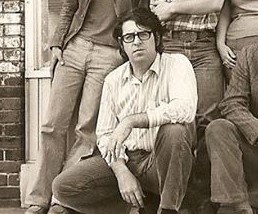
A few years later, I became a member of a group of people in Beckley, West Virginia, who have gone on to become some of the most respected writers, teachers, and social activists in all of Appalachia. The Southern Appalachian Circuit Of Antioch College in Beckley was created and directed by Robert "Bob" Snyder one of the best poets and most brilliant minds Appalachia has ever produced. He also put together a tremendous group of professors and students at that time in the early 1970's who are often spoken of as a group when Appalachian writing and social activism are discussed. In that group of professors was Don West, P. J. Laska, Rod Harless, and William C. "Bill" Blizzard. Each of those people further reinforced my commitment to do the right thing no matter the circumstances or the opponent. I learned valuable lessons from each of them along with several of the other students in that group.
 |
| Don West--Photo by Georgia Encyclopedia |
Don West had been born in North Georgia as the son and grandson of poor mountain farmers. He grew up to write, teach, preach, do social action work, and to influence dozens of other American social activists. He co-created Highlander Center in New Market, Tennessee, with Miles Horton. He and his wife Connie Adams West created the Appalachian South Folklife Center in Pipestem, West Virginia. Don fought for the UMWA in Harlan County Kentucky in the 1920's, worked in the defense of Angelo Herndon in Georgia in the 1930's, and saw himself fired from Oglethorpe University due to his social activism. He was run out of Georgia under a death warrant for his defense of Herndon, saw two homes burned out from under him, and was ostracized in many ways in many places. But Don West never stopped fighting for social justice. He also never stopped working to teach anyone he met about the importance of doing the same thing and never stopping in a fight for the good, just, correct thing in a crisis. By the time Don West died in 1992 at 86, his battles had earned him an obituary in the New York Times and a biography in the encyclopedias of two states, Georgia and West Virginia.
 |
| Roderick Mansfield Harless--Photo by the Harless Family |
Roderick Mansfield "Rod" Harless was also one of those professors at the Southern Appalachian Circuit of Antioch College. Rod had grown up in a large family which produced both him and a brother who was a long term official in the United Mine Workers of America. Rod was quiet, low key, and a wonderful writer. His "Prince of New Rock" satire series about the candidacy of Jay Rockefeller for governor of West Virginia is an unknown and unrecognized classic. He was a social activist who was deeply committed to always doing the right thing in all circumstances and passed that commitment on to those who knew him.
 |
| William C. Blizzard--Photo by Kimberly Clear |
William C. "Bill" Blizzard was also a member of the faculty at the Southern Appalachian Circuit of Antioch College after having spent most of his life as a writer at the Charleston Gazette which fired him for refusing to cross a press men's picket line at the paper during a strike. Bill Blizzard would likely have chosen to die rather than cross a picket line. He was the son of William Blizzard, the leader of the United Mine Workers at the Battle of Blair Mountain in Logan County, West Virginia. Bill Blizzard published a book, "When Miners March" about the West Virginia unionization effort late in life and devoted his life and much of his free lance writing to passing on the socially active values his father and the United Mine Workers had passed on to him as a child.
 |
| P. J. Laska--Photo by Roger D. Hicks |
P. J. Laska was also a key member of the faculty at the Southern Appalachian Circuit of Antioch College and has been my professor, mentor, and friend since we met in the 1970's. He is the one living member of that incredible group of teachers and activists who came together in Beckley along with a sizeable group of their students who have continued the good fight in nearly all causes we have encounter. Laska was a finalist for the National Book Award in Poetry in 1976. I have been blessed to have known all of these people I have listed so far in this blog post. But I have been especially blessed to have had P. J. Laska as a friend and mentor for the past forty plus years. Today, at 80, he is still fighting the good fight just as many of his former students are. After knowing and having been mentored by this group of people, how could I do anything except keep up the good fight until it is won just as the American Revolution was won, just as the Civil War was won, just as all of our greatest challenges such as the Great Depression have been won?
 |
| Dr. Daya Singh Sandhu--Photo by Sikhnet.com |
I have also been blessed to know several immigrants who have influenced me deeply over the years. I have written about some of those people and their contributions to America in this blog and I will continue to do so. Recently, I have met two new immigrants who work in two of my favorite restaurants who are also inspirations to me. After having known people like Dr. Elif Arioglu-Oral, Dr. Daya Singh Sandu, Dr. Surjit Dhooper, Dr. Noor Loynab and his wonderful wife, Amena Loynab, all of whom are immigrants, how could I not continue to fight the good fight to keep the open door of America open to all who are willing to come and work to make this country better? But I have also been influenced by many other immigrants who came to America, became citizens, and spent their lives working as horsemen, waiters, laborers, and other jobs which make a country function successfully? And, of course, how could any loyal citizen of this country not fight to their dying breath against the nameless TRAITOR who now lives illegally in the White House based on his TREASON with Russia? I call upon every person who reads this blog post to join in this greatest fight in American history and to continue unflinching until the battle is won. Do not allow our country's greatest enemy to destroy the US Constitution, American Democracy, and America herself as they are working daily to do?
 |
| Dr. Elif Arioglu-Oral, M. D.--Photo by U of Michigan Health Net |
Sunday, June 24, 2018
Some Immigrants I Have Known
As I have watched the steadily increasing coercion and terrorism being directed at immigrants by TRAITOR and International Terrorist Trump, I have thought frequently that I needed to write this blog post. Yet I have put it off time after time since January 20, 2017. Due to current circumstances in American politics, I can no longer procrastinate about this post or this issue. I will insist on saying that I have not avoided speaking my mind on this topic to anyone when the subject arose and I have always been willing to say that it is my considered opinion that any immigrant who wishes to come to America is worth more to this country than the TRAITOR and International Terrorist Trump. During the course of their first year in America, nearly all immigrants will pay more in taxes to the US government than TRAITOR & International Terrorist Trump can prove he has paid in the last twenty years. Any immigrant who is being forced out of the country by the current illegitimate and TREASONOUS Russian Owned Criminal Syndicate which lives in the White House would be welcome in my home to which I will never invite any Right Wing Radical Repugnican supporter of TRAITOR and International Terrorist Trump.
Now that I have prefaced this post about some of the immigrants I have known, I will get down to the meat of the writing about these people who have crossed my trajectory and, almost without exception, enriched my life. I honesty do not remember clearly the first immigrant I met but I remember stories I heard in childhood from old Appalachian coal miners about the immigrants they worked with in the mines of Eastern Kentucky. My father, Ballard Hicks, and my maternal grandfather, Woots Hicks, both worked many years in the mines of Floyd County Kentucky and worked with many Italian, Hungarian, Polish, German, Romanian, and Czech immigrants who had often been specifically recruited and brought to the US to work in the mines because the coal companies of the time wanted hard workers who had no connections in the immediate community which meant they had no significant support system other than the coal company and, possibly, other immigrants from their own country. In the stories I heard miners tell about these immigrants, I do not remember any particularly disparaging remarks about them from anyone. I heard numerous stories about how hard they worked, how they often got paid less than American citizens for the same work, and how well they were respected by their American coworkers. The great majority of these immigrant miners stayed in America for the rest of their lives and most achieved citizenship while working an incredibly difficult job for companies who often used the old statement that "a mule is worth more than a miner. When a mule dies, you have to buy another mule but you can always hire another miner if one dies." Companies which applied that type of thinking always applied it equally to all their miners whether American citizens or immigrants.
Many of the descendants of these immigrant miners achieved great things in America based on the values which their parents taught them. Daniel Mongiardo, descendant of Italian stone masons who were brought to Hazard, KY, by coal companies, became both a doctor and the Lieutenant Governor of the state. One of my professors in the 1970's was Peter J. Laska, the descendant of Ukranian immigrant coal miners in Northern West Virginia, achieved a Ph.D. degree and was a finalist for the National Book Award in Poetry. His book of poetry "D. C. Images And Other Poems" was a finalist for the award in 1976. Peter Laska is one of my closest friends, professional mentors, and role models. In Logan, West Virginia, I became friends with Monty Stagnoli, the descendant of Italian coal miners who had been brought to Harlan, KY, by coal companies and became a grocery store manager for a major chain. I have also come to know the highly respected West Virginia novelist Marie Manilla whose novels and short stories are read and studied all across America. Her novel "The Patron Saint Of Ugly" won the Weatherford Award as the best Appalachian novel of 2014. All of these people achieved more than most of their classmates who were descended from people who had been considered Americans for far more generations.
But we should discuss the actual immigrants who have been my friends, mentors, professors, coworkers, and, in some cases, heroes and role models. In the early 1980's, when I was working as a door to door salesman in Logan, WV, I was incredibly lucky to meet a family of immigrants from Afghanistan. I sold a vacuum cleaner to Mrs. Amena Loynab, the wife of Dr. Noor Loynab, who was practicing medicine in Logan, WV. I was often brought into their home in Whitman, WV, for supplies or repairs related to that vacuum cleaner. The home was always spotless and I was always made to feel extremely welcome there. When I expressed an interest in the Koran, Amena Loynab loaned me her personal Koran wrapped in a bright yellow scarf to protect it. Every time I ever went to that home, I was invited in, placed at the table and offered food which almost always included the best baklava I have ever eaten. I always remember that Amena Loynab's aged father, who spoke only Arabic, would be in the house and would always pass through when he realized I was there. He would always say nothing to me but would give a short stern speech in Arabic to his daughter which I always assumed was a reprimand about allowing a man inside the house when her husband was not present. But, regardless of whatever he said, I was always brought into the home and treated as a respected guest. Dr. Loynab was then and still is a highly respected physician in Logan who always treated anyone who came through his office door regardless of their poverty or any other negative factors. I will always cherish the memories I have of this immigrant family.
In 1992, I was living and working in Lexington, KY, and, for about two years, I worked on a horse farm which was a profession I had practiced in the 1970's and 1980's for nearly twenty years. I had returned to horse farm work in 1992 temporarily as I was searching for my second job placement in the human services professions. During that time, I worked with two Mexican immigrant brothers who were some of the best horsemen I have ever known. They also had a third brother who, as an immigrant, became one of the best, most highly respected and sought after, farriers in Central Kentucky, an area where a second rate blacksmith cannot last a week. These brothers were friendly, open, honest, compassionate people and I will always remember an occasion when one of them gave me a dozen fresh ears of corn from their personal food supply simply because he wanted to do something nice for my wife and I. I will always remember these brothers fondly.
In the early 1990's, my wife Candice began to develop serious neurological symptoms which eventually caused her to spend the last eighteen years in a wheelchair. We eventually learned from Dr. Joseph Berger, M. D. , the current Associate Chief of the Multiple Sclerosis Division of the University of Pennsylvania and retired Chairman of the Department of Neurology at the University of Kentucky, that he was unable to diagnose the cause of her problems. Dr. Berger referred us to the National Institutes of Health in Bethesda, Maryland, where we traveled regularly for nearly five years only to eventually learn that Candice's problems were due to a rare and untreatable genetic anomaly. But from the first day we arrived at NIH, we were blessed to know and Candice was blessed to be treated by Dr. Elif Arioglu Oral, M. D., a young, brilliant female Muslim physician from Turkey who at the time was on a fellowship at NIH. Today, she is an Associate Professor at the University of Michigan School of Medicine. She was one of the best, most intelligent, most compassionate, and most honest humans I have ever known.
When I was working on my Master of Education Degree in Counseling and Human Development at Lindsey Wilson College, from 2002 to 2005, I was blessed to know and learn from Dr. Daya Singh Sandhu, Ph.D. Dr. Sandhu came to America with degrees from a college in his native India in English and went on to switch from English to Counseling, and, in the process, became one of the most experienced, best respected professors and authors on the topic of mental health counseling in all of America. He went on to earn three further degrees including his doctoral degree after coming to the USA. He has authored, co-authored, edited, or co-edited at least thirteen books on counseling related subjects most of which were published by the American Counseling Association Press. He also has published fifty professionally refereed articles in counseling journals and has published at least eighty chapters in professional books edited by others. Dr. Sandhu is an Indian Sikh, a religion which is often misunderstood and villified by Americans who know nothing about it. But Dr. Sandhu is one of the most compassionate, professional professors I ever had to the good fortune to know. When I met Dr. Sandhu, he was teaching a course in substance abuse counseling in the masters degree program during his summer vacation from his full time job as Director of the Counseling and Human Development Department at the University of Louisville, a job from which he subsequently retired to join the full time faculty at Lindsey Wilson College. There were about fifteen of us graduate students in that course. On the last day of class in that substance abuse counseling course, he took the entire class to lunch at Pizza Hut out of his own pocket. He was available, professional, compassionate, and served as a mentor to many of us in that graduate cohort. I will always cherish the time I able to spend under his instruction and mentoring and I firmly believe I was a better counseling professional for the remainder of my years of practice because I knew Dr. Sandhu.
This list of immigrants I have known and benefited from includes a housewife and mother, two medical doctors,two common laborers in the Thoroughbred horse business, a farrier in the Thoroughbred business where unskilled blacksmiths were quickly shown to the farm gate, a couple of college professors, and all of them were excellent people. They included Catholics, Muslims, and a Sikh. I would trust any of that group of immigrants in any situation more than I ever could anyone willing to work for TRAITOR and International Terrorist Trump. I would invite them into my home gladly and I never would do the same for anyone who ever worked for the TRAITOR and International Terrorist Trump. Any and all of those immigrants is more valuable to this country than any person, citizen or not, who is stupid enough to believe the lies coming from the Russian Owned Criminal Syndicate which lives in the White House today. Any of those immigrants is much more highly developed morally than anyone who would participate in the separation of children from their parents and agree to incarcerate those children in tent cities in the desert. It is long past time for this country to come to its senses and stop this rapid political, moral, and social degeneration at the hands of a Russian Agent who committed TREASON in order to steal an election.
Subscribe to:
Posts (Atom)