
Showing posts with label Don West. Show all posts
Showing posts with label Don West. Show all posts
Monday, June 29, 2026
"Soupbean: An Anthology of Contemporary Appalachian Literature" by Bob Snyder, P. J. Laska, et. al.


Saturday, July 6, 2024
"So Much To Be Angry About, Appalachian Movement Press and Radical DIY Publishing, 1969-1979" by Shaun Slifer--Comments On A Book

This book was published by West Virginia University Press in 2021, and I read it shortly after it was released since I had known the primary subject of the book, Tom Woodruff, who built and ran Appalachian Movement Press for its entire effective life before he left the publishing industry to become a union organizer for Local 1199 and to eventually rise to be its national leader. About a week ago, I had posted a blog post about John Hennen's excellent book, "A Union For Appalachian Healthcare Workers, The Radical Roots and Hard Fights of Local 1199". That review of Hennen's book is available at the link above.Tom Woodruff, the primary subject of this book founded Appalachian Movement Press in 1969 and ran it in Huntington, West Virginia, where he had attended Marshall University. During several years of the life of the press, Tom was also an adjunct professor at The Southern Appalachian Circuit of Antioch College, a branch campus of Antioch College in Yellow Springs, Ohio, which had been founded by Robert "Bob" Snyder. The Southern Appalachian Circuit of Antoch College was initially founded in Huntington, West Virginia, and after a short time, was moved to Beckley, West Virginia, for the remainder of its existence. The press published a large number of excellent, small publications with political leanings to the political left by authors including Don West, Bob Snyder, P. J. Laska, Rod Harless, and Woodruff himself. Don West eventually bought the printing equipment of the press from Tom Woodruff and transported it to the Appalachian South Folklife Center in Pipestem, West Virginia, where he managed to use the equipment to produce a few pamphlets primarily of his own political oriented writings. But the equipment was stored in the watery basement of a chapel at the Folklife Center and fell into disrepair due to the fact that West could not operate it himself and had no full time printer who knew the intricacies of operating and maintaining such equipment which Woodruff had actually bought used, and we might say "well used".

In 2016, Shaun Slifer and his wife paid a visit to the Folklife Center during which he discovered the press and a large amount of publications both from the time when Woodruff had operated it in Huntington and those few items which Don West has managed to publish after he bought the equipment. Slifer salvaged as much of the publications as he could and wrote this book about the press and Woodruff. He also implied in the book that there were other such Do It Yourself, radical leaning presses in the Appalachian Region at the time. But the book contains little or no actual information about any of those other presses. It is fortunate that Slifer managed to stray into the press and publications, salvage as much as he could, and took the initiative to write the book. It is, however, unfortunate that he did inadequate research and writing about the other implied presses of a similar nature. That work remains for some other interested researcher and writer, if one ever appears on the scene. I knew both Tom Woodruff and Don West, spent a period of time as a student at The Southern Appalachian Circuit of Antioch College, and lived for about a year at the Folklife Center. That entire series of experiences was one of the formative influences in my adult life as a writer and political activist. I am grateful that as much was salvaged as has been of the publications. They are a genuinely important piece of the history of the leftward leaning political actions which were taking place in West Virginia and Appalachia at that time. There are some excellent photographs of some of the publications in the book which can serve as clues for any future researchers and writers who may take on the task of completing the job which Slifer began. I am proud to say that I own a few of the publications from that period. This book was a beginning but nowhere near the work which deserves to be produced about the Appalachian Movement Press, the Appalachian South Folklife Center during the time Don West was operating it himself, and of the Southern Appalachian Circuit of Antioch College at which Bob Snyder assembled one of the finest collections of Appalachian educators, political activists, and writers which has ever been in one location in the region for any significant period of time. That assemblage of people included both the faculty and several of the students who have gone on to produce effective works about, for, and in defense of Appalachia. All three organizations deserve to have their history(ies) fully and adequately told and preserved for the future in a single work which would address the interconnections and influences which existed between them. Slifer's book did not even begin to scratch the surface of that collective history and the interconnections of the triumvirate. Due to the fact that both West and Woodruff taught at the Southern Appalachian Circuit of Antioch College and several students at Antioch worked with either Woodruff or West and, in some cases, lived at the Folklife Center, this complete story needs to be adequately addressed by another better researcher and writer. But Slifer's book is worth reading for the student of Appalachia and Appalachian History. The image below is of a literary journal which was produced by the students and faculty of The Southern Appalachian Circuit of Antioch College and produced at Appalachian Movement Press.

Sunday, June 30, 2024
"A Union For Appalachian Healthcare Workers, The Radical Roots And Hard Fights Of Local 1199" by John Hennen

The advertising blurb on the back cover of this book states in part:
"The union of hospital workers referred to as the 1199 sits at the intersection of three of the most important topis in US history: organize labor, health care, and civil rights. John Hennen's book explores the union's history in Appalachia, a region that is generally associated with extractive industries but has seen health care grow as a share of the overall economy."
John Hennen is professor emeritus of history at Morehead State University and this is his third published book. He is a native West Virginian and was educated at Marshall University and West Virginia University. This is his third book. He is an excellent researcher and a damn fine writer. This book is the history of one of the most unique unions in America, Local 1199, a union which defends the rights of healthcare workers in several states, most of which are in Central and Southern Appalachia. But the union was actually chartered and did its first organizing work in New York City. The book provides a scholarly account of the work of original organizer Leon Davis who was an immigrant from Belarus. It also covers the work of Tom Woodruff, another native West Virginian who was educated at Marshall University, and explores the connection between Tom Woodruff and Don West, the founder of The Appalachian South Folklife Center in Pipestem, West Virginia, and co-founder of the Highlander Research and Education Center in New Market, Tennessee. Woodruff and West both taught at the Southern Appalachian Circuit of Antioch College in Beckley, West Virginia, during a time when Woodruff was also running Appalachian Movement Press in Huntington, West Virginia, before Woodruff left those two positions to become an organizer for Local 1199 and began what is a storied career as a union organizer and eventual operating officer.
The book chronicles organizing efforts by 1199 in West Virginia, Kentucky, and Southern Ohio in the 1970's which were both successful and hard fought. The union and its organizers and members were resisted, red baited, and drug through the court systems of nearly every county they attempted to organize in. Hospital administrators frequently hired strike breaking companies which were generally billed as "consultants" and which used every means possible including arrest, red baiting, and general harassment to attempt to break 1199. The union did not win all its organizing effforts but, in the long run, it was more successful in organizing healthcare workers in Appalachia than anyone in the region ever imagined it could be. Across several small communities and small hospitals, they won key strikes, benefited from support among the communities which often had been strongholds of the United Mine Workers of America, and made union membership and its benefits a real part of life and the American Dream for workers who had generally been poorly paid, without benefits, and forced to live and work at the whim of hospital administrators many of whom proved to be just as mercenary as the local coal operators had been in earlier times when the United Mine Workers were attempting to organize coal miners in the early twentieth century.
If you are a student of organized labor, the Appalachian Region, a healthcare worker anywhere in America, or simply a supporter of basic human rights, you should read this book. It is a fine lesson in how determined organizers and union members can win against long odds. This union, its officials, and members lived a proud portion of history in the Appalachian coal fields and their story deserves to be heard wherever workers have felt as Ma Joad did in "The Grapes of Wrath" when she said,
"...it looked as though we was beat. Good and beat. Looked like we didn't have nobody in the whole wide world but enemies. Like nobody was friendly no more. Made me feel kinda bad and scared too, like we was lost and nobody cared... ."
The organizers, national officials, and members of Local 1199 never gave up, never backed down, and never were willing to accept being in a world where it seemed the whole world was their enemy. Read this book! :Union, Yes!
Sunday, July 19, 2020
"Appalachians Speak Up" compiled by Irmgard Best--Book Review
This wonderful book was compiled and produced by Irmgard Best in 1972 and reissued in 1973 in an updated version which, it is my understanding, she used in her Appalachian Studies classes at Berea College. This book also served as a primary impetus for her husband, my friend Bill Best, to produce his later book, "100 Years Of Appalachian Visions", which I discussed in the post at the preceding link. This book will be very difficult to locate but it can be done. I found my copy on one of the national used book websites. If you decide you are actively interested in reading and owning it, don't pass up the first copy you find because you may well never find another. The book is comprised of essays, poetry, and a rare piece of fiction from both some of the most well known experts of Appalachia and Appalachian Culture as well as some pieces from native Appalachians whose names will not ring a bell for anyone other than their occasional relatives. The book was produced by Irmgard Best in a stapled paper format with a heavier paper for the covers and what I believe to be 20 pound paper for the 215 pages of paper content. Due to the stapled format, do not expect to find a copy in "Fine" or "Very Fine Condition". Count yourself lucky if you find one at all.
The book contains a one page introduction by Irmgard Best and a combination of essays, fiction, and poetry from about 25 people including some of the leading figures in the early development of Appalachian Studies. The list includes Don West, Loyal Jones, Cratis D. Williams, Emma Miles, Wilma Dykeman, and Jim Wayne Miller. For me, the most interesting piece is an early version of the essay which later became one of my favorite books, "Appalachian Values" by Loyal Jones. I have written extensively on the topic of this work and Loyal Jones even blessed me with a copy of his forty year retrospective on that book which he wrote by request for the administration of Berea College. At the time Loyal Jones gave me that copy of his recent essay, he also suggested that I write my own response to it which is found at the link above. The essay in Irmgard Best's book gives the scholar who is familiar with the Jones book an interesting insight into his thought processes concerning "Appalachian Values" as both he and the book aged. You can also go to the link on the bottom of the front page of this blog called "Links To Other Sites About Appalachia" and find links to two essays I co-wrote with Dr. Heather Ambrose, Ph. D., one of my former professors, about "Culturally Appropriate Counseling In Appalachia: The Need And How To Address It" and "Clinical Supervision of Counselors In Appalachia: A Culturally Appropriate Model". Those essays are on the permanent online data base for professional counselors of the American Counseling Association and are frequently cited and quoted by other Appalachian professionals. They are based almost totally on the work in Loyal Jones' book.
An essay by Wilma Dykeman called "The Professor And The Hunter" is also one of my favorite pieces in the book. Without going into a long winded discussion of the essay it describes the relationship between a local mountain hunter in the Smoky Mountains and a professor from outside the region who worked in that area for many years and culminates in the hunter searching in the mountains for the professor until he was able to locate his body. It is a powerful piece of writing and ties in strongly to works on Appalachian Culture and Values, especially those related to sense of duty, loyalty, and friendship. There is also a quite interesting essay by Cratis D. Williams called "Mountaineers Mind Their Manners" which can serve as a great introduction to the work of the man many credit with being the most important early figure in the field of Appalachian Studies. I have also written extensively recently on this blog about the work of Cratis D. Williams. I strongly recommend "Tales From Sacred Wind" by Cratis D. Williams both for its authenticity and its humor.
Admittedly, some of the essays in this book can be said to be a bit dated today due to the fact that the book is almost fifty years old. But the book, and every essay in it are well worth reading if you are a student of Appalachia and Appalachian Culture. I hope you can find a copy either in a good library with a focus on Appalachian Studies or locate your own copy on a used book site. If you get your hands on a copy, please be sure when you are done with it that you make certain it is preserved for posterity by passing it on to a younger student of the region or to a library which will commit to preserving it.
The book contains a one page introduction by Irmgard Best and a combination of essays, fiction, and poetry from about 25 people including some of the leading figures in the early development of Appalachian Studies. The list includes Don West, Loyal Jones, Cratis D. Williams, Emma Miles, Wilma Dykeman, and Jim Wayne Miller. For me, the most interesting piece is an early version of the essay which later became one of my favorite books, "Appalachian Values" by Loyal Jones. I have written extensively on the topic of this work and Loyal Jones even blessed me with a copy of his forty year retrospective on that book which he wrote by request for the administration of Berea College. At the time Loyal Jones gave me that copy of his recent essay, he also suggested that I write my own response to it which is found at the link above. The essay in Irmgard Best's book gives the scholar who is familiar with the Jones book an interesting insight into his thought processes concerning "Appalachian Values" as both he and the book aged. You can also go to the link on the bottom of the front page of this blog called "Links To Other Sites About Appalachia" and find links to two essays I co-wrote with Dr. Heather Ambrose, Ph. D., one of my former professors, about "Culturally Appropriate Counseling In Appalachia: The Need And How To Address It" and "Clinical Supervision of Counselors In Appalachia: A Culturally Appropriate Model". Those essays are on the permanent online data base for professional counselors of the American Counseling Association and are frequently cited and quoted by other Appalachian professionals. They are based almost totally on the work in Loyal Jones' book.
An essay by Wilma Dykeman called "The Professor And The Hunter" is also one of my favorite pieces in the book. Without going into a long winded discussion of the essay it describes the relationship between a local mountain hunter in the Smoky Mountains and a professor from outside the region who worked in that area for many years and culminates in the hunter searching in the mountains for the professor until he was able to locate his body. It is a powerful piece of writing and ties in strongly to works on Appalachian Culture and Values, especially those related to sense of duty, loyalty, and friendship. There is also a quite interesting essay by Cratis D. Williams called "Mountaineers Mind Their Manners" which can serve as a great introduction to the work of the man many credit with being the most important early figure in the field of Appalachian Studies. I have also written extensively recently on this blog about the work of Cratis D. Williams. I strongly recommend "Tales From Sacred Wind" by Cratis D. Williams both for its authenticity and its humor.
Admittedly, some of the essays in this book can be said to be a bit dated today due to the fact that the book is almost fifty years old. But the book, and every essay in it are well worth reading if you are a student of Appalachia and Appalachian Culture. I hope you can find a copy either in a good library with a focus on Appalachian Studies or locate your own copy on a used book site. If you get your hands on a copy, please be sure when you are done with it that you make certain it is preserved for posterity by passing it on to a younger student of the region or to a library which will commit to preserving it.
Monday, July 22, 2019
This Is The Battle I Was Trained To Fight!


America is in the midst of the worst constitutional crisis in the history of the country. I had considered saying that we are in the worst constitutional crisis since April 12, 1861, the day the Civil War began. But after careful consideration, I realized that even during the Civil War, the forces which were fighting against the United States of America were not controlled by a foreign power. They were not fully committed to destroying Democracy in North America. They were not fully committed to destroying the US Constitution. Today, we are in a battle in which the individual who illegally occupies the White House is fully committed to destroying America, American Democracy, the US Constitution, and everything they all represent as he works to support his Russian master and the ideas of his heroes such as Adolph Hitler, Benito Mussolini, Adolph Eichmann, and every other Fascist and dictator who ever lived. These are the worst days in the history of the country, worse than the Civil War, worse than World War I, worse than World War II, worse than the Great Depression. We are literally engaged in a battle which will decide if this country will survive as the greatest democracy in the history of the world.
So the question becomes what will each of us do in response to this widespread Fascist attempt to destroy America. I don't know about you but I will fight it to my dying breath. Just as the title of this blog post says 'This is the battle I was trained to fight'. I have been incredibly lucky to be born in the greatest democracy on the face of the earth and so were most of you. And, of course, some of you were born in other countries and chose to immigrate to America for a better life in a better country. I applaud each immigrant in America and know that the great majority of you are also deeply involved in this battle for the country you loved enough to leave everything and everyone you had ever known to become Americans. Each immigrant citizen in America is under attack today and living in fear of seeing the destruction of the constitutional process which made you an American. I was incredibly lucky to have been born into a family which was composed of intelligent, politically aware people who were able to understand an attack on our country and to train me to understand it also along with being able to see and understand any future attacks long after the people who raised me were dead. I have been incredibly lucky to have found, wandered into, or been divinely guided to other teachers, mentors, heroes, and friends who expanded on that early education I received at the feet of my elders. Collectively and individually these people gave me a base of knowledge, morals, values, and resources which make it not only suggested but mandatory that I stand up for what is right in the face of any attacks which occur to destroy that which is valuable to and life sustaining for a democracy. I sincerely hope each of you who read this has also had some level of the same type of mentoring, instruction, and moral training to teach you the same things. At this time of incredible crisis in America, it is necessary that every American citizen with enough intelligence and morals to understand the nature of the intensifying attack on our country and its sacred institutions must be willing to stand up, stand out, speak up, and speak out on a daily basis to confront the incredibly Fascist and anti-American ideas which are arising from the Radical Right and from Russia and their minion in Washington.
I have often written on this blog about some of the people I have encountered in life who have reinforced the democratic and patriotic values which my parents instilled in me. Probably the first such person I met was William Howard Cohen when I was about 14 years old in Upward Bound on the campus of Alice Lloyd College. Bill Cohen became my professor, mentor, and friend and taught me both by example and by didactic methods to stand up for what is right. Bill Cohen went out in Eastern Kentucky to strip mines and lay down in front of coal trucks in his fight against strip mining and eventually lost his job at Alice Lloyd College because of it. But because he was right, he never stopped speaking out against wrong. At about the same time, I met Albert Stewart who also taught at Alice Lloyd College but fought his fights in a much quieter but just as firm a manner. In his effort to save his family farm on Yellow Mountain in Knott County from destruction by strip mining, he eventually willed it and gifted it to the University of Kentucky to prevent that destruction.
A few years later, I became a member of a group of people in Beckley, West Virginia, who have gone on to become some of the most respected writers, teachers, and social activists in all of Appalachia. The Southern Appalachian Circuit Of Antioch College in Beckley was created and directed by Robert "Bob" Snyder one of the best poets and most brilliant minds Appalachia has ever produced. He also put together a tremendous group of professors and students at that time in the early 1970's who are often spoken of as a group when Appalachian writing and social activism are discussed. In that group of professors was Don West, P. J. Laska, Rod Harless, and William C. "Bill" Blizzard. Each of those people further reinforced my commitment to do the right thing no matter the circumstances or the opponent. I learned valuable lessons from each of them along with several of the other students in that group.
Don West had been born in North Georgia as the son and grandson of poor mountain farmers. He grew up to write, teach, preach, do social action work, and to influence dozens of other American social activists. He co-created Highlander Center in New Market, Tennessee, with Miles Horton. He and his wife Connie Adams West created the Appalachian South Folklife Center in Pipestem, West Virginia. Don fought for the UMWA in Harlan County Kentucky in the 1920's, worked in the defense of Angelo Herndon in Georgia in the 1930's, and saw himself fired from Oglethorpe University due to his social activism. He was run out of Georgia under a death warrant for his defense of Herndon, saw two homes burned out from under him, and was ostracized in many ways in many places. But Don West never stopped fighting for social justice. He also never stopped working to teach anyone he met about the importance of doing the same thing and never stopping in a fight for the good, just, correct thing in a crisis. By the time Don West died in 1992 at 86, his battles had earned him an obituary in the New York Times and a biography in the encyclopedias of two states, Georgia and West Virginia.
Roderick Mansfield "Rod" Harless was also one of those professors at the Southern Appalachian Circuit of Antioch College. Rod had grown up in a large family which produced both him and a brother who was a long term official in the United Mine Workers of America. Rod was quiet, low key, and a wonderful writer. His "Prince of New Rock" satire series about the candidacy of Jay Rockefeller for governor of West Virginia is an unknown and unrecognized classic. He was a social activist who was deeply committed to always doing the right thing in all circumstances and passed that commitment on to those who knew him.
William C. "Bill" Blizzard was also a member of the faculty at the Southern Appalachian Circuit of Antioch College after having spent most of his life as a writer at the Charleston Gazette which fired him for refusing to cross a press men's picket line at the paper during a strike. Bill Blizzard would likely have chosen to die rather than cross a picket line. He was the son of William Blizzard, the leader of the United Mine Workers at the Battle of Blair Mountain in Logan County, West Virginia. Bill Blizzard published a book, "When Miners March" about the West Virginia unionization effort late in life and devoted his life and much of his free lance writing to passing on the socially active values his father and the United Mine Workers had passed on to him as a child.
P. J. Laska was also a key member of the faculty at the Southern Appalachian Circuit of Antioch College and has been my professor, mentor, and friend since we met in the 1970's. He is the one living member of that incredible group of teachers and activists who came together in Beckley along with a sizeable group of their students who have continued the good fight in nearly all causes we have encounter. Laska was a finalist for the National Book Award in Poetry in 1976. I have been blessed to have known all of these people I have listed so far in this blog post. But I have been especially blessed to have had P. J. Laska as a friend and mentor for the past forty plus years. Today, at 80, he is still fighting the good fight just as many of his former students are. After knowing and having been mentored by this group of people, how could I do anything except keep up the good fight until it is won just as the American Revolution was won, just as the Civil War was won, just as all of our greatest challenges such as the Great Depression have been won?
I have also been blessed to know several immigrants who have influenced me deeply over the years. I have written about some of those people and their contributions to America in this blog and I will continue to do so. Recently, I have met two new immigrants who work in two of my favorite restaurants who are also inspirations to me. After having known people like Dr. Elif Arioglu-Oral, Dr. Daya Singh Sandu, Dr. Surjit Dhooper, Dr. Noor Loynab and his wonderful wife, Amena Loynab, all of whom are immigrants, how could I not continue to fight the good fight to keep the open door of America open to all who are willing to come and work to make this country better? But I have also been influenced by many other immigrants who came to America, became citizens, and spent their lives working as horsemen, waiters, laborers, and other jobs which make a country function successfully? And, of course, how could any loyal citizen of this country not fight to their dying breath against the nameless TRAITOR who now lives illegally in the White House based on his TREASON with Russia? I call upon every person who reads this blog post to join in this greatest fight in American history and to continue unflinching until the battle is won. Do not allow our country's greatest enemy to destroy the US Constitution, American Democracy, and America herself as they are working daily to do?
 |
| Statue Of Liberty--Photo by Ellis Island |
So the question becomes what will each of us do in response to this widespread Fascist attempt to destroy America. I don't know about you but I will fight it to my dying breath. Just as the title of this blog post says 'This is the battle I was trained to fight'. I have been incredibly lucky to be born in the greatest democracy on the face of the earth and so were most of you. And, of course, some of you were born in other countries and chose to immigrate to America for a better life in a better country. I applaud each immigrant in America and know that the great majority of you are also deeply involved in this battle for the country you loved enough to leave everything and everyone you had ever known to become Americans. Each immigrant citizen in America is under attack today and living in fear of seeing the destruction of the constitutional process which made you an American. I was incredibly lucky to have been born into a family which was composed of intelligent, politically aware people who were able to understand an attack on our country and to train me to understand it also along with being able to see and understand any future attacks long after the people who raised me were dead. I have been incredibly lucky to have found, wandered into, or been divinely guided to other teachers, mentors, heroes, and friends who expanded on that early education I received at the feet of my elders. Collectively and individually these people gave me a base of knowledge, morals, values, and resources which make it not only suggested but mandatory that I stand up for what is right in the face of any attacks which occur to destroy that which is valuable to and life sustaining for a democracy. I sincerely hope each of you who read this has also had some level of the same type of mentoring, instruction, and moral training to teach you the same things. At this time of incredible crisis in America, it is necessary that every American citizen with enough intelligence and morals to understand the nature of the intensifying attack on our country and its sacred institutions must be willing to stand up, stand out, speak up, and speak out on a daily basis to confront the incredibly Fascist and anti-American ideas which are arising from the Radical Right and from Russia and their minion in Washington.
 |
| Albert Stewart--Photo by Lexington Herald-Leader |
I have often written on this blog about some of the people I have encountered in life who have reinforced the democratic and patriotic values which my parents instilled in me. Probably the first such person I met was William Howard Cohen when I was about 14 years old in Upward Bound on the campus of Alice Lloyd College. Bill Cohen became my professor, mentor, and friend and taught me both by example and by didactic methods to stand up for what is right. Bill Cohen went out in Eastern Kentucky to strip mines and lay down in front of coal trucks in his fight against strip mining and eventually lost his job at Alice Lloyd College because of it. But because he was right, he never stopped speaking out against wrong. At about the same time, I met Albert Stewart who also taught at Alice Lloyd College but fought his fights in a much quieter but just as firm a manner. In his effort to save his family farm on Yellow Mountain in Knott County from destruction by strip mining, he eventually willed it and gifted it to the University of Kentucky to prevent that destruction.
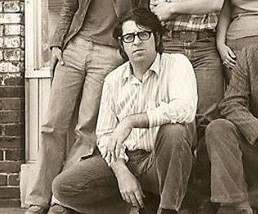 |
| Robert "Bob" Snyder--Photo by Southern Appalachian Circuit of Antioch College |
A few years later, I became a member of a group of people in Beckley, West Virginia, who have gone on to become some of the most respected writers, teachers, and social activists in all of Appalachia. The Southern Appalachian Circuit Of Antioch College in Beckley was created and directed by Robert "Bob" Snyder one of the best poets and most brilliant minds Appalachia has ever produced. He also put together a tremendous group of professors and students at that time in the early 1970's who are often spoken of as a group when Appalachian writing and social activism are discussed. In that group of professors was Don West, P. J. Laska, Rod Harless, and William C. "Bill" Blizzard. Each of those people further reinforced my commitment to do the right thing no matter the circumstances or the opponent. I learned valuable lessons from each of them along with several of the other students in that group.
 |
| Don West--Photo by Georgia Encyclopedia |
Don West had been born in North Georgia as the son and grandson of poor mountain farmers. He grew up to write, teach, preach, do social action work, and to influence dozens of other American social activists. He co-created Highlander Center in New Market, Tennessee, with Miles Horton. He and his wife Connie Adams West created the Appalachian South Folklife Center in Pipestem, West Virginia. Don fought for the UMWA in Harlan County Kentucky in the 1920's, worked in the defense of Angelo Herndon in Georgia in the 1930's, and saw himself fired from Oglethorpe University due to his social activism. He was run out of Georgia under a death warrant for his defense of Herndon, saw two homes burned out from under him, and was ostracized in many ways in many places. But Don West never stopped fighting for social justice. He also never stopped working to teach anyone he met about the importance of doing the same thing and never stopping in a fight for the good, just, correct thing in a crisis. By the time Don West died in 1992 at 86, his battles had earned him an obituary in the New York Times and a biography in the encyclopedias of two states, Georgia and West Virginia.
 |
| Roderick Mansfield Harless--Photo by the Harless Family |
Roderick Mansfield "Rod" Harless was also one of those professors at the Southern Appalachian Circuit of Antioch College. Rod had grown up in a large family which produced both him and a brother who was a long term official in the United Mine Workers of America. Rod was quiet, low key, and a wonderful writer. His "Prince of New Rock" satire series about the candidacy of Jay Rockefeller for governor of West Virginia is an unknown and unrecognized classic. He was a social activist who was deeply committed to always doing the right thing in all circumstances and passed that commitment on to those who knew him.
 |
| William C. Blizzard--Photo by Kimberly Clear |
William C. "Bill" Blizzard was also a member of the faculty at the Southern Appalachian Circuit of Antioch College after having spent most of his life as a writer at the Charleston Gazette which fired him for refusing to cross a press men's picket line at the paper during a strike. Bill Blizzard would likely have chosen to die rather than cross a picket line. He was the son of William Blizzard, the leader of the United Mine Workers at the Battle of Blair Mountain in Logan County, West Virginia. Bill Blizzard published a book, "When Miners March" about the West Virginia unionization effort late in life and devoted his life and much of his free lance writing to passing on the socially active values his father and the United Mine Workers had passed on to him as a child.
 |
| P. J. Laska--Photo by Roger D. Hicks |
P. J. Laska was also a key member of the faculty at the Southern Appalachian Circuit of Antioch College and has been my professor, mentor, and friend since we met in the 1970's. He is the one living member of that incredible group of teachers and activists who came together in Beckley along with a sizeable group of their students who have continued the good fight in nearly all causes we have encounter. Laska was a finalist for the National Book Award in Poetry in 1976. I have been blessed to have known all of these people I have listed so far in this blog post. But I have been especially blessed to have had P. J. Laska as a friend and mentor for the past forty plus years. Today, at 80, he is still fighting the good fight just as many of his former students are. After knowing and having been mentored by this group of people, how could I do anything except keep up the good fight until it is won just as the American Revolution was won, just as the Civil War was won, just as all of our greatest challenges such as the Great Depression have been won?
 |
| Dr. Daya Singh Sandhu--Photo by Sikhnet.com |
I have also been blessed to know several immigrants who have influenced me deeply over the years. I have written about some of those people and their contributions to America in this blog and I will continue to do so. Recently, I have met two new immigrants who work in two of my favorite restaurants who are also inspirations to me. After having known people like Dr. Elif Arioglu-Oral, Dr. Daya Singh Sandu, Dr. Surjit Dhooper, Dr. Noor Loynab and his wonderful wife, Amena Loynab, all of whom are immigrants, how could I not continue to fight the good fight to keep the open door of America open to all who are willing to come and work to make this country better? But I have also been influenced by many other immigrants who came to America, became citizens, and spent their lives working as horsemen, waiters, laborers, and other jobs which make a country function successfully? And, of course, how could any loyal citizen of this country not fight to their dying breath against the nameless TRAITOR who now lives illegally in the White House based on his TREASON with Russia? I call upon every person who reads this blog post to join in this greatest fight in American history and to continue unflinching until the battle is won. Do not allow our country's greatest enemy to destroy the US Constitution, American Democracy, and America herself as they are working daily to do?
 |
| Dr. Elif Arioglu-Oral, M. D.--Photo by U of Michigan Health Net |
Tuesday, November 27, 2018
The Mixed Blessings Of Having Writers As Friends
As I have said on several occasions in this blog, I have known and been mentored by several of the most important writers in Appalachia. I have had published writers as friends, mentors, professors, and colleagues since I was in my early teens. I have written about several of those relationships and people on this blog over the last seven years. I have benefited greatly, in a variety of ways, by having known these people. I do not say that all of them have been glowing examples of the human race. One or two I have known have been many of the things most people work diligently to try to never become. A few others have been nearly everything decent, honorable, and caring humans strive to become. At least one of these relationships extends all the way back to the early 1970's. Others have only been my friends for a few years. Yet at least one of those brief friendships is one of my closest today. For a time I was a member of a group of Appalachian writers, both professors and students, which is thought of by many in the fields of Appalachian Studies and Appalachian Literature as having been one of the more significant groups of writers in Appalachia.
However, knowing numerous writers is, in general, a bit like knowing all of the dogs in your neighborhood or the racehorses at your favorite track. Some of them will bite without provocation. Some will be your best friend so long as you have food to eat, a warm house, or something to drink or smoke. Some of them will be winners. Some will always finish well behind the pack. Some will only be consistent consumers of favors and influence while others will be consistent producers of both great literature and fond memories. Over the last few weeks I have had occasion to be reminded of this for several reasons. I recently acquired a few books from the estate of a lesser known poet and newspaper writer in my area and most of those books had been autographed by their authors and given to the writer of whose estate I had managed to buy part. During her lifetime, she had known many of the most influential writers in the state of Kentucky. During my lifetime, I have done the same with a similar group of writers from both Kentucky and West Virginia. I also have a similar collection of books written, autographed, and presented to me by writers I have known. I even bought a wood stove once from one of the most famous Kentucky writers without anything other than home heating having ever been discussed between us.
Also during this recent period, I acquired four or five books written by two or three of my friends. One of those friends I have known since about 1995. The other I met just this past summer. One is an excellent writer. The other is not. I have been in fairly regular contact with both over the time I have known the later. The recent friend has provided me with warmth, friendship, and respect. The other, whom I have known much longer has been in contact on superficial levels and been less than forthcoming in many ways. The new friend, during the course of writing their third published book, sought my input and even included a piece of a great writer's production in that book to make a point. It was not the point I would have made with the same excerpt but I do know that my friend had never before seen that writer's work until they knew me and chose to use the work mentioned when I made them aware of it. They also listed me in the "Acknowledgements" page of the next book for having critiqued the previous book and for "providing a bottomless well of research material." The second writer, whom I have known considerably longer also published a couple of books recently which would have been better left in a manila envelope under a bed for some auctioneer, yet unborn, to include in a box lot at an estate sale. At some point, I offered this second mistakenly ambitious writer some constructive criticism pending their willingness to hear it. I never even got a response which in some ways did not surprise me. I refer you once again to my earlier metaphor about dogs and racehorses. The new friend has produced a well written, respectable book which will not likely ever be famous due primarily to that person's total aversion to seeking or achieving advantages by virtue of doing anything that is not modest and humble. But their work is likely to be kept in some bookshelves for the foreseeable future. The other produced a book which would, as I said earlier, have been better placed elsewhere other than in the public market. At about the same time this series of exchanges was transpiring, a third writer friend who works in several areas has been well reviewed by random strangers over the last several decades asked me to consider providing input on an upcoming book which leads me to believe that my input is not totally worthless.
To put all this in a neat little package, or at least as neat a package as possible, I will say that despite having been bitten and ravaged by fleas on a few occasions in addition to having been kicked, pawed, and dragged by several horses, I still pet strange dogs, admire and sometimes even bet on new horses, waste my time picking up strays, and have even paid to neuter two stray kittens lately. I will probably not stop expressing my opinions to writers whom I know and some I have still not met.
Wednesday, September 20, 2017
Connie West Art Exhibition--Loyal Jones Center--Berea, KY
 |
| Photo By Roger D. Hicks |
On September 7, 2017, my wife Candice & I traveled to Berea, KY, to see an exhibition of art by Connie West at the Loyal Jones Appalachian Center at Berea College. The exhibition is the first to my knowledge of Connie West's work since her death in 1990 at the age of 81. Connie West was the wife of my professor, mentor, and friend Don West, the Appalachian poet, preacher, teacher, union organizer, and social activist. She was also the mother of the late folk singer Hedy West. Connie was a highly accomplished woman in her own right. She held degrees from Lincoln Memorial University, the University of Georgia, and the Baltimore Institute of Art. She had met Don West at Lincoln Memorial University when they were both undergraduates there in the 1920's. Connie was also always active in the social justice causes which Don worked to accomplish. She had been active in the founding of both the Highlander Folk School and the Appalachian South Folklife Center. Connie was also a brave example of the thousands of women who fought against cancer in the 1960's through the 1980's, a period when successes against cancer were rare and treatments were not nearly as well developed or effective as they are today.
 |
| Photo By The West Family |
It is sad that many of the paintings of Connie West were lost in a fire at the Appalachian South Folklife Center in 1974. At that time, many of her paintings were exhibited in the dining hall of the Folklife Center and an accidental fire destroyed the building along with many of Connie's paintings and a sizable collection of artifacts from the lives of both Don and Connie West many of which were also historic items in the progression of the field of study known today as Appalachian Studies. Don West made a dangerous and heroic attempt to save as many of Connie's paintings during the fire as possible. He did manage to save a few and suffered minor burns and smoke inhalation in the attempt. I was living and working at the Folklife Center at the time and attending Antioch Appalachia in Beckley, WV. When the fire occurred, three of us who lived at the Folklife Center were in class in Beckley and received a call that the building was on fire. We left class and raced over the mountains to arrive after the building was a total loss. It was the only time I ever saw Don West cry in the twenty years I knew him. I will never forget standing beside Don and Connie with Connie crying openly, Don with silent tears streaming down his cheeks, his eyebrows and much of his hair singed from the fire, and openly weeping at the loss of both Connie's paintings and much of their lives work.
 |
| Portrait Of Don West By Connie West Photo By Roger D. Hicks |
As a result of that loss to the fire, the exhibition at Berea is of high quality photographs of many of Connie's paintings taken by Wes Harris. Her surviving paintings are scattered through the collections of Wes Harris, her daughter Ann West Williams, and a few individuals who were lucky enough to own some of her work. Even though this exhibition is of photographs and not the actual paintings, it is well worth seeing especially for the student of Appalachia and Appalachian Studies. This may well be the only chance many will ever have to see Connie's work. Connie West painted primarily portraits of persons she knew and considered to be worthy of memorializing. Subjects include her husband Don West and a sizable number of native Appalachians who had accomplished lives of distinction. Attend the exhibition and make note of the fact that the online web page to which I provided the link above states that the show ended at the beginning of September 2017 but it is still hanging as of September 20, 2017. I have been informed by personnel of the Loyal Jones Appalachian Center that the exhibition is likely to remain open to the public until December due to the lack of another scheduled exhibition in the Long Wall Gallery. I would also suggest that my readers find time to obtain and read the works of Don West and the James Lorence biography of Don. Don't collected poetic works have been published twice. The first book is called "In A Land Of Plenty A Don West Reader" which was published by West End Press in 1982. The second collection of his work, published posthumously in 2004 by the University Of Illinois Press and was edited by George Brosi and Jeff Biggers under the title "No Lonesome Road Selected Prose And Poems". The James Lorence biography is an excellent work with highly detailed scholarship and fine writing. It was published in 2007 by the University Of Illinois Press under the title "A Hard Journey The Life Of Don West". All three of these books will give the reader a deeper understanding of the many accomplishments of Don and Connie West and their joint importance to Appalachia and the field of Appalachian Studies.
 |
| Appalachian Quilter Pipestem WV by Connie West Photo By Roger D. Hicks |
Sunday, April 16, 2017
"The Hills Remember The Complete Short Stories Of James Still" Book Review
Still, James and Ted Olson (Editor) 2012 The Hills Remember The Complete Short Stories Of James Still (Lexington, University of Kentucky Press)

Growing up in Knott County Kentucky where James Still lived for most of his 94 years, I knew about James Still at about the same time I became aware of Appalachia and Appalachian Studies sometime in the late 1960's. I honestly do not recall the first time I met James Still. I cannot say that James Still and I were friends but we were acquaintances and I was flattered to be able to refer to him as Jim to his face. I was also able to introduce Jim Still and my long time friend and mentor, National Book Award Finalist P. J. Laska at a James Still reading at Black Swan Books in Lexington, KY, sometime in the early 1990's. As I recall, it was some time shortly after the release of the "Wolf Pen Notebooks". That was a highly interesting evening for several reasons. Lexington socialite Anita Madden was at the reading wearing a pair of skin tight bright blue pants and she and Jim flirted for most of the evening. If you have never seen an 85 year old man flirt with a 60 year old woman and find that flirtation reciprocated, I highly recommend it as entertainment especially if the man and woman are of the caliber of Madden and Still. After the reading, Laska, Still, and I went to eat at a Shoney's Restaurant on North Broadway near the Springs Motel where he usually stayed when he was in Lexington. We stayed in the restaurant until about 1am talking about Appalachia, literature, Appalachian Literature, Still's travels around the world, the Southern Appalachian Circuit of Antioch College writers group of which Laska and I were both members, and the triumvirate of Appalachian writers of which Still was a member, the 1929 class from Lincoln Memorial University which included Still, Jesse Stuart, and my friend and mentor as well as Laska's professional colleague, Don West. That evening deserves to be addressed in a completely separate blog or essay and will be some day.
 |
| James Still Photo by University Of KY |
Over the years I had read large chunks of Still's writing but had never had the pleasure of reading his complete short stories. I recently bought the book "The Hills Remember..." and plowed through it in something less than record time. It contains 53 stories of which a couple are published in the book in two versions, usually one as it was published in a magazine and another as it was included later as a chapter of a novel or part of a major short story collection. Still had a practice of often publishing short stories in magazines and later using them as book chapters both as originally published and sometimes with significant edits. "The Hills Remember..." is believed to contain every extant story written by Still. Ted Olson, the editor, did an excellent job of locating, editing and collating the works. Olson had worked with Still prior to his death, was aware of his idiosyncrasies, and was an excellent choice as the editor. The stories are arranged in somewhat chronological order as they were originally written or published and contain all the stories which were included in "River Of Earth", "The Run For The Elbertas", "Pattern Of A Man", and "On Troublesome Creek". The book is an excellent way for the economically minded reader to achieve as broad as possible a sampling of Still's short fiction. But I would not recommend that the person seeking to fully understand his prose output read the book and assume they are done. The stories which were included in "River Of Earth" are not always exactly as they were published in the novel. There may also be slight differences in these versions of the stories included in "The Run For The Elbertas" and the other two aforementioned collections. The stories which are included as chapters in the novel "River Of Earth" are also not necessarily published in this collection along the timeline of the novel. If you are a real aficionado of Appalachian Literature or James Still, you will want to read his entire body of work. Still was a widely known short story author in America as evidenced by the body of stories which were previously published in national magazines such as "Atlantic", "Yale Review", and "Virginia Quarterly Review". This book attempts, in part, to reassert Still as a major American short fiction author in addition to his prior recognition as a novelist and poet.
The book contained several stories I had not read and several of those are well above average. The first and best surprise I received from the book was a story called "Sweet Asylum" which is set in James Still's native Alabama. This story is about an Alabama cotton plantation owner who is deep in debt, widowed, and seeking a way to resolve his debts and save his family plantation. It is a masterpiece which instantly reminded me of the work of Kate Chopin. In terms of technique, it is highly reminiscent of her classic "The Story Of An Hour". It is not quite as masterful a work but uses the same type of double twist ending to slam doors in the faces of both the protagonist and the reader. It may well be the best short story James Still ever wrote. James Still has so thoroughly been identified as a master author of Southern Appalachia that many of his readers either forgot or never knew that he was born and grew up in Chambers County Alabama, an area that is very different culturally and physically from Knott County Kentucky and Central Appalachia. I should state for the record that I have traveled extensively in Alabama in general and Chambers County in particular and know that area quite well. James Still did, however, spend the great majority of his life in Knott County and Appalachia and will forever be seen as an Appalachian author. He went to Lincoln Memorial University in 1925 and graduated there in 1929 as a member of that incredible threesome of Appalachian writers: Still, Don West, and Jesse Stuart. LMU is located in Harrogate, TN, in Claiborne County, which is just as much the heart of Appalachia as Knott County. Hindman, KY, and Harrogate, TN, are only 100 miles apart. During his time at LMU and later throughout his life, Still was a classmate and friend of both Jesse Stuart and Don West. During that time frame, John Crowe Ransom and the Agrarians and Fugitives were key components of the literary world at LMU. Collectively, Still, West, and Stuart of the LMU Class of 1929 are arguably the best single graduating class of regional writers to ever graduate from any university in the same academic year. That is a particular feather in the hat of LMU since it is a decidedly small university with only 1,675 undergraduate students as of this writing. Still then completed a Master of Arts Degree in English at Vanderbilt University in Nashville. After completing his work at Vanderbilt he was employed by the Hindman Settlement School and remained in Knott County for the rest of his life.
The second observation I made as I read "The Hills Remember..." was that in many of Still's short stories there is a level of violence which could almost be called gratuitous. Several of his stories, including one which I consider among his best, culminate in or originate from murder. The second story in the book and the title piece "The Hills Remember" is a fine piece of work but also inordinately violent. The main character, Old Aus Hanley "...had a graveyard all his own across Stormspur filled with men he had killed." As the story begins, Aus Hanley is lying in a pool of his own blood after being ambushed by a drunk man, shot in the back by someone whom no one in the area would have believed capable of murder and especially not capable of the murder of Aus Hanley. A crowd gathers to watch Aus Hanley die. The sheriff arrests the drunken perpetrator and stands near the victim also waiting to see him die. The crowd all believe that one of Aus Hanley's family members who are too far away to attend the death will eventually seek revenge against the shooter. But Aus Hanley calls the sheriff from his death throes to bring the shooter to him so he can learn who killed him. The story concludes with Hanley pulling his murderer close to him and "...his right arm lunged in a single driving stroke toward Luke's breast...The handle of a Barlow knife protruded from his breast." With his final dying act, the murdered man has also murdered his killer. It is a wonderful story but the level of violence portrayed is well beyond that found in most short American fiction.
Speaking as a native of Knott County which is generally assumed to be the setting of most of Still's work, I must say that it is not a level of violence I found common in the time I was growing up there. I was born in Knott County roughly 20 years after James Still moved to the county. I grew up in a country store in the Beaver Creek area of the county. My father was born in 1887 on Bruce at Mousie and lived most of his early life in Mousie, not far from Hindman where Still lived. My mother had been born and reared on Rock Fork Creek in still another area of the county. I was exposed to people from all over Knott County and the surrounding area. Although I knew several people during my childhood who either had already or later committed murder, the area was never as violent as Still portrayed it in many of his stories. A second story which is incredibly violent is called "The Scrape". In that story, two men induce the protagonist to tie their arms together with a wire, take charge of their guns, and observe as they fight with knives to a mutual death. "Jiddy produced a wire...He ordered me to tie an end around his left wrist, and the other about Cletis's. A thing they had agreed on. I did what I was bid do..." The story ends with both men dead in the dirt road and the narrator heading off toward his original destination with the comment "I thought about Posey Houndshell. Nobody stood between me and her."
I must admit that I have not read the two books which might help me to further understand the violence in Still's fiction. They are: "James Still In Interviews, Oral Histories, and Memoirs" by James Still and the aforementioned Ted Olson; and, "James Still: Critical Essays On The Dean Of Appalachian Literature" edited by Ted Olson and Kathy H. Olson. What I would really love to see is a book length work solely addressing that issue of violence in Still's work.
Still is also frequently referred to as one of the better, if not the best, writers in Appalachian dialect. I do not dispute that he is a fine writer in Appalachian dialect. But I will always believe that Mildred Haun is a far superior writer of Appalachian dialect. Her classic work "The Hawk's Done Gone" is far and away the best dialect writing ever done in Appalachian Literature. As I said earlier, I spent the first twenty years of my life in Knott County Kentucky, was educated there through high school and began my college education at Alice Lloyd College. I was also reared by my parents, maternal grandparents, and an extended family of aunts and uncles who all grew up in Knott County early in, and in some cases before the turn of the twentieth century. I know Knott County Appalachian dialect as well as any human on earth and I must insist that there are times when I see that James Still wrote linguistic expressions which I never heard from my parents, grandparents, aunts, uncles, farmers at the livestock sales or jockey grounds, or the elderly customers at my parents' country store. The one word which he used frequently, especially in "River Of Earth" and his short stories and which I never once heard in Knott County is "chaps" in reference to small children. In my childhood, small children were "young'uns", "chillun", "yard apes", "curtain climbers", and several more conventional, less colloquial terms. But they were never "chaps". I suspect that is an expression from Still's youth in Alabama. Getting back to the comparison between Still and Haun, I will defend Still to the degree that the two of them were writing dialect based on two different subregions of Central Appalachia. I have also traveled extensively in the Cocke County, TN, area where Haun spent her life and did extensive research among Appalachian serpent handlers there. The two subdialects have significant differences. But Haun's consistency and accuracy in writing dialect is superior to James Still's. It is also worth noting that it is only 63 miles from Harrogate, TN, where Still attended college to Newport, TN, where Haun lived her life. I do not know that Still ever spent time in Newport but since he and Haun both attended Vanderbilt University it is possible that he did know her and might have even visited the area which would have also exposed him to the dialect which she wrote so admirably. It is also possible that Still's travels from Chambers County Alabama to Claiborne County Tennessee to Davidson County Tennessee to Knott County Kentucky could have provided a plethora to opportunity for Still to blend the dialects of the four to a degree that not even he recognized.
Do not allow anything I have said in this post to leave you with the impression that I do not respect and value the writing of James Still in all genres in which he wrote. He is definitely at the vanguard of writers about Appalachia. His short fiction can stand up well in comparison to nearly any other writer in American Literature. The book "The Hills Remember..." is a compulsory read if you intend to believe or say that you understand the literature of Appalachia. Buy a copy and read it sometime soon. You will enjoy it greatly.
The book contained several stories I had not read and several of those are well above average. The first and best surprise I received from the book was a story called "Sweet Asylum" which is set in James Still's native Alabama. This story is about an Alabama cotton plantation owner who is deep in debt, widowed, and seeking a way to resolve his debts and save his family plantation. It is a masterpiece which instantly reminded me of the work of Kate Chopin. In terms of technique, it is highly reminiscent of her classic "The Story Of An Hour". It is not quite as masterful a work but uses the same type of double twist ending to slam doors in the faces of both the protagonist and the reader. It may well be the best short story James Still ever wrote. James Still has so thoroughly been identified as a master author of Southern Appalachia that many of his readers either forgot or never knew that he was born and grew up in Chambers County Alabama, an area that is very different culturally and physically from Knott County Kentucky and Central Appalachia. I should state for the record that I have traveled extensively in Alabama in general and Chambers County in particular and know that area quite well. James Still did, however, spend the great majority of his life in Knott County and Appalachia and will forever be seen as an Appalachian author. He went to Lincoln Memorial University in 1925 and graduated there in 1929 as a member of that incredible threesome of Appalachian writers: Still, Don West, and Jesse Stuart. LMU is located in Harrogate, TN, in Claiborne County, which is just as much the heart of Appalachia as Knott County. Hindman, KY, and Harrogate, TN, are only 100 miles apart. During his time at LMU and later throughout his life, Still was a classmate and friend of both Jesse Stuart and Don West. During that time frame, John Crowe Ransom and the Agrarians and Fugitives were key components of the literary world at LMU. Collectively, Still, West, and Stuart of the LMU Class of 1929 are arguably the best single graduating class of regional writers to ever graduate from any university in the same academic year. That is a particular feather in the hat of LMU since it is a decidedly small university with only 1,675 undergraduate students as of this writing. Still then completed a Master of Arts Degree in English at Vanderbilt University in Nashville. After completing his work at Vanderbilt he was employed by the Hindman Settlement School and remained in Knott County for the rest of his life.
The second observation I made as I read "The Hills Remember..." was that in many of Still's short stories there is a level of violence which could almost be called gratuitous. Several of his stories, including one which I consider among his best, culminate in or originate from murder. The second story in the book and the title piece "The Hills Remember" is a fine piece of work but also inordinately violent. The main character, Old Aus Hanley "...had a graveyard all his own across Stormspur filled with men he had killed." As the story begins, Aus Hanley is lying in a pool of his own blood after being ambushed by a drunk man, shot in the back by someone whom no one in the area would have believed capable of murder and especially not capable of the murder of Aus Hanley. A crowd gathers to watch Aus Hanley die. The sheriff arrests the drunken perpetrator and stands near the victim also waiting to see him die. The crowd all believe that one of Aus Hanley's family members who are too far away to attend the death will eventually seek revenge against the shooter. But Aus Hanley calls the sheriff from his death throes to bring the shooter to him so he can learn who killed him. The story concludes with Hanley pulling his murderer close to him and "...his right arm lunged in a single driving stroke toward Luke's breast...The handle of a Barlow knife protruded from his breast." With his final dying act, the murdered man has also murdered his killer. It is a wonderful story but the level of violence portrayed is well beyond that found in most short American fiction.
Speaking as a native of Knott County which is generally assumed to be the setting of most of Still's work, I must say that it is not a level of violence I found common in the time I was growing up there. I was born in Knott County roughly 20 years after James Still moved to the county. I grew up in a country store in the Beaver Creek area of the county. My father was born in 1887 on Bruce at Mousie and lived most of his early life in Mousie, not far from Hindman where Still lived. My mother had been born and reared on Rock Fork Creek in still another area of the county. I was exposed to people from all over Knott County and the surrounding area. Although I knew several people during my childhood who either had already or later committed murder, the area was never as violent as Still portrayed it in many of his stories. A second story which is incredibly violent is called "The Scrape". In that story, two men induce the protagonist to tie their arms together with a wire, take charge of their guns, and observe as they fight with knives to a mutual death. "Jiddy produced a wire...He ordered me to tie an end around his left wrist, and the other about Cletis's. A thing they had agreed on. I did what I was bid do..." The story ends with both men dead in the dirt road and the narrator heading off toward his original destination with the comment "I thought about Posey Houndshell. Nobody stood between me and her."
I must admit that I have not read the two books which might help me to further understand the violence in Still's fiction. They are: "James Still In Interviews, Oral Histories, and Memoirs" by James Still and the aforementioned Ted Olson; and, "James Still: Critical Essays On The Dean Of Appalachian Literature" edited by Ted Olson and Kathy H. Olson. What I would really love to see is a book length work solely addressing that issue of violence in Still's work.
Still is also frequently referred to as one of the better, if not the best, writers in Appalachian dialect. I do not dispute that he is a fine writer in Appalachian dialect. But I will always believe that Mildred Haun is a far superior writer of Appalachian dialect. Her classic work "The Hawk's Done Gone" is far and away the best dialect writing ever done in Appalachian Literature. As I said earlier, I spent the first twenty years of my life in Knott County Kentucky, was educated there through high school and began my college education at Alice Lloyd College. I was also reared by my parents, maternal grandparents, and an extended family of aunts and uncles who all grew up in Knott County early in, and in some cases before the turn of the twentieth century. I know Knott County Appalachian dialect as well as any human on earth and I must insist that there are times when I see that James Still wrote linguistic expressions which I never heard from my parents, grandparents, aunts, uncles, farmers at the livestock sales or jockey grounds, or the elderly customers at my parents' country store. The one word which he used frequently, especially in "River Of Earth" and his short stories and which I never once heard in Knott County is "chaps" in reference to small children. In my childhood, small children were "young'uns", "chillun", "yard apes", "curtain climbers", and several more conventional, less colloquial terms. But they were never "chaps". I suspect that is an expression from Still's youth in Alabama. Getting back to the comparison between Still and Haun, I will defend Still to the degree that the two of them were writing dialect based on two different subregions of Central Appalachia. I have also traveled extensively in the Cocke County, TN, area where Haun spent her life and did extensive research among Appalachian serpent handlers there. The two subdialects have significant differences. But Haun's consistency and accuracy in writing dialect is superior to James Still's. It is also worth noting that it is only 63 miles from Harrogate, TN, where Still attended college to Newport, TN, where Haun lived her life. I do not know that Still ever spent time in Newport but since he and Haun both attended Vanderbilt University it is possible that he did know her and might have even visited the area which would have also exposed him to the dialect which she wrote so admirably. It is also possible that Still's travels from Chambers County Alabama to Claiborne County Tennessee to Davidson County Tennessee to Knott County Kentucky could have provided a plethora to opportunity for Still to blend the dialects of the four to a degree that not even he recognized.
Do not allow anything I have said in this post to leave you with the impression that I do not respect and value the writing of James Still in all genres in which he wrote. He is definitely at the vanguard of writers about Appalachia. His short fiction can stand up well in comparison to nearly any other writer in American Literature. The book "The Hills Remember..." is a compulsory read if you intend to believe or say that you understand the literature of Appalachia. Buy a copy and read it sometime soon. You will enjoy it greatly.
Sunday, December 18, 2016
French Toast And Political Activism
Today, December 18, 2016, I made French Toast for breakfast for myself and my wife Candice. Those of you who have read most of this blog probably know that French Toast is a metaphor for political activism for me. In the post which is linked in the previous sentence, I tell the story of learning to make French Toast from Don West, one of the most courageous and politically outspoken humans I have ever known. Candice asked me to make French Toast this morning because she likes my French Toast and wanted some for breakfast, nothing more complicated than that. But as I was cooking the French Toast, I remembered that tomorrow, December 19, 2016, the US Electoral College is likely to confirm the election of Donald Trump, a career criminal, self confessed sex offender, and likely minion of Russian President Putin, to the White House. Hillary Clinton won the popular vote by about 2.7 million votes, more than the vote totals of 11 previously elected Presidents. But by winning Wisconsin, Pennsylvania, and Michigan, Trump won enough electoral votes to be declared the winner. There has never been a more unqualified human who ever ran for the Presidency.
Now, just before the Electoral College votes, we have learned that the CIA has stated they have sufficient evidence to state that Russian hacker, under the direction of President Putin, hacked many data bases in the US and successfully influenced the election in favor of Donald Trump. Trump has nominated Exxon CEO Rex Tillerson as Secretary of State and Tillerson has numerous direct connections to the Russian regime. Paul Manafort, a former campaign manager for Trump, was forced to resign before the election because of his proven connections to the Russian regime. When the CIA announcement became public, Trump stated that he did not believe the CIA. No potential president could have said anything that could be potentially more damaging to the entire country and it's security apparatuses. Nearly in the same breath, Trump spoke out against China for seizing a US spy drone and then reversed himself and said that China could keep the drone. Once again Trump committed a stupid, dangerous, and unjustifiable error which was contrary to the best interests of the US. Trump is far too stupid, dangerous, and uncaring to be in any public position of trust. Numerous people have written at length about Trump's degree of danger, psychological instability, probable diagnosis as an Antisocial Personality Disorder. Psychological expert Sam Vaknin studied more than 600 hours of Donald Trump's public appearances and concluded that Trump is highly dangerous. The Electoral College could not take an action that could be more dangerous than voting to support Donald Trump as President.
And that brings me back to French Toast as a metaphor for political activism. I realized as I was cooking French Toast this morning that I, and every other intelligent citizen of America should work every day, for so long as Donald Trump may be near the White House, to force the government officials such as the Electoral College, the United States Congress, and The Joint Chiefs of Staff to prevent Donald Trump from occupying ((I use the military definition of occupy.) the White House. His likely connection to Russia and Putin borders on treason and may well be treasonous. Donald Trump also publicly confessed to sex crimes, has been sued by more than 4,000 innocent victims because he won't pay his bills, was sued and managed to settle or stop a case involving the alleged violent rape of a thirteen year old, payed $25million to settle the Trump University Case, and has more than 75 pending civil suits as we speak. At this time, Senator Mitch McConnell and other members of the Republican congressional leadership are refusing to empower a bipartisan select committee to investigate the Russian hacking despite requests to do so from both Senator Lindsey Graham and Senator John McCain to do so. This refusal is clearly an attempt to sweep the crimes under the rug and allow Trump to assume the presidency. Donald Trump is unfit to hold any public office. Donald Trump must be held responsible for all his criminal actions, past, present, and future. Indict, impeach, and imprison Donald Trump!
Wednesday, January 29, 2014
Reflections On The Death Of Pete Seeger
If I Had A Hammer, I'd Hammer In The Morning
Pete Seeger, a genuine America hero, is dead. I never knew Pete Seeger but we had one friend in common, the Appalachian poet and social activist Don West. Pete Seeger and Don West had a great deal in common. Both were hauled in front of the Senate Un-American Activities Committee which was chaired by Wisconsin's right wing radical Senator Joseph McCarthy. Both Pete Seeger and Don West stood up to Senator McCarthy and his right wing minions with unflinching persistence and refused to be cowed by a classic example of a small minded, black hearted, egocentric man who had managed to accumulate far more power than he was capable of handling in a responsible manner. Both Pete Seeger and Don West walked out of the McCarthy Hearings with new, ironclad determination to exercise their right to free speech and to dedicate their lives anew to the causes of the poor, minorities, elderly, infirm, and the working class. Both men faced persistent problems throughout the rest of their lives due to this work for good, right, just causes. They were frequently defamed, belittled, and pilloried by the forces in America which have always fought to prevent just causes from being successful. But neither of them ever gave up on the fight and went to their graves after speaking about injustices as long as it was physically possible for them to do so.
Pete Seeger was a shining example of a public figure who knew how to use his fame to help others. He spoke out in songs, speeches, and written prose on nearly a daily basis for more than seventy years. Since his death, I have read quotes from him as recently as 2011 in which he was still seeking to right wrongs, repair injustices, and change the world for the better. Don West did the same until his death at age 86 in 1992. I was also lucky enough to meet two others who were interrogated and pilloried by the McCarthy Committee, Florence and Sam Reese, and to spend one day in their company in November 1974 at a workshop at the Highlander Center in New Market, TN, which was co-founded by Don West. Sam Reese was a union member and organizer during the UMWA strikes in Harlan County Kentucky during the 1920's and his wife Florence was a songwriter and singer who wrote the classic union song, "Which Side Are You On", during those union efforts. Just like Pete Seeger and Don West, Florence and Sam Reese never stopped speaking out against injustice and working to right wrongs and improve living conditions for the working class, the poor, minorities, ill, and elderly. They also travelled the country as long as it was physically possible for them to do so and Sam Reese was actually in poor health when I met the Reese's but he was still working and speaking out to the best of his ability to do so.
I have learned a great deal from knowing Don West, knowing the work of Pete Seeger, and learning for one day at the feet of Florence and Sam Reese. The most important thing I learned from them all was that freedom of speech is a sacred right given to us by the founding fathers and should never be abridged or endangered and should also be exercised at every opportunity especially in the presence of those like Senator Joseph McCarthy who would seek to impair, endanger, or infringe upon it. I learned that there will always be people like Joseph McCarthy who are willing to ignore and even run roughshod over the constitution in order to promote their own interests and opinions. I also learned that speaking out in support of the best interests of the poor, minorities, elderly, infirm, and working class can be an expensive and painful habit. But I also learned that there must be those of us who are persistently and unceasingly willing to speak out and to suffer whatever consequences might occur in order to promote the truth, to fight injustices, and to seek to make the world a better place for all who live in it no matter how vocal, venomous, or virulent the opposition may become.
It is particularly interesting that Pete Seeger died in these current times when a particularly vocal, venomous, and virulent group of people have risen to some serious levels of power in this country and are totally devoted to destroying the rights and lives of those less fortunate than themselves. A Right Wing Radical Fringe of the Republican Party is once again holding sway with millions of attentive listeners and they are working to impair voting rights; destroy trade unionism; reverse important gains such as minimum wage, overtime pay, health care reform, gay marriage, and women's rights. This group is led by several members of congress including, but not limited to, Senators Rand Paul and Ted Cruz, Representative Paul Ryan, former Alaska Governor Sarah Palin, and a handful of other slightly less vocal and virulent public figures. These are particularly dangerous people and these are the most dangerous times for human rights and free speech in America since the McCarthy Era. This group of public figures have managed to gain the support of several hundred thousand to a few million Americans and to promote a number of various assaults on voting rights, free speech, universal religious freedom, health care accessibility, and a plethora of lesser social contracts which have been forged by voters and workers over the last 50 to 100 years.
There has never been a more important time for socially responsible individuals to stand up, speak out, and work to promote the best interests of all Americans. I ask each of you who reads this piece to spend some time in reading, study, and observation in order to prepare yourselves to support the common good just as Thomas Paine and the founding fathers did. Work to develop the unceasing and unflinching fearlessness Pete Seeger and the others I have mentioned developed in the face of Joseph McCarthy. Stand up, speak out, and never cease to do so until the day they bury you just as Pete Seeger, Don West, Florence Reese, and Sam Reese did.
Pete Seeger was a shining example of a public figure who knew how to use his fame to help others. He spoke out in songs, speeches, and written prose on nearly a daily basis for more than seventy years. Since his death, I have read quotes from him as recently as 2011 in which he was still seeking to right wrongs, repair injustices, and change the world for the better. Don West did the same until his death at age 86 in 1992. I was also lucky enough to meet two others who were interrogated and pilloried by the McCarthy Committee, Florence and Sam Reese, and to spend one day in their company in November 1974 at a workshop at the Highlander Center in New Market, TN, which was co-founded by Don West. Sam Reese was a union member and organizer during the UMWA strikes in Harlan County Kentucky during the 1920's and his wife Florence was a songwriter and singer who wrote the classic union song, "Which Side Are You On", during those union efforts. Just like Pete Seeger and Don West, Florence and Sam Reese never stopped speaking out against injustice and working to right wrongs and improve living conditions for the working class, the poor, minorities, ill, and elderly. They also travelled the country as long as it was physically possible for them to do so and Sam Reese was actually in poor health when I met the Reese's but he was still working and speaking out to the best of his ability to do so.
I have learned a great deal from knowing Don West, knowing the work of Pete Seeger, and learning for one day at the feet of Florence and Sam Reese. The most important thing I learned from them all was that freedom of speech is a sacred right given to us by the founding fathers and should never be abridged or endangered and should also be exercised at every opportunity especially in the presence of those like Senator Joseph McCarthy who would seek to impair, endanger, or infringe upon it. I learned that there will always be people like Joseph McCarthy who are willing to ignore and even run roughshod over the constitution in order to promote their own interests and opinions. I also learned that speaking out in support of the best interests of the poor, minorities, elderly, infirm, and working class can be an expensive and painful habit. But I also learned that there must be those of us who are persistently and unceasingly willing to speak out and to suffer whatever consequences might occur in order to promote the truth, to fight injustices, and to seek to make the world a better place for all who live in it no matter how vocal, venomous, or virulent the opposition may become.
It is particularly interesting that Pete Seeger died in these current times when a particularly vocal, venomous, and virulent group of people have risen to some serious levels of power in this country and are totally devoted to destroying the rights and lives of those less fortunate than themselves. A Right Wing Radical Fringe of the Republican Party is once again holding sway with millions of attentive listeners and they are working to impair voting rights; destroy trade unionism; reverse important gains such as minimum wage, overtime pay, health care reform, gay marriage, and women's rights. This group is led by several members of congress including, but not limited to, Senators Rand Paul and Ted Cruz, Representative Paul Ryan, former Alaska Governor Sarah Palin, and a handful of other slightly less vocal and virulent public figures. These are particularly dangerous people and these are the most dangerous times for human rights and free speech in America since the McCarthy Era. This group of public figures have managed to gain the support of several hundred thousand to a few million Americans and to promote a number of various assaults on voting rights, free speech, universal religious freedom, health care accessibility, and a plethora of lesser social contracts which have been forged by voters and workers over the last 50 to 100 years.
There has never been a more important time for socially responsible individuals to stand up, speak out, and work to promote the best interests of all Americans. I ask each of you who reads this piece to spend some time in reading, study, and observation in order to prepare yourselves to support the common good just as Thomas Paine and the founding fathers did. Work to develop the unceasing and unflinching fearlessness Pete Seeger and the others I have mentioned developed in the face of Joseph McCarthy. Stand up, speak out, and never cease to do so until the day they bury you just as Pete Seeger, Don West, Florence Reese, and Sam Reese did.
Friday, June 29, 2012
Appalachian Patriotism And The Role Models Who Explained It To Me
A few recent events have led me to speculate and ruminate on what patriotism means and the role models in my life who taught me about patriotism.
Firstly, a Facebook exchange with a former teacher prompted me to think about patriotism, politics, and the importance of our right to free speech and its free exercise. This woman taught me in two math courses in high school and we were not particularly close in that time period. But recently, we have connected on Facebook, as millions do, and have not just re-established our relationship but it seems to be growing. We share some basic ideas politically, morally, and ethically about, good, evil, right, wrong, and the responsibility of those who have more to protect and care for those who have less. I express my political opinions freely and often. My former teacher has often, so she says, bitten her tongue in the company of others rather than give herself free expression. I said to her that, in my opinion, anytime we allow those who are misinformed or just plain wrong to go without benefit of further information and even confrontation we do both themselves and ourselves a disservice. She responded that I have begun to help her develop the courage to speak more freely and more often.
Secondly, the recent decision of the US Supreme Court to uphold the Affordable Health Care Act showed me how important a single individual can be and how monumental a change can be brought about when that individual does the right thing. Chief Justice John Roberts showed the judgment and courage to step outside the persona and mold, or, more appropriately, cage which many of his alleged supporters have tried to build around him in order to use him to achieve their own objectives. And he proved that, beyond a shadow of a doubt, he has read voluminously and understood well the US Constitution and prior case law. Chief Justice Roberts stepped out on his own, in the right, and became the key vote and opinion writer of the most important decision the Supreme Court has handed down since the errant and egregious decision in the Gore v. Bush case of 2000. With a single vote, Roberts proved that he is truly an independent and intelligent jurist. He also established a new and expandable legacy for himself in the mold of prior Chief Justice Earl Warren and retired Justice Sandra Day O'Connor. All three have shown the courage to take the right action despite any preconcieved notions. Chief Justice Roberts has opened the door through which he can pass to become a historically great Chief Justice.
Thirdly, the 4th of July is approaching. It is nearly Independence Day and deserves some discussion. Also, my earlier post on "Patriotism An Appalachian Value" has consistently been one of my most frequently viewed and best received writings on this blog. It can't hurt to discuss patriotism and the men who showed me what patriotism should be in Appalachia. I was very lucky to have three men in my life, all now deceased, who showed me from the time I born until I was past forty exactly what patritotism is and how it should be utilized to protect the rights of all.
The first of these men was my father, Ballard Hicks, who lived from 1887 until 1971. He was past 60 when I was born but managed to live until I was 20. He was born to Charles and Elizabeth Carpenter Hicks in the Head of Bruce at Mousie Kentucky at a time when Grover Cleveland was President and died during the term of Richard M. Nixon. He was a devout Democrat all his life. He had lost his life savings in the Bank of Wayland at Wayland, Kentucky when the stock market crashed at the start of the Great Depression. He rebuilt his life and died after nearly 30 years of self employment as the owner of a country grocery store. He and many of his friends never voted a Republican vote in their lives and they were correct in doing so. He had a third grade education but was one of the most intelligent men I have ever known. He read regularly and I knew from the time I was old enough to understand that I would go to college. He taught me about the importance of free speech, separation of church and state, union labor, the minimum wage, and the programs of the New Deal, the Fair Deal, and the Great Society. He taught me to think on my own, form my own opinions, express them freely, and defend them vigorously.
 |
| Ballard Hicks, 1887-1971 |
Ballard Hicks was a shining example of a man with little formal education who had studied enough on his own to be well versed in many of the most important topics of his time. He bought and urged me to read everything from "Boy's Life" to "The American Farm Journal" and "The Courier Journal". But the most important thing he taught me was to think on my own. It is interesting that I have a 97 year old half sister who is still outspoken, intelligent, and opinionated. I see several of the same qualities in her of which I am most proud in myself. I am convinced that it is no accident that we both grew up in the same man's home.
Shortly after my father's death, I became exposed to Appalachian writer, professor, preacher, union organizer, and community activist Don West. I have mentioned Don in several of my blog postings but have still never written the long Appalachian Hero piece which I intend to do about him. Don was born in a poor Appalachian working family in North Georgia and lived from 1906 to 1992. I knew him from 1973 to his death. While my father taught me to think about democracy and patriotism in many important ways and set me on the right path, Don West expanded my vision of democracy and patriotism from two different perspectives. He was both a member of the working class as was my father and also a member of the educated Appalachian social activists who have been my colleagues and friends since a few years before I met Don. Don had worked in mills, mines, cotton fields, and log woods. He worked his way through both Lincoln Memorial University and Vanderbilt University Graduate School. He never ceased to be a member of the working class and loved physical labor better than any other human I have ever known while maintaining his status as a genuine intellectual.
Don was absolutely unflinching in his adherence to the values and beliefs which his experiences had taught him were right. He believed that no workers rights were ever less important than the corporation by which that worker might be employed. He also taught me that core beliefs should always be spoken and defended; and, if necessary, those beliefs were worth suffering for. Don West was beaten and left for dead while organizing miners in Harlan County Kentucky. He was fired by Oglethorpe University for expressing his beliefs. He had two homes burned because of objections to his beliefs. He was hauled in front of the House Unamerican Activities Committee of Senator Joe McCarthy and flatly refused to bend about his beliefs.
I learned many things from Don West. But the most important of those include the need for trade unionism for all workers, the rights of all people to a decent standard of life (including affordable health care), the importance of the separation of church and state, and the inviolable right to free speech.
 |
| Don West, 1906-1992 |
I was very lucky to have known Don West for nearly 20 years. I have been affected by his example in a multitude of ways. His collected writings are published under the name "No Lonesome Road" and an excellent biography called "A Hard Journey: The Life of Don West" was written by James Lorence.
I met the third person who taught me about democracy and patriotism about 1984 in Chapmanville, West Virginia. He was James G. "Jim" Ferrell and was the closest and best friend I ever had. Jim was the son of devoutly Irish Catholic parents and was raised to believe many of the same concepts as Don West and Ballard Hicks. I have written a longer Appalachian Hero posting about Jim on this blog. He was a major influence on my life. He left WVU law school to join the Army during WWII and never returned to study law as he had dreamed he would. That is a shame because he would have made a fine attorney. Instead, he ran a country store, worked in a food stamp office, and acted a wage bond enforcement officer for the West Virginia Department of Labor. He believed firmly in the duty of the well off to assist the needy and practiced it to the point that he sometimes even gave away more than he kept. He fought for worker's rights his entire life and was a life long Democrat just as my father had been. I have to say they were alike in many ways. Jim Ferrell believed that government should meet the needs of the people, all the people. He was also outspoken and unflinching in his defense of his convictions. He was one of the finest human beings I have ever known. Jim lived from 1924 to 2004.
All three of these role models lived in roughly the same time period in Appalachia. My father was the earliest born of the three and was grown before Don and Jim were born. But their life times overlapped significantly. It is interesting that they never met and yet each of them influenced me tremendously. I would have loved to have heard those conversations if they had ever been in the same room. Individually and collectively they taught me many of the core concepts on which I still base my life. Democracy and patriotism for them were not about a little person who simply served a large government or country. It was about a government and country which also was able to adequately serve the needs of every little person who comprised part of that country. They did not believe in a world in which individuals might be forced to unquestioningly adhere to the rules of government. They believed that right and good required that all individuals must be free to live life as they wished so long as that did not harm others. They believed in fair wages, equal rights, equal health care, and equal opportunity for all. And so do I. Thank you Daddy, Jim, and Don! And also, thank you John Roberts! And Happy Birthday, America!
All three of these role models lived in roughly the same time period in Appalachia. My father was the earliest born of the three and was grown before Don and Jim were born. But their life times overlapped significantly. It is interesting that they never met and yet each of them influenced me tremendously. I would have loved to have heard those conversations if they had ever been in the same room. Individually and collectively they taught me many of the core concepts on which I still base my life. Democracy and patriotism for them were not about a little person who simply served a large government or country. It was about a government and country which also was able to adequately serve the needs of every little person who comprised part of that country. They did not believe in a world in which individuals might be forced to unquestioningly adhere to the rules of government. They believed that right and good required that all individuals must be free to live life as they wished so long as that did not harm others. They believed in fair wages, equal rights, equal health care, and equal opportunity for all. And so do I. Thank you Daddy, Jim, and Don! And also, thank you John Roberts! And Happy Birthday, America!
Subscribe to:
Posts (Atom)