
Showing posts with label P. J. Laska. Show all posts
Showing posts with label P. J. Laska. Show all posts
Monday, June 29, 2026
"Soupbean: An Anthology of Contemporary Appalachian Literature" by Bob Snyder, P. J. Laska, et. al.


Thursday, March 19, 2020
"The Abolition Of Man" by C. S. Lewis--Book Review
After having spent more than a week remaining at home, avoiding face to face contacts with anyone other than my FedEx man this morning, I am tired of thinking about the Corona Virus pandemic, the possibility of becoming randomly infected, and the possibility of dying from a virus

which has been poorly, treasonously, and inadequately dealt with by the TRAITOR who illegally occupies the White House based on his TREASON with Russia, I was ready for a break. I decided a few days ago to read a book by C. S. Lewis which I had not remembered ever being aware of, "The Abolition Of Man". Most of you probably remember Lewis as having the author of "The Chronicles of Narnia" and "The Space Trilogy" which are some of the best and best known writing in the field of science fiction and fantasy. But Lewis was a prolific writer in the fields of philosophy and theology and he is considered to be a major thinker in the area of christian apologetics. His book of essays, "Mere Christianity" is considered to be a classic in the field of christian apologetics just as "The Chronicles of Narnia" and "The Space Trilogy" are classics in their field of fantasy and science fiction. But this book, "The Abolition Of Man" is not in either of those areas. The official C. S. Lewis website to which I have provided the link above files this book under the heading "Literary Criticism". I would not necessarily agree with that label and think of the book as being much more appropriately placed in the field of educational philosophy. Another anonymous writer has said that the book is "...a starting point for a defense of objective value and natural law
as well as a warning of the consequences of doing away with or
"debunking" those things. It defends science as something worth pursuing
but criticizes using it to debunk values, the value of science itself
being among them, or defining it to exclude such values." In all honesty, after reading it, I have to say that I'll be damned if I'm sure exactly what it is other than educational philosophy. I am not a philosopher or a student of philosophy. Like most other American undergraduate students, I suffered through "Introduction To Philosphy" because it was a requirement of my university. But I also read a lot of other philosophy during that undergraduate program because I was a member of the Morehead State University Academic Honors Program which was chaired at that time by Dr. George M. "Mac" Luckey who had also served for a few years as the chairman of the philosophy department. The program, at least during Mac's tenure as its chair was strongly based in philosophy and literature. Six courses comprised the program and were restricted to attendance by only members of the program who were competitively admitted based on academic qualifications. Those courses began with a course which was based in the Greek and Roman classics including the works of Plato and three other courses followed which took us through the other major periods of greater philosophical and literary progress in the world. Those four courses were also accompanied by two seminars which varied from year to year in both subject matter and professors. The one which impressed me most was based in scientific progress including the works of Charles Darwin and Stephen Hawking. But none of those courses and none of the philosophical content I read, understood at the time well enough to receive an "A", and tried desperately to absorb was enough to make me want to change my major to philosophy. Neither did this book, "The Abolition Of Man" by C. S. Lewis. Maybe I am just getting old, but this was a very boring little book to read. But I have enough respect for C. S. Lewis and his other works to still come away willing to bore my readers on this blog with my discussion of the experience.
The book contains three chapters or essays and is only fifty-eight pages long. But it was still more than I was looking for when I paid a former part employee fifty cents for it along a pile of other books at the same price all of which I am convinced will excite me more. But I do not want to leave my readers with the impression that I do not respect C. S. Lewis and his works. He was a close friend of J. R. R. Tolkein of "Lord Of The Rings" fame and the two of them were key members of the famous group of friends known as "The Inklings". The two of them were the two best known members and most prolific writers among this group which also included the writer Owen Barfield who was also quite prolific by ordinary standards. The group was composed of at least fifteen members, all associated with Oxford University, over the years and always met weekly at an Oxford pub named The Eagle And Child but known around London at The Bird And Baby. I have often wished I could have been a fly on the wall at one of their meetings to hear what future great literature they were discussing. But I repeat I am not a philosopher.
And that last preceding sentence is interesting since just last night I told my cousin, more like a brother, Jack Terry, that the three greatest influences on my writing and thinking in academic world were all philosphers, Robert "Bob" Snyder, P. J. Laska, and Mac Luckey. But none of them was capable of making a philosopher of me and I suspect that all three often attempted to remodel other sow's ears into silk purses. If you have already read "The Chronicles Of Narnia", "The Space Trilogy", and "Mere Christianity" and want to tackle a rarely read book by C. S. Lewis, this is the one for you and I hope you are able to find a copy as cheaply as I did. I suppose I must have gotten my half dollar out of it since it did motivate me to write another blog post.
Monday, July 22, 2019
This Is The Battle I Was Trained To Fight!


America is in the midst of the worst constitutional crisis in the history of the country. I had considered saying that we are in the worst constitutional crisis since April 12, 1861, the day the Civil War began. But after careful consideration, I realized that even during the Civil War, the forces which were fighting against the United States of America were not controlled by a foreign power. They were not fully committed to destroying Democracy in North America. They were not fully committed to destroying the US Constitution. Today, we are in a battle in which the individual who illegally occupies the White House is fully committed to destroying America, American Democracy, the US Constitution, and everything they all represent as he works to support his Russian master and the ideas of his heroes such as Adolph Hitler, Benito Mussolini, Adolph Eichmann, and every other Fascist and dictator who ever lived. These are the worst days in the history of the country, worse than the Civil War, worse than World War I, worse than World War II, worse than the Great Depression. We are literally engaged in a battle which will decide if this country will survive as the greatest democracy in the history of the world.
So the question becomes what will each of us do in response to this widespread Fascist attempt to destroy America. I don't know about you but I will fight it to my dying breath. Just as the title of this blog post says 'This is the battle I was trained to fight'. I have been incredibly lucky to be born in the greatest democracy on the face of the earth and so were most of you. And, of course, some of you were born in other countries and chose to immigrate to America for a better life in a better country. I applaud each immigrant in America and know that the great majority of you are also deeply involved in this battle for the country you loved enough to leave everything and everyone you had ever known to become Americans. Each immigrant citizen in America is under attack today and living in fear of seeing the destruction of the constitutional process which made you an American. I was incredibly lucky to have been born into a family which was composed of intelligent, politically aware people who were able to understand an attack on our country and to train me to understand it also along with being able to see and understand any future attacks long after the people who raised me were dead. I have been incredibly lucky to have found, wandered into, or been divinely guided to other teachers, mentors, heroes, and friends who expanded on that early education I received at the feet of my elders. Collectively and individually these people gave me a base of knowledge, morals, values, and resources which make it not only suggested but mandatory that I stand up for what is right in the face of any attacks which occur to destroy that which is valuable to and life sustaining for a democracy. I sincerely hope each of you who read this has also had some level of the same type of mentoring, instruction, and moral training to teach you the same things. At this time of incredible crisis in America, it is necessary that every American citizen with enough intelligence and morals to understand the nature of the intensifying attack on our country and its sacred institutions must be willing to stand up, stand out, speak up, and speak out on a daily basis to confront the incredibly Fascist and anti-American ideas which are arising from the Radical Right and from Russia and their minion in Washington.
I have often written on this blog about some of the people I have encountered in life who have reinforced the democratic and patriotic values which my parents instilled in me. Probably the first such person I met was William Howard Cohen when I was about 14 years old in Upward Bound on the campus of Alice Lloyd College. Bill Cohen became my professor, mentor, and friend and taught me both by example and by didactic methods to stand up for what is right. Bill Cohen went out in Eastern Kentucky to strip mines and lay down in front of coal trucks in his fight against strip mining and eventually lost his job at Alice Lloyd College because of it. But because he was right, he never stopped speaking out against wrong. At about the same time, I met Albert Stewart who also taught at Alice Lloyd College but fought his fights in a much quieter but just as firm a manner. In his effort to save his family farm on Yellow Mountain in Knott County from destruction by strip mining, he eventually willed it and gifted it to the University of Kentucky to prevent that destruction.
A few years later, I became a member of a group of people in Beckley, West Virginia, who have gone on to become some of the most respected writers, teachers, and social activists in all of Appalachia. The Southern Appalachian Circuit Of Antioch College in Beckley was created and directed by Robert "Bob" Snyder one of the best poets and most brilliant minds Appalachia has ever produced. He also put together a tremendous group of professors and students at that time in the early 1970's who are often spoken of as a group when Appalachian writing and social activism are discussed. In that group of professors was Don West, P. J. Laska, Rod Harless, and William C. "Bill" Blizzard. Each of those people further reinforced my commitment to do the right thing no matter the circumstances or the opponent. I learned valuable lessons from each of them along with several of the other students in that group.
Don West had been born in North Georgia as the son and grandson of poor mountain farmers. He grew up to write, teach, preach, do social action work, and to influence dozens of other American social activists. He co-created Highlander Center in New Market, Tennessee, with Miles Horton. He and his wife Connie Adams West created the Appalachian South Folklife Center in Pipestem, West Virginia. Don fought for the UMWA in Harlan County Kentucky in the 1920's, worked in the defense of Angelo Herndon in Georgia in the 1930's, and saw himself fired from Oglethorpe University due to his social activism. He was run out of Georgia under a death warrant for his defense of Herndon, saw two homes burned out from under him, and was ostracized in many ways in many places. But Don West never stopped fighting for social justice. He also never stopped working to teach anyone he met about the importance of doing the same thing and never stopping in a fight for the good, just, correct thing in a crisis. By the time Don West died in 1992 at 86, his battles had earned him an obituary in the New York Times and a biography in the encyclopedias of two states, Georgia and West Virginia.
Roderick Mansfield "Rod" Harless was also one of those professors at the Southern Appalachian Circuit of Antioch College. Rod had grown up in a large family which produced both him and a brother who was a long term official in the United Mine Workers of America. Rod was quiet, low key, and a wonderful writer. His "Prince of New Rock" satire series about the candidacy of Jay Rockefeller for governor of West Virginia is an unknown and unrecognized classic. He was a social activist who was deeply committed to always doing the right thing in all circumstances and passed that commitment on to those who knew him.
William C. "Bill" Blizzard was also a member of the faculty at the Southern Appalachian Circuit of Antioch College after having spent most of his life as a writer at the Charleston Gazette which fired him for refusing to cross a press men's picket line at the paper during a strike. Bill Blizzard would likely have chosen to die rather than cross a picket line. He was the son of William Blizzard, the leader of the United Mine Workers at the Battle of Blair Mountain in Logan County, West Virginia. Bill Blizzard published a book, "When Miners March" about the West Virginia unionization effort late in life and devoted his life and much of his free lance writing to passing on the socially active values his father and the United Mine Workers had passed on to him as a child.
P. J. Laska was also a key member of the faculty at the Southern Appalachian Circuit of Antioch College and has been my professor, mentor, and friend since we met in the 1970's. He is the one living member of that incredible group of teachers and activists who came together in Beckley along with a sizeable group of their students who have continued the good fight in nearly all causes we have encounter. Laska was a finalist for the National Book Award in Poetry in 1976. I have been blessed to have known all of these people I have listed so far in this blog post. But I have been especially blessed to have had P. J. Laska as a friend and mentor for the past forty plus years. Today, at 80, he is still fighting the good fight just as many of his former students are. After knowing and having been mentored by this group of people, how could I do anything except keep up the good fight until it is won just as the American Revolution was won, just as the Civil War was won, just as all of our greatest challenges such as the Great Depression have been won?
I have also been blessed to know several immigrants who have influenced me deeply over the years. I have written about some of those people and their contributions to America in this blog and I will continue to do so. Recently, I have met two new immigrants who work in two of my favorite restaurants who are also inspirations to me. After having known people like Dr. Elif Arioglu-Oral, Dr. Daya Singh Sandu, Dr. Surjit Dhooper, Dr. Noor Loynab and his wonderful wife, Amena Loynab, all of whom are immigrants, how could I not continue to fight the good fight to keep the open door of America open to all who are willing to come and work to make this country better? But I have also been influenced by many other immigrants who came to America, became citizens, and spent their lives working as horsemen, waiters, laborers, and other jobs which make a country function successfully? And, of course, how could any loyal citizen of this country not fight to their dying breath against the nameless TRAITOR who now lives illegally in the White House based on his TREASON with Russia? I call upon every person who reads this blog post to join in this greatest fight in American history and to continue unflinching until the battle is won. Do not allow our country's greatest enemy to destroy the US Constitution, American Democracy, and America herself as they are working daily to do?
 |
| Statue Of Liberty--Photo by Ellis Island |
So the question becomes what will each of us do in response to this widespread Fascist attempt to destroy America. I don't know about you but I will fight it to my dying breath. Just as the title of this blog post says 'This is the battle I was trained to fight'. I have been incredibly lucky to be born in the greatest democracy on the face of the earth and so were most of you. And, of course, some of you were born in other countries and chose to immigrate to America for a better life in a better country. I applaud each immigrant in America and know that the great majority of you are also deeply involved in this battle for the country you loved enough to leave everything and everyone you had ever known to become Americans. Each immigrant citizen in America is under attack today and living in fear of seeing the destruction of the constitutional process which made you an American. I was incredibly lucky to have been born into a family which was composed of intelligent, politically aware people who were able to understand an attack on our country and to train me to understand it also along with being able to see and understand any future attacks long after the people who raised me were dead. I have been incredibly lucky to have found, wandered into, or been divinely guided to other teachers, mentors, heroes, and friends who expanded on that early education I received at the feet of my elders. Collectively and individually these people gave me a base of knowledge, morals, values, and resources which make it not only suggested but mandatory that I stand up for what is right in the face of any attacks which occur to destroy that which is valuable to and life sustaining for a democracy. I sincerely hope each of you who read this has also had some level of the same type of mentoring, instruction, and moral training to teach you the same things. At this time of incredible crisis in America, it is necessary that every American citizen with enough intelligence and morals to understand the nature of the intensifying attack on our country and its sacred institutions must be willing to stand up, stand out, speak up, and speak out on a daily basis to confront the incredibly Fascist and anti-American ideas which are arising from the Radical Right and from Russia and their minion in Washington.
 |
| Albert Stewart--Photo by Lexington Herald-Leader |
I have often written on this blog about some of the people I have encountered in life who have reinforced the democratic and patriotic values which my parents instilled in me. Probably the first such person I met was William Howard Cohen when I was about 14 years old in Upward Bound on the campus of Alice Lloyd College. Bill Cohen became my professor, mentor, and friend and taught me both by example and by didactic methods to stand up for what is right. Bill Cohen went out in Eastern Kentucky to strip mines and lay down in front of coal trucks in his fight against strip mining and eventually lost his job at Alice Lloyd College because of it. But because he was right, he never stopped speaking out against wrong. At about the same time, I met Albert Stewart who also taught at Alice Lloyd College but fought his fights in a much quieter but just as firm a manner. In his effort to save his family farm on Yellow Mountain in Knott County from destruction by strip mining, he eventually willed it and gifted it to the University of Kentucky to prevent that destruction.
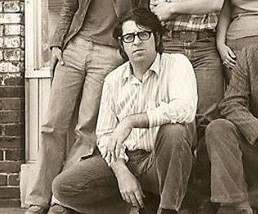 |
| Robert "Bob" Snyder--Photo by Southern Appalachian Circuit of Antioch College |
A few years later, I became a member of a group of people in Beckley, West Virginia, who have gone on to become some of the most respected writers, teachers, and social activists in all of Appalachia. The Southern Appalachian Circuit Of Antioch College in Beckley was created and directed by Robert "Bob" Snyder one of the best poets and most brilliant minds Appalachia has ever produced. He also put together a tremendous group of professors and students at that time in the early 1970's who are often spoken of as a group when Appalachian writing and social activism are discussed. In that group of professors was Don West, P. J. Laska, Rod Harless, and William C. "Bill" Blizzard. Each of those people further reinforced my commitment to do the right thing no matter the circumstances or the opponent. I learned valuable lessons from each of them along with several of the other students in that group.
 |
| Don West--Photo by Georgia Encyclopedia |
Don West had been born in North Georgia as the son and grandson of poor mountain farmers. He grew up to write, teach, preach, do social action work, and to influence dozens of other American social activists. He co-created Highlander Center in New Market, Tennessee, with Miles Horton. He and his wife Connie Adams West created the Appalachian South Folklife Center in Pipestem, West Virginia. Don fought for the UMWA in Harlan County Kentucky in the 1920's, worked in the defense of Angelo Herndon in Georgia in the 1930's, and saw himself fired from Oglethorpe University due to his social activism. He was run out of Georgia under a death warrant for his defense of Herndon, saw two homes burned out from under him, and was ostracized in many ways in many places. But Don West never stopped fighting for social justice. He also never stopped working to teach anyone he met about the importance of doing the same thing and never stopping in a fight for the good, just, correct thing in a crisis. By the time Don West died in 1992 at 86, his battles had earned him an obituary in the New York Times and a biography in the encyclopedias of two states, Georgia and West Virginia.
 |
| Roderick Mansfield Harless--Photo by the Harless Family |
Roderick Mansfield "Rod" Harless was also one of those professors at the Southern Appalachian Circuit of Antioch College. Rod had grown up in a large family which produced both him and a brother who was a long term official in the United Mine Workers of America. Rod was quiet, low key, and a wonderful writer. His "Prince of New Rock" satire series about the candidacy of Jay Rockefeller for governor of West Virginia is an unknown and unrecognized classic. He was a social activist who was deeply committed to always doing the right thing in all circumstances and passed that commitment on to those who knew him.
 |
| William C. Blizzard--Photo by Kimberly Clear |
William C. "Bill" Blizzard was also a member of the faculty at the Southern Appalachian Circuit of Antioch College after having spent most of his life as a writer at the Charleston Gazette which fired him for refusing to cross a press men's picket line at the paper during a strike. Bill Blizzard would likely have chosen to die rather than cross a picket line. He was the son of William Blizzard, the leader of the United Mine Workers at the Battle of Blair Mountain in Logan County, West Virginia. Bill Blizzard published a book, "When Miners March" about the West Virginia unionization effort late in life and devoted his life and much of his free lance writing to passing on the socially active values his father and the United Mine Workers had passed on to him as a child.
 |
| P. J. Laska--Photo by Roger D. Hicks |
P. J. Laska was also a key member of the faculty at the Southern Appalachian Circuit of Antioch College and has been my professor, mentor, and friend since we met in the 1970's. He is the one living member of that incredible group of teachers and activists who came together in Beckley along with a sizeable group of their students who have continued the good fight in nearly all causes we have encounter. Laska was a finalist for the National Book Award in Poetry in 1976. I have been blessed to have known all of these people I have listed so far in this blog post. But I have been especially blessed to have had P. J. Laska as a friend and mentor for the past forty plus years. Today, at 80, he is still fighting the good fight just as many of his former students are. After knowing and having been mentored by this group of people, how could I do anything except keep up the good fight until it is won just as the American Revolution was won, just as the Civil War was won, just as all of our greatest challenges such as the Great Depression have been won?
 |
| Dr. Daya Singh Sandhu--Photo by Sikhnet.com |
I have also been blessed to know several immigrants who have influenced me deeply over the years. I have written about some of those people and their contributions to America in this blog and I will continue to do so. Recently, I have met two new immigrants who work in two of my favorite restaurants who are also inspirations to me. After having known people like Dr. Elif Arioglu-Oral, Dr. Daya Singh Sandu, Dr. Surjit Dhooper, Dr. Noor Loynab and his wonderful wife, Amena Loynab, all of whom are immigrants, how could I not continue to fight the good fight to keep the open door of America open to all who are willing to come and work to make this country better? But I have also been influenced by many other immigrants who came to America, became citizens, and spent their lives working as horsemen, waiters, laborers, and other jobs which make a country function successfully? And, of course, how could any loyal citizen of this country not fight to their dying breath against the nameless TRAITOR who now lives illegally in the White House based on his TREASON with Russia? I call upon every person who reads this blog post to join in this greatest fight in American history and to continue unflinching until the battle is won. Do not allow our country's greatest enemy to destroy the US Constitution, American Democracy, and America herself as they are working daily to do?
 |
| Dr. Elif Arioglu-Oral, M. D.--Photo by U of Michigan Health Net |
Monday, April 8, 2019
"The Sleep Of Reason" by Edwina Pendarvis, P. J. Laska, & Peter Kidd
This little book of poetry has been in the making for a short while and, since I know two of the authors, I had been eagerly anticipating its arrival in my mail box for a while. It appeared yesterday and I quickly slammed through it which I don't usually do with poetry. I like to read poetry slowly, a poem or two at a time, and then return at least once or twice to reread it for better comprehension, appreciation, and respect for the poets involved. I assure you I will do that with this little epistle at least once or twice more. But, also out of respect for the authors, this work deserves your attention and awareness of its existence as soon as possible. "The Sleep Of Reason" by Edwina Pendarvis, P. J. Laska, & Peter Kidd is available from Igneus Press, a small press which was founded by one of the authors, Peter Kidd, whom I do not know. But P. J. Laska and I have been friends since the early 1970's when we first met and he was a finalist for a National Book Award in Poetry for his collection, "D. C. Images And Other Poems". Laska introduced me to Edwina Pendarvis and she and I have been friends about two years although we grew up in different forks of Beaver Creek at slightly different times only a few miles apart.
 |
| "The Sleep Of Reason" Front Cover |
The book is entitled for an etching by Francisco Goya, the great Spanish artist which is more fully entitled "The Sleep Of Reason Produces Monsters" and is in the permanent collection of the Prado. The etching is a metaphor for the many prices of ignorance, especially self-imposed ignorance. It one of a series of about eighty prints which Goya produced about the "caprices" of Spanish society in his time from about 1746 to 1828. According to Art Gallery NSW, Goya was making statements about many of the weaknesses of unthinking, uneducated, and willfully ignorant people. Art Gallery NSW's analysis of the piece states that Goya's intent was to confront "...superstition, vanity and folly, as well as hypocrisy, cruelty, greed and injustice." I cannot think of a better analogy for discussing the lives and works of both Laska and Pendarvis. I do not know Peter Kidd or his work well enough, at this time, to make the same statement about his life and work. Both Laska and Pendarvis are doctoral level retired professors, native Appalachians, and have spent their lives in the effort to confront and eliminate all those same weaknesses which Francisco Goya was addressing in his etching. When I think of the two of them, I am also reminded of a quote from Clarence Darrow which I have used on my e-mail since shortly after November 8, 2016: “I have lived my life and I have fought my battles, not
against the weak and poor—but against power, injustice, and oppression.” When Laska and I met for the first time, we were both connected to Antioch Appalachia, a branch campus of Antioch University which was located in Beckley, WV, which has come to be recognized over the last forty years as having produced some of the finest, and most politically and socially active, writers in America and Appalachia. When Pendarvis and I physically met for the first time, we were on our way to a political protest in Huntington, WV. This little book by Laska, Kidd, and Pendarvis continues that tradition of activism for all three of the authors. Goya would have been proud to be associated with such work.
 |
| "The Sleep Of Reason" rear cover |
The book is small, only about 28 pages, but it is well worth the price of admission. It contains eight poems by Pendarvis, seven by Laska, and eight by Kidd. All are examples of outspoken beliefs about some or all of the character flaws which Francisco Goya was confronting in the work for which the book is named. Pendarvis addresses the hanging of John Brown in 1859 in the poem "Farmer Brown Ascends The Gallows" and ends the poem with these powerful words:
"He'd kept his eyes on heavenand the hell of this world and the next.He loved the beauty of action.The crops he raised blossomed fire." (Edwina Pendarvis)
Those words epitomize several of the goals of a social activist, to always keep your eyes on the prize, to always know that we must confront injustice and ignorance wherever we find it, to take actions to bring about change, and to hope in our hearts every day that our actions will "blossom fire".
In his poem "Almost Dead Matter Walking Bags", Peter Kidd delivers some of his own political statements with the opening and closing words:
That, my friends is a strong political statement in today's America. It is also a strong poetic statement in just about any other time or place. If reading lines like those does not raise your political hackles, then you have none.
But this little book is also loaded with what is simply just good, solid poetry intended to expand both the mind and soul of the astute reader. In her poem "Making Salt", Pendarvis uses Daniel Boone to make both poetic and powerful points.
Over the last forty plus years, I have been blessed to read most of the literature which P. J. Laska has produced, much of it in the manuscript stage, and I must insist that this little book contains some of his best work over the last decade or more. You will find this book to be pleasure and a motivator for some social action on your own part. You can buy the book from Igneus Press or from Ecces Books, 392 Rio Altar, Green Valley, AZ 85614.
In his poem "Almost Dead Matter Walking Bags", Peter Kidd delivers some of his own political statements with the opening and closing words:
"a nation of self interested material/machine worshipers
forever waiting...
the Atom Bomb finger tips away
from the most sociopathic
narcissists in the world." (Peter Kidd)
That, my friends is a strong political statement in today's America. It is also a strong poetic statement in just about any other time or place. If reading lines like those does not raise your political hackles, then you have none.
But this little book is also loaded with what is simply just good, solid poetry intended to expand both the mind and soul of the astute reader. In her poem "Making Salt", Pendarvis uses Daniel Boone to make both poetic and powerful points.
"Boone, skulking his lonely wayWhile some readers might wish to quibble about the use of the words "by" and "beside" in the same line, very few would argue with the deft phrasing and opulent word pictures the poem conveys.
through iron age Kentucke
found mastodon bones lying around a salt lick...
Squatting by his fire, beside
a behemoth, he poured cold
salty water into a flat pot." (Edwina Pendarvis)
Over the last forty plus years, I have been blessed to read most of the literature which P. J. Laska has produced, much of it in the manuscript stage, and I must insist that this little book contains some of his best work over the last decade or more. You will find this book to be pleasure and a motivator for some social action on your own part. You can buy the book from Igneus Press or from Ecces Books, 392 Rio Altar, Green Valley, AZ 85614.
Tuesday, November 27, 2018
The Mixed Blessings Of Having Writers As Friends
As I have said on several occasions in this blog, I have known and been mentored by several of the most important writers in Appalachia. I have had published writers as friends, mentors, professors, and colleagues since I was in my early teens. I have written about several of those relationships and people on this blog over the last seven years. I have benefited greatly, in a variety of ways, by having known these people. I do not say that all of them have been glowing examples of the human race. One or two I have known have been many of the things most people work diligently to try to never become. A few others have been nearly everything decent, honorable, and caring humans strive to become. At least one of these relationships extends all the way back to the early 1970's. Others have only been my friends for a few years. Yet at least one of those brief friendships is one of my closest today. For a time I was a member of a group of Appalachian writers, both professors and students, which is thought of by many in the fields of Appalachian Studies and Appalachian Literature as having been one of the more significant groups of writers in Appalachia.
However, knowing numerous writers is, in general, a bit like knowing all of the dogs in your neighborhood or the racehorses at your favorite track. Some of them will bite without provocation. Some will be your best friend so long as you have food to eat, a warm house, or something to drink or smoke. Some of them will be winners. Some will always finish well behind the pack. Some will only be consistent consumers of favors and influence while others will be consistent producers of both great literature and fond memories. Over the last few weeks I have had occasion to be reminded of this for several reasons. I recently acquired a few books from the estate of a lesser known poet and newspaper writer in my area and most of those books had been autographed by their authors and given to the writer of whose estate I had managed to buy part. During her lifetime, she had known many of the most influential writers in the state of Kentucky. During my lifetime, I have done the same with a similar group of writers from both Kentucky and West Virginia. I also have a similar collection of books written, autographed, and presented to me by writers I have known. I even bought a wood stove once from one of the most famous Kentucky writers without anything other than home heating having ever been discussed between us.
Also during this recent period, I acquired four or five books written by two or three of my friends. One of those friends I have known since about 1995. The other I met just this past summer. One is an excellent writer. The other is not. I have been in fairly regular contact with both over the time I have known the later. The recent friend has provided me with warmth, friendship, and respect. The other, whom I have known much longer has been in contact on superficial levels and been less than forthcoming in many ways. The new friend, during the course of writing their third published book, sought my input and even included a piece of a great writer's production in that book to make a point. It was not the point I would have made with the same excerpt but I do know that my friend had never before seen that writer's work until they knew me and chose to use the work mentioned when I made them aware of it. They also listed me in the "Acknowledgements" page of the next book for having critiqued the previous book and for "providing a bottomless well of research material." The second writer, whom I have known considerably longer also published a couple of books recently which would have been better left in a manila envelope under a bed for some auctioneer, yet unborn, to include in a box lot at an estate sale. At some point, I offered this second mistakenly ambitious writer some constructive criticism pending their willingness to hear it. I never even got a response which in some ways did not surprise me. I refer you once again to my earlier metaphor about dogs and racehorses. The new friend has produced a well written, respectable book which will not likely ever be famous due primarily to that person's total aversion to seeking or achieving advantages by virtue of doing anything that is not modest and humble. But their work is likely to be kept in some bookshelves for the foreseeable future. The other produced a book which would, as I said earlier, have been better placed elsewhere other than in the public market. At about the same time this series of exchanges was transpiring, a third writer friend who works in several areas has been well reviewed by random strangers over the last several decades asked me to consider providing input on an upcoming book which leads me to believe that my input is not totally worthless.
To put all this in a neat little package, or at least as neat a package as possible, I will say that despite having been bitten and ravaged by fleas on a few occasions in addition to having been kicked, pawed, and dragged by several horses, I still pet strange dogs, admire and sometimes even bet on new horses, waste my time picking up strays, and have even paid to neuter two stray kittens lately. I will probably not stop expressing my opinions to writers whom I know and some I have still not met.
Tuesday, November 28, 2017
"Crum" by Lee Maynard--Book Review
Maynard, Lee: Crum( Morgantown, WV Vandalia Press 2001)

As I said in my recent review of Lee Maynard's book "The Pale Light of Sunset: Scattershots And Hallucinations In An Imagined Life", I had never read his work, by my deliberate choice, until after his recent death. Quoted below is my introduction to that first review of a Lee Maynard work:
"Until Lee Maynard's recent death on June 16, 2017, I had never read any of his work. Maynard was, and will always be, a controversial figure in the world of literature in West Virginia and Appalachia. His first published work, "Crum", was actually banned from sale at the Tamarack Center in Beckley, WV, due to its perceived extreme negativity to Crum, WV, Maynard's hometown, and to West Virginia and Appalachia in general. Most of the West Virginia and Appalachian writers who have been my mentors and friends also held Maynard in contempt for the same reason. We rarely, if ever, discussed him or his work. And generally, to a person, we never bothered to read his work. I chose to read this book [The Pale Light of Sunset: Scattershots And Hallucinations In An Imagined Life] after having read some comments, in a newspaper obituary, from Cat Pleska about Lee Maynard, his death, and his writing. Cat Pleska and I have never met but are now Internet and E-mail friends and I trust her judgment. I am glad I read the book." My Appalachian Life July 30, 2017
Since reading that first Lee Maynard book, I have become a dedicated reader of his work, while continuing to hold some serious misgivings about some of his actions as a writer, a West Virginian, and an Appalachian. At his best, Lee Maynard was a powerful and talented writer. At his worst, from my viewpoint as a native Appalachian writer and protagonist for the Appalachian Culture, Lee Maynard was an inflammatory, abrasive, and insulting writer who sometimes used the bully pulpit which his popularity provided to defame, denigrate, and abuse his native state and Appalachia as whole. But I was sufficiently impressed by the quality of much of the writing in "The Pale Light of Sunset..." to delve deeper into Maynard's work. I have now nearly completed reading every book which the man published. "Crum" was the next book I chose to read after completing "The Pale Light of Sunset...". Although I have continued to read the body of the man's work after reading "Crum", I must say that if it had been the first of his books I read, I would not have continued in the effort and I might well have not even finished the book. The opening page describes Crum, the town of Maynard's nativity as a "...sad little town...awaiting each stagnant winter with all the patience, good looks, and energy of a sloth." The third page describes Kentucky, the land of my nativity, as a "...mysterious land of pig fuckers". Most native Appalachians who have read such comments about our homeland have a natural and well justified tendency to throw such comments into the burn barrel, whether they came from a recognized writer of Lee Maynard's stature or from a cousin who was writing back home after making a foothold in the industrial north after fleeing Appalachia.
 |
| Lee Maynard Photo by WVU Press |
In her introduction to "Crum", Meredith Sue Willis states that "The novel, then, makes a remarkable journey from the opening descriptions of barren shacks to a rich human and natural landscape." She goes on to conclude that "this is a novel about love of place". I will not concur with Ms. Willis completely in that assessment. But I have stated elsewhere that I believe in some of the writings which appear in "The Pale Light of Sunset..." that Maynard did love West Virginia and Appalachia. It is much more difficult to reach that conclusion about him if "Crum" is the first of his writings which the reader encounters.
 |
| Lee Maynard Photo by Herald Dispatch |
My friend and mentor of forty years, P. J. Laska, and I discussed Lee Maynard and his work during my recent visit with Laska at his home in Arizona. He reminded me of an essay he had written about Lee Maynard and Denise Giardina in 1990 entitled "Saints And Sinners The Either Or Syndrome In Appalachian Fiction" and provided me with a copy of the essay. In the essay, Laska states: "Crum" has realistic details but they are cut off from any meaningful context." Laska goes on to say that "Crum" is a one-sided picture of life in Appalachia. It isolates the comic, the crude, the trashy, the disgusting." But he goes on to say in that same paragraph that "Crum's details are not false. The deprivations, the narrowness of experience, the boredom, the crude pleasures that relieve it--these ring true." And therein lies the conundrum that Lee Maynard presented to the world in general and to native Appalachians in particular.
 |
| Lee Maynard Photo by Herald Dispatch |
The conundrum of Lee Maynard leaves the reader, especially the native Appalachian reader, with some serious questions. Did Lee Maynard love or hate West Virginia and Appalachia? Did Lee Maynard intentionally denigrate and defame the town of Crum, the state of West Virginia, and Appalachia as whole? And, for me most importantly, after he achieved fame did Lee Maynard perhaps regret the damage he had done to his homeland? These are not simple questions to answer. They do not lend themselves to a quick, brief discussion and an easy fix. Lee Maynard understood Crum and the area in Wayne and Mingo counties which he chose to place the novel in. He chose to leave them behind and to write a great deal of highly inflammatory material about them. But he also chose to return to West Virginia every year for the annual conference of West Virginia writers as my friend Edwina Pendarvis, an equally broadly published Appalachian writer, has reminded me. In a recent e-mail she said this about Maynard: "I knew him just a little bit because almost every summer for several
years he came to the WV Writers conference. I think he liked WV but
wouldn't want to live there!" He also returned, as he wrote so eloquently about in "The Pale Light Of Sunset...", to the farm of a long time friend to deer hunt and rode his motorcycle on most of those trips. I will never believe that anyone rode a motorcycle from Santa Fe to West Virginia just to see place they hated.
But to get back to the real subject of this review, the novel "Crum", let's consider that book alone, on its own merits, strengths, and weaknesses. It is a novel which has caused the blood of many a native Appalachian to boil. I am sure that many copies of it have been thrown into either the Tug River or a good, hot fire. It is also a novel which is frequently listed on long lists of works by Appalachians. It is now sold in Tamarack, the West Virginia cultural and tourist attraction near Beckley, where it was banned for many years. That is actually where I bought my copy.
I was born in Lackey, Knott County Kentucky, about fifteen years after Lee Maynard was born in Crum, Wayne County, West Virginia. Our birthplaces are only about sixty miles apart. We grew up in very similar communities and attended very similar high schools. Based on our personal experiences and educations, we seem to have to reached different conclusions about our homeland. I might also add that I lived in Logan and Mingo Counties in West Virginia for about five years and worked as a door to door salesman in nearly every inch of Lee Maynard's home environs. I knowWayne and Mingo counties nearly as well as I know Knott County. I consider myself to be just as much a West Virginian as I do an Eastern Kentuckian. They are both soaked deep into my blood, bones, psyche, and soul.
In the novel "Crum", Lee Maynard insulted both West Virginia and Kentucky in ways that were hurtful, deliberate, and likely not fully founded in facts. But the novel is still worth reading. It tells a story that resonates with a significant portion of the populace both in Appalachia and out. It is a tale of alienation, deprivation, and determination. Lee Maynard's narrator uses his God given talents to leave Appalachia and seek his healing elsewhere. Most characters created by native Appalachian writers choose to grit their teeth and either stay at home or return after a brief hiatus elsewhere. In my opinion, the novel has enough redeeming virtues in its writing to make it worthwhile to read. But, if you are a native Appalachian, be prepared to see words in print that leave you wishing you had your hands on that rascal.
Thursday, September 21, 2017
"The Original Wisdom Of The Dao De Jing A New Translation And Commentary" by P. J. Laska--Book Review
Laska, P. J.: The Original Wisdom Of The Dao De Jing A New Translation And Commentary (Green Valley, AZ. ECCS Books, 2012)
 |
| P. J. Laska Photo by Warene Hobson |
Please allow me to preface this review and/or commentary by saying that what I know about the Dao De Jing would not fill a thimble. This is the first time I have ever read any translation of the Dao De Jing other than whatever small sections of it which might have been included in an old classic called "The Bible Of The World" edited by Robert O. Ballou and published in 1939. That little classic and its subsequent replacement, "The Portable World Bible" also edited by Mr. Ballou and published in 1976, are both classic texts for the students of both religion and history who want to understand the complexity and diversity of the world's religions and their effects on world history without doing a full fledged doctoral level piece of research. I was first introduced to "The Bible Of The World" by Dr. Billy Rojas, Ph.D., who taught history at Alice Lloyd College for a few years in the 1960's and 1970's. Later in about 1974, I met my friend, professor, and mentor, P. J. Laska, who wrote the particular version of the Dao De Jing which I am attempting to address in this review, and he further broadened whatever understanding I have of the world's religions. Laska published this version of the Dao De Jing in 2012 after having studied the Dao and Daoism for more than forty years. It is also relevant to this discussion that P. J. Laska holds a doctorate in philosophy.
 |
| P. J. Laska Photo By Roger D. Hicks |
The Dao De Jing is generally defined as "...a famous Chinese philosophical text attributed to the authorship of
Laozi (Lao Tzu) (sixth century B.C.E.), and highly influential in the
religion of Daoism." Like most major religious texts of the world, the Dao De Jing must be studied regularly and frequently in order to be understood. I do not presume to understand it. Laska has told me in our personal communications that:
"...I'm not interested in Daoism (the religion), which is what most of western writing is about. I found the older wisdom tradition conveyed by the Dao De Jing to have a lot in common with the naturalism that evolved in early Greek philosophy. Then I was puzzled by the phrase "wei wu wei" (ddj 3 & 63) and spent a lot of time trying to make sense of other translations before I realized they were passing off "act without action" and other contradictory nonsense as something subtle and mysterious.I started exploring this phrase which asks the reader to bring opposites together. Then it struck me that the opposites are "wei"=human action, and "wu wei" =non-human activity, or natural process, and it fell into place. The ancient wisdom is about balancing these two, to achieve sustainability.The main difference between human activity and natural process is the intellectual and artistic design that's present in human action, whether it is called thought or idea, or consciousness that gives our action its end or goal. I call it 'desiging (sp) action' to set it apart [from] the processes of nature that go on without this conscious design. This is the key to the ecological reading that guides the commentary -that and the anti-imperialist thread, which you will see in ddj 80 the paradigm for a sustainable community is a small state with few people." Personal Communication from P. J. Laska to Roger D. Hicks 2017.
As I understand our prior and subsequent communications about this book, P. J. Laska's intention was to produce an ecologically based translation of the Dao De Jing. I do not wish to further speculate as to whether or not I believe that Laska achieved his goal. Or as they used to say on Beaver Creek when I was growing up "I reckon I jist don't know nothin' about that there stuff." I did find the Dao De Jing sufficiently interesting that I might go so far as to reread Laska's translation in a more studious manner by following all cross referenced sections which appear in his notes and commentary which will be an even more time consuming task. I read it this first time in what some might consider a fairly close effort and actually read every note or commentary section throughout the entire text. I did find it somewhat disconcerting that there are notes at the end of most of the verses, stanzas, chapters, or sections and there are also commentaries in a separate section at the back of the book each of which is designated by an asterisk at the end of the particular stanza or chapter. I would have found it personally more effective if both the notes and commentaries had been combined in a single note at the bottom of each stanza or chapter.
 |
| Roger D. Hicks & P. J. Laska Photo By Candice Hicks |
I must also say that certain small sections of the text struck me as particularly pertinent to life and world politics in the highly dangerous world in which we live today. I refer the reader to stanza or chapter 30, found on page 37 of the book, states in part:
"Those using [the Wisdom of] the Way to assist a sovereign in governing do not employ force of arms. This will likely provoke the use of arms in return. Where troops set up camp, thistles and thorns grow. Where great battles are fought, years of hardship will follow. Those adept [in the use of the Way] do not risk using force. They succeed without vanity and without aggression, and get results without arrogance, gain, or use of force."
This language is more pertinent today than it could have been at nearly any other time in world history. I am writing this review on the day after the particularly ignorant, inflammatory, and ill advised speech before the United Nations by the TRAITOR and International TERRORIST Donald Trump. There are other equally pertinent sections of the text of this book which can be applied to world politics today in general and in particular involving the Russian Owned Criminal Syndicate which is currently illegally occupying the White House. But, to return to my discussion of P. J. Laska's book:
This is a book worth reading especially for the practicing Daoist or student of Daoism. It is also worth reading for the student of world theology and, perhaps, even for the person who is in that life stage of seeking peace of mind and a personal spiritual world view. I would not presume, and I do not believe that Laska does either, that this edition of the Dao De Jing is a be all end all edition that will give the reader release from the need or desire to read other editions. In fact, if I ever finish all the other projects I am working on to which I assign higher levels of importance I just might read another more commonly used edition myself. Maybe, to that degree, P. J. Laska might have achieved one of his unstated goals, to initiate the reader into a further study of the Dao De Jing. However, let me end this piece the same way I began. What I know about the Dao De Jing would not fill a thimble.
Subscribe to:
Posts (Atom)