


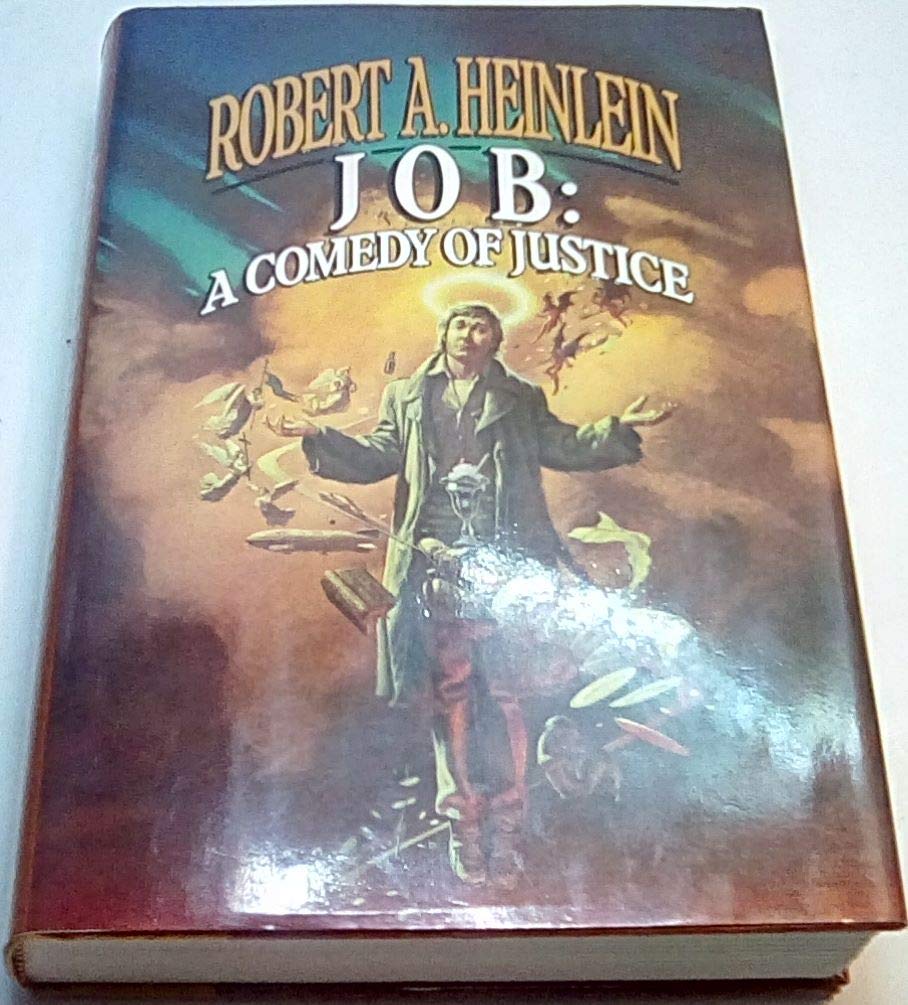


"The Far Family" is a novel written by famed Appalachian author who is, perhaps, best known for her other novel, "The Tall Woman". I have to admit that I have read little by Wilma Dykeman over the years and had tended to focus on a few other female Appalachian authors to my own detriment. This is fine novel about a close knit but far flung Appalachian family who grew up in Nantahalla County, a fictional county which is somewhere in the area of Western North Carolina. That area is loosely located somewhere in Nantahala National Forest and/or Nantahala Township. The book is written in alternating chapters labeled "Yesterday" and "Today". In terms of actual time or current time, it covers a long weekend in which the family gathers together to assist one of the sons, Clay Thurston, who has just been charged with the murder of a friend or acquaintance, a black man named Hawk Williams during an all night long hunting trip which Clay organized for several of his friends. Hawk Williams was hired to cook for the men on the trip because of his wide spread reputation as an excellent cook. He is also acknowledged widely as a vicious and dangerous man. The Thurston family is composed of Clay, his brother Kin, sisters Ivy Thurston Cortland, Phoebe, and Frone. Their mother Martha is still alive but bedfast in Ivy's home being cared for by her daughter who is a widow after having married an older widower from New York State whom she had met while living in a boarding house in town while attending high school. Ivy has a son, Phil, who happens to be a young, newly appointed United States Senator, who has also returned for the visit and its related attempt to keep Clay, a notorious alcoholic and ne'er do well, out of the penitentiary. The "Yesterday" chapters of the book flash back to the developmental years of the brothers and sisters and tell the story of their father's repeated hopeless attempts to make a massive mark on the world around him and his eventual relatively young death in a sawmill he owned.

The book is wonderful piece of work and shows a widespread, deft, and accurate depiction of life in Central and Southern Appalachia. It discusses the massive exodus of young men and women from Appalachia indirectly in its discussion of the lives of Clay, Phoebe, Frone, and Ivy as they married, left the area, and in all cases except that of Ivy, never returned except to visit. Ivy and her husband had chosen to sell his New York farm in the Mid-Hudson to return to North Carolina where she raised her son after the death of her older husband. With the accusation of murder of a black man against a white member of a prominent family in North Carolina, the issue of race relations in the Appalachian South is a key focus of the story. It is particularly addressed in one chapter when Phil, the US Senator, and his uncle Clay, the accused murder, visit the widow and other family members of the victim Hawk Williams. As unlikely it is that a sitting US Senator would have ever made such a trip, it is a very impressively written scene in the family's shack as the two white men are welcomed by the widow and her aged father, who reminiscences about a time when a distant relative of the two men assisted him in a legal situation and saved him from conviction in a case which would have damaged the rest of his life. It is an accurate depiction of life encounters between the races in the south in times past and, perhaps present.
I won't ruin anyone else's reading of the book by telling the story of the outcome of the murder accusation against Clay and the conclusion of the book. But it does involve another aspect of the race issue in the Southern Appalachians. It is a wonderful book! Read it!

A little more than a year ago, I watched a documentary on KET about the life of Walter Tevis who had suddenly risen once again to a high profile in the media because of the success of a television miniseries based on his book "The Queen's Gambit" which is about a young female character who becomes a chess champion. I have to admit I have still not read that book despite its having been on my large To Be Read Shelf for over a year. But I did read his science fiction classic, "The Man Who Fell to Earth" and loved it to the degree that it prompted me to order most of his published works and add them to my long list of books I "will get around to someday". But let's talk about the actual subject of this blog post, "The Man Who Fell To Earth". Tevis's work on that book is as good as any science fiction I have ever read. It is one of those rare works of science fiction which also falls solidly within the larger and more important body of what we know as "Great Literature". It is a masterpiece and deserves every accolade it has ever received. It is masterful science fiction which is solidly based in the minds of both its characters and the author and not in ray gun shoot 'em up scenes which are cheap copies of some bad John Wayne western as much of ordinary science fiction is today.

The main character in the book is Thomas Jerome Newton from the planet Anthea who has been sent to earth to determine if it is possible for the occupants of his doomed planet to emigrate to earth in order to save their lives and their much more advanced culture. His spaceship is destroyed on landing and it is determined that he will not be able to return to his home planet. He is humanoid in appearance with some odd features which he is able to disguise well enough to "pass" as human for quite some time. He becomes a very wealthy individual because he is able to patent many ideas which his culture has produced that are much more scientifically advanced than anything on earth. But his obvious intelligence and scientific acumen are soon recognized the government as being impossible for an ordinary human to have achieved and "the jig is up" to use common vernacular. But in the end, he is allowed to remain on earth, still disguised as a human, living in quiet semi-poverty with a Social Security check and a small apartment. This is a book which no aficionado of science fiction can claim expert status in the field without having read. The book was made into a movie starring David Bowie in 1976 for which Bowie recieved rave reviews playing the truly unique alien. It was also made into a 2022 Showtime miniseries which "The Guardian" panned as "a misbegotten and poorly paced attempt to update the 1976 cult sci-fi classic". I have to admit that I have never seen either production of the work, but I will go so far as to say that I won't bother with the Showtime effort based on "The Guardian's" review. When the time comes that is available somewhere again on television, I will definitely watch the 1976 work with David Bowie.

Over the years, I have read about 10 of Pearl S. Buck's fine novels and written about several of them on this blog. Recently, in a large purchase of used books from the estate of a former school principal in this community, I obtained several first editions of Buck's novels including a copy of "Imperial Woman" which was published in 1956. I had never read it and completed it a few weeks ago although I have procrastinated about writing a blog post about it for no good reason. After having read all three novels in the "Good Earth" trilogy, three novellas which were published under the pseudonym John Sedges, "The Living Reed" which is a Korean novel and, in my opinion, one of her finest other than her masterpiece "The Good Earth". I love her work and don't believe that she ever allowed herself to write and publish a second rate book. I had loved "The Living Reed" nearly as much as "The Good Earth", but I have to say that I am now convinced that it must be at most her third best novel running behind "Imperial Woman" and "The Good Earth".
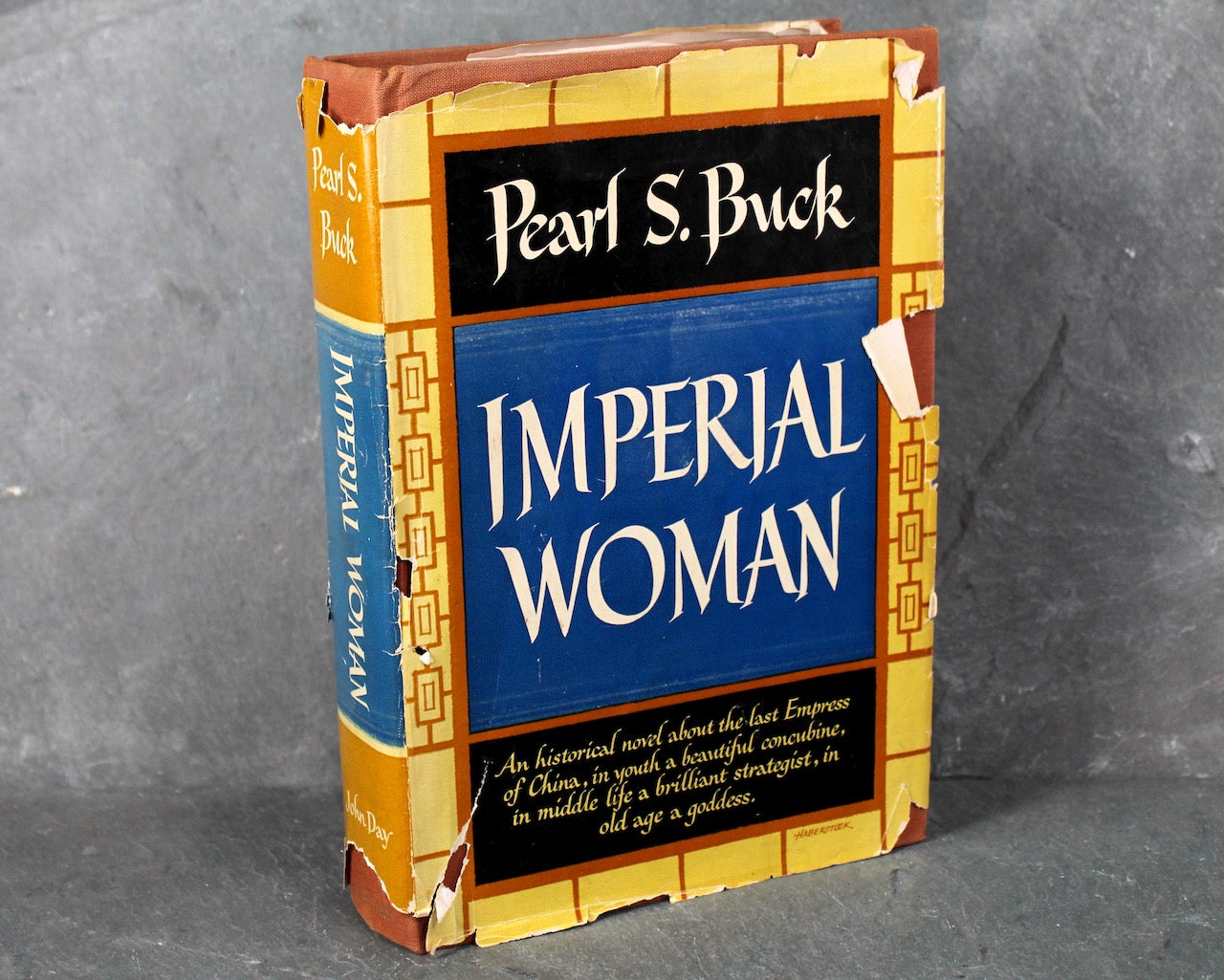
"Imperial Woman" is a fictionized biography of Tzu Hsi, the last empress of China who was born of low caste and brought into the Forbidden City as a candidate to become a concubine of the sitting emperor at the time. She is not only chosen to be one of his concubines but manages to bear him a son, the heir to the Dragon Throne, and becomes his most beloved partner and advisor. She initially devotes her life to helping her son gain and maintain the throne. But due to the many weaknesses of her son and his early death, she then manages to gain total control of the kingdom through a male heir she has chosen from the family of one of the dead emperor's advisors. With the help of her cousin Jung Lu to whom she had been betrothed prior to her becoming a royal concubine, she not only managed to hold onto power but increased her power and popularity over the kingdom while living as a conflicted type of ruler who is loving, devout, and intellectual while also being absolutely ruthless when it becomes necessary.
It is said that Buck strove to depict both sides of the empress, who is actually only a regent for the child emperor she has chosen. Buck did an excellent job of achieving that goal. The character of the empress can be loving and devoted to her son and the few people she allows to be closer to her while also being capable of ordering the deaths of those who oppose her. She is a powerful and powerfully depicted ruler. She is also dealing with a lifelong conflict between her love for Jung Lu and the inability to allow it to be a public matter in her royal role. She arranges a loveless marriage for Jung Lu with one of the women who assists her on a daily basis and they both live with the conflict of being in love and unable to allow that love to be manifested fully.
This is one of Pearl Buck's best efforts in my opinion and well worth reading by any lover of great literature. It helps prove, along with "The Living Reed", that Pearl Buck's best work was not finished after "The Good Earth". She was an incredible novelist and knew the China in which he spent much of life as few Americans ever could. If you haven't read it, find a copy and reward yourself with this wonderful book.

When I entered Knott County High School at Pippa Passes, Kentucky, in September of 1964, I remember thinking that the little one room library was the finest collection of books that I had ever seen. When I began to write this post, I sent a message to my friend and former high school teacher Mary Lois Jacobs who was able to tell me that the books in the Knott County High School Library had primarily been donated by Alice Lloyd College and that there were about 2,000 books in the collection, mostly fiction. She also stated that the faculty had been disappointed in the lack of sufficient non-fiction in the collection. Prior to entering high school, the only lending library I had access to was a summer book mobile program which stopped at our country store at Dema once a week during the summer vacation from school. I had visited the Kendallville, Indiana, library a few times during some summer visits to my sister's home there but I had never been a regular user of such a fine library. Today, I know that the collection at KCHS would be considered woefully deficient in most public high schools in America. The other distinct memory I have retained from that time is that on one of the first occasions I took a lengthy, perhaps epic, novel off the shelves and asked to check it out that Cloys Thornsbury, the librarian, gave me a somewhat askance gaze and asked me something to the effect of "are you sure you can read that". I'm sure I answered "yes" and I'm also pretty sure I actually finished whatever book I checked out. Three of those first long novels I remember reading are this one, "The Silver Chalice" by Thomas B. Costain, along with his "The Black Rose", and "The Count of Monte Cristo" by Alexandre Dumas. I don't recall that Cloys asked me that question again after I had read, returned, and could discuss those three books.
Recently, in one of my frequent visits to some surplus store where I often buy used books, I strayed into a weathered copy of "The Silver Chalice", bought it, and committed myself to rereading it. I can now report that the mission has been completed. Thomas B. Costain was a Canadian born journalist and mass market writer who produced 14 novels, 8 non-fiction historical works, and 4 co-edited collections of short stories by major authors. His major novels were generally massive works with plots, counter plots, historical settings and characters, and multitudinous casts of characters. His works can be argued to have not been quite great works but they were well written, meticulously researched, and generally popular on the mass market. "The Silver Chalice" is an example of all those qualities.
The primary protagonist in this novel is a totally fictional young artist named Basil who has been sold into slavery by his uncle under Roman law upon the death of his father before he attained the age of majority. Basil's freedom is arranged by the Apostle Luke who does so because he has been chosen by the early Christian church to locate and hire an artist to create a frame to hold the cup which was used by Jesus Christ and the Apostles for the sacrament at the Last Supper. The frame is to be made of silver and the cup is to be surrounded by small busts of the Twelve Apostles. The freedom of Basil and the commission to create the frame are financed by the Biblical person Joseph of Arimathea who is the same man who is credited in the Bible with having provided his own tomb for the burial of Jesus. As the novel progresses, Basil falls in love with the granddaughter of Joseph of Arimathea and eventually marries her just minutes before her grandfather's death. But they have previously agreed that the marriage is one of convenience only because her father is not a Christian and would not agree to continue to finance the work after his father's death. The newly weds leave Jerusalem for Antioch, outside the reach of Jewish law and the Jewish high priest and his co-conspirators who seek to find and destroy the cup. Basil goes on a long journey to locate the living disciples and create their busts from actual memory after meeting them. Along the journey, Basil decides that he has not only come to realize that he loves his wife Deborra but that he also has been converted to Christianity. Just in case any of you want to read the novel and can actually locate a copy on some of the used book websites, I won't spoil the story by disclosing the conclusion. Just know that this novel is well worth reading whether or not you are religious. It moves quickly from scene to scene, from crisis to crisis. The characters are realistically rendered, both known historical persons and those who are purely fictional. It is filled with fascinating people including a Chinese prince who befriends Basil, Luke, and Deborra; an Arabic camel driver who seeks to become an important trader; a villain who is also a magician; and a manipulative, beautiful, and dangerous female assistant to that magician. Basil even spends some time in the home of the Roman emperor. If you can find it, I can't more highly recommend a historical novel. And, I was very pleased to be rewarded by those wonderful memories from my teen years by the second reading of the book.

In the era of Trump, certain members of Congress and other Trump enablers...have preyed on the patriotism of millions of Americans. They are working to return to office the man responsible for January 6. We the people must stop them. We are the only thing that can stop them. This is more important than partisan politics. Every one of us--Republican, Democrat, Independent--must work and vote together to ensure that Donald Trump and those who have appeased, enabled, and collaborated with him are defeated. This is the cause of our time. (Liz Cheney, "Oath and Honor" p. 368)
Liz Cheney used the words above to end her important and honest book "Oath and Honor: A Memoir and A Warning" and she is absolutely correct. Donald Trump and every one of his thousands of enablers, co-conspirators, and cult members must be stopped in their efforts to return him to his illegal and illegitimate occupation of the White House. They managed to nearly subvert the certification of an honest American presidential election on January 6, 2021, and they would not hesitate to commit any crime on the face of the earth to achieve that treasonous goal. Liz Cheney has written the most important book in this 2024 election cycle. No other book published before hers and none which will come after hers can more succinctly or more accurately can tell the tale of the political treason, insurrection, and domestic terrorism which they perpetrated against the United States of America on January 6, 2021, and which was rooted in the actions of Donald Trump and his co-conspirators in the White House in the weeks between the 2020 election and January 6. Liz Cheney has honestly and forthrightly told the tale of that insurrection and was fully willing to sacrifice her political career in order to see that this virulent and treasonous conspiracy did not succeed. She has also stepped forward to teach every citizen of the United States about the danger which this group of insurrectionists, domestic terrorists, and traitors present to America and American Democracy. Her book is truly the one book every citizen of this country should read in this incredibly important election year. Despite the fact that nearly a thousand of these criminals have been indicted for their crimes and several hundred have already been convicted and sentenced to federal prison, the conspiracy is still alive. The would be dictator and his cult are still working every day to keep the treason alive, to return the traitor to the scene of his treason. If you do not read another book for the rest of your life, read this one. It is written in a simple, direct, easy to read prose which allows a fast read but you should read it slowly, thoughtfully, and with an open mind. This is a book written by an American patriot who literally sacrificed a wonderful political future in order to confront these traitors and their treason, in particular to confront and hold the worst traitor in world history responsible for his treason. Give it an honest, open minded read and then fully and without reservations of any kind commit yourself to do everything in your power to assist America and American Democracy in this fight for survival. This is truly the cause of our time.


