In June 1997, Hunt won his first victory in the matter when the Alabama Board of Pardons and Paroles approved a pardon for him on grounds of innocence. For the pardon to be valid, however, it needed to be signed by a judge or district attorney, but no one willing could be found. Even the recently elected Republican attorney general, Bill Pryor, refused to sign the pardon, arguing that he did not believe his office held that right or power. Then in a stunning defeat, when Hunt requested that probation be terminated shortly before it was due to expire in 1998, circuit judge Sally Greenhaw extended it for five more years because Hunt had been able to pay only $4,200 of the fine and court costs assessed against him. On March 30, 1998, however, Hunt's probation was lifted when his attorney presented a check to the court for the entire balance. Sympathetic Alabamians, both Democrats and Republicans, had helped Hunt raise the needed funds. The next day, the Board of Pardons and Paroles again pardoned Hunt on grounds of innocence, and because probation had been terminated, no affirming signature was needed. The following day, Hunt qualified to run for the Republican nomination for governor.I cannot fully decide just how similar and how different these two cases and their ultimate handling by the powers that be in West Virginia and Alabma are, but both have been forever imprinted in my memory, and both are forever connected in my mind. Two state governors from two politically (now) similar states were charged and convicted of political corruption in their states during their terms of office. The outcomes were somewhat different despite the convictions. You can make up your own minds whether either or both of these cases was/were handled appropriately. If there are political lessons to be learned from these two men and their criminal convictions, I sincerely hope all of us can figure out what those lessons are.
An ever growing site of non-fiction,flotsam, fiction,memoir,autobiography,literature,history, ethnography, and book reviews about Appalachia, Appalachian Culture, and how to keep it alive!!! Also,how to pronounce the word: Ap-uh-latch-uh. Billy Ed Wheeler said that his mother always said,"Billy, if you don't quit, I'm going to throw this APPLE AT CHA" Those two ways are correct. All The Others Are Wrong.
Search This Blog
Friday, July 3, 2026
Two Separate, But Connected Visits To Two State Capitols, West Virginia And Alabama
Thursday, August 7, 2025
"A Driving Tour of Elliott County Kentucky" by Sharon Boggs
Saturday, May 31, 2025
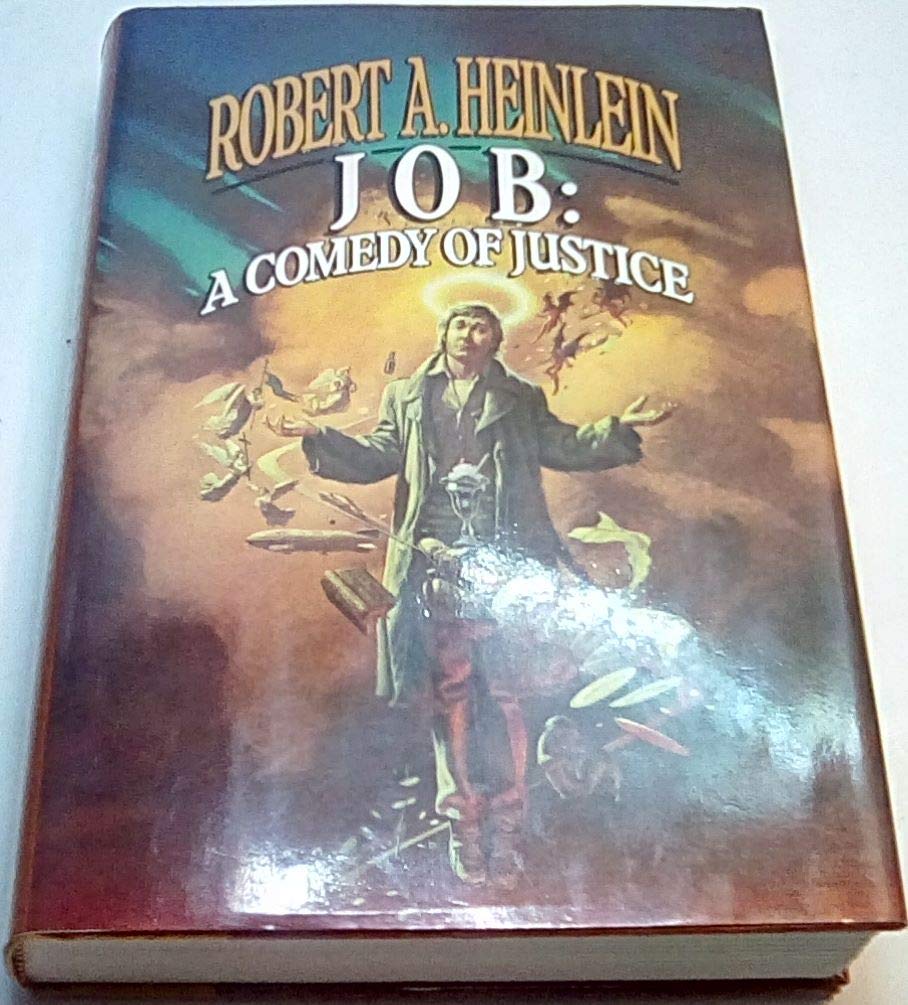
"Job: A Comedy Of Justice" by Richard A. Heinlein
Sunday, June 30, 2024
"Sibir" by Farley Mowat, Reflections On An Older Book About Siberia
For many years, I have read the works of Canadian naturalist and author Farley Mowat, and several months ago my wife and I read several of his books together which had been the first time she had ever been exposed to his wonderful writiing. The only negative comment I can make about Mowat and his work is that after he had become widely and wildly successful for works like "Never Cry Wolf" and "A Whale For The Killing", some of his later works were less interesting, less exciting, and, of course, less popular. But every book I have ever read by Mowat was still filled with occasional shots of his splendid writing and voluminous vocabulary. When I was younger, I would often read his books with a dictionary by my side because I knew I would find some words along the way that I had never heard, some from his life as a world traveling Canadian, and some from his having been descended from Scottish ancestors who must have passed a great deal of their linguistic panache along with their DNA.
This book we are discussing was published in 1970, and came about because Mowat was invited to come to Russia by a Russian writer who also lived in and wrote about the extreme north of the country, Siberia, one of the coldest climates on earth with the possible exception of the peaks of the Alps and Himalayas. Naturally, Mowat took the man up on his offer and eventually made several trips to Russia and Siberia. In spite of the cold war, and because international concerns were different in those days, Mowat said that he was always well received and well treated wherever he went in the Russia, and particularly in Siberia. I have been motivated to remember and write about this particular book, because my wife and I are currently reading a much less scholarly book about that region, "Last Of The Breed" by Louis L'Amour which I picked up on a whim in a Goodwill store because it was uncharacteristic of L'Amour's western writing. I had also picked up two other L'Amour books for the same reason, already read and written about one of them, "Yondering" which is a collection of his short stories. "Last Of The Breed" has led me back to this Mowat book because, to his credit, L'Amour had done some reasonable amount of research about Siberia before he wrote his book about an American pilot who escapes from a Siberian prison and is attempting to cross Siberia to Alaska in order to escape.
Issues such as those in the L'Amour book never arose in Mowat's experience in Siberia although the two men do write about several similar aspects of the region which was far less developed in the times Mowat traveled there than it was in 1986 when L'Amour wrote his novel. The vast majority of the region was what is known as the taiga, a vast forested area which was replete with wildlife and few people. Mowat was being guided on his visits by Yuri Rythkheu, a Russian nature writer and naturalist whose works were motivated by many of the same concerns which motivated Mowat. The two became close friends over the years they knew each other and corresponded regularly, and in those times, Russia was considerably less repressive than it is today. Mowat was allowed to travel extensively in the country, was often given official welcomes by local government officials and greeted much like a celebrity might have been even in America at the time. He came to love Siberia, the Taiga, the people, and the vast wildlife of the region, and writes about it with a great deal of the same emotion and general protective concern he wrote about his native Canadian north. The people he eoncountered in his travels there were much more open than Russians are today and, at times, Mowat found himself invited into homes and even involved in fairly wild parties.
I have also known a few others of my friends and acquaintances who have been privileged to travel to Russia in the past including a nurse practitioner who went there as a young nurse with a Christian based medical entourage and claims to have bribed an airport security officer in order to be allowed to take some medications into the country which she said the officer claimed were not permitted. Nearly forty years ago, I also knew a few people who traveled to Russia as part of a group sponsored by the American Friends Service Committee, a Quaker group. But none of those people were ever received in Russia in the open hearted way that Mowat was. This is a fascinating book despite its age and good reading for anyone who likes to learn the history of other places in the world. If you can find a copy, read it. You won't be disappointed. And, you might even like "Last Of The Breed" by Louis L'Amour.
Friday, March 29, 2024
The Wildlife Of Kentucky Route 1000
Kentucky Route 1000 begins about a mile and a half from my house and I have driven it regularly for over 31 years. It is only about 7 miles long and intersects with US 460 at its eastern end and Kentucky Route 191 at its western end. It runs up what is sometimes known as the Right Fork of White Oak Creek, over the hill, and down a small branch of Caney Creek where it connects with Kentucky Route 191 at the Caney Grocery, an old wooden building approaching a hundred years old which is filled with assorted antiques and sells good sandwiches and pizzas. The Kentucky Department of Highways has four classifications of roads in the state and Route 1000 is in the last and lowest classification. The classifications are number 1 through four and those classified as fours are what are described as "the set of highways not in the first three systems, including frontage roads, bypassed portions of other state highways, and rural roads that only serve their immediate area." That is a great description of Kentucky Route 1000. But that description leaves out the entire best part of driving Route 1000, the wildlife diversity it regularly produces to the attentive driver.
Nearly every time I drive across Route 1000, I see some kind of wildlife. There are always small animals, squirrels, rabbits, opossums, raccoons, and sometimes a ground hog. And ground hogs are much more rare today than they were before coyotes spread all across the southeastern United States. Sadly, coyotes have nearly obliterated ground hogs in many areas of the country because ground hogs dwell in earthen dens and are very easy for coyotes to dig out and kill. But in one place in particular, actually in front of a house, I have seen a few ground hogs, probably multiple generations of the same line of descent, dwelling in the vicinity of a culvert which crosses the road at the edge of that yard. The photo below is of a small buck eating birdseed in my driveway about a mile and a half from Route 1000.
In some ways, it might be easier to list the animals I have not seen when I am driving on Route 1000. I have never seen a bobcat, a bear, or an elk on Route 1000. But bobcats are primarily nocturnal and with the many small farms and woodland on the road, I know there are bobcats all around. I have never seen an elk on Route 1000 but one was seen a few years after elk were placed in Southeastern Kentucky not far from Route 1000. This county is actually one of the buffer counties which the Department of Fish and Wildlife added into the design of the entire elk program to prevent them from spreading into primarily agricultural areas and doing damage to crops such as corn, grains, etc. I have never seen a bear on Route 1000 but a few years ago a man living a few miles from it, actually just across one of the ridges, killed a bear on his property and claimed it had attacked his dog. The game warden at the time accepted but probably doubted the story of the attack on the dog but chose to not charge the man with killing the bear. I have no doubt that we have bear in some of the deeper hollows on Route 1000. The photo below is of a ground hog leaving its den.
But the real question becomes, what have I seen on Route 1000. I see deer regularly, maybe not every time I drive the road, but on many occasions I see them. I even see them at times in small herds of half a dozen or so. I have, just in the last few days, seen four separate flocks of turkeys along the road grazing in the fields with gobblers strutting in front of the hens in spring mating rituals. I have no idea how many species of birds I have seen on the road or how many species of birds regularly live in that part of the county. But I have documented about fifty species of birds on my own property a couple of miles from Route 1000 so I know there must be in excess of that number along the road, in the fields and the woodlands in that 6 or 7 mile stretch. So, let's talk about the somewhat unusual bird sightings I have seen on Route 1000. Just a couple of days ago, I saw the first Canada Goose I have ever seen in this immediate area in a neighbor's field on Route 1000 and within sight of US 460. About a year ago, my wife and I saw a Great Blue Heron feeding in the creek within a few feet of the road. I slowed down almost to a stop to get a sight of it and it flew slowly up the creek in front of us as I drove behind it for a quarter mile or so. It kept to the edge of a mowed hay field near the stream and the timber but flew slowly along until it found a spot it liked in the creek as far as possible from the road and disappeared behind a clump of willows to resume feeding. The photo below is of a recently hatched but dead common snapping turtle I found in my yard.
On two occasions in the last few years, I have encountered female common snapping turtles crossing Route 1000 either before or after laying their eggs. In both cases, these turtles were actually only a short distance from the ridge which is an odd place to see a snapping turtle even in spring egg laying season. One of them was probably an eighth of a mile from the ridge in a spot where the little creek isn't three feet across and not at all deep. This particular turtle was headed back to the creek after laying her eggs near a house which is actually not unusual since I have had common snapping turtles hatch on my own property of an acre or so. The second snapping turtle was actually just exiting the highway literally at the top of the ridge when I saw it and I suspect it was headed to lay its eggs since there is a small farm pond on the far side of the ridge about a hundred or so yard from where I saw that turtle. I suspect if she had already laid her eggs, she would have been headed back in the other direction toward the pond.
On New Year's Eve 2016, I actually drove up on a Bald Eagle eating on a road killed opossum about a hundred yards from where I recently saw the Canada Goose. The eagle flew up into a tree near the road and I drove past, turned around at the intersection of US 460, and returned to sit and watch the eagle in the tree for a few minutes as it waited for me to leave so it could return to its meal. That is only the second eagle I have ever seen in this county. A few years ago, in broad daylight, literally across the road from an occupied home, I saw a coyote standing at the edge of the road. But as I approached, it quickly darted over the embankment and disappeared into a field where cattle are pastured. As I recall it was spring calving season and the coyote was most likely looking for fresh afterbirths from cows. But the owner of that house also owns guineas and the coyote might have been stalking a guinea which I did not see. The photo below is not the actual eagle I saw but I figure this post deserves a photo of an eagle anyway.
As I said at the beginning of this blog post, I am never surprised by what I see in terms of wildlife on Kentucky Route 1000. If I ever see a bear, an elk, or some other highly unusual animal or bird on that road, I won't really be surprised. If you are in the area with nothing to do, take a quiet, slow drive across Kentucky Route 1000 and you can probably be surprised by some bird or animal you haven't seen in quite a while.
Tuesday, December 13, 2022
Visiting Jerry's Restaurant Paris, Kentucky!
The photograph below is of the front of the Jerry's Restaurant in Paris, Kentucky, which stills shows that standardized architecture of all Jerry's construction. This photograph is by the blog author, Roger D. Hicks.
The photograph below is of the traditional Jerry's Restaurant sign which is still proudly displayed by the Jerry's in Paris, Kentucky, and states the fact that the same family has owned the restaurant since its franchise date in 1961. This photograph is by the blog author, Roger D. Hicks.
Tuesday, June 7, 2022
Take A Real Vacation--Go Somewhere You've Never Been
At about this time of year in the area of Eastern Kentucky in which I live, I see or hear people I know who are extremely excited because they are going on vacation to some spot they have been going for the last many years. Generally, these people have never been on a real vacation to any other spot in the country. Once in a while they say they "went somewhere else and I didn't like it" or "I went somewhere else and I had to drive all the way to get there" or "I went somewhere else and it was too expensive". For me, the only one of those statements that has any validity whatever is "...it was too expensive". But there are dozens of great spots to take a vacation within a reasonable distance at a reasonable price near just about anywhere anybody in America lives. I love to see places I've never seen, meet people I've never met, do things I've never done, and have new experiences of almost any kind. Why does anybody want to go to the very same place for a "vacation" year after year, frequently staying in the same hotel or bed and breakfast, eating meals in the same restaurants which are often other locations of the same chains they eat in at home, and often seeing the same attractions year after year?
This photo is on a tour boat in Apostle Islands National Lakeshore in Wisconsin.In the area in which I live, there are about a half dozen locations I see people visiting year after year and most of them are not places I would ever want to visit twice. Those areas include Gatlinburg, TN; Virginia Beach, VA; Myrtle Beach, NC; and Cherokee, NC. These people come back saying how much fun they had going to Dollywood or swimming at the beach where they have been on numerous occasions. I do not understand that kind of thinking. Yes, I have been to Dollywood, Gatlinburg, Cherokee, and Virginia Beach, most of them one time each. I have been to one of two of them twice. But I have also been in thirty-one of the 50 US states and can't wait to get to the other 19. I have been from New York state to Arizona, from South Florida to Winnipeg, Manitoba, Canada, to Nogales, Mexico, and I loved nearly every minute of all those trips. I despise going to some place I've seen a dozen times before, staying the same, now deteriorating hotel, eating in the same restaurants, and often seeing the same dull people who are stranded in the same low paying jobs. I even see a lot of these people I am referring to who could easily afford to take a vacation anywhere they wanted to.
This photo is at the Alamo in Texas.For me, the ultimate vacation is to get in a good vehicle with my wife, and point it in a direction toward some destination I have never been. We do usually book a place to stay every night along the route because my wife has been in a wheelchair for over 20 years and has trouble sleeping in ordinary hotel beds. But we also often schedule little of what we are going to do on these vacations and let the route dictate what happens. Twice on our way to visit her family in Wisconsin we have taken spontaneous, totally unplanned trips which turned out to be two of the best trips we were ever on. Once we suddenly decided to go visit the University of Wisconsin-Platteville where she went to college which is in the northwest corner of Wisconsin. Her family have always lived about an hour north of Milwaukee in the southeast portion of the state. We hung a left in southern Indiana and crossed into Iowa at Clinton, Iowa, and then hung a right and drove up the old US highway along the Mississippi River to Dubuque, Iowa, and into southwest Wisconsin to Platteville. It was a great trip up the Big Muddy. We stayed in a little motel in Clinton, Iowa, and had a great pizza for supper from a little pizzeria in that town where, most likely, many of the locals eat every day. On the other trip to visit her father, after her mother had died, she suddenly said, somewhere in Indiana, "I've never been in Michigan. Let's go up through Michigan, across the Upper Peninsula and south his house." That's exactly what we did. We drove up the western edge of Wisconsin, stopped in Grand Rapids, spent a night in Saint Ignace, Michigan, spent half a day on Mackinac Island, drove across the Upper Peninsula, bought dried fish in a little store with antique coolers just like the ones in my parents' store when I was a boy, and drove down the eastern edge of Wisconsin to her father's house. We ate fresh cherries from a roadside stand, saw the National Park on Mackinac Island, shot some photos of some Lake Michigan lighthouses, and had a ball.
This is with friends in Nogales, Mexico.Once in South Louisiana, when we were staying in an AirBNB in Jeffersonville, LA, we took a day and drove down an old two lane highway to the Gulf of Mexico stopping at a few little restaurants which caught our eyes along the way. We got the best pork roast I ever ate in a little restaurant stuck between a bayou and the highway, and some of the best fried shrimp and crawfish etouffee I have ever had in another little place with gingham curtains sitting beside the highway in a little town most people never go to if they visit New Orleans or Baton Rouge. On that same trip, we also toured the LA state capitol, saw the spot where Senator Huey Long was assassinated, and had a fine experience with the security people at the capitol which you could have only had in a southern state before gun violence and bun related domestic terrorism became rampant in America. We had parked in a free lot on the banks of the Mississippi and walked to the capitol a block away. I never thought a thing about having my pocket knife in my pocket and when I got to the metal detector I remembered the knife, showed it to the security people, and asked "don't you just put things like this in a box or envelope and hold them till people leave" to which they said "no, we can't do that. But do you see those bushes at the bottom of the steps. Just take it out there, pick out a bush, and hide it under the bush till you get done" which is what I did. You can't have that kind of experience in Gatlinburg or Myrtle Beach.
The photo above is sitting in the porch swing on the porch of the boyhood home of President Lyndon B. Johnson in Johnson City, TX.And the beautiful sign below was on a carpet store marquee sign in El Paso, Texas, in October 2017. I went inside to meet the owner and thank him for speaking out and defending America.
Sunday, February 27, 2022
Two Unusual Trips To Arkansas
I have always really enjoyed Arkansas and truly wish I could have spent more time there over the years and enjoyed the beauty, hospitality, and unique nature of the state from border to border. While it is not remotely Appalachian, the cultures of the Ozarks and Appalachia do share some significant similarities. I hear people all the time making disparaging remarks about the state and I have never found legitimate reasons to do that. I will admit that after the Clintons left Arkansas the politics has gone downhill terribly and it is, in many ways, a truly southern state, and that is not a good thing in many ways, especially in politics. For me the only truly negative aspect of Arkansas, or at least Arkansas geography, is the long, horribly boring drive on the interstate from Memphis to Little Rock. It is flat as a pancake nearly all the way and you actually want to cheer every time you see a tree standing out in a cotton field or cow pasture. But the people are generally kind, cheerful, and interesting to talk to.
But what I really want to write about here are the first trips both my wife Candice and I made to Arkansas and they came years apart because my first trip there happened almost ten years before I met Candice. In the early 1980's, I was between jobs in the Thoroughbred horse business in Lexington, Kentucky, and I had a friend, Joe Durkin, who owned a small Thoroughbred farm outside Lexington and Joe was having a very bad year. His father had recently died. He and his wife were getting a divorce and he eventually lost primary custody of his young son. Because of the divorce, he also had to declare bankruptcy and was in the process of losing the farm. Between Joe and the one or two Thoroughbred boarding clients he had left, they owned a total of 7 Thoroughbred mares none of which had outstanding pedigrees. They collectively made the decision to sell the mares in Little Rock at an auction of horses of all ages which was known as The Arkansas Thoroughbred Breeders Sale which now seems to be defunct which is not surprising. The next Man O' War was not remotely likely to have ever been sold through that sale.
Joe got me to agree to make the trip to Arkansas with him, drive a horse van he had borrowed from a well known, generally low end horse trainer named Smiley Adams who won a ton of claiming races but very few stakes races. I was going to drive the van and do the work of caring for the horses and showing them to potential buyers at the sale. It turned out the van was a six horse van and we had seven mares. But the van also had a large tack box which extended over the cab of the truck and a narrow walkway between the cab of the truck and the wall behind the three front stalls which faced backward toward the center aisle of the van. We managed to load the normal six mares in the normal six stalls and then got the seventh mare loaded into the walkway behind the cab with her rear end facing the door. We headed to Little Rock with me driving the van and Joe driving behind me in a small pickup he owned with the necessary hay, straw, feed, and other items in the bed of the truck. We didn't quite look like Okies but maybe a bit close.
We got just outside Elizabethtown, Kentucky, and the engine blew in Smiley's van. There we were sitting on the side of the interstate with seven mares in a six horse van which was inoperable and Joe was not a rich man. But amazingly, it wasn't long before a thirteen horse van owned by Sallee Vans in Lexington came along headed straight to Little Rock. At that time and still today, Sallee is one of the biggest, and the best, companies in the horse vanning business. We were able to flag down the van and, to our great surprise, they had only six horses in a thirteen horse van. The drivers agreed to take Joe's mares to Little Rock if we could figure out how to transfer them from the six horse van to the Sallee Van.
Then, which was not surprising, a Kentucky State Trooper came along, turned on his blue lights and pulled in behind the two vans and the pickup truck. We were beginning to look like a drive by parade and traffic was whizzing by at 80 and 90 miles an hour as we held a conference on the side of the interstate. We all knew there was no safe way to move those mares from one van to the other and our six horse van was immobile. But the state trooper had the answer which was also very lucky for us. He said there was an abandoned Kentucky Weigh Station just a mile or so down the highway and we could pull the trucks into there and load the mares on the Sallee van. So the trooper called for a heavy wrecker which showed up fairly quickly and we had them pick the front tires of the six horse van about four to six inches off the pavement and slowly drive it to the weigh station. The wrecker set the van down and the Sallee driver pulled his van up about six inches away from the door to our van. We laid one of the van ramps across the space between the vans, put the side boards up, and walked the mares from van to van. Getting the seventh mare into the Sallee van was the hardest part of the deal since she was loaded with her hindquarters toward the door. The Sallee van driver pulled up beside the door to the walkway and we slid the wooden ramp as close to the mare's hind feet as we could get it and managed to back her from van to van.
The part I hadn't seen coming was that the Sallee drivers wanted me to ride from Elizabethtown to Little Rock as a van attendant in the back of the van with the thirteen horses. By that time, I had done a lot things in the Thoroughbred horse business, including stretches as farm foreman at the Stallion Station in Lexington and a horrible year as a farm manager for a lunatic in Upstate New York, but I had never been a van attendant except to occasionally ride in small van with a brood mare on her way to and from a breeding shed or with a yearling or two on their way to a sale, all of which I had never done except in the environs of the Lexington general area. I had sometimes fantasized that I might like to be a full time van attendant with Sallee so I could travel the country from New York to California. But I had no idea until then just how miserable it is to ride on four bales of hay and straw in the back of a thirteen horse van headed into the deep south on a summer day. It is almost 500 miles from Elizabethtown, Kentucky, to Little Rock and one trip in the back of a horse van was enough for me to abandon all my fantasies about being a van attendant.
I have no idea how much money Joe Durkin lost on that trip with the need to have a motor either rebuilt or a new one installed in Smiley Adams' van but Joe said Smiley actually took it all pretty well since it was his oldest backup van. Smiley raced horses at many of the tracks across the country in those days and he had two or three newer vans which he relied on most of the time. But Joe had to pay the repair bill and tow bill on the van, the haul bill on the seven mares from Elizabethtown to Little Rock, the sales commissions on his own mares, my labor, hotel bills and food bills while we were in Little Rock, and he was already facing bankruptcy, divorce, and losing his farm. But after all his legal issues were settled, Joe went to work as a clerk in a liquor store in Versailles, Kentucky, and the last time I had any contact with him a few years later he was the manager of an S & S Tire Store in Versailles and had managed to survive. After we got back to Lexington, he helped me get a job working on a small Thoroughbred farm in Versailles for one of the granddaughters of Huey Long which did not turn out be nearly as exciting as it might sound on paper.
Now, let's talk about my wife Candice's first trip to Arkansas which was actually to Hot Springs. Shortly after Candice and I got married in 1992, I developed a friendship with an old, somewhat broken down Thoroughbred jockey named Quentin Schlafer. Quentin was a wonderful fellow but he lived a life of bad decisions and could no longer ride races and most horse trainers were no longer willing to allow him to exercise their horses. But he got the idea that some trainer he knew who trained horses at Oaklawn Race Track in Hot Springs would hire him if he could get there. His mother, who was a wonderful, hard working Jewish woman about 80 said she would pay Candice and I to haul Quentin and his gear to Oaklawn. It was the dead of winter in late December of 1993, I believe, when we started out with Quentin, an exercise saddle and bride, riding helmet, his clothing, and two tack sewing machines in the back of my Dodge Ram 50 pickup. With three of us in the front seat, it got crowded and both Quentin and Candice didn't like it. The truck had a manual transmission and every time I shifted gears I was banging somebody on the knees. In spite of the weather, Candice and Quentin decided to take a sleeping bag and take turns staying in the back of the truck with all the gear under the topper which was still mighty cold. I would stop every time whoever was riding in the back would bang on the front window of the topper and they would switch. But we managed to arrive in Hot Springs with both of them still alive and without visible frostbite.
The Finish Line At Oaklawn
We dropped Quentin off at the race track where he was able to find some trainer who would let him sleep in a tack room and we took the left over money his mother had paid us and checked into the historic Arlington Resort Hotel and Spa, the best, most beautiful place in Hot Springs. It was between Christmas and New Years and the hotel was fully decorated with a large gingerbread house in the lobby and Christmas lights everywhere. They were also having a New Year's Eve buffet in the dining room which was expensive but loaded with the best food the south can offer. Hot Springs is also the home of Hot Springs National Park which used to be a resort for the ultra-rich in the early twentieth century. We checked in, got reservations for the buffet, and scheduled massages at the hotel which used hot water pumped directly from the hot springs in old claw foot bath tubs with same sex attendants giving the massages while you were in the tub. We had the spa/massage experience, at the buffet, visited the national park, ate lunch the next day in a little restaurant across the street which had great jambalaya, and headed back to Lexington. But it is interesting to me to remember that the first trip each of us made to Arkansas was riding in the back end of a truck.
The Arlington Hotel, Hot Springs
Tuesday, November 30, 2021
Observations On Attending Serpent Handling Churches
Two Churches In
Two States: An Ethnographic Observation Among Serpent Handling Believers
The morning of September 11, 2004, began the way most of my Saturday mornings began at that time. I awoke at 5am and worked briefly on the computer before cutting my hair to its usual skin tight burr, showered, and awoke my wife, Candice, who is bound to a wheelchair, to assist her with her early morning routines before leaving the house to conduct a court ordered visit in the home of a client and then drive to a graduate class at Lindsey Wilson College’s branch campus program in Jackson, Kentucky. As I left the house, I inserted the Ralph Stanley “Saturday Night” CD into my player and listened to the opening song “Mountain Folk”, one of my favorites, as I thought about the weekend ahead and the people I was about to meet.
I attended the morning session of the class as usual before leaving the all day session at 11:30am to return home to prepare for a trip to a small, rural community in Western North Carolina. By the time Candice and I left home, I had already been up 8 hours and driven over a hundred miles. We were on our way to an area just north of Asheville to attend the annual homecoming meeting of a tiny, but somewhat famous, serpent handling church, at the invitation of the pastor who is the brother of a deceased signs following preacher who died after receiving a rattlesnake bite while preaching in a different church in an adjacent state. That deceased preacher’s wife had also died of a rattlesnake bite received in a similar church in a third state about five years earlier. Their five children had become orphans upon the deaths of their parents and were being cared for by their father’s surviving parents who were also signs following believers. The grandparents continued to handle serpents as did their sole surviving son and his wife. I felt honored that I was about to meet these people about whom I had read so much and yet, somehow, knew that I knew so little. I state for the record at this point that I have chosen to leave these people and all the serpent handling believers I have known anonymous for their own privacy and peace of mind.
I left West Liberty, Kentucky, and drove south through Salyersville, Prestonsburg, and Pikeville toward Western North Carolina, where we intended to stay in a motel about 20 miles from the church. From Prestonsburg to North Carolina, much of the route was along US 23 and wove through the mountains of Kentucky, Virginia, Tennessee, and North Carolina in settings which reminded me of my childhood as a native Appalachian and helped to prepare me for this initial experience in a world about which I had been told since childhood, the world of the signs followers or “snake handlers”, as their detractors so often refer to them. It is important to state that such a misnomer is just that, nothing more, nothing less. Serpent handling believers is more appropriate nomenclature since their actions are based on their personal interpretation of Mark 16: 17-18 from the King James Bible. To these people the poisonous reptiles which they sometimes handle in church as a sign of their faith are quite simply a sacramental object much as the bread and wine in a communion service.
We arrived at our motel in North Carolina to learn that the city had been flooded and was without water which the reservations clerk had not told my wife when she made the reservation the day before. I looked at the time and realized I had only an hour and a half before church began 25 miles away. The clerk informed me that the water would likely be on that night or the next morning and I chose to stay in the motel. I did not have time to drive from motel to motel searching for a wheelchair accessible room suitable for my wife which had running water when my first opportunity to be an ethnographic participant-observer of the signs following world was at stake.
We checked in and quickly changed clothes to go to the church. I helped Candice to put on a long green dress, hose, and plain black dress shoes before putting on my own simple blue dress shirt and white khaki pants. It was our intent to respect the customs and beliefs of these people and to dress in a similar manner to the clothes they wear on a daily basis. We drove to the little courthouse town near which the church is located, got last minute directions at the fire house, and proceeded to the church. Our first trip up the holler revealed a small, treated wood church in an idyllic setting. But no one was visible in the parking lot.
Just down the hill, at the next driveway, several dozen cars were parked, an open tent was set up, and tikki torches burned. We turned in the driveway and were met by a young man who looked baffled when we asked for the pastor by name. It seemed that this gathering was either a party or a wedding and we decided to travel to a gas station at the forks of the road for more precise directions. At the forks of the road, we saw a man of about seventy with hair cropped as short as my own and a plain shirt only slightly darker blue than mine standing outside his car. On the hunch that he might be a member of the congregation, I asked where I might find the pastor. The man introduced himself by name and told me he knew where the person I was seeking would be in about thirty minutes. We followed him back to the church and this time found the pastor and his family standing on the little covered porch. I recognized him instantly from the many photos I had seen in books about their religion.
We introduced ourselves and the pastor recognized my name from conversations we had previously. The pastor and the man who had led me to the church shook hands, hugged each other, and obviously were well pleased to be together again. They spoke of the time since they had seen each other, talked of growing older, and of events that had transpired in their lives. It suddenly struck me, when the pastor smiled and said “The Lord has been good to me”, that this was a unique and resilient man who loved his God and lived his faith. No man on the face of the earth had more reason to doubt his beliefs than this man and yet, in the first three minutes I had been in his presence, he had reaffirmed his faith in the justness and fairness of God. He had lost his only brother and sister-in-law, as well as numerous friends, to religiously based snake bites and poison ingestion, had been involved in a long drawn out custody battle, along with his parents, in their effort to retain custody of their grandchildren, and yet he freely and happily reaffirmed that “The Lord has been good to me”.
As the two men caught up on recent events in their lives, I noticed a small cemetery at the edge of the hill below the church. It contained several graves shaded by trees, planted with Hosta, azalea, and rhododendron. It was a quiet, peaceful, and even idyllic setting. I walked to the graves and began reading markers as I have done since childhood when I was growing up near three small such cemeteries in Knott County Kentucky. The first name to strike me was a man who had died after drinking strychnine in a church service. I realized that, finally, I was standing on some of the most hallowed ground of the signs following world and I was glad to be there. I knew I had come to the right place to learn the truth about these people.
Shortly afterward, the congregation began to trickle in from the road. They were men in plain shirts and simple pants like my own, women in long dresses and long hair, children who had learned to obey their parents and proved it as they went to their seats. They were clean, neat, orderly, well mannered, respectful, and obviously deeply religious. They always shook hands, often breathed “Praise the Lord” as they greeted each other, and moved to their seats as several musicians including the pastor and his wife began to tune instruments. There were several guitars, an organ, a set of drums, and numerous tambourines which found ready hands among the congregation.
“Are you happy to be in the House of the Lord?” asked the pastor several times as he walked through the crowd shaking hands, greeting friends and strangers, and making even me, a visiting writer new to this world, feel welcome. A common, simultaneous prayer was offered in rising and falling cadences and two young women in long hair, long denim dresses, and measured modesty went to the microphones at the front of the church where they began to sing with their backs to the congregation. The music began in a driving, syncopated rhythm which often vibrated the seat beneath me. The congregation joined in freely. The songs changed from one to another as the music remained the same. People began to dance in the spirit. “Hallelujah” and “Praise The Lord” could be heard all over the house. I was in the House of the Lord and I felt honored to be there.
Eventually, the pastor arose to preach in a structured, well thought out sermon about obedience of the servant to the master and of the wife to the husband. Suddenly he reached behind the lectern where an unseen serpent box lay and brought out a rattle snake about 3 feet long and held it, much like an offering, as he passed behind the altar continuing to preach. “Amen” and “Hallelujah”, as well as “Preach it brother” and “Help him, Lord” could be heard rising intermittently throughout the congregation.
The sermon ended and he called on several people to testify, even eventually calling on me. I simply said, “Thank you for opening your door to a stranger”. The service came to an end with a few songs of a less strident nature and the crowd left in the same manner in which they arrived with hand shakes, gentle words, and a few “We’ll see you in the mornings”.
As I drove back toward my motel, the cars from the party next door mixed into those leaving the church, and the believers reentered the world. In the motel room without water, eating a hot pickled sausage because the restaurants had no water either, I realized it was nearly midnight and I was not tired. I knew I had come to the right place.
Sunday morning, September 12, 2004, we awoke at about 8am, found a small stream of cold water pouring from the faucet in the sink and none in the shower. I realized that, in the overall scheme of life, this was a minor inconvenience. Candice used bottled water to wash her hair. I shaved in the sink and each of us used a wash cloth to perform the minimum ablutions before getting back in the van to go to church. I stopped at the motel office and argued only briefly with the manager who refused to give any discount for the lack of water and said “I have a meeting in one hour” as I left the motel.
I drove eagerly back to the church and found only the pastor’s family there ahead of us. I mentioned our motel inconvenience to the preacher and inquired if Candice’s blue jeans and dachshund house slippers were inappropriate for church. He assured me that they were not and I began to help him and his sons set up a large tent for the dinner on the grounds.
The next person to arrive was a well-known signs following preacher from Newport, Tennessee, with whom I had also been corresponding recently. We introduced ourselves and finalized plans for Candice and me to follow him and his wife back to their home before attending services at their church in Newport that evening. He also began to help with the tent and the crowd began to arrive. As each family arrived, the labor became less, a series of tables beside the church grew steadily in the food they held, and the spirit of the previous evening began to multiply even before the service began. Several congregants carried in serpent boxes of wood with hinged Plexiglas lids and arranged them side by side in front of the altar.
The service began in much the same way as the night before with a common prayer, and the music drove to what seemed to be even greater stridency. Congregants began to dance in the spirit; a few began to speak in tongues, a young minister from Harlan, Kentucky, delivered a sermon which was fiery, exhortative, and voluble. Once again, the pastor initiated the handling of serpents by bringing out the same rattlesnake of the night before. But this time, several others also joined in the activity and several copperheads were also passed from hand to hand.
The music and dancing vibrated the floors, seats, and walls of the little church. Joy could be seen, heard, felt, and nearly touched. Adrenaline could be sensed all round the room. Several people went forward to be prayed for and have hands laid on them. A young woman of about thirty began to dance in the spirit, went to the altar for anointing oil, and finally came to my wife Candice in her wheelchair. Kneeling before Candice, the woman wept freely, gently removed the dachshund house slippers from each of her feet, and slowly, gently, thoroughly, lovingly caressed each foot and lower leg speaking softly worded prayers of supplication and healing. I found myself crying profusely and the man who sat beside me said or did nothing allowing me to live within myself and the moment. The woman gently replaced the dachshund house slippers on Candice’s feet, and rose to pass her hands over my wife’s entire body before returning to the altar. Then she opened a fire bottle, had it lit by the minister from Harlan and passed it along both hands and arms as she danced in front of the altar. The minister finally took the bottle of fire from her, handled it for awhile himself, blew out the flame, and replaced it on the altar. The young woman returned to her seat in front of me where she continued to sing and dance for several minutes. Eventually my crying ceased, the service ended with another handling of the serpents, and the singing of songs such as “Sometimes I Feel Like Heaven’s Come Down”.
As I walked outside to the dinner on the grounds, I suddenly realized that I know what Jim Birckhead, a tenured professor at Charles Sturt University in Australia who researched signs followers for more than thirty years, meant when he stated to me recently that he misses “being able to attend spirit filled services”. The food was abundant, well cooked, and freely given. Fellowship and discussion of the services and signs following beliefs continued until, at last, Candice and I said goodbye to our new friends, got into our van, and followed the Cocke County pastor across the state line to his home in Tennessee.
The winding, pristine drive across the mountains into Tennessee was the ideal setting to deescalate from the powerful, emotional experience of the service. We crossed the French Broad River several times on US 25, passed through the little town of Hot Springs, encountered a street called Serpentine Way which seemed somehow appropriate, and finally found ourselves on the front porch of this second pastor.
This particular man has spent much of his life attending and preaching in signs following churches and has collected a vast amount of articles, books, and photographs about the practices. He carried several large binders of material to the porch where we shared and discussed it. Eventually, he took me to the small, double locked outbuilding where he keeps his serpents. We discussed serpent catching, the police intervention imposed on signs followers in his native Cocke County, and techniques for keeping serpents alive in a Tennessee winter.
He showed me his collection of serpents, serpent boxes, and a winter den which is dug below the frost line and lined with a large section of ceramic drain pipe. Finally, he placed a large copperhead in a locked serpent box and we prepared to go to his church a few miles away. As he made the final preparations to leave, he set the copperhead in the serpent box on the porch near Candice’ feet in the dachshund house slippers. We walked back out in the yard and he showed me the rats he raises to feed his serpents while Candice watched the caged copperhead near her feet. Before we left the house, the preacher went inside one last time to retrieve a handmade Appalachian doll which he made as a gift for Candice. Today it sits on our mantle and has been christened in his honor.
The preacher, his wife, Candice, and I traveled the few miles to his little church in a setting nearly as idyllic as that in North Carolina. We walked over the church grounds, looked at a second collection of memorabilia in the church and talked about signs following beliefs until 7pm, the scheduled time for services to begin. No one else had arrived and I wondered if this minister would continue to talk to us or begin a service. Earlier in the day, he had told me that attendance was not strong in his church and blamed it on the police attitude in Cocke County. He stated that he continued to “show up and keep the doors open”.
But, at the stroke of 7pm, this solitary signs following minister, stepped behind the pulpit and said, “It’s time to start the service.” The four of us sang, none well or melodiously, “Amazing Grace” and “I’ll Fly Away”, our four voices joined in a weak, discordant, sometimes faltering choir and then the preacher’s wife, with her back modestly turned toward the congregation, sang a few other songs which Candice and I did not know. Her husband stood, prayed, and began to preach from the sixth chapter of Revelations and delivered a full sermon in which he also briefly handled the copperhead. We sang another song, the preacher said a prayer and the four of us walked out into the warm Tennessee night to say goodbye. As we drove toward the interstate, Candice said suddenly, “You know, I think that even if we hadn’t been here, he would still have preached.”.
As I wrote these notes, I cried once again just as freely as I had when the young woman in North Carolina placed the anointing oil on Candice’ feet. I may well never fully understand everything to which I have been exposed in these past two days. But I do know, without a doubt, that these people are sincere, deeply religious believers who support their beliefs with their lives on a daily basis and the world is a better place because they are here. I also know that I am a better man for having come to know them. I have now come to know family members of three people who all died of snakebites received in church services about five years apart. The five children of one of pair of those people are orphans who are cared for by their surviving grandparents who continue to handle serpents to this day as do their sole surviving son and his wife. I felt honored that I was about to meet these people about whom I had read so much and yet, somehow, knew that I knew so little.
In the seventeen years since this unusual weekend of ethnographic study, I came to the decision to not reveal the names, personal details, or residence information about any of the serpent handling believers I have met. I now no longer spend time among them and never completed a book I had been working on about them primarily because I realized, over time, that they have suffered far too much at the hands of both the media and researchers because of their beliefs. They are ordinary, hard working people just about like all their neighbors around them. They raise families, hold down ordinary jobs, strive to achieve the same dreams most of the rest of us seek. They simply choose to interpret several key verses of the Bible differently than the majority of their peers. They also choose to literally place their lives on the line for their beliefs on most of the occasions when they attend church. One of the serpent handling preachers who was present at that North Carolina church when I attended the meeting described in this paper has died since from a rattlesnake bite. In the time I knew him, I came to respect him for his dedication to his beliefs and knew full well that in the event he suffered a serious serpent bite in church he would never agree to be transported to a hospital. He fulfilled that expectation on my part by returning to his home the night he suffered his fatal bite and died with his family and friends praying with him and for him in his bedroom.
I do not make any judgments about these people or their beliefs and I place no negative opinions on them. They are loyal to their religion and view a fatal serpent bite as an opportunity to be rewarded in Heaven for their faith on earth. I cannot say they are right. I will not say they are wrong. They are simply people who hold beliefs which are different from those held by most of us who are in the majority. They are to be respected, not shunned or belittled. They should be allowed to practice their unique religious beliefs under the protection of the United States Constitution just as everyone else is. They are no better or no worse than you or I.
Copyright 2021 by Roger D. Hicks