



A little more than a year ago, I watched a documentary on KET about the life of Walter Tevis who had suddenly risen once again to a high profile in the media because of the success of a television miniseries based on his book "The Queen's Gambit" which is about a young female character who becomes a chess champion. I have to admit I have still not read that book despite its having been on my large To Be Read Shelf for over a year. But I did read his science fiction classic, "The Man Who Fell to Earth" and loved it to the degree that it prompted me to order most of his published works and add them to my long list of books I "will get around to someday". But let's talk about the actual subject of this blog post, "The Man Who Fell To Earth". Tevis's work on that book is as good as any science fiction I have ever read. It is one of those rare works of science fiction which also falls solidly within the larger and more important body of what we know as "Great Literature". It is a masterpiece and deserves every accolade it has ever received. It is masterful science fiction which is solidly based in the minds of both its characters and the author and not in ray gun shoot 'em up scenes which are cheap copies of some bad John Wayne western as much of ordinary science fiction is today.

The main character in the book is Thomas Jerome Newton from the planet Anthea who has been sent to earth to determine if it is possible for the occupants of his doomed planet to emigrate to earth in order to save their lives and their much more advanced culture. His spaceship is destroyed on landing and it is determined that he will not be able to return to his home planet. He is humanoid in appearance with some odd features which he is able to disguise well enough to "pass" as human for quite some time. He becomes a very wealthy individual because he is able to patent many ideas which his culture has produced that are much more scientifically advanced than anything on earth. But his obvious intelligence and scientific acumen are soon recognized the government as being impossible for an ordinary human to have achieved and "the jig is up" to use common vernacular. But in the end, he is allowed to remain on earth, still disguised as a human, living in quiet semi-poverty with a Social Security check and a small apartment. This is a book which no aficionado of science fiction can claim expert status in the field without having read. The book was made into a movie starring David Bowie in 1976 for which Bowie recieved rave reviews playing the truly unique alien. It was also made into a 2022 Showtime miniseries which "The Guardian" panned as "a misbegotten and poorly paced attempt to update the 1976 cult sci-fi classic". I have to admit that I have never seen either production of the work, but I will go so far as to say that I won't bother with the Showtime effort based on "The Guardian's" review. When the time comes that is available somewhere again on television, I will definitely watch the 1976 work with David Bowie.

I had known indirectly about the writing of Walter Tevis for many years but had never really read his work until recently after my wife and I had watched a documentary about his life on KET. Tevis was the author of two books which were made into two of the most well known movies starring Paul Newman, "The Hustler" and "The Color Of Money". I had always loved both movies primarily because of Newman's acting. He was nominated for Best Actor Oscars for both movies and won for "The Color Of Money". But, somehow, I had never read the books on which those two movies were based and had also never read Tevis' science fiction despite having been a regular reader of the genre for most of my teens and twenties. Two of Tevis' books are considered among the best science fiction ever written and deservedly so. I had also not heard Tevis's name mentioned, except perhaps in passing, despite the fact that we both lived in Lexington, Kentucky, for several years at the same time. Tevis was inducted into the Carnegie Center Kentucky Writers Hall of Fame in 2018.
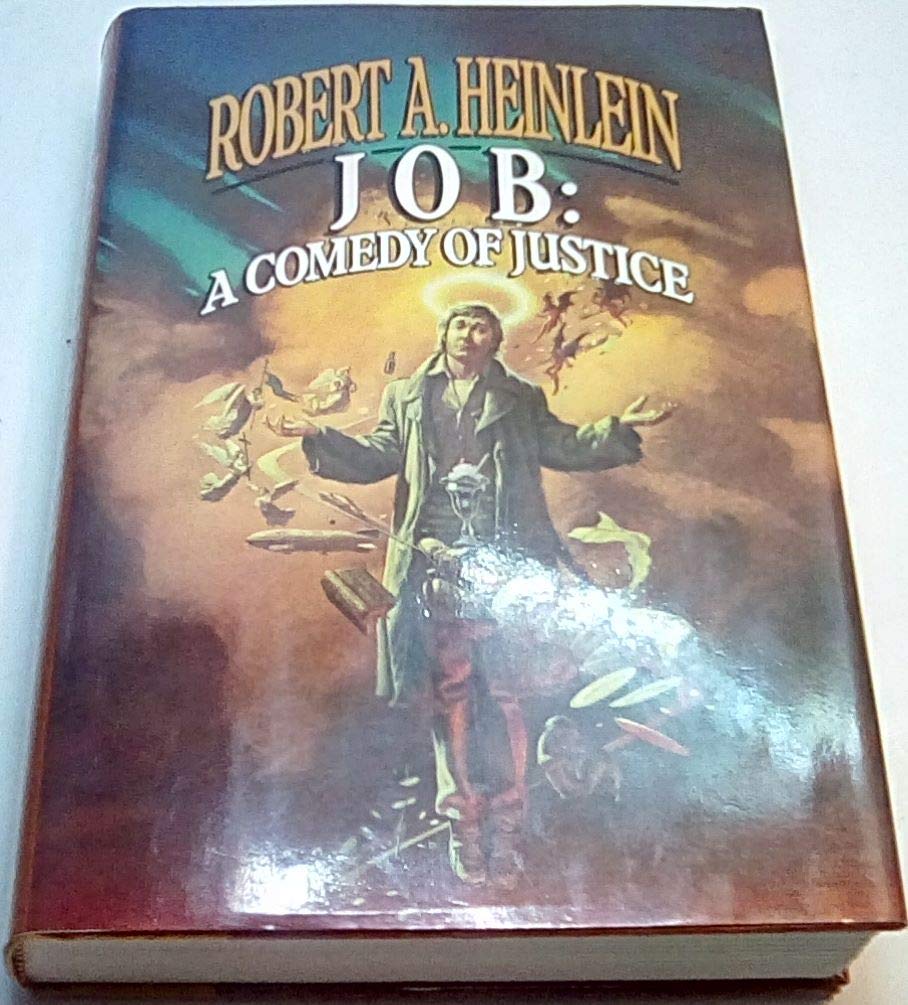
After my wife and I watched the documentary, she wanted us to read his works and she was especially fascinated by his novel "The Queen's Gambit" which has been turned into a Netflix miniseries which has been widely acclaimed. My wife has now read the book and loved it. I have still not read that book, but probably will get around to it sooner or later I suspect. I did read his science fiction classic, "The Man Who Fell to Earth" and loved it to the degree that it prompted me to order most of his published works the remainder of which still lie on my always large "To Be Read" shelf. Tevis's work on "The Man Who Fell to Earth" is as good as any science fiction I have ever read. It is one of those rare works of science fiction which also falls solidly within the larger and more important body of what we know as "Great Literature". It is a masterpiece and deserves every accolade it has ever received. As a largely productive genre of literature, science fiction can boast only a few such masterpieces with other examples being Ray Bradbury's "Fahrenheit 451" and "Stranger In A Strange Land" by Robert A. Heinlein which can be said to be somewhat similar to "The Man Who Fell To Earth" since both main characters are truly unique creatures from other planets who find themselves on earth.
But after reading the book and watching the documentary, I became much more interested in Tevis, his life, and his other works. That led me to the official Walter Tevis website which his agent, The Susan Schulman Literary Agency operates. The website states in their biography of Tevis that "Walter traveled across the country alone by train at the age of eleven to rejoin his family and felt the shock of entering the Appalachian culture when he enrolled in the local school." Tevis actually attended high school in Lexington which is not now, nor was it ever, an example of the Appalachian Culture. The dominant culture in Lexington is vastly different from the Appalachian Culture. The Appalachian Culture is seen in hundreds, perhaps several thousand residents of Lexington but is vastly different from the Central Kentucky Culture which is rooted in the earlier history of Lexington, Fayette County, and Central Kentucky as an agriculturally based economy which was deeply affected by the pre-Civil War slave holding plantation system while the Appalachian Culture is rooted in an area which was first settled by anti-slavery settlers from the British Isles, many of whom had actually come to North America as indentured servants large numbers of which settled the Appalachian regions of Kentucky, Virginia, West Virginia, Tennessee, and the Western Carolinas. The predominant culture of Central Kentucky is rooted in settlers who were often recipients of large land grants due to a combination of justifications ranging from simple political connections to the political kings and king makers in early America to legitimate service in the American Revolution. Most of the early landowners in the Eastern and South Eastern areas of Kentucky which constitute the Appalachian area of the state were simple homesteaders who traveled to the mountains where they could stake claims to small holdings of land which were never productive of the Thoroughbred horses, Bourbon, and tobacco which characterize early life in Central Kentucky. While Tevis did use the "hillbilly" ethnic slur in his writings and his literary agency seems to see that as a point of pride, Tevis never lived in the truly Appalachian area of the state. Whatever contact he had with Appalachian people took place in Lexington where they were just as out of place and uncomfortable as the somewhat odd genius Tevis who actually was an immigrant from California.
Tevis was a truly unique and apparently deeply damaged person well before he came to Kentucky to join his family of origin after having spent more than a year alone as an adolescent patient in the Stanford Children's Convalescent Home in San Francisco due to his having been diagnosed with a rheumatic heart condition. His parents placed him in the home and effectively abandoned him to return to their native Central Kentucky until he was released from the convalescent home and required him, at age 11, to travel alone by train across the continent to a place he had never lived to be reunited with a family whose only contact with him had been periodic letters and telephone calls. Very few children at that delicate age of development would have survived that type of treatment without having been deeply damaged. Tevis became a chronic alcoholic and was always known as a unique individual at best and a truly odd human at worst. An argument can also be made that his advanced level of intelligence might well have made his ability to cope with the abandonment even more fragile. But regardless of how deeply his abandonment affected his later life, it must also be conceded that Tevis was a genius, a tremendous novelist and short story author, and a man deserving of a great deal of respect for his literary output. In all, he wrote six novels and one collection of short stories all of which are well respected work. He also spent most of his life as a teacher and college professor at Ohio University where it said that he was a popular professor. But, I am not convinced that he was ever truly a "Kentucky Writer" or that he ever viewed himself as such. Yes, his works do have settings in Kentucky and he does, from time to time, express his written opinions of the state. But in many ways, he must be viewed somewhat as "a man without a country". He was deeply traumatized by his last year living in his native California and never truly adjusted to Central Kentucky where he spent his late adolescence and was educated at the University of Kentucky. He also taught at UK, Northern Kentucky University, and Southern Connecticut University. He seems to have drifted across a great deal of American geography, spent his last years in New York City where he died, but was buried in Richmond, Kentucky, at the edge of Central Kentucky. He was a deeply damaged human being who managed to turn his personal history into a productive life as a writer of excellent literature but seems to have been unable to attach himself in a meaningful way to any particular environment either in Kentucky, Connecticut, Ohio, or New York.
But, he was a genius and he deserves to have his writing survive as long as humans read great literature.

When I was in my high school years, I used to read a lot of science fiction, and westerns, at least for a few years, and have read most of the early classics. For some reason or other, I missed out on "Something Wicked This Way Comes" by Ray Bradbury but read and loved his other classic novel, "Fahrenheit 451" which is actually solidly in the field of dystopian literature and less of a pure science fiction novel. In fact, I had reread "Fahrenheit 451" with my wife in April of 2019 and wrote about it in the post linked above. At that time, I was reading a lot dystopian literature because of the terrible political disaster which had been unfolding in America since June 16, 2015, and which is still unfolding before our eyes. But somehow, I never had taken up Bradbury's other classic, "Something Wicked...".

A few weeks ago, I decided to correct that error in my reading and ordered a copy of the 2017 Special Edition whose cover is pictured above. I am truly glad I did. I also read this one with my wife in a practice we have carried on for several years now in which I read out loud to her each day as she washes the dishes. In addition to the original text, this edition of the book also has a roughly 70 page section of "History, Context, and Criticism" at the back of the novel. It is well worth reading, both for the classic work itself and for the section of "History, Context, and Criticism". The book apparently took Bradbury several years to bring it to fruition, first as a short story, and then as a novel in which he greatly expanded the text, renamed key characters, merged at least one character into another already in the text, and turned what must have been a pretty nice short story into one of the best known and loved novels in all of science fiction. The novel does have some detractors who primarily quibble about the style which is unique. But, in my opinion, that style is one of the best aspects of the book. Most of the chapters are very short with only a few exceptions, usually in the later sections of the book. The writing style is very crisp, short sentences, rapid interchanges between characters, and little extraneous narration or description. But it is a wonderful book. I do remember in the first few chapters that I also questioned the style but as I began to fully understand what Bradbury was accomplishing with the style I came to love the book. It is every bit as good as any other classic science fiction or fantasy novel I have ever read. It is better than most. In fact, I will go so far as to say this novel is better than many highly praised novels in the greater body of what we sometimes droolingly call "great literature".

The three protagonists are two twelve year old boys and the father of one of those boys who is 53 or 54 years old and, to his son, seems to be incredibly old and unlikely to be understood. I laughed when I saw the writing about this age difference in light of the fact that my own father, whom I loved dearly and still do, was 64 when I was born but saw me grown before he died and will always be a major influence on everything I do, or have ever done. The boys, on a forbidden midnight jaunt in the neighborhood, see a carnival hauled by an ancient train, pull into and set up in a meadow near an abandoned railroad crossing at the edge of their sleepy little Midwestern town. They become fascinated by the carnival and its owners Cooger and Dark, who are, naturally, the villains in the novel. As the story progresses, the boys realize that the carnival is evil and on a mission to destroy them and anyone else with whom it comes into contact. Finally, Will's somewhat aged father, Charles Halloway, joins the boys in their effort to save themselves and the town from the carnival and its evil proprietors. Two mechanical portions of the carnival also play heavily into the suspense of the story. The merry go round and the hall of mirrors are tools which the proprietors use to practice their evil on their unsuspecting victims. Charles Halloway, his son Will, and Wills' best friend Jim learn the truth about the carnival and manage to snatch their collective bacon out of the fire just in time. Bradbury builds the suspense throughout the novel in a way that is slow, methodical, relentless, and terrifying. It is a masterful piece of work. I won't spoil it for you by divulging too much of the plot. But take my word for it, it is well worth your time and money.
 |
| Ray Bradbury--Photo by britishfantasysociety.org |


