Search This Blog

Showing posts with label music. Show all posts

Saturday, December 28, 2024

Josiah H. Combs, Knott County Kentucky Musicologist

Josiah H. Combs was born in Perry County Kentucky and grew up at Hindman in Knott County Kentucky where he was the first graduate of the Hindman Settlement School. He graduated from Transylvania University and obtained a doctoral degree from the Sorbonne in Paris. He was one of the most important collectors of folk songs in America and his book, “Folk Songs of the Southern United States” (University of Texas Press) is considered a classic in the field. The book is based on his doctoral dissertation at the Sorbonne and was originally published in French in Paris. He also published “A Syllabus of Kentucky Folk Songs” which contained more than 300 songs collected in Eastern and Central Kentucky. Dr. Combs's publications include “The Kentucky Highlanders” (Lexington, Kentucky, I912), “All That's Kentucky” (Louisville, Kentucky, I9I5), and “Folk Songs from the Kentucky Highlands” (New York, 1935), as well as textbooks and contributions to the “Journal of American Folklore”, “Books Abroad”, “Folk-Say”, and the “Kentucky Folklore Record”. Much of his important work remains in manuscript, including "The Language of Our Southern Highlanders." Josiah H. Combs’ is one of the four great writers and educators whose lives are detailed in the recent Loyal Jones book “My Curious and Jocular Heroes”. Josiah H. Combs was an important professor of foreign languages (French, Spanish, German) and a first rate linguist. He was a friend to H. L. Mencken who was very laudatory of his writings in “Dialect Notes”, “American Speech”, “Publications of the American Dialect Society”, and “Publications of the Modern Language Association”. He collected and preserved folk songs in Kentucky, West Virginia, and Texas. Many of his documented versions of American folk songs are either the only versions ever preserved or considered to be the most accurate. They often contain language variants which are more correctly and accurately preserved than those of lesser scholars and writers. He taught foreign languages at Texas Christian University, the University of Oklahoma, and the University of Virginia. Many, if not most of his papers, are preserved in the Special Collections Department of the Berea College Library. While Josiah H. Combs’ literary work may not be well known in today’s literary world, he is one of the most important figures in the voluminous body of literature which is rooted in Knott County Kentucky and his published works are among the most respected in his fields of specialty. I have a major problem with the computer language on this blogspot website and I can't seem to get it corrected. My last few posts have had major errors in them which I can't seem to edit away. I apologize and I am working to correct it. When the problem has been addressed, I will re-edit the previous several posts. Keep coming back and thanks for reading my blog!

Friday, September 20, 2024

Billy Edd Wheeler, Appalachian Polymath: Reflections On The Death Of A Great Appalachian

On September 16, 2024, Billy Edd Wheeler died at his home in North Carolina at the age of 91.  Depending on whom you ask, you could hear Wheeler described as a practitioner of various occupations and, before you ask, you should know that he was a master at several.  He was a song writer and performer, an author of nearly a dozen books, a college administrator, a humorist, and a playwright.  He was admired all across Appalachia as a shining example of what a great Appalachian should be and what all Appalachians should seek to become.  Several of his songs have embedded themselves deep in the psyche of the country.  His half dozen books of humor, co-authored with another great Appalachian, Loyal Jones, are found on the display shelves of book stores, variety stores, and general merchandise establishments.  Several of those humor books are likely to be reprinted for years to come.  He was also the author of several outdoor dramas in states as varied as his native West Virginia to Indiana, Ohio, and Kentucky.  Wheeler was a man of man talents and he worked daily to utilize them all to the best of his prodigious ability.  In addition to those occupations from which he received most of his support, he was also a painter, wood worker, and sculptor whose works were actually good enough to be displayed in several galleries over the years.  


He was the  son of a mother who raised to be man enough at 16 to climb on a bus in his native West Virginia and travel to Swannanoa, North Carolina, to a residential school with only a single dollar in his pocket.  Over the years after that fateful trip to North Carolina, he served his country as a student pilot, was hired as Alumni Director at his alma mater Berea College, and completed graduate school in play writing at  Yale University.  His was truly a varied and prodigiously productive life.  
 
I never knew Billy Edd Wheeler but we have had three mutual friends including his coauthor of six books Loyal Jones, and Betty Lynn whom he hired as a secretary at Berea College and who also worked with Wheeler and Jones on the publication of their books.  My friend Betty Lynn had this to say about Billy Edd Wheeler: "I read the obit, but it didn't list BEW's first job out of BC. He was associated with the outdoor drama, "Wilderness Road" at Berea, and was the Alumni Director for a few years before going to Yale. He hired me in Jan.'59 to be the secretary/office mgr. in Alumni Office; and we completed the Alumni Memorial Bldg. in 196l under his leadership. I started being Assoc. Ed. of THE BEREA ALUMNUS, a publication for alumni, staff and the campus, under his leadership. I worked with him and Loyal Jones on the Traditional Music events, held annually on the campus and in the publication of their humor books. BEW wrote several outdoor dramas, one in Indiana about Abe Lincoln; one in West, KY at Murray (I went to both of those) and one in WVA about Hatfields/McCoys; and, maybe others? He put out several albums himself, I have most of them. He was very talented!"  

Another friend who had worked with Billy Edd Wheeler on an outdoor drama in North Carolina said, "he authored our sesquicentennial play in MacDowell County some years ago. 1993. " Voices In The Wind". My oldest daughter and I were both in the show. He was quite taken with her performance, at 9 years old!"   Billy Edd Wheeler was obviously a man who enjoyed watching children develop their talents and was willing to reward them for their achievements.  

I have not even mentioned the things I appreciate most about Billy Edd Wheeler and his amazing life.  I love his obvious zest for life and his ability to achieve success in many fields, his lifelong striving to produce high quality work, his outstanding example for other ambitious Appalachians, and his incredible song writing ability.  I consider three of his songs about the coal mining life to be among the ten or so best songs ever written about coal mining.  "Coal Tattoo" is an incredibly masterful work about the difficulty of being a coal miner and facing periodic layoffs and injuries from the profession.  He addressed the frequent loss of a job in coal mining in that song with these words: 
Travelin' down that coal town road,
Listen to those rubber tires whine;
Goodbye to Buckeye and White Sycamore,
I'm leavin' you behind.
I been a coal man all my life
Layin' down track in the hole,
Got a back like an ironwood bent by the wind
Blood veins blue as the coal.

Then he went on to address the frequent injuries in coal mining with one of the great metaphors in all of song writing, comparing a near death experience in the mines with a tattoo,  And yet, that same stanza ends with another reference to the typical coal miner's love of the job which has nearly killed him: 

 Somebody said "That's a strange tattoo
You have on the side of your head."
I said "That's a blue print left by the coal.
Just a little more and I'd be dead"
But I love the rumble and I love the dark
I love the cool of the slate.

Billy Edd Wheeler addressed the deaths and injuries in the coal mines once again in another of the best coal mining songs ever written, "Red Winged Blackbird".  

Oh, can't you see that pretty little bird
Singing with all his heart and soul
He's got a blood red spot on his wing
And all the rest of him is black as coal

Of all the colors I ever did see
Red and black are the ones I dread
For when a man spills blood on the coal
They carry him down from the coal mines dead

Fly away you red winged bird
Leave behind the miner's wife
She'll dream about you when you're gone
She'll dream about you all her life

Oh, can't you see that pretty little bird
Singing with all his heart and soul
He's got a blood red spot on his wing
And all the rest of him is black as coal
 Using the coloration of a beautiful bird, the red winged blackbird as a metaphor for the wounding, disabling, murdering  accidents inside a coal mine was a brilliant piece of writing.  "For when a man spills blood on the coal  They carry him down from the coal mines dead."   It is my personal opinion that Billy Edd Wheeler was the greatest writer of coal mining music who ever lived.  And he proved it once again the beautifully poignant song "The Coming Of The Roads" about a broken love affair and the death of a coal mining town.
Once I thanked God for our treasure
Now like rust it corrodes
And I can't help but blamin' your goin'
On the coming, the coming of the roads
No, I can't help but blamin' your goin'
On the coming, coming of the roads 

While I value the song writing of Billy Edd Wheeler most for his incredible contributions to the genre of coal mine music, I would be remiss if I didn't also mention that Wheeler also wrote a couple of other songs which were even more favorably regarded by the market place.  He was also the author of the songs "Coward Of The County" which was a Number 1 song for Kenny Rogers; "Jackson" which was often regarded as the signature song of Johnny Cash and June Carter; and the humorous "The Little Brown Shack Out Back" which Wheeler  himself took into the Top 10.  He is a member of the Nashville Song Writers Hall of Fame, the North Carolina Music Hall of Fame; and the West Virginia Music Hall of Fame.  That, my friends, is a career. 


Tuesday, February 6, 2024

Country Music Association Nominees For Entertainer Of The Year 1967

This morning I awoke thinking about what music I might listen to today and the thought entered my head that it would be interesting to listen to the music of several people who had been nominated for Entertainer Of The Year by the Country Music Association or CMA.  Since I like classic country much better than the great majority of what is being billed and sold as country music today, I went to the first year of the CMA Awards, 1967, to start looking at who had been nominated but didn't win that year.  The list was an incredible group of five of the greatest male country singers of all time, Eddy Arnold, Merle Haggard, Bill Anderson, Sonny James and Buck Owens.  When I read the list, I was thinking that this group of five must have all won several CMA Awards in their careers despite not winning that year's Entertainer Of The Year Award.  I was wrong!  One of those five never won a CMA Award.  Yet, all five are in the Country Music Hall Of Fame in Nashville.  I am sure most of you will struggle to guess which one never won a CMA Award.  I know I did.  

I  did not say at the beginning of this blog post who won the CMA Entertainer Of The Year Award in 1967.  The winner was Eddy Arnold.  He had actually been nominated for three CMA Awards that year, Entertainer Of The Year, Album Of The Year, and Male Vocalist Of The Year.  He only won the Entertainer Of The Year Award and was never nominated again after that year.  
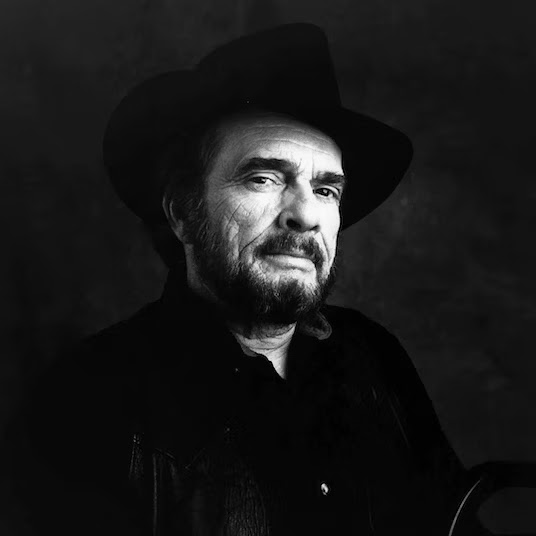

Merle Haggard didn't win the Entertainer Of The Year Award in 1967 and, in fact, did not win a CMA Award until three years later in 1970 when he was nominated for an amazing 9 awards and actually won four.  In an even more amazing statistic, Merle was nominated for 46 CMA Awards from 1967 until 2015.  


Despite his amazing career as both a performer and a songwriter, Bill Anderson has been nominated for only 9 CMA Awards including that 1967 nomination for Entertainer Of The Year.  He did not win a CMA Award until 2001, 34 years after being nominated the first time and having written at least 7 number one country songs both for himself and other performers.  


Buck Owens has been nominated for 6 CMA Awards including that 1967 Entertainer Of The Year Award and did not win an award until 2001 when he shared the win with Brad Paisley, George Jones, and Bill Anderson, for the project called "Too Country". Buck Owens has never won a CMA Award on his own.  Yet he had 10 Number 1 Country Albums in his career along with an astounding 20 Number 1 Singles.  He also went 34 years after his first nomination before he ever won that joint Vocal Event Of The Year Award with Bill Anderson and company.  

By now you have probably guessed that Sonny James was the one singer from that amazing fivesome who were nominated in 1967 who never won a CMA Award of any kind.  In a 9 year period from 1967 to 1976, Sonny James was nominated for 5 CMA Awards and never won a single one.  And during his prolific career, Sonny James had 2 Number 1 Country Albums and an amazing 23 Number 1 Country Singles.  It is hard to believe that with that kind of career he never won a CMA Award.  

I firmly believe those 5 men might well be the best group of nominees ever for any CMA Award.  They all had stellar careers, all are in the Country Music Hall Of Fame, and all are world famous as singers and musicians.  All 5 are among the best singers in the history of Country Music. 

Wednesday, May 31, 2023

Reflections On Reading "Accordion Crimes" by E. Annie Proulx


E. Annie Proulx, or Annie Proulx as she is sometimes known, is one of America's best known and most successful authors.  She is the author of the short story on which the movie "Broke Back Mountain" was based and won the Pulitzer Prize for Fiction and the National Book Award for her novel "The Shipping News" in 1994.  This is actually the third of her works which I have read and yet I have not yet written about any of them on this blog which is an unjustifiable error.  At times, she is a wonderful writer and her prose can flow smoothly, interestingly, and in a manner which consistently draws the reader deeper into her works.  But, in my opinion, at times her work falls measurably short of her best.  I like this book as much or better than either of her others which I have read.  But I have to admit that I enjoyed the earlier reads enough to go back for another dip in this one. Perhaps part of that higher level of pleasure on my part comes from the fact that, as a child in grade school in Knott County Kentucky, I was exposed on a monthly basis to live gospel accordion music from Alma Heibert, of the two "Bible Women" who were allowed to visit each small, rural grade school in the county on a monthly basis as a part of their missionary work with Camp Nathaniel in the county.  As always when I mention my experience with these two women and that fact that missionaries were allowed to visit public schools in the county, I am morally and ethically bound to state that the fact that they were allowed to do so in public schools was a clear cut violation of the Separation of Church and State and never should have been allowed to happen. But, yes, I do have fond memories of having known those women and of accordion music.  

The main character in this novel is not a person but an accordion, hand made by a native of an Italian native who emigrated to the United State with the instrument he had made and eventually sold it.  The human characters come and go in the novel as the accordion passes from hand to hand, being used by members of different ethnicities to play the particular music of each culture as the instrument passes along its life.  The accordion is variously owned and played by Mexican Americans, African Americans, Polish Americans, Irish Americans, and other members of other cultures. Along the way during the story, Proulx weaves in a great deal of historical and musical information about accordions, their instrumental relatives, and many of the cultures which are historically connected to accordion music.  along the way, the instrument is loved, played, admired, and sometimes abandoned much as a human character might have been.  It is an interesting and unique method of constructing a novel and, I believe, is some of Proulx's best work.  In my opinion, the language and written structure of the novel is more skillful than that in either "The Shipping News" or "That Old Ace In The Hole" both of which I have also read and will, perhaps, also write about on this blog.  The accordion becomes a living, breathing character in the book.  It is more than just a musical instrument.  It is a delivery vehicle which deposits musical and cultural history at the reader's doorstep. It becomes the glue which brings all the other characters, cultures, and histories together.  And those histories are both documentations of cultures and of people, families, and individual and shared lives.  It is a book well worth reading, especially if the reader is not familiar with the work of Proulx it is a fine place to begin a relationship with the author and her work. 


Thursday, April 1, 2021

"Devil In The Hills", Music About Esau In The Coal Fields by Mary Hott

 For those of you who have already read my previous blog post about Esau in the coal fields, you probably know that the music in this CD is not feel good music in most cases.  Esau in the coal fields was a practice in which women in coal camps whose husbands, fathers, or other custodial male relative was unemployed due to injury, a strike, or other serious event were able to obtain necessary items at coal company stores through a practice similar to scrip but with much more serious consequences if the debts could not be paid.  This practice was first brought to light at the Whipple Company Store in Raleigh County West Virginia.  Mary Hott, who is a singer/songwriter from Paw Paw, West Virginia, learned about Esau during the time when the Whipple Company Store was being operated as a privately owned museum by Joy and Chuck Lynn.  Because she was deeply moved, as any compassionate human being would have been, by the stories of Esau and the sexual abuse and sexual servitude which it resulted in Mary Hott wrote most of the songs on this CD and recorded it with a well known West Virginia band known as The Carpenter Ants.  Her website, "Devil In The Hills", can be found at this link.  The CD is composed of ten songs and an introductory sound bite called "A Miner's Perspective".  Ms. Hott wrote or co-wrote eight of the songs.  the CD ends with Mary Hott's versions of the well known songs "Life's Railway To Heaven" and "Take Me Home Country Roads" both of which have for many years been strongly associated with the Mountain State.  The CD is also shipped with a 24 page booklet which includes several historic photos, lyrics to the songs, and Mary Hott's own powerful writing about both the CD and the practice of Esau which prompted this piece of work.  

Although I have written about music several times on this blog, I do not recall ever choosing to review a CD before.  That should be considered as an indicator of my overall opinion of this CD.  The lyrics are powerful.  Mary Hott's voice is smooth yet strong, trained yet native to West Virginia in such a way that the CD is clearly authentic, and her vocal range makes the CD a pleasure to listen to if it is not a faux pas to call a CD on the subject of Esau in the coal fields by such a word.  Mary Hott and I exchanged internet based messages about this CD and Esau almost immediately after I first learned of the practice of Esau and her information and honesty helped a great deal in the formation of my opinions about Esau.  During those exchanges, Mary Hott had this to say, in part, about the CD and Esau:

"I'm careful to not call the Esau scrip "institutionalized" -- it appears it was more localized, and may have originated in railroad culture, but not necessarily known at the upper ownership levels of coal companies. It appears it was mainly a method for keeping families "in their place" and not attempt unionization (or any betterment of their living conditions). And Esau was only a part of the story of the conditions women lived under during that time. My interest started with Esau but soon turned to the overall abuse of human rights, both women and men, of all cultures. My CD package contains a booklet that interprets the background stories as well as explains the historical context." (Mary Hott- personal message to Roger Hicks March 20, 2021) 

The CD begins with "A Miner's Perspective" which is a recorded reminiscence by a coal miner in the book "Whipple Company Store Vol 1:Coal Camp Voices"  by Joy Lynn.  The second track, "They Built A Railroad" was written by Michael Lipton and Mary Hott about the early development of railroads into West Virginia in support of the rapidly burgeoning coal industry.  These lines from the lyrics are an excellent portrayal of what was happening in the early days of the coal industry both in West Virginia and in Appalachia in general: "They were building empires from a distance. Monied men from the north and east.  They called it progress, taming our wilderness.  They left despair and poverty." The third track, "Annabelle Lee" utilizes the name of Edgar Allen Poe's martyred heroine.  Poe's lines "That the wind came out of the cloud by night, Chilling and killing my Annabel Lee." are echoed in the lyrics of Mary Hott "At twelve years old she was sold to the agents who sought out her kind.  Trafficked by train to the deep, remote coal camp-a comfort girl."  And that is the nature of Esau in the coal fields.  The fourth track on the CD, "Room Of Lost Souls", combines elements of three different stories which have been told by miner's and their survivors about the cruel, often fatal, consequences for miners who opposed the company and it's enforcers.  "Each death a mystery. A warning how it will be.  If we think you're a Union man."  The fifth track on the CD directly addresses the issue of Esau under the title "Take The Esau".  These powerful words by Mary Hott tell the story of Esau in a nutshell:  "Mother took the Esau, had no choice.  Had no other options, had no voice.  Kept us kids from starvin', kept our home.  She faced the consequences all alone."  The next song, track six, "The Spot", was actually written by Mary Hott and Michael Lipton about a bar near her hometown of Paw Paw, West Virginia, but the song, the story, and the bar are emblematic of many towns, numerous bars, hundreds of coal camps all across Appalachia.  "It's anyone's guess at the end of the night. The liquor speaks loud and fuels the fight.  In desp'rate times, reach for your revolver, Load one chamber, watch 'em head for cover."  The coal fields of Appalachia are filled with literally thousands of stories about desperate men, without hope, bereft of alternatives who sought the alleviation of their pain in coal camp bars and found only death among other men who were often even more desperate and sought some semblance of power with a gun or knife in their hand.  The title track of the album, "Devil In The Hills", co-written by Hott and Lipton, returns us directly to the story of Esau in the coal fields: There's a devil in the hills...and he's on the loose.  He's a mean one, those company men have the power to abuse."  That abuse took many forms in the Appalachian coal fields: murder, beatings, unjustified firings, and the worst form of all, Esau, which preyed on the wives and daughters of miners who were unemployed and powerless, even more powerless than when they were still working.  "Rise Up, WV", written by Hott and Lipton, is a call for action, both by the powerless miners, wives, and daughters in the time of Esau and for all West Virginians today in memory of those earlier, unprotected victims and reminds us of the famous words of the West Virginia motto as the personification of that call for justice.  "Gotta take a stand for WV.  Rise Up, be free.  Show the world the way it can be.  Mountaineers are always free."  The ninth track of the CD, "Blair Mountain Ballad" is a traditional song set to music by Mary Hott which reminds us of the connection between Blair Mountain, the most famous occasion in which miners literally fought for their lives in Logan County against coal company gun thugs with machine guns.  Blair Mountain will always stand out as the one occasion in which American citizens were attacked by agents of the US government in support of criminal corporations and an even more criminal sheriff.    The last two track on the CD are the traditional songs "Life's Railway To Heaven" and "Take Me Home, Country Roads" which can also be said to personify traditional cultural life in the West Virginia coal fields.  

If you are familiar with the coal fields of Appalachia and the struggles of the Appalachian coal miners and their families, you will appreciate this music.  If you are unfamiliar with the miners and their struggles, this CD is a good place to start.  The description of the CD and its musical styles on Mary Hott's website says The music ranges from bluesy Americana and roots rock to Celtic and gospel, and the deep groove of the anthemic “Rise Up, WV.”  The album is mostly original songs with two covers, including a unique southern gospel version of West Virginia’s adopted state song, “Take Me Home, Country Roads.”  And therein lies my one objection to this work. I would have appreciated the CD more if it had been recorded in one cohesive style no matter what that style might have been.  Whether it had been in the country and Bluegrass which are so popular in the coalfields or in the popular music played on most radio stations today, it could have been a better, more cohesive product if it had been consistently one style of music.  But do not allow my single objection to this CD prevent you from buying, enjoying, and promoting this CD.  It definitely deserves your undivided attention.  And so does the subject of Esau in the coal fields. 


Monday, March 30, 2020

John Prine, The Corona Virus, and The Great Compromise

John Prine, Photo by t2.gstatic.com
"I used to sleep at the foot of old glory
And awake in the dawn's early light
But much to my surprise when I opened my eyes
I was a victim of the great compromise"

"The Great Compromise" by John Prine

When John Prine (October 10, 1946-March 7, 2020) wrote, recorded, and released "The Great Compromise" in 1972, I don't think he had any idea he was a prophet.  Based on everything he has said, written, and sung, I believe he thought he was just another dissenting American speaking out against an unjust war in Viet Nam and a government which was ignoring the best interests of the nation and the world just as Thomas Paine did when he spoke out against England and King George.  But today, 48 or so years after the song "The Great Compromise" was recorded and released, John Prine  lay in an intensive care unit in a hospital in Nashville fighting for his life for more than a week and died yesterday, March 7, 2020, just as have more than 13,000 other Americans, as of today, March 8, 2020, because once again, America is suffering from a "Great Compromise".  Actually, Prine  fought for his life died due to the Corona Virus because nearly four years ago, Vladimir Putin and Russia were able to steal an American election and illegally install the worst traitor in the history of the world  in the White House.  Now, a little over three years after the agents of the US government stood silently and allowed that treason to take place, the United States is suffering from the worst disease pandemic since the 1918 flu epidemic and the polio epidemic of the early twentieth century.  The current Corona Virus pandemic would not be devastating the United States if we had a legally, duly elected president in the White House instead of the Russian agent who, on January 29, 2020, ignored the information provided by the US intelligence community and his economic adviser Peter Navarro which informed him that a Corona Virus pandemic was beginning in China and would be likely to spread across the entire world and into the United States.

TRAITOR Trump did nothing in January after being warned and has done as little as possible with his illegally obtained power to this very day.  He lies, obfuscates, prevaricates, distorts, misrepresents the truth, and denies  all responsibility for his malignant inaction and his deliberate destructive actions to avoid doing anything about the pandemic.  And today, Joe Diffie, Ken Shimura, CBS News reporter and producer Maria Mercader, Alan Merril, Mark Blum, chef Floyd Cardoz, playwright Terrence McNally and 13,000 other Americans have died because a TRAITOR lives in the White House after having committed TREASON with Vladimir Putin and Russia.  And now John Prine's name has been added to that list of the dead for the very same reason.  

When John Prine wrote "The Great Compromise" he was protesting the Viet Nam war in song.  But the words from that song above were highly prophetic about the pandemic we are facing today.  John Prine served the United States honorably in the US Army and as a mail carrier.  He literally slept at the foot of Old Glory during those years.  Today, John Prine's eyes eyes have been closed forever, his pen and his guitar have been silenced and, truly, irrevocably, he is a victim of "The Great Compromise" just as are all of us Americans who are forced to hide in our homes from a virus which could have been stopped with appropriate government actions at the onset if we had a legally, duly elected president who had the honor, intelligence, and moral character sufficient to take appropriate actions in the best interest of the country. 

But, as I said in the beginning of this requiem, John Prine was a prophet.  The words he wrote 48 years ago foretold his death due to the Corona Virus.  John Prine will continue to speak until the day America finally hold the TRAITOR Trump responsible for his TREASON.  


Wednesday, November 28, 2018

"Conquerors Of The Dark Hills" by Rufus Mitchell Reed--Book Review


Reed, Rufus Mitchell: Conquerors Of The Dark Hills (New York, Vantage Press, 1979)


Once in a while we stumble into a book which surprises us with its quality, applicability to our needs, and general utility.  For me this was such a book.  I bought my copy from a local speculator in antiques and collectibles who had bought most of the estate of a local newspaper writer and poet who had known many of the published authors in Eastern Kentucky in particular and the whole of Kentucky in general.  My copy was autographed by the author and inscribed to the aforementioned local newspaper writer.  The book was published by Vantage Press which, for several years, was the largest vanity press in America before losing $3.5million in damages in a civil suit due to having defrauded several hundred authors.  Vantage also lost all credibility and eventually went out of business in 2012.  But this book is a reasonably high quality hardcover and my copy was still in its paper dust cover which is also in good to very good condition.  But enough about the physical state of the book.  Let's talk about its writing, content, and applicability to my needs as a student, researcher, and writer in the areas of Appalachian Studies and Appalachian Literature.  

Rufus Mitchell Reed Photo by The Reed Family

Rufus Mitchell Reed was born in 1895 in Martin County Kentucky near Lovely, Kentucky, in the Tug River Valley.  He lived his entire life in Martin County and worked most of that time as a surveyor.  But he was also apparently a student of Appalachian Culture, the local genealogy and history, and the flora and fauna of the entire Tug River Region.  His writing is well above average and I am somewhat surprised by the fact that he had published the book with a vanity press.  The quality and accuracy of the work and comprehensive nature of his knowledge about Appalachia in his time were more than sufficient for a regional press to have published his work.  He also published several volumes of poetry  over the course of his lifetime, none of which I have ever read.  But as soon as I can lay hands of copies of his other books, I will gladly purchase, read, write about, and retain them in my ever growing collection of Appalachian books.  

Rufus Mitchell Reed Photo by The Reed Family
"Conquerors Of The Dark Hills" can best be described as memoir but it addresses a significant number of aspects of life in the Tug River Valley in the late nineteenth and early twentieth centuries.  The book was published in 1979 when the author was eighty-four years old and I am sure it was his last ditch effort to have his impressions of his life and those of his family and neighbors recorded for posterity.  He is an articulate, skillful writer whose grammar, syntax, and style are well within the good to better category.  His knowledge of Appalachian Culture, history, and the area in and around Lovely, Kentucky, and the Tug River Valley are comprehensive, accurate, and honest.  This is a book which deserved to have been printed by a legitimate academic press which could have successfully marketed it across the wider Appalachian area. 

The chapters discuss early Kentucky and Appalachian history and a variety of topics of everyday life in the period from about 1800 to 1980.  It is a book which draws the reader in, makes you eager to read every word of it, and leaves you wishing for more when you reach the end far too soon.  For the fledgling student of Appalachia, it is wonderful source of cultural information.  For the accomplished Appalachian scholar it is a useful source of first hand information about life in the Tug River Valley in the early twentieth century.  It left me wishing I could have known Rufus Mitchell Reed, Rufe as he was known by his family and friends.  Due to the vanity press publication, there are a limited number of copies to be found on the open market and some of them are a bit steeply priced by sellers of rare books.  But I will gladly recommend to the reader that you buy one when you can find it.  You will not be disappointed.  

The individual chapters address several of the same topics I have addressed in the life of this blog plus several others such as education, hog killing, family life in Appalachia, Appalachian religion, digging ginseng, and hoedowns.  If you can find your copy, read it, enjoy it, hang on it for dear life, and arrange to pass it on to another lover of Appalachia when you die. 

Friday, January 6, 2017

You Don't Need A Reason In A Bluegrass Song

Today, while we were traveling to and from an appointment in Mount Sterling, KY, my wife Candice and I listened to a couple of Bluegrass CD's which we hadn't listened to in a while including Ralph Stanley's classic "Saturday Night" CD, Larry Sparks' "40" disc, and Dale McCoury's "Del And The Boys" album which contains one of the best Bluegrass songs ever recorded, "Vincent Black Lightning 1952" which was actually written by the great rock and roll guitarist Richard Thompson.  Actually, every one of those discs contains more than one Bluegrass classic recording.  Candice grew up in East Central Wisconsin and never listened to Bluegrass until we were married and she moved to Eastern Kentucky.  At first exposure, she frequently responded "it makes my ears hurt" but she has become a devout Bluegrass aficionado over the last twenty-five years.  But today, as she sometimes does in the middle of a Bluegrass song about death or murder she asked "but why did he kill her". This time she asked that question in response to "Banks Of The Ohio".  My first response, which I still think was a good one, was "you don't need a reason in a Bluegrass song".  But, if you listen to the lyrics, you will hear the words "I killed the girl I love you see because she would not marry me."  As is true with "Banks Of The Ohio", most Bluegrass songs which involve the murder of a loved one or an innocent do contain some stated reason for the murder. 

Bluegrass Banjo


The next best example of this type of song that pops into my head is "Pretty Polly".  Late in the song, the reason for the murder is clearly given: "Willie, Little Willie, I'm afraid of your ways The way you've been rambling you'll lead me astray".  The young Polly is clearly afraid that her lover, Little Willie  will lead her astray.  We don't clearly hear exactly how Polly is afraid this will happen but we learn almost immediately that Willie has planned this murder in advance and has "dug on your grave the biggest part of last night". 

Photo Of An Appalachian Graveyard


The Bill Monroe classic "The Little Girl And The Dreadful Snake" actually falls clearly into this category of songs without a clear reason for the death, not by murder but by snake bite, and also falls clearly into another of the most unique categories of Bluegrass which I have written about previously, Dead Baby Music.  The child dies due to a snake bite without any clear reason being given in the lyrics for her death.  It is also interesting that this song is included on a very unique compilation CD called "American Gothic: Bluegrass Songs Of Death And Sorrow".  That CD also contains a Mac Wiseman version of an old song called the "Ballad Of The Lawson Family" in which the father kills his wife and six children and commits suicide.  It is a classic Bluegrass song without a reason for the violence and the lyrics clearly state that "we'll never know what caused him to take his family's life". Of course, since the song is about the death of six little children, it also falls clearly within the subgenre of Dead Baby Music. 

I could go on at great length about all the Bluegrass songs which contain tragic circumstances without a reason for the tragedy but I think you get the point.  Some of the best songs in Bluegrass are tragic and have no clearly stated reason for that tragedy.  Let's all hope Bluegrass song writer's keep going for the next hundred years writing without a reason. 

Tuesday, December 3, 2013

DEAD BABY MUSIC, A SUB-GENRE OF BLUEGRASS

DID I REALLY SAY "DEAD BABY MUSIC" YOU ASK?  YES, I DID!


Growing up in  Eastern Kentucky in the 1950's & 1960's I listened to a lot of bluegrass & classic country music primarily because that was what most of the people around me listened to and most of the radio stations I could pick up also played it daily.  But I also loved the music in all its manifestations.  As I became a hippie in the late 1960's, I ceased to listen to bluegrass and country for several years and listened primarily to rock and folk until about the middle 1970's.  At about that time, I returned to the music of my childhood and have listened to it nearly every day of my life since.  I generally prefer bluegrass over most other forms of music but do still periodically listen to classic rock, folk, blues, classical, jazz, and zydeco.  But, when I want to feel at peace, at home, comfortable and rested, I listen to bluegrass.  My favorite musicians include the Stanley Brothers, Flatt & Scruggs, Reno & Smiley, Bill Monroe, Dailey & Vincent, the Carter Family, Tom T. Hall, Doc Watson, Area Code 615, Dale McCoury, Ricky Skaggs, Dolly Parton, Clarence Kelly, Patty Loveless, Don Rigsby, and Larry Cordle.  Nearly every one of these people is an above average musician and there are some of the best songwriters in America in this group.  Nearly every one of them has written and/or recorded at least one American classic song which has woven its way into the hearts of the general public.  Several of them such as Bill Monroe, Tom T. Hall, Ricky Skaggs, Flatt & Scruggs, Dolly Parton, and Larry Cordle have written and recorded several such songs.
Bluegrass music is the music of the Appalachian working class, the poor, the disenfranchised, and many of the people in the country who seek to move upward from an economic or social condition which they do not wish to live in for the rest of their lives.  Bluegrass music shares these qualities with both country music and rap. Like country music, bluegrass has commonly heard themes of love, drinking, unrequited love, cheating, home & family, hard work, prison, Christianity, and love of place, an Appalachian Value I have discussed at length in several other posts. Bluegrass also shares several of these themes with rap and at some time in the future, I will also write a post about common themes in bluegrass and rap.  But for now, my topic is a sub-genre of bluegrass music which I have always referred to as Dead Baby Music. And I have to give credit for the name Dead Baby Music to my wife Candice, a transplanted Wisconsin native, who first heard bluegrass with every negative opinion possible and has since come to know and love it.  I have searched for a slightly less off putting name for this type of music and to be honest, I cannot find one that is more accurate or more appropriately descriptive of the music I am discussing.  What I mean by Dead Baby Music is music which almost always has a central character, usually a child, who dies an untimely and often painful or cruel death.  In some of these songs, that death may have even come at the hands of a parent, family member or friend. 

The three best examples of Dead Baby Music I can think of are "Little Bessie" written by Bill Emerson, Doyle Lawson, & Charley Waller, "Bringing Mary Home" written by Red Sovine, and "The Water Lily" written by Tom T. Hall. "Little Bessie" is an absolute classic which has been recorded by hundreds of bluegrass artists but the two best versions are by Ralph Stanley and Ricky Skaggs.  Skaggs recorded a version which is nearly 14 minutes long and is timeless in its musical skill & heart wrenching vocals.  In the song, Little Bessie, a terminally ill child tells her mother of a dream or vision in which "a window opened on a field of lambs and sheep. Some far out in a brook were drinking.  Some were lying fast asleep."  The next stanza describes "a world that was filled with little children and they seemed so happy there."  These clearly Christian symbols of pairing children with lambs lead into the next stanza in which Bessie asks if the Savior "saw me would he speak to such as me".    Bessie does go on to describe a conversation with Jesus in the next two stanzas in which he tells her "come up here my Little Bessie. Come up here and live with me".  Then the poor sick child tells her mother that she had just been getting ready to go when the mother called and she proceeds to tell her mother goodbye.  "Oh to sleep and never suffer Mother don't be crying so" is a request by the child for permission to die.  At this point, the "mother pressed her closer to her own dear burdened breast. On the heart so near its breaking lay the heart so near its rest".   And naturally, Little Bessie must die and go to join Jesus as the final stanza says "at the solemn hour of midnight in the darkness calm and deep lying on her mother's bosom Little Bessie fell asleep".  That is Dead Baby Music at its finest.  "Little Bessie" personifies nearly everything that Dead Baby Music is. It is played by thousands of bluegrass musicians ranging from the great to the miserably ordinary.  It is a crowd favorite at bluegrass concerts and festivals and will continue to be so long as bluegrass music is played in public.


Tom T. Hall, one of America's greatest living songwriters, with a portfolio of classics to his credit also wrote one of the finest pieces of Dead Baby Music when he penned "The Water Lily" which is best heard on the Hall & Stanley duet on Ralph Stanley's "Saturday Night, Sunday Morning" recordings.  The song also begins with a dream, another common element in Dead Baby Music.   But this time, the mother is dreaming "of a lily decked pool with a border of ferns and a beautiful child with butterfly wings trips down to the edge of the water and sings."  Hall has probably consciously reversed some of the best elements of the earlier classic by having the mother dream and the child beckoning from the dreamland asking the mother to come.  But he has also consciously kept the elements of the dream, the mother, the child, and the water.  Tom T. Hall did not become the unequaled songwriter he is accidentally. He has studied and written both novels and short stories.  His public nickname has for many years been the Story Teller.  During the time he worked as a regularly touring musician, his band was known as the Story Tellers.  And in the story of "The Water Lily", he has woven one of his finest and one of the favorites of all followers of Dead Baby Music.  The lyrics of the song are woven together by the chorus of the child with butterfly wings singing to her mother "come mother, come quick follow me. Step out on the leaves of the water lily."  And, naturally, the mother attempts to join the beckoning child "but the lily leaves sink and she wakes from her dream".  And of course, the writer and the mother let us all know the inevitable for "waking is sad for the tears that it brings and she knows it is her dead baby's spirit that sings".  There is no finer example of Dead Baby Music in the world today.  Hall kept the best themes from "Little Bessie" but reversed the position of the mother and child.  He has the child already dead and begging her mother who is unable to comply to come and join her.  But, like "Little Bessie" we still have the grieving mother left behind by the dead child.


Red Sovine used a different approach but achieved an equally touching effect with "Bringing Mary Home".  The song begins with a narrator stopping in the night to pick up a small girl from the side of the road.  The child climbs into the car and tells the narrator "my name is Mary please won't you take me home."  And the narrator goes on to give us a touching physical description of the little girl.  "She must have been so frightened all alone there in the night.  There was something strange about her cause her face was deathly white."  Here we also see another common theme in Dead Baby Music with white symbolizing purity as it has in literature for hundreds of years.  Then the narrator and driver takes the little girl to the house where she asks him to go and when he gets out to open the car door for her  "I just could not believe my eyes the back seat was bare.  I looked all around the car but Mary wasn't there." And finally, Sovine brings the mother into the song with these words " A small light shown from the porch a woman opened up the door. I asked about the little girl that I was looking for. Then the lady gently smiled and brushed a tear away. She said it sure was nice of you to go out of your way. But thirteen years ago today in a wreck just down the road our darling Mary lost her life and we miss her so."  This time the mother is providing the consolation for the innocent stranger who has just happened to become an element in the child's quest to return to the home and grieving mother."  And then we reach the somewhat surprising and chilling end of the song when the mother tells the man  "so thank you for your trouble and the kindness you have shown.  You're the thirteenth one who's been here bringing Mary home."  At this point, it is not uncommon to see tears in an audience when a good singer and band deliver that line.


Dolly Parton has also written and recorded some of the finest Dead Baby Music I have ever heard.  She, too, is one of America's finest song writers with more than a few classic songs to her credit in the fields of country, pop, and bluegrass.  But her best Dead Baby Music is rarely heard outside the world of bluegrass.  On her classic bluegrass CD "Little Sparrow", Parton actually recorded two fine examples of Dead Baby Music,  "Mountain Angel" and "Down From Dover".  Parton did some of her best writing in "Mountain Angel".  It is a song about a girl who was born as close to perfect as it is possible to be. "Skin as fair as lily's. Hair as golden as the corn. She was her momma's baby. She was her Daddy's pride."  And then a man enters the picture and changes everything in this woman's life.  He gets her pregnant and disappears before the child is born.  "They say she had a baby.  Some say that it had died.  They say it's just as well as it had been the devil's child".  And now the grief-stricken mother disappears "into the wild".  The most powerful lyrics in the song come in the last couple of stanzas.  "She waited for him as her beauty faded. Her parents died from grief before their time." Not only has the tragedy consumed the mother of the dead baby in this song, it has also consumed the grandparents as well.  And like the other mothers in the other examples, this mother tries to deal with her grief but cannot. "She tried to gather pieces of her life, they wouldn't fit. Beside the tiny grave deep in the woods is where she'd sit. Talking to the child, herself, to him, who knew for sure. Possessed they say by Satan's insane lure."  At this point in the song, she has now completely lost her mind and become an outcast "high a'top the mountain"  And that is how she lives out her life roaming the mountains, grieving for the dead child and the man who ruined her. Parton takes her out into the hills and leaves her for all eternity where "for years they say she's seen. Looking down upon the town where she had once been queen. She'd sneak around the playground, watch the little children play. They'd see the crazy lady then run away. They say she roamed these hills for years, wearing not a stitch. The lovely mountain angel now thought to be a witch."


Parton also narrowly misses the genre of Dead Baby Music in another of her songs, "These Old Bones" from the "Halos And Horns" CD.  In that song, she tells a story of witchcraft or clairvoyance about another woman who lives alone in the mountains with her bag of bones, a dog, a cat, and a goat.  The narrator turns out to be a daughter of the woman which "the country took you from me said I wasn't right in my mind."  But this child lives to find the mother and takes care of her, burying her, and assuming her position of telling fortunes and living in the mountain with "These Old Bones".


In the other example of Dead Baby Music on the "Little Sparrow" CD, Parton writes about another young girl who has become pregnant by a man who deserts her.  But this girl leaves her family and home and goes to take "care of that old lady" as a way to have a home away from her family who have ostracized her.  As childbirth gets closer, she keeps repeating the chorus line "I know he'll be coming down from Dover."  But the girl delivers the child still born and sings "dying was her way of telling me he wasn't coming down from Dover".  All the songs I have discussed here are fine examples of Dead Baby Music.  They share several common elements.  There are many more in bluegrass which fit the genre.  They are part of what makes bluegrass unique and wonderful.  Rarely would anyone wish to listen to these songs all day long.  But when you mix them in among the other standard bluegrass themes of love, work, prison, heartbreak, and religion, they are well worth paying attention to and accepting as a treasured part of the bluegrass music many of us will love to our dying day.