Pearl S. Buck wrote and published five novels under the psudonym "John Sedges" during her lifetime after she had returned to America from China. At the time, her publishers thought that she was being viewed primarily as a Chinese or Asian centered 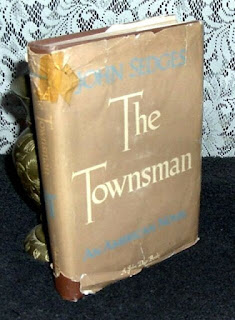
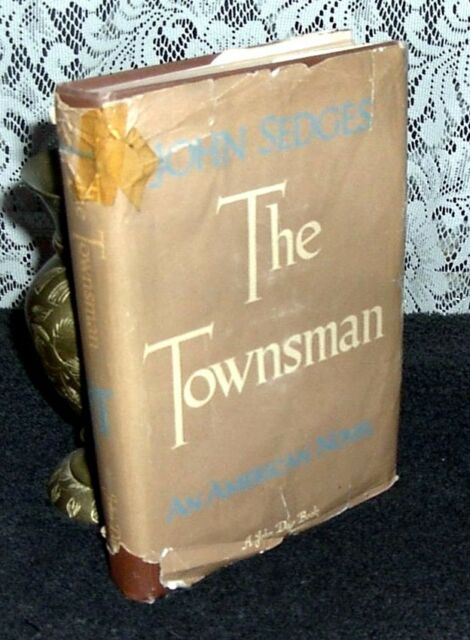
writer and that the reading public would be reluctant to buy American centered books by Buck. "The Townsman", "The Long Love" and "Voices In The House" were all published in 1944 and were well received despite the wartime environment which was naturally depressing book sales nationwide. The sales of those two novels under the pseudonym eventually led to the publication of "The Long Love (1944)", "Bright Possession (1952)", and "The Angry Wife (1947)" under the John Sedges pseudonym. But as Buck is quoted in the foreword to "American Triptych" a collection of three of the John Sedges novels, eventually someone who knows will talk in such situations and the pseudonym was common public knowledge and no longer used.
In an earlier blog post, I wrote about a single quotation from "The Townsman" about the American presidency which is suffering from its worst crisis today because of the current Russian Owned occupant of the White House and his inherent incompetence and willingness to destroy the country he betrayed in cooperation with Vladimir Putin and Russia. You can bet that a book which is good enough to merit a full article

about a single quotation it contains is well worth reading. "The Townsman" is one novel in "American Triptych: Three John Sedges Novels" and that is the best way to buy it since I do not know of a recent publication of the book. But it can be found on the customary used book sites such as Alibris and others. Buying it in that format will allow you to enjoy three Pearl S. Buck books for the price of one. I have to admit I have not yet read the other four John Sedges novels but I fully intend to based on my highly favorable impression of "The Townsman". This is a long novel of more than four hundred pages but it is well worth the time to read. The protagonist is Jonathan Goodliffe who, at the beginning of the book, is a teenaged English boy in a large poor family with a hardworking, overburdened mother and a somewhat shiftless father who has big dreams but never fulfills them. Eventually, the father, Clyde Goodliffe, decides to emigrate to America and the family takes up residence in a brand new, tiny hamlet in the plains of Kansas. Clyde Goodliffe accomplishes just as little in Kansas as he had in England and as he matures Jonathan becomes the head of the family by default since Clyde leaves all except his favorite son to traipse across Kansas to homestead land.
As the novel progresses, Jonathan meets and falls in love with the daughter of an itinerant preacher who jilts him to run away with his best friend. This is a novel of unrequited love; good, solid working class people; and fulfillment of personal commitments by numerous characters including Katie, the woman Jonathan eventually marries and spend his life with. Jonathan becomes the central figure in the little Kansas town which he nurtures, grows, and keeps in accordance with his beliefs about right and wrong. The novel serves to espouse many of Pearl S. Buck's own personal beliefs as in the aforementioned quotation about the American presidency, her personal opinions about the equality of the races, and right and wrong. A set of important figures in the book are a family of former slaves, the Parry's, who have a brilliant eldest son whom Jonathan assists in achieving his dreams. The Parry parents also play diminished but important roles in the life of the town as a carpenter and a midwife, herb doctor.
The book is well worth reading as is everything I have ever read by Pearl S. Buck. I would repeat that it is best bought in the "American Triptych.." form since you can also enjoy two other John Sedges novels in that format. Enjoy the book! It will keep you busy at home for a while as we fight to win against the Corona Virus.


