Search This Blog

Sunday, February 21, 2021

Thoughts On Having Survived A Bad Winter Storm


Yesterday, Saturday, February 19, 2021, at about 4pm our electricity was restored after having been off since Monday, February 15, 2021, at about 6pm for a total time of about 94 hours.  The outage was due to a combination of 3 sequential winter storms or, if you prefer, 1 long winter storm with about 12 to 15 hours time off in the middle.  The first onslaught began as freezing rain which eventually turned to snow to leave us with about 4 or 5 inches of snow on top of an inch of solid ice.  We live on a hill with a markedly steep blacktop driveway which is about 130 feet long with a large paved parking area beside our house.  I have an emergency generator which I have had since our last major ice storm in 2009.  It is free standing and is not wired into the main electrical service as the best standby generators are.  I had some trouble with it earlier in the fall when I attempted to test run it as I have always  done about once every three months.  I got it out several months ago on schedule and it would not start.  So I finally got it repaired after having it worked on by two different other people who failed to do the job.  I had test started it on Sunday, the day before the storm was due to hit.  I chose to not run the generator on Monday night since it was already dark and I did not want to go through the effort to drag it, the power cord, my bevy of extension cords, etc. out of the storage building and basement. We used candles and a Coleman lantern to get by until bedtime on the first night.  On Tuesday morning when I got squared away I dragged it out, started it on the second pull which was a relief and set it up as I usually do with cords running to one lamp and the television in the family room, the refrigerator and microwave in the kitchen, and the big 21 cubic foot freezer in the basement.  We would eat breakfast and supper with the generator on, watch about 3 hours of television morning and night, and ascertain that the freezer was still staying sufficiently frozen since we have several hundred dollars worth of pasture raised chickens, two boxes of wild caught frozen fish, a bushel of frozen peaches, and a passel of other frozen fruits and vegetables.  That is far too much to allow to thaw and go to waste no matter how good your home insurance may be.  I also took the contents of the freezer compartment of the refrigerator and placed it in a large Styrofoam ice chest, carried it outside and leaned it against the rear wall of the house, covered it about a foot deep with snow and left it to wait for the return of power.  If you have your own power outage problems in the future, this is a great way to save what you have in the refrigerator if you don't own a generator.  Just put a tight lid on the food in a solid ice chest, cover it with snow outside your home in a safe spot, and uncover it as you need items until the electricity comes back on.  It never fails. 

But my biggest personal issue in such a disaster is that my wife, Candice, is in a power wheelchair and sleeps on an alternating air mattress due to a long term neurological disability.  The main power on her wheelchair only has to be charged every few days unless she is going outside a lot which she had no intentions of doing.  But she also uses an alternating air cushion in the chair which has to be charged every day as does our cell phone.  I had neglected to get all my gasoline cans filled before winter hit and only had about five gallons of gas.  We also do not have city water and our driveway is long and steep  as is the state highway from our driveway to US 460 about 100 yards away. Our water pump is 220 volts which makes it impossible to run both the pump and the 110 volt outlets at the same time on the generator so we never run the pump during a power outage. But we are planning to buy and install a propane powered standby type generator this coming fall and have it wired directly in the electrical system of our house by a licensed electrician for all the obvious safety and legal reasons. YOU SHOULD NEVER WIRE A GENERATOR INTO YOUR HOMES ELECTRICAL BOXES UNLESS YOU ARE A LICENSED ELECTRICIAN!  THEY CAN KILL A LINEMAN IF THEY ARE RUNNING IN AN OUTAGE!  I keep commode flushing water in jugs in the basement for any possible emergency and we always have lots of staple foods in the freezer and in canned goods.  We also have a set of propane logs in the family room which heat the family room and kitchen area and keep the rest of the house warm enough to be able to stay safe in most winter weather. Food was not an issue but Candice's needs are always primary.

I got out early on Tuesday morning after firing up the generator and walked to the bottom of our driveway to try to begin the job of clearing a road to the highway.  I realized when I saw the state road that it was not at all likely to thaw that day since the temperature was not projected to rise above freezing.  But I started working on the driveway immediately since I knew it was going to be a big job.  But I did not figure out just how big the job was until I started shoveling.  What I found was that aforesaid several inches of snow on top of an inch of solid ice.  A heavy duty plastic snow shovel will not begin to deal with that kind of ice.  Also, due to the steepness of the driveway, in a rain there has always been a lot of runoff down the driveway.  In the freezing rain, it froze in a thin layer on the surface of the blacktop and later the remainder made that hard inch layer which makes it very hard to break completely free since that first little layer bonds the whole thing to any small openings in the blacktop.  

As I was shoveling at the edge of the highway, I spotted our mail woman driving past and being followed by a sheriff's cruiser with two deputies inside.  I stopped the deputies who were out making visits to the known ill and elderly although we have never been on that list since I am able bodied.  I inquired if they knew anyone who could bring me some gasoline and drinking water which I made clear I was willing to pay for.  They told me they would contact the local disaster services and see what they could do.  A couple of hours later as I was eating lunch, one of them called me and said, "We are on the way with two cases of water and ten gallons of gasoline.  Meet us at the highway."  They came to the house with the supplies and I paid them the reimbursement.  They refused to allow me to buy their lunch.  We now had enough generator gas and drinking water to last us about three days at our rate of use.  

On Monday night, about 8 o'clock, my good friend Aquila Derstine, a conservative Mennonite who lives about thirty miles away had called me as he sometimes does on a Monday which is not a church night for him.  We laughed and joked a bit and he asked me if I needed anything.  I said "no not really but I will need to come to your sister-in-law's bulk food store in a few days to buy some oatmeal."  I never thought another thing about that comment until Friday about noon when we heard a knock on the door.  I opened the door and found Aquila standing outside with a box of oatmeal, chocolate chip cookies, and dried mango which I buy to eat as a snack.  He had driven thirty miles from home to bring me that food because he said, "it is Anna's (his wife) birthday and I wanted to do something nice for her birthday."  He refused to let me reimburse him but we will take that up again in the near future.  If he and his sister-in-law both refuse the money, I will lay it down in front of them with the suggestion that they put it in the Mennonite disaster relief fund or some such charity.  To say the least, Aquila is a great friend and we have known each other nearly twenty years.  He also offered to shovel my driveway and I refused to allow him to do it since I am able bodied and had no reason to leave until I ran out of gasoline.  Aquila is very serious about his religion and has even adopted two small children in his fifties after having raised 8 of his own to adulthood.  In fact, Aquila and Anna have several grandchildren as old or a bit older than their two adopted children. Their oldest son Asa, his wife, and their three small children including one daughter only a few months old are living in a Mennonite missionary operation in Ghana and will be there for at least three years.  The youngest daughter was actually born in Ghana.  I have known Asa since he was a small boy and he practices his religion just as strictly as his father which is why he agreed to take his family to Ghana in the face of the Covid 19 pandemic. There are several posts on this blog about my Mennonite friends, their lifestyle, and a young female Mennonite author, Emily Steiner, who is also a friend of mine.  Each of these previous links goes to a different post about Mennonites, their lifestyle, and my friend Emily's books.  I am truly grateful to live in a community with people like the Derstine family and my numerous other Mennonite friends.  


I have left one of the most interesting stories from our power outage for last.  I called our electricity provider, Kentucky Power, almost as soon as our power went out because in our area we had serious advance warning that the freezing rain was coming, and we also have had several periods of multiple day power outages in the 28 years we have lived here.  It was rapidly growing dark, the rain was pouring and freezing as it hit the ground, and I knew we were in for trouble.  When I was connected to a live human at the power company, he was a very nice young sounding man who said he was working from a call center in Ohio.  We went through the usual questions an answers which are standard when you report a power outage and I was standing in front of the picture window where this computer sits watching the freezing rain and rapidly falling darkness as I talked to the man.  Suddenly, I saw a rabbit, which appeared to be about three quarters grown, come running around the corner of our house on the blacktop driveway and cross into the front yard out of sight.  Then what I first thought was a ground hog came running along the same area from the corner of the house into the front yard.  Even though we get lots of wildlife in our yard and in our sights year round where we live, this event was so unusual that i mentioned it to the young man at the power company.  My first guess was that it was due to the freezing rain having flooded the burrows the two animals were living in and said so the young man before I hung up.  He agreed with me that it was unusual.  But before I walked away from the window, the second animal returned from the front of house, where it was out of sight, carrying the rabbit in its mouth.  That was when I realized it was a mink and had been chasing the rabbit as prey.  It carried the rabbit back across the blacktop farther from the house than the original chase, crossed below a large maple at the edge of the parking area and disappeared out of sight presumably toward its den nearer the creek about fifty yards below our house.  In 28 years of living in this house, we have had fawns raised in our yard including five in one year by 3 different does; wild turkeys both being raised in and around our yard and eating bird seed in winter off the blacktop; a red tailed hawk making a kill on another bird in the front yard; raccoons, opossums, and skunks traveling to our front porch when we used to feed outdoor cats there; several red foxes crossing our property; baby snapping turtles being hatched from eggs buried in the outer reaches of our yard; and a large male coyote crossing the edge of our yard in broad daylight.  But we had never seen a mink in our yard and definitely had not seen a mink making a kill there.  Actually, I never saw the moment of the kill because the mink and rabbit were out of sight.  But I did see part of the chase and the end result of the mink carrying the dead rabbit back to its den.  I love being in a place where so much wildlife exists within my field of vision.  There are only three species which are common in our area that I have not seen in our one acre which happens to be in the middle of several large farms: bobcats, and I am certain they do pass through at night; bear which have been spotted within a few miles; and elk which have also passed by within a few miles.  I have also seen one bald eagle eating a road killed opossum in a country road about 2 miles from our house.  It is great to live in a very rural area even in a power outage with the exception that it takes a long time to get the power back on.  


Saturday, February 20, 2021

On Reading "My People Was Music" by Kirk Judd


Kirk Judd and I passed like ships in the night without ever knowing each other during our time at the Southern Appalachian Circuit of Antioch College in Beckley, West Virginia, in that amazing circle of writers, poets, social activists, teachers, students, unionists, liberals, and outlaws who had been assembled by the great Appalachian poet and educator Bob Snyder.  By outlaws I mean those of us who were willing and able to be, to become, to seek to be outlaws in the mold of Mother Jones, John L. Lewis, Jack Kerouac, Bob Dylan, Hosea Hudson, Woody Guthrie, Jock Yablonski, and many others who always Stood Up, Spoke Up, and Spoke Out against evil in its many forms.  Kirk Judd and I have still never met but we do communicate now and then since participating in a Zoom Poetry Reading of the posthumous book of poetry, "Milky Way Accent",  by our mutual mentor and friend Bob Snyder.  Kirk Judd published this book of poetry, My People Was Music, in 2014 with Mountain State Press in Charleston, West Virginia, and I have to admit that I had never read it until he sent me a copy shortly after that Zoom reading which I encourage all of you to view if you did not see it live.  And this is a bit earlier in my post than I usually say this, but you should also consider reading Kirk Judd's book which is actually one of three books of poetry he has published.  The others were self-published as I understand it, and will be much harder to find copies of on the open market.  

Kirk Judd has made public appearances for many years as what can best be described as a performance poet utilizing music and musicians in association with his poetry and this book was actually issued with an accompanying music CD.  The book is also noteworthy for the poem, "The Ground of Eden", which is described as a "dual voice" poem and is actually a melding of two separate poems by Judd and Sherrel Wigal with alternating stanzas from each poem on opposite sides of the page.  The explanatory notes in the back of the book have this to say about the poem(s): It is a performance piece meant to be read in two voices.  The concluding stanza, written by Wigal epitomizes the beliefs and emotions many of us hold dear who have ever lived in West Virginia: 

This

This is the land which owns you

This is the ground of Eden

This is the soil

You cannot leave

In many ways, that stanza epitomizes the entire book even though it was not written by Kirk Judd.  This book is woven throughout with a deep love of the land, the mountains, the unexplainable soul of West Virginia and the undying devotion of West Virginians for the land, the state, the mountains.  Kirk Judd describes himself as a trout fisherman among other things and a great deal of the poetry is rooted in fishing, hiking, living, breathing, in the mountains.  One of my favorite poems in the book is called "Spring Prayer On Bald Knob" which describes a hike.  One stanza of the rather lengthy poem characterizes much of what I find in the book and that all consuming love of the land: 

I make it back to the peak

And now begin to understand how awed I am.

I start the prayer.

I have no tobacco, so I offer water

The only valuable I have with me.

I gave myself years ago.

That stanza takes me back to several experiences of my own, if not hundreds, hiking in the middle of wild, desolate places, living and breathing in the land, the mountains, the surroundings, the creation around me no matter which particular version I, Kirk Judd, or any other reader might hold about the circumstances of that creation.  It reminds of standing, staring from one of the highest overlooks into the New River Gorge, or gazing out over a Virginia valley from the top of Stony Man, or taking in deep, woodsy breaths in a deep Appalachian hollow listening to the trickle and babble of the tiny stream at my feet, or the midnight Native American ceremony in which I once partook in a small cave in East Tennessee on the homeplace of Sgt. Alvin York with a few close friends, sweet grass, cedar, and a clay pipe passed hand to hand.  

I found several things in this book of poetry and one of them was a collection of common griefs with Kirk Judd of some of the people we both knew at different times in both our lives and theirs, our mentor the great Appalachian poet Bob Snyder, Joseph Barret, Rod Harless, Don West, Connie West, and others.  Another of my favorite poems about grief in the book is entitled "The Death of Her Son".  The first and last stanza of that poem describe not just that woman's grief but the manner in which many people resolve their grief: 

She asked all her questions

in the unanswering hours, 

after the preacher had gone

and the boys who brought the flowers

from the funeral home

and all the family and friends

who brought cakes and coffee

and all the food

in dishes with name tags

on the things that needed to be returned...

 The sorrow overwhelmed he.

She fell down and wept.

She felt him rise to leave

and, through her tears,

she saw him,

loved him,

and finally,

let him go.

For those of us who have experienced multiple, small, home funerals in the mountains of Appalachia, especially those of us who have seen our friends, loved ones, heroes die too young those two stanzas describe the process of grief and paint a vivid photograph of how we Appalachians have come together to support our friends and neighbors during the hard times of life and death.  We have come together carrying our condolences and our contributions in bowls of shucked beans and cushaw,  and large, stacked plates of Funeral Bologna sandwiches ground in an old hand cranked grinder which helped us meld cheap bologna, pickle relish, and mayonnaise into something which might not be kind words but clearly demonstrated our unspoken thoughts. 

Sunday, February 14, 2021

Observations On Reading "Rednecks and Hillbillies: A Thematic Analysis of the Construction of Pride and High Self-Esteem Exhibited by Southern Characters of Pride and High Self-Esteem Exhibited by Southern Characters" by Dr. Casey R. White, Ph. D.

 On January 25, 2021, I received a comment on this blog from a woman known as Dr. Casey R. White, Ph. D., on a post which I had written on December 2, 2020, entitled "Hillbilly Is A Cultural And Ethnic Epithet" which was my stated opinion of many years that the term "hillbilly" is a pejorative epithet intended to demean and degrade the person(s), culture(s), or lifestyle(s) to which it refers.  In my opinion, there is not now, never has been, and will never be a positive effect from anyone calling themselves or anyone else a "hillbilly". In the post in question, I had stated that:

"I have also been able to locate a second refreshingly positively entitled doctoral dissertation by Dr. Casey R. White at South Dakota State University which states its intentions in the title:  "REDNECKS AND HILLBILLIES: A THEMATIC ANALYSIS OF THE CONSTRUCTION OF PRIDE AND HIGH SELF-ESTEEM EXHIBITED BY SOUTHERN CHARACTERS".   Its stated intent to examine the "construction of pride and self-esteem exhibited by southern characters" is exactly what I hoped to engender with this blog post.  I hope to be able to read (this dissertation) fully and to report on (it) succinctly in later blog posts." (Hillbilly Is A Cultural And Ethnic Epithet, This Blog, December 2, 2020)

That statement about having located the doctoral dissertation mentioned above whic was produced and approved at South Dakota State University in 2020, and resulted in Dr. White receiving  her doctoral degree in sociology subsequent to having produced that dissertation in addition to completion of all other work required for such a degree prompted  Dr. White's comment on my blog post was triggered by a notification to her from an academic service she subscribes to which reports to authors of academic articles and dissertations when their work is cited, quoted, and read by others.  Her comment on my blog at the blog post cited above is as follows:

Hi there! There's a website that tells me whenever someone cites or mentions my dissertation and that's how I ended up here. I'm Dr. Casey White you mentioned and it's very nice to see others are finding my dissertation to read. I'd love to see what you get out of it if you end up writing another blog post.

I've always been fascinated by words and how they change over time and their meanings. When I did my dissertation, being from Tennessee, I was fascinated by the words hillbilly and redneck. Historically, they were insults and in some scholarly research were comparable to racial slurs at one time which is something you mention above. Interestingly, I had to put a disclaimer in my dissertation when I said this because we now live in an extreme PC culture where people might get ticked off by someone saying any insults directed to white individuals can be comparable to racial slurs. Being from Appalachia and seeing mountain poverty and poor "hillbilly" culture firsthand I can make the argument easily but I'm drifting from my purpose in commenting :).
Over time the words hillbilly and redneck became more complex. Today capitalism is a big part of those words and stereotypes attached to them are big business. The point of my dissertation was to also discuss how in modern times these words could have positive meanings where on television the modern day hillbilly and redneck could be a billionaire with good family values and Christian morals. There's so much you could talk about just looking at the words hillbilly and redneck. Anyways, I thought I'd leave you a comment of encouragement since you ran across my dissertation. I think your blog is pretty neat and on a great subject I'm pretty passionate about. Keep up the good work. (Dr. Casey R. White, Blog Comment On This Blog, January 25, 2021)

As I frequently do with blog comments which merit a response, I left the following response to Dr. White's comment which said the following: 

 Dr. White:
I just found your comment on my blog post in which I mentioned your dissertation. I still have to admit that I haven't read the dissertation fully but intend to do so. I found it on Encompass which I am able to access free from the website of Eastern KY University although I have no connection to the university. I appreciate the response. I assume you know that the term "redneck" arose as a result of the Battle of Blair Mountain in WV. I was fortunate enough to know Bill Blizzard (Jr.) whose father Bill Blizzard (Sr.) led the UMWA miners at Blair Mountain and was charged with sedition and a variety of other crimes along with several others of his associates, tried and acquitted at Harper's Ferry. When Bill the younger died, mourners at his memorial service wore red bandanas in memory of both his work and that of his father. Bill the younger had been fired by the Charleston Gazette because he refused to cross a pressmen's picket line during a strike. The miners at Blair Mountain wore red bandanas to differentiate themselves from the Baldwin Felts gun thugs and thus arose the term "redneck" which has long since been relegated to negativity. If you wish to converse more directly, my e-mail is rchicks@mrtc.com Where are you working now? And where are you from in TN? Have you ever seen the AppalShop movie I mention above, "Strangers and Kin: A History of the Hillbilly Image"? I also assume you know the origin of the Appalachian State University mascot Yosef. And how on earth did you end up doing a Ph.D. in the Dakotas?(Roger D. Hicks, Blog Comment On This Blog, January 26, 2021)

I should also say that in cases when I receive comments from others who have legitimate academic, literary, or cultural credentials I often make an attempt to conduct a personal exchange with those people.  However, a basic Google Search was unable to lead me to an e-mail address for Dr. White which prompted me to respond in the blog comment section as I did.  I have found that at certain times this method of response never elicits a response from the person in question since they may never return to my blog which is why I have chosen to use the full title of her dissertation in this blog post which should trigger another notice from her service which generally works better than word of mouth or the barking and growling of a yard dog.  I am also saying at this point that I suspect many of my regular readers who are not in an academic field will find this entire blog post far too boring to read the whole thing.  I understand and will not hold it against those of you who left two or three paragraphs ago or henceforth.  But I also suspect that a few academics with a sense of humor will stick it out to the end of whatever communications take place between myself and Dr. White and are already somewhere between a soft smile and a chortle at one more silly academic argument between two suspected, or perhaps even legitimate geeks, on which many of us self-described geeks would have the world believe we thrive.  

I can now report that I have read Dr. White's dissertation, as many rural conservative Baptist preachers of a hundred different sub-denominations might say, "from kiver to kiver".  I must confess that I did not keep copious notes as I read it which might have made what I have to say more rational and cogent but I stopped that practice in most cases since I no longer have to worry about concluding such endeavors with a passing grade. I should also say that I am appreciative of the compliment Dr. White paid me by saying: "Anyways, I thought I'd leave you a comment of encouragement since you ran across my dissertation. I think your blog is pretty neat and on a great subject I'm pretty passionate about. Keep up the good work."  And since I am such a glutton for these types of compliments, and for passing them on in order to prove that I occasionally receive them, I can say that just this morning, February 9, 2021, an old friend Jerry Felty, with whom I attended the Southern Appalachian Circuit of Antioch College in the 1970's sent me an e-mail which said in part: "I finally realize that this blog is yours! I looked through some of the older posts and man is it really good and true to you and your mission on this here earth. In 2011, I was reading your lineup of local fantastic musicians. Very cool.  I love Patti Loveless, whether she believes it or not. Congratulations on being yourself dude. Not all that many people can honestly say that."  I have chosen to insert that comment from Jerry Felty into this rather rambling blog post both to prove that other intelligent people read this blog sometimes and a few of them seem to enjoy it.  Maybe, Dr. White did also. Further I insert it to state that Jerry Felty is correct in saying that I am "being myself".  In fact, one of my favorite, now timeworn, baseball caps has the caption "You be you and I'll be me."  

Now to get back to the real point of this little exercise, as I said earlier,I did not take extensive notes on the dissertation in question and that could well leave me looking less focused than I intended to be.  As Dr. White said in her comment to me, her purpose in her dissertation was to "discuss how in modern times these words [Hillbilly and Redneck] could have positive meanings where on television the modern day hillbilly and redneck could be a billionaire with good family values and Christian morals."  I will insist on sticking to my guns and saying that there can never be a positive outcome from using those words just as there can never be positive outcomes from using the "N" word, the "K" word, the "Q" word, or the "C" word, or any other word whose intent is to demean, defame, and belittle the members of the cultural and ethnic groups to which such words refer.  Sadly, part of the problem with the words "Hillbilly" and "Redneck" is that the group or groups to which they refer are still not widely recognized as a cultural and/or ethnic minority which should be eligible to receive all the considerations which are generally accorded to the members of the other groups which are implied by such words.  As for Dr. White's dissertation, it has some positive points and, since she is a native of Tennessee, I am willing to assume that her intentions were positive.  But just as the aforementioned Baptist preachers are also fond of saying, "the road to hell is paved with good intentions".  

It is my considered opinion that no minority group ever benefits from appropriating and using as self references those slurs, insults, and epithets which have been invented and used by the prejudiced members of the majority culture as they are appropriated and used by the people in most of the television shows which Dr. White studied for her dissertation.  This practice has long been and remains common among African American youth, especially, just as it does for the participants in these television "reality" shows about southern and Appalachian people. Patrick Huber in the journal "Southern Cultures Vol 1. No. 5 Winter 1995" in an article entitled "A Short History of Redneck: The Fashioning of A Southern White Masculine Identity" wrote in his introduction: 

Rural poor and working-class white southerners have endured a broad range of slurs throughout U.S. history, many derived from geographic regions, dietary habits, physical appearance, or types of clothing. Epithets aimed at urban poor white southerners are fewer and tend to focus on cotton-mill workers: cottonhead, cotton mill trash, cottontail, factory hill trash, factory rat, and linthead, for example. A few of the rural class slurs, especially redneck and hillbilly, are also applied indiscriminately to southern white migrants working in factories in Chicago, Detroit, Cincinnati, and other midwestern cities. (Patrick Huber See Citation Above)

In 2005, in nearly identical words, Anthony Harkins of Western Kentucky University wrote:

 "What defines the hillbilly more than geography are cultural traits and values. In this regard, "hillbilly" is no different than dozens of similar labels and ideological and graphic constructs of poor and working-class southern whites coined by middle-and upper-class commentators, northern and south-ern. These derisive terms were intended to indicate a diet rooted in scarcity ("clay eater," "corn-cracke~," "rabbit twister"), physical appearance and cloth-ing that denoted hard al!d specifically working-class laboring conditions ("redneck," "wool hat," "lint head"), an animal-like existence on the eco-nomic and physici\l fringes of society ("brush ape," "ridge runner," "briar hop-per"), ignorance and racism, and in all cases, economic, genetic, and cultural impoverishment (best summed up by the label "poor white," or more point-edly, "poor white trash"). Many of these derogatory labels were used inter-changeably as putdowns of working-class southern whites, especially those who had migrated to southern and midwestern urban centers." ( Harkins, Anthony, "Hillbilly: A Cultural History of an American Icon" (2005). History Faculty Book Gallery.Book 4.http://digitalcommons.wku.edu/history_book/4)

Thus we see that there is a basic flaw in any supposition that there can be positive outcomes from the use, acceptance, and appropriation of such epithets by those the epithets are intended to demean.   

 In 2013, in a senior writing project entitled "Coming to Appreciate the Redneck Stereotype: A Value Analysis of Here Comes Honey Boo Boo" at California Polytechnic University, Bevie Tyo wrote: 


Reality TV ... producers selectively expose what the audience will see which in the end could lead to misinformation of a certain race, culture, or gender. When filming reality TV shows like Here Comes Honey Boo Boo, they are constantly filming the family 24 hours a day for several weeks or months just to produce thirty minutes of footage for ten episodes of the first season. There is so much footage left out, giving the audience selective exposure to the most entertaining parts of their lives. This ultimately affects the viewer’s perceptions and leads the audiences to stereotype because they are only given certain information about people on reality TV. (Bevie Tyo See Citation Above)


Dr. White studied 110 episodes of a sizeable number of such shows for her dissertation in the effort to find ways in which those shows depicted their participants in positive ways. She studied that total of 110 episodes from a randomly chosen group of 12 different shows. The list of shows she studied included "Swamp People", "Rocket City Rednecks", "Moonshiners", "Hillbilly Blood", "Hillbilly Hand Fishin'" and 7 others. She used what is known as a convenience sample of the episodes from these shows.  A convenience sample is defined by the website "Statistics How To" as: Convenience sampling (also called accidental sampling or grab sampling) is where you include people (Or television episodes) who are easy to reach or easy to locate as was the case with Dr. White's work on this dissertation. Convenience sampling is a contrast and methodological opposite to Random Sampling which is defined by the same website as participants are randomly selected, and each has an equal chance of being chosen. In academic research, a random sample is always considered to be a higher quality sample of anything under study, or to use another word from academic research, random sampling gives a research project higher validity.  Validity is defined by the website Scribbr as: Validity refers to how accurately a method measures what it is intended to measure. If research has high validity, that means it produces results that correspond to real properties, characteristics, and variations in the physical or social world. Thus random samples always have higher validity than convenience samples.  

Now that we have explained some of the research terms related to Dr. White's dissertation, let's move on to discuss the work itself.  I must say that I almost never watch "reality" television with a few exceptions and those exceptions are not shows about those of us who are known as hillbillies and rednecks.  The one show on Dr. White's list which I have watched extensively is "Swamp People" both because I love to watch those people do high quality work in a dangerous profession and because I have spent some time in Louisiana and love to eat alligator, bullfrogs, and squirrels.  I also have watched a few episodes of "Hillbilly Handfishin'" because I wanted to see if it was possible to learn some techniques for use in that sport if I ever find an expert who is willing to take me out with them.  But, in general, I avoid like the plague those shows which attempt to present real life in the world of Central and Southern Appalachia and choose to present us as hillbillies.  I will also take umbrage with the effort to lump all southerners and all Appalachians into one group whether or not they refer to the collective group as either hillbillies or rednecks.  Central and Southern Appalachia is a very different area culturally from the greater geographic southern United States or the northeastern portions of the Appalachian mountain range.  The two areas in question do tend to overlap geographically a bit especially if you consider the greater political definition of Appalachia as being correct instead of the markedly narrower culturally based geographical boundaries which I believe are more correct. 

I also do not accept the fact that any of these types of shows are actually "reality" television.  Austin Carroll Baker on August 26, 2017, on the web page "Screen Rant" made this statement about scripting in reality television:  "Often times they will script scenarios or plant items so that they can make the show more interesting. What is real and what is fake?" One of the shows which Dr. White studied for her dissertation was "Moonshiners" which I have always believed is totally fake in one of two ways, possibly both.  The Bureau of Alcohol, Tobacco, and Firearms still regularly enforces the laws prohibiting the production of untaxed liquors and the possession of unlicensed distillation mechanisms.  As they state on this webpage dated April 15, 2019, the Alcohol Tobacco Tax and Trade Bureau of the United States Treasury covers thoroughly the sections of the United States Code which prohibit moonshine production.  If the television personalities and production companies responsible for "Moonshiners" were actually producing untaxed, illegal moonshine and filming the commission of the crime, they would have been arrested years ago and every pixel of their video production would have been seized as evidence, presented in US District Courts, and would have resulted in their incarceration.  They are doing one of two things: either 1) they are producing steam from clear water and distilling even more pure water; or, 2) they are operating a fully legal distilling operation.  I can assure you they are not engaging in the "unlawful production of distilled spirts" as defined in the United States Code.  They are as fake and scripted as a three dollar bill.   As further evidence of the validity of my argument, I offer the following media documentation of occasions in which the authorities have pursued, arrested, prosecuted, and convicted moonshiners in the Central and Southern Appalachian region.  This first operation was in Louisville, Jefferson County Kentucky, and therefore well outside the region of Appalachia but may well have been operated by urban Appalachians.  This story comes from Barrackville, West Virginia, and occurred only 7 months ago.  I am also adding this story which occurred less than two years ago in Mingo County West Virginia, an area in which I lived and worked for five years as a salesman. This story from roughly four years ago details an arrest involving the production and sale of moonshine in both Tennessee and Virginia.   I rest my case as to whether or not the denizens of the television show "Moonshiners" are actually producing moonshine simultaneously with the evidence to send themselves to federal prison.  

Since we have now proven that the "reality" television show "Moonshiners" is highly likely to be fictitious and illegitimate, we must consider the need to remove it and all information it might have provided from Dr. White's research.  She utilized 10 episodes of the show in her research.  With 110 total episodes of all the shows she utilized, we see that this reduces her total data base by 9% and her total useful episodes to 100 which necessitates us to discuss the importance of "N" in all academic research.  The website mathnstuff.com describes "n" in this manner: "Number, n, is the statistic describing how big the set of numbers is, how many pieces of data are in the set." In their discussion of the importance of "n", or the total size of a data set, the website tools4dev.org states that "Most statisticians agree that the minimum sample size to get any kind of meaningful result is 100. If your population is less than 100 then you really need to survey all of them."  Further, the website statisticssolutions.com states "Some researchers do, however, support a rule of thumb when using the sample size. For example, in regression analysis, many researchers say that there should be at least 10 observations per variable. If we are using three independent variables, then a clear rule would be to have a minimum sample size of 30."  If we accept the basic assumption of nearly all academic researchers that the minimum sample size should be at least 100, after the deletion of all information from the reality show "Moonshiners", Dr. White was in a position that left her without any possible room for error in her sample or findings.  Further, Dr. White attempted to analyze 11 elements or variables in the television shows she examined: Patriotism; Ancestry/Family; Outside Cultures; Diversity; Wealth/Material Possessions; Females In Non-traditional Roles; Education; Specialized Educational Skills; Religion; Occupation; and Traditional Stereotypes. If we accept the rule of thumb from Statistic Solutions that a research project must have ten samples per variable, then the minimum n which could have provided valid data for her project would have been the 110 with which she began.  But when we consider the fact that "Moonshiners" must be invalid based on the total absence of law enforcement intervention in a case with extensive video evidence, then Dr. White's findings cannot be valid due to the low n. 

But, even if I were willing to accept the data based on the low n resulting from the inclusion of data from "Moonshiners", there is a basic error of judgment involved in the acceptance and adaptation of any negative stereotype by any member of any minority group.  The individuals who accept and attempt to adapt these stereotypes to their own use as members of the group being stereotyped are assenting to their own minimalization, defamation, degradation, and public abuse and every element of that assent has negative consequences.  In her paper "What Is The Nature of Appalachian Identity?", Elizabeth Trout states:

"The stereotypes of Appalachia are predominantly negative and their effect is powerful. Both Dannenberg and Hazen et al. observed a decline in the Appalachian English. This language, while still indicative of Appalachian identity, is not as pronounced as in previous eras. What this means to the future of Appalachian identity remains to be seen, but this phenomenon does prove that language is an important facet of Appalachian identity." (Trout, Elizabeth, "What is the Nature of Appalachian Identity?" (2015).Communication Studies Student Scholarship. 2.https://digitalcommons.hollins.edu/commstudents/2)

Chelsea G. Adams, in her masters thesis at the University of Kentucky, examined perceptions of  Appalachian students regarding negative stereotypes of Appalachians and came to three basic conclusions:

(a) Appalachian students in this study are aware of and can readily identify stereotypes about Appalachia; (b) Students in this study from Appalachia believe that people who are not from the area have mostly negative perspectives about Appalachia; and (c) though aware of shortcomings within their community and culture, Appalachians often feel the need to defend and protect the integrity of their community, culture, and people. (Adams, Chelsea G., "“I WONDER WHAT YOU THINK OF ME”: A QUALITATIVE APPROACH TO EXAMINING STEREOTYPE AWARENESS IN APPALACHIAN STUDENTS" (2017). Theses and Dissertations--Educational, School, and Counseling Psychology. 59. https://uknowledge.uky.edu/edp_etds/59)

From my point of view, Ms. Adams' most important finding is that the students she researched expressed their awareness "of shortcomings within their community and culture" which resulted in their  "need to defend and protect the integrity of their community, culture, and people".  That is a common element across all of the Appalachian Culture both among the educated and relatively poorly educated.  It has led to myself and two of my fourteen maternal first cousins all obtaining advanced degrees in three widely divergent fields: human services, medical anesthesia, and aircraft engineering.  It led to more than a half dozen of my high school classmates, in addition to myself, completing the same level of achievement of at least one advanced degree, while we graduated in a class which had only 58 members.  In conclusion, I must say that I find myself markedly disappointed to learn that Dr. Casey White, Ph. D. of stated Appalachian heritage failed to produce results stated in her dissertation title of finding "construction of pride and high self-esteem" in Appalachian characters and settled for supporting the adaptation of negative stereotypes by her research subjects.    


Sunday, February 7, 2021

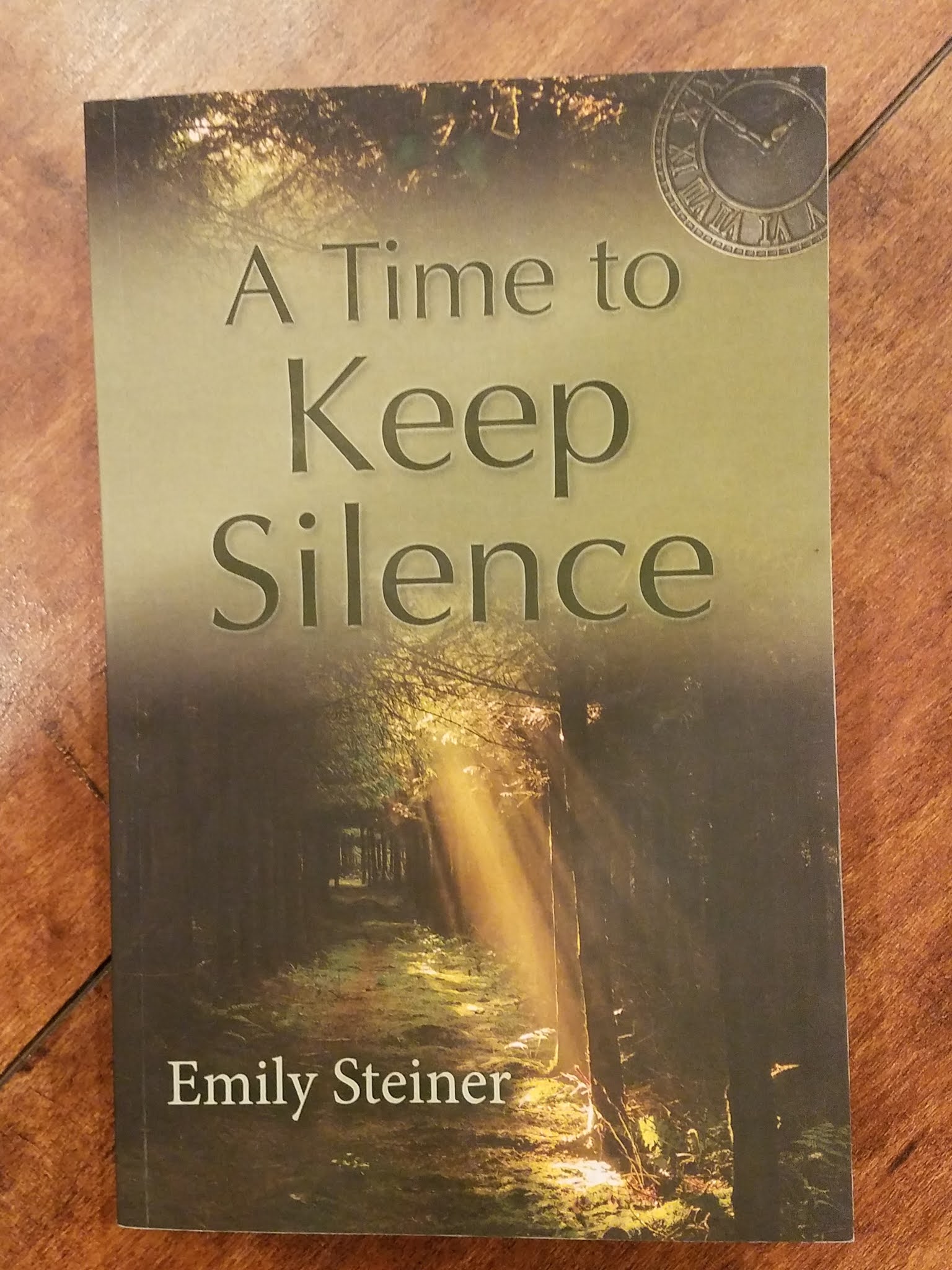
"A Time To Keep Silence" by Emily Steiner--Book Review


 I always enjoy reading books and posting about them on these reviews on my blog post and, in general that is especially true when I write about books which were written by my numerous friends who are authors.  This is not one of those times because I have just read and am now writing about a new book by one of my friends whom I like especially well and I do not like this book nearly as much as I have three others she has written and which I have also reviewed on this blog.  The friend and author to whom I refer is Emily Steiner, a young conservative Mennonite woman whom I have known for about three years.  I respect her talent, her intelligence, her writing, her books, and her commitment to her religion.  I value our friendship and we correspond these days by e-mail since she is teaching in a small Mennonite school in Central Michigan.  We met accidentally, or serendipitously as I prefer to believe, in Old Mill Park near my home in West Liberty, Kentucky, and slightly farther away from her childhood home in Crockett, Kentucky. She was dressed in a traditional Mennonite long dress and head covering and carrying a lap top which is odd among Mennonites.  I had already read her book, "Under The Bridge", which is linked above and which is the first book in her triumvirate of books about a coal mining family in Harlan County Kentucky in the union organizing efforts of the 1920's.  While I disagreed with the book's position that Christianity and trade unionism are not necessarily compatible, I liked the book and her writing quite well overall.  I struck up a conversation with her by asking these exact words, "I don't mean to bother you, but are you Emily Steiner?"  She responded "Yes!" and I told her about having read her book and we had about a half hour conversation about her book, writing on both our parts, Appalachia, and writers I knew.  We established what has been a good, honest, communicative, and respectful friendship beginning that day despite the difficulty of an older, married, non-Mennonite man and a younger, single, Mennonite woman having a friendship which respects the social barriers her religion requires in such cases.  We sometimes read each other's writing, sometimes e-mail, and, if a community occasion makes a face to face meeting possible in her community of origin, we sometimes talk a while in plain view of other Mennonite observers.  It has helped that I am fairly well known by numerous members of her congregation because I have done business with them for quite a few years and have always respected and honored the constraints and barriers their religion places on contacts with outsiders.  

So, to repeat myself, this is a difficult review to write since I like and respect the author a great deal and am not particularly fond of the book.   But please do not assume that I am saying you, dear reader, will not like the book.  It has merit as does all the work I have ever read by Emily Steiner.  So, in order to be absolutely fair to my friend, Emily Steiner, I searched out two other reviews on the internet from other sources who have read the book to see what they thought about it.  An anonymous reviewer on the Goodreads website has this to say about the book: ...A Time to Keep Silence shows the loneliness and misunderstanding that singles can face in a tight-knit Mennonite community. This is a book that an older single may relate to, and those who are married can read to understand the challenges of singles.  I agree wholeheartedly with this reviewers statement that the book "shows the loneliness and misunderstanding that singles can face in a tight-knit Mennonite community". From my point of view, the most valuable thing I got from reading the book is that it gave me an improved understanding of the religious based social customs which govern dating and consideration of marriage among young conservative Mennonites.  But, having lived my life in the greater non-Mennonite community, I tend to believe that the social customs in question place undue burdens on those young church members.  I was left with the impression that, in most cases, young Mennonite women are almost required to accept the first young Mennonite man whom they agree to date as the person they will marry even before their first date.  That is a bit too restrictive for my blood.  

The second review I chose to read about "A Time For Silence" is by a relatively young Mennonite widow who describes herself on her blog as follows: I am Gina, a Mennonite mom who writes about books, broccoli, and baking bread. In May, 2017 my husband was diagnosed with glioblastoma, an aggressive brain cancer, which took his life two years later in May, 2019. These pages share my journey of searching for joy with cancer and widowhood."  I know nothing about Gina other than what I have read on her blog and the fact that Emily Steiner has told me she knows Gina. As it turns out, I have just discovered that Gina was the person whose writing was used in part on the Goodreads website for the first quotation I used about the book since the language is identical on that website to part of Gina's review on her blog which I recommend for anyone who wants to learn more about Mennonites, their religion, and the self-sufficient lifestyle of gardening, canning, freezing, cooking, and other things such as homeschooling and church based childhood education.  I should also say that the photo of "A Time To Keep Silence" which I have used above is taken from Gina's blog, "HomeJoys" as linked above.  I have been unable to locate other independent reviews of the book at this time and will attempt to use quotations in others I might locate in the future to update this review.  

Now to more adequately address my personal issues with this book which Emily Steiner has told me is selling better than any of her previous books.  In fact, she and I had one e-mail exchange when she was actually at her printer, Haines Printing, watching the presses run so she could pick up several hundred more copies of this book.  That could be an indication that I am wrong about the book.  But, the first critique I have of the book is that it is a story which is told in 341 pages and could, I believe, have been told in a more literary manner in 200 or 250 pages at the most.  I have told Emily in an e-mail that I think that a lot of dialogue does little to advance the plot and I stick to that assessment.  The book is broken into 60 relatively short chapters, the longest of which is about 10 pages and several are 1 page.  Emily has explained this to me as a choice she made "to keep people turning pages".  I did keep reading to the end and I will buy and read the other two books which are to follow in this series about the main characters, Justin and Monica, whom I expect to be married by the end of the third book.  I was also put off mildly by one section in the book in which the protagonist, Monica, who is working in a coffee shop she and a friend, Ida Belle, have recently bought and are operating as single Mennonite women. Monica becomes scared of a rough looking non-Mennonite man who is staying in the coffee shop too long, asking a few too many questions and is dressed somewhat inappropriately by Mennonite standards.  To see single Mennonite women operating a business as Monica and Ida Belle do in the book is uncommon but not totally rare.  I regularly do business in a bulk food store which is owned by a woman in Emily Steiner's community of origin.  I also know of a bakery business in that same community which was operated for a time by the former Mennonite divorcee daughter of a devout Mennonite friend of mine.  But I have never known of a Mennonite who pre-judged a person to the degree I perceived in that section of the book.  Monica fears are used as a tension builder before the male in whom she is interested, Justin, enters the shop to buy coffee for himself and his employees.  Monica fights the desire to ask Justin to rescue her from the perceived danger of the rough look man and allows Justin to leave before making the request.  The book also winds to a conclusion without either Monica or Justin taking any action to move their relationship to another level.  It simply ends with the two of them still thinking about the possibility of dating each other but doing nothing to bring it about.  Both are afraid of entering a dating relationship because they have both been unsuccessful in one prior dating relationship.  Both fear the disapproval of the community if they enter a relationship which does not end in marriage.  In the real world, almost no one, except Mennonites apparently, gets married to the first person they date.  In my opinion, no one, not even young Mennonites, should feel compelled to marry the first person who asks them to consider a dating relationship.  I sincerely hope the next two books in this series are better than this one.  But use your own judgment about whether or not you want to read this book, especially if you have read other books by Emily Steiner and enjoyed them.  This could turn out to be the very book you have been hoping you would find.

"A Time To Keep Silence" is available directly from the author, Emily Steiner, for $12.50 plus $3.00 shipping for a total price of $15.50 by check or money order from: Emily Steiner, 5532 N. Shepherd Road, Rosebush, Michigan 48878.  If you have questions, Emily will answer her cell phone in person or return your call if you need to leave a message at 606-495-8090.  But, if you call, please keep in mind that she is a school teacher.  Call after 4pm on weekdays, never on Sunday. 

Saturday, February 6, 2021

Was That Dove An Omen?


The Oxford Reference Dictionary  of English Folklore defines omens as "Occurrences outside human control, interpreted by communal tradition as foretelling future events".  They go on to give several examples of omens such as the hooting of an owl and seeing magpies.  Dictionary.com defines omen as "anything perceived or happening that is believed to portend a good or evil event or circumstance in the future; portent.  Synonyms for omen include "foreboding, foretoken, prophecy, and premonition".  Now, let's move on to frequent symbolic ideas which are attached to doves before I get to the point of writing this blog post about one dove in particular.  Doves are sometimes seen as symbols of peace, love, and good luck but they are also used as the symbol of the fleeting soul of a dying person and are often seen on flower arrangements at funerals.  

Appalachian Culture commonly holds numerous symbolic representations of an equally numerous set of animals, weather phenomena, sayings, and even slips of the lip.  But this type of belief in portents or omens is not limited to Appalachia and Appalachians.  It is common among nearly every culture in which the members live in close proximity to the earth.  Since the great majority of Central and Southern Appalachia is rural with prevalent industries and lifestyles such as farming, logging, mining, fishing, hunting, and other earth based practices, it is not unusual for Appalachians to believe strongly in symbolic omens, portents, warnings, and handwriting on walls whether those walls are literal or metaphorical.  

In fact, one of my favorite books in all of Appalachian Literature is Mildred Haun's "The Hawk's Done Gone" which is filled with folklore, omens, portents, and premonitions from cover to cover.  Mildred Haun's masters thesis at Vanderbilt University is considered to be a masterpiece in the study of folklore, omens, portents, and premonitions.  Under the title "Cocke County Ballads And Songs”1937, the thesis is available only from the special collections of the Vanderbilt University Library.  But I do not remember specific mentions of doves as portents in my reading of Mildred Haun. 

Two nights ago, on February 4, 2021, as I was preparing for bed at about 10:30pm, I looked out the window in my back door to check visible signs of precipitation as I often do in winter.  To my surprise, about ten or fifteen feet from the door on the blacktop driveway sat an adult dove, absolutely motionless, but not dead since it was in a sitting position.  I decided to go outside to check it out further in order to determine if it might be injured and in need of rescue.  The dove sat absolutely still until I was about step or two away and nearly ready to bend down to see if I could pick it up.  As I started to bend toward the bird, it suddenly burst into flight as only a dove can do and flew away, calling repeatedly as it flew, into a tree behind my house on a hill.

I have a neighbor and good friend who lives about a mile away who is nearly 95 and lives alone after the death of his wife about 16 months ago.  In the world of Covid, I no longer visit him regularly but I generally call him every day, never letting it go more than two days.  When I got up on the morning after my experience with the dove, I called his number and he did not answer.  That is not a total surprise since he still does his own laundry in his basement and also still drives his brand new car which he bought after the death of his wife.  But about an hour after my attempt to call him, I received a call from the wife of his nephew who acts as his next of kin since my friend has no children.  She informed me that my friend had a fall, without injury, at home the night before sometime after he and I had spoken at 7pm.  He had called his nephew that morning after the fall and asked to be taken to the hospital in Morehead, Kentucky, to be checked out since he had fallen due to suddenly becoming light headed.  It has transpired since that the doctors decided his heartbeat was slowed sufficiently to require him to be admitted.  After some observation and testing, they have decided to install a cardiac pacemaker to assist him in maintaining a normal heartbeat.  Otherwise, he is reported to be fine for a man who will be 95 in 3 months.  Hopefully, he will be fine and back home when the procedure is completed on Monday, February 8, 2021, which is, coincidentally, the birthday of my long dead father.  So far as we know, my friend is as good a candidate for the implantation procedure as can be found at his age.  We are all assuming that he will survive the procedure without problems, will be able to escape Covid 19 infection while hospitalized, and will return home to live out the remainder of his long, healthy, productive life.  

But, as a native Appalachian deeply immersed in my culture, and having seen the adult dove sitting on the ground in the dead of night less than 12 hours before I learned of my friend's apparent health issue, I am forced to ask, "Was that dove an omen?"  What do you think?