Search This Blog

Showing posts sorted by relevance for query William Howard. Sort by date Show all posts

Sunday, May 30, 2021

"Sacramental Spaces: The Salvaged World of Raymond Barnhart" by William Howard Cohen

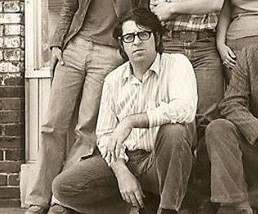
The photo above is an official Alice Lloyd College yearbook photo of William Howard Cohen.  

William Howard Cohen was a college professor, poet, and mentor to many young, aspiring writers wherever he lived and worked, Kentucky, Florida, Illinois.  I have written about Bill Cohen and his poetry more than once on this blog and was very pleasantly surprised to see others who had been mentored by Bill Cohen respond very favorably to his writing and his encouragement and criticism of their writing.  William Howard Cohen was an internationally recognized expert on Haiku and served as the American Cultural Delegate in the area of poetry at the Mexico City Olympics in 1968. Cohen was also an outspoken and highly effective environmental advocate who fought bravely and well against strip mining in Appalachia.  If you read the comments section at the end of this blog post about William Howard Cohen, you will see that this man was not just a writer who spent his time sitting in a cloister somewhere writing.  He also spent a great deal of that time teaching, training, mentoring and encouraging young writers whom he met as a result of his books, teaching, poetry readings, and attendance at other events. 


 The photo above is William Howard Cohen and his wife, Delores Cohen, at Alice Lloyd College about 1968 or so.  

William Howard Cohen also made a conscious effort to constantly improve his knowledge of art in all its form and frequently attended exhibitions of painting and sculpture wherever he might be traveling.  The book we are discussing here, "Sacramental Spaces: The Salvaged World of Raymond Barnhart", contains twenty-one poems which Cohen produced and published after attending an exhibition somewhere of the work of Barnhart.  It is a very difficult piece of Cohen's work to locate on used book websites and was apparently issued as a small, self-published book, perhaps printed by Pippa Valley Printing in Knott County Kentucky  where Cohen was teaching at Alice Lloyd College at the time.  Amazingly, the one copy of the book which I have been able to locate is autographed by Raymond Barnhart himself and I found it at a used books and collectible store in California which sells items through one of the large used book clearinghouses online.  According to the blog "Litterata": 

 "In his youth, Raymond Barnhart worked as a riverboat deck-hand, carpenter, fruitpacker, and window designer before becoming an artist. A painter during the first half of his life, Barnhart received his MFA from Ohio State University, and he was an instructor at the University of Kentucky for 32 years before leaving and moving to California in 1958."  (Litterata Blog, available May 30, 2021, at 7:15am) 

That blog post, if you read it, will show you that the blogger was highly impressed by the assemblage sculptures which Barnhart produced as were many others including William Howard Cohen who most likely  saw and exhibition of Barhhart's work at the University of Kentucky where he he taught for several years before leaving for California where he died in 1996 at the age of 93.  My recent acquisition of William Howard Cohen's little book of poetry and the creation of this blog post are both quite timely since there is an ongoing exhibition of collage and assemblage which contains at least some pieces of the work of Raymond Barnhart at the University of Kentucky Art Museum at 405 Rose Street on the UK campus. I will attend that exhibition since it runs until July 10, 2021.  The museum website does state that they are operating under Covid 19 restrictions and do require hourly reservations for visitors.  But, admission is free.  I will be attending that exhibition and so should you, IF YOU ARE FULLY VACCINATED!  


The phot above is William Howard Cohen, far right with beard, Kenneth Baldridge, and four unknown Alice Lloyd College students. 

Now that we know who Raymond Barnhart is, let's actually address the primary reason for this blog post, the poetry of William Howard Cohen which is contained in his ode to Raymond Barnhart.  This collection contains 21 poems all of which were inspired by the art of Raymond Barnhart.  Each of the poems appears to have been motivated by a single work by Barnhart although it is possible one or two could have been inspired by an overall exhibition of the artists work.  Barnhart created his assemblage pieces by using found objects and, if we refer once again to the "Litterata" blog piece about him we learn that: 

"While teaching a design and wood sculpture class in Mill Valley, and from his contacts with the Bauhaus novement, Barnhart found his true medium: assemblage. His assemblage work is classical in the sense of composition, aesthetics, and design. From the Conceptualists, he incorporated the use of found objects. And he made a just marriage of it.  But whereas Conceptualists diverged, exploring man's alienation in society, Barnhart's work is full of hope and compassion: it reflects the linear sentiments of art, beauty, balance, harmony; it transmorgifies limitation as set in stone by various art movements: it remains unswerving in its devotion to the aesthetics of art.  Wind-blasted, sun-bleached, and burnt materials juxtaposed against man-made rusted and tarnished discards become the poetry of deserted places. Fellow Sonoma County artist John Kessel said, "Raymond Barnhart assembles diverse, objects to create visual poems that evoke either man's place in nature—or man in contemplation before nature. Some pieces tell a story, and all are poems which convey an impact. This is an art of redemption and reconciliation." Litterata Blog, Available May 30, 2021, at 7:15am)

Both William Barnhart and William Howard Cohen believed that nothing should be wasted.  In the 1960's when I knew Bill Cohen, he was already involved in the very early effort to save the earth, the natural environment, and wasted nothing of value.  Barnhart created his art from the things others had thrown away.  It was no surprise that William Howard Cohen would have been inspired by the works of Barnhart and would have written a little book of poetry to commemorate that work.  These 21 poems are all short and, as a person who has read and studied much, if not most, of the work of William Howard Cohen, this little book contains some of the best of his short poems.  As an internationally respected expert on Haiku, William Howard Cohen practiced economy of language.  He wasted few words in his poetry and this poetry is a fine example of that economy of language.  One of my favorite poems is called 

      "Monument" 

The burnt pylons of time

Rise Heavenward-

The skeletal heart

Rides the air midway

      Suspended

Between the finite

     and the infinite. (William Howard Cohen, "Sacramental Spaces...")

That poem paints a myriad of pictures in our minds as we read it.  We see images left by old fires rising into the air. are they burnt timbers or are they really old highway pylons used in a Barnhart assemblage?  This brief poem, only seven lines, twenty-one words, a minimal amount of utterances on the keys of typewriter are what economy of language is all about.  There are only four more words in that poem than in a traditional Haiku and, while the poem is not Haiku, it is reminiscent of some of the best of Haiku.  It is William Howard Cohen at his best.   

Another of my favorite poems from the book is "World Of Raymond Barnhart" which contains only sixteen words, one less than in a traditional Haiku: 

"World Of Raymond Barnhart"

From the broken shards of time

Rainbows of eternity; 

From the charred shells of earth

Universes.  (William Howard Cohen, "Sacramental Spaces...")

It is always a pleasure to read the work of William Howard Cohen and this little book is an especial pleasure since it has also led me to learn about the work of a man artist whom my old friend and mentor, Bill Cohen, admired.  I hope you can locate a copy of "Sacramental Spaces: The Salvaged World Of Raymond Barnhart".  You will enjoy it.  If you cannot locate a copy of this apparently small edition collection, then consider finding and reading the two books by William Howard Cohen which are more easily located, "The Hill Way Home" and "A House In The Country: Poems From Southern Illinois".  They are both well worth reading.  

+++++++++++++++++++++++++++++++++++++++++++++++++++++++++

Addendum: August 27, 2024

I have recently been contacted by first cousin of William Howard Cohen, also a former university professor in Indiana who had read my blog posts about Dr. Cohen and seen that a niece and nephew of Doctor Cohen had left comments on these posts.  This cousin, Dr. Paul Newman, P.H.D, is the retired chair of the linguistics department at Indiana University and would like to be able to locate these mutual relatives of his and Dr. Cohen's.  They can contact me at rchicks@mrtc.com and I will provide them with Dr. Newman's contact information.  Thanks!   

Saturday, December 17, 2016

William Howard Cohen, Poet, Professor, Hero

The photo above is an official Alice Lloyd College yearbook photo from about 1968.
 
William Howard Cohen was unique.  He was one of the most outspoken, brilliant, and weird men I have ever known.  I first met Bill Cohen in the summer of 1966 when I was attending Upward Bound on the campus of Alice Lloyd College in Pippa Passes, KY.  Bill Cohen, as he generally preferred to be known, despite his doctoral degree, taught English and Humanities at ALC.  He was probably more broadly known in Knott County than many other professors at the school because of his outspoken nature, his unique differences with most of the locals and even the other ALC staff.  Bill was a constantly moving, constantly talking, highly opinionated man.  Looking back on Bill through the lens of twenty years experience in the mental health field, it is my considered professional opinion that Bill Cohen was probably dealing with a diagnosis of Bipolar Affective Disorder, rapid cycling type.  Bill demonstrated most if not all of the symptoms of the diagnosis.  He had rapid, constant, pressured speech, flight of ideas, grandiosity, distractibility, and was a constant ball of sometimes unfocused energy.  Bill Cohen was also a great teacher and knew American literature, poetry, and Haiku cover to cover, front to back, upside down and sideways.  
 

The photo above is William Howard Cohen and his wife, Delores Cohen, in their home at Alice Lloyd College.

William Howard Cohen was an accomplished poet and wrote several books of poetry during his life.  They included "The Hill Way Home Poems From The Appalachian Highlands" which was published during the time he was teaching at Alice Lloyd College.  This book probably represents his best work in more traditional poetic styles.  
 

 The photo above is William Howard Cohen, far right, Kenneth Baldridge, and four unknown Alice Lloyd College students. 

He also wrote and published "Mexico '68 The New World Of Man: Poems From The Olympic Games".  This book consisted of poems which Bill wrote while he was attending the Olympic Games in Mexico City as a cultural delegate from the US.  I knew Bill at that time and I will never forget how excited he was to learn that he had been chosen to represent the country at the Olympics.  He was even more excited when he returned.  I will always remember an incident which happened in one of his humanities classes after his return.  His flight of ideas was running rampant that particular day and he was still incredibly excited about his recent trip.  Literally in the middle of a lecture about Greek architecture, he said "Doric column are...Man, you should have seen Jim Ryun run down that track."  

William Howard Cohen also wrote "Conversations With Albert Einstein And Other Poems From The Einstein Year" which was published in 1979 after he had left Alice Lloyd College.  Sadly, I have never read this book since I learned of it too late to buy a new copy and now it is usually priced outside my range on Internet based used book sites.  But I know without reading the book that it will reflect Bill's fascination with genius and high achieving people in general.  

After leaving Alice Lloyd College, he also edited a book of children's poetry called "Under Enchanted Boughs: Children's Poems From The Duval County Schools" which was a project of the Jacksonville Children's Museum Outreach Program.  I have also never seen a copy of this book at somewhat reasonable prices on Internet used book websites.

During his time in Southern Illinois, William Howard Cohen also published another book of poetry entitled "A House In The Country Poems From Southern Illinois".  I have not read this book either and have never been able to find a copy for sale when I have searched for it.  Considering that it was published very early in his career, I suspect it will be primarily composed of more traditionally styled poetry much like the poems in "The Hill Way Home...".  

William Howard Cohen was an international expert on Haiku, the well-known form of Japanese poetry, and his best known book was called "To Walk In Seasons An Introduction To Haiku".   This book was published in 1972 after he left Knott County but I am certain that he was working on it at the time he was teaching in Kentucky.  I still find Haiku experts writing about and referring to this book online nearly fifty years after it was published.  In fact, as I was writing this post, I found a blog post about the book by a poet and professor named Don Wentworth.   I also recently responded to another Haiku expert's piece about "To Walk In Seasons..." in which the writer attempted to critique the book quite negatively.  But I am sure that the Bill Cohen I knew would have laughed out loud to know that his little book was still being criticized by experts nearly half a century after he wrote it.  


I also just found another memoir piece from a former student of Bill's, Dan Kenneth Phillips, at this web address.   This piece discusses having been a student of Bill's and his nickname, "The Blue Noodle", the origin of which no one seems to know.   Thank you, Dan, for remembering Bill just as fondly as I and many other former proteges do. 

Shortly after I met Bill Cohen, he took me to a statewide poetry gathering at Western Kentucky University which was flattering.  I had been chosen to travel to a writer's gathering in the company and under the mentorship of an internationally recognized poet.  That was a lot for a teenager from Dema, Ky.  At that time, it was probably as far as I had ever been away from my home on Beaver Creek.  Bill arranged for us to stay in a university guest house and I remember being highly impressed to be in a bedroom with matching, fancy, delicate furniture and wall paper with border added.  It was a trip that taught me a lot about both poetry and William Howard Cohen.  I enjoyed it greatly.  At that meeting, I also met former Kentucky Poet Laureate Joy Bale for the first time.

Bill Cohen also loved and collected art.  I do not know that he owned any art which had serious value but he had good taste and his home, which was provided by Alice Lloyd College, was filled by paintings, sculptures, and mobiles from his travels around the country and the world.  I always remember a carved sandstone statue which he kept on a set of steps which divided the two levels of the house.

During his time at Alice Lloyd College, William Howard Cohen would become an outstanding and outspoken advocate against strip mining.  He would use some of his spare time to join and to initiate protests at strip mine sites.  He would often lie down in front of coal trucks leaving strip mines in an attempt to stop production.  When he did this, Bill always carried an American flag and a Bible which he placed on his chest as he lay on his back in the middle of the haul roads.  People would ask him if he wasn't afraid of being run over by a coal truck and his answer was always the same: "I know these mountain boys.  They might run over a little Jew from Florida but they won't run over the flag and the Bible."  It turned out he was always correct in that assessment.  During this period, the Louisville Courier Journal featured Bill in a Sunday Magazine article and he was mentioned in several other stories in the paper.  It is my belief that his activism against strip mining played a large part in his being fired by Alice Lloyd College.  Many of the early graduates and supporters of the college had become wealthy and were involved in the coal industry.  There is no doubt such people would have resisted having such a committed advocate of environmentalism on the faculty and their financial support of the institution would have been unlikely.  Alice Lloyd College eventually fired William Howard Cohen and he moved on to the Jacksonville, Florida, area.  Kentucky lost a fine professor, a better than average poet, and one of the most outstanding advocates for environmentalism in the state at the time.  In my opinion, William Howard Cohen was just as important an opponent of strip mining as Preacher Dan Gibson or Widow Ollie Combs who spent Thanksgiving of 1964 in the Knott County Jail because of her opposition to strip mining.  William Howard Cohen is a fine example of that group of non-native residents of Appalachia who became heroes for the region.  

William Howard Cohen died in the Gainesville, Florida area in 2007.  If anyone reading this knows of his exact burial location or the disposition of his body, and any other information about Bill Cohen, I would love to know about it.  I also do not own a photograph of Bill and I would love to have one if anyone has one to scan and share.  I would post it on this blog post and give full photographer credit.  "Baruch Dayan Emet, Blessed is the true judge."  Rest In Peace, Bill!  

Bill Cohen was probably the first Jewish person I ever met although he was not a practicing Jew at the time I knew him.  It is possible if he had not been living more than 100 miles from the nearest synagogue he might have practiced more diligently.  But he had no qualms about telling anyone in Eastern Kentucky of the  late 1960's that he was a Jew.  He was always honest and outspoken about everything he was, did, or believed.  I will always cherish having known and been able to learn from Bill Cohen.

Here is a link to the obituary of William Howard Cohen which was located and provided by Ray Turner.  Thanks, Ray!  
+++++++++++++++++++++++++++++++++++++++++++++++++++++++++++++++++++++++

Addendum: August 27, 2024

I have recently been contacted by first cousin of William Howard Cohen, also a former university professor in Indiana who had read my blog posts about Dr. Cohen and seen that a niece and nephew of Doctor Cohen had left comments on these posts.  This cousin, Dr. Paul Newman, P.H.D, is the retired chair of the linguistics department at Indiana University and would like to be able to locate these mutual relatives of his and Dr. Cohen's.  They can contact me at rchicks@mrtc.com and I will provide them with Dr. Newman's contact information.  Thanks!  

Tuesday, August 27, 2024

Search For Relatives of William Howard Cohen


 Dr. William Howard Cohen, Ph. D. 

Because of two previous blog posts (first post) I had published about Dr. William Howard Cohen, a former professor at Alice Lloyd College in Pippa Passes, Kentucky, I was recently contacted by a cousin of his, Dr. Paul Newman, Ph.D. chair emeritus of the Linguistics Department at Indiana University.  Dr. Newman would very much like to make contact with a niece and nephew of Dr. Cohen who had previously commented on the two earlier blog posts (second post) I had published about him and his influence on me.  If these relatives of Dr. Newman see this post and contact me at rchicks@mrtc.com and I will give them Dr. Newman's contact information.  Thanks!

Roger D. Hicks

Saturday, March 24, 2018

Short Story or Vignette???

Since the time I entered Upward Bound at Alice Lloyd College when I was about 14, I have known and been friends with a fairly large number of published authors.  During my first summer in that program, I met and became friendly with Albert Stewart and William Howard Cohen both of whom were major American poets.  Albert Stewart was also the founder of Appalachian Heritage Magazine and a mentor to numerous young writers throughout his career.  William Howard Cohen was an internationally recognized expert on Haiku and served as the American Cultural Delegate in the area of poetry at the Mexico City Olympics in 1968. Cohen was also an outspoken and highly effective environmental advocate who fought bravely and well against strip mining in Appalachia. He also mentored numerous young writers in both Eastern Kentucky and Florida where he lived the last years of his life.  I have always been extremely proud to have known and been friendly with both men.  During that first Upward Bound summer, the program directors also brought Harry Caudill to speak at one of our assemblies.  His strongly negative book about Appalachia, "Night Comes To The Cumberlands", was still in the height of its popularity and he was considered by many to be an expert on Appalachia.  I can say that I met Caudill and I can also say that I am proud that, as a native Appalachian, I was not pleased with him and still am not.  I have said all the preceding, a rather long winded introduction, in order to say this once again, I have known and been friends with a fairly large number of published authors, learned a great deal from them both about life and writing.  And that brings me to the title of this article, Short Story or Vignette???

Which is it, a short story or a vignette is a question which is frequently asked by readers and writers about short works of fiction.  It is also a question which should be asked even more frequently, especially by the numerous people who mistakenly believe they are writing short stories.  As a result of having known the writers I have known, I have come to regularly either buy or be given books by many people some of whom are genuine writers and some of whom only wish to be but have managed to make it into print anyway.  I have in my possession at this time several books written and published by people I know and labeled as short story collections.  A sizable portion of those "short story collections", most of them self-published through vanity presses, do not contain a single actual short story and are, instead, collections of vignettes some of which could have been turned into short stories by a skillful writer, and others which Leo Tolstoy, Flannery O'Connor, or William Faulkner could not have stretched enough to make them an actual short story.  That brings us to the key question I hope to address in this article.  What is the difference between a short story and a vignette?

A commonly used definition of the term "short story" runs something like this:  the term short story most often refers to a work of fiction no shorter than 1,000 and no longer than 20,000 words. An actual short story should contain these five essential elements, characters, plot, setting, conflict, and theme. An equally common definition of the term "vignette" runs something like this: a brief, evocative account, description, or episode.  A less common definition of the term "vignette" runs something like this: a vignette is a cute little story which, on a good day, might include one or two of those key elements of a short story but never by any stretch of the imagination will a vignette contal all five.  By that I mean that a vignette is something a first grader might tell her mother when she returns home from school. Two or three old men sitting in the local country store, gas station, or barber shop swap vignettes.  Old, blue haired widows do the same in beauty shops, meat markets, and boutiques.  While I almost never say anything this personal or negative to any of my friends and acquaintances who have produced collections of vignettes which they insist on forcing to masquerade as short stories, I really do not like buying, borrowing, or being given such collections of vignettes which a vanity press has managed to make a buck on while perpetuating the misbegotten dreams of the people who cranked them out on a PC or antique Underwood in the lonely silence of their home.  

It is also interesting that, for a skillful writer, it is not necessary to produce a work the size of "War And Peace" in order to tell a good story with all five of those key elements, characters, plot, theme, setting, and conflict. While I despise what is now known and inordinately popular as "flash fiction", I also recognize that it is possible to tell a great story with a bare minimum number of well chosen, well organized words.  The best example of this I can think of is the classic Kate Chopin short story, "The Story Of An Hour".  This incredible little masterpiece of roughly a thousand words contains every one of those five key elements and perfection to boot.  With an opening sentence of less than thirty words, we meet the central character, Mrs. Mallard, learn that she has a heart condition, that she is/was married, that her husband is dead, and that someone cares enough about her to "break to her as gently as possible the news of her husband's death."  Then the story goes on in the remaining 950 or so words to work in a couple of absolutely masterful twists in which she weeps loudly and publicly in the company of her family and friends, retreats to her bedroom where she realizes with great joy that she is "Free!  Body and soul...free!" and then, as a combination of that great joy and her aforementioned heart condition, she dies without her family and friends ever knowing how happy she was to anticipate that freedom.  That my friends is a short story.  And I haven't even mentioned that in those thousand words, Kate Chopin threw in a train wreck.  

I am not completely opposed to vignettes and often use them myself, sometimes in the middle of what I believe are short stories I produce, sometimes in country stores, gas stations, and barber shops with my illiterate friends, and even at rare times in beauty shops.  As an addendum to this little article I will also insert a short list of some of my other favorite short stories and suggest that you read them sometime if you haven't already.

Desiree's Baby by Kate Chopin
The Most Dangerous Game by Richard Connell
The Lottery by Shirley Jackson
Parker's Back by Flannery O'Connor
Ugly by Guy de Maupassant
A Rose For Emily by William Faulkner
Big Two-Hearted River by Ernest Hemingway
A View Of The Woods by Flannery O'Connor

Saturday, July 9, 2011

Appalachia--What's In A Name

Appalachia, More Than Just A Word

The general rule of thumb in pronouncing proper names is that the owner of the name sets the rule.  In the case of place names, the rule is to pronounce the place name as the majority of residents of a place pronounce it.  We Appalachians generally pronounce the word Ap Uh Latch Uh.  Appalachian writer and song writer Billy Ed Wheeler said that his mother always said, "Billy, if you don't quit, I'm going to throw this Apple AT Cha."  Those two ways are correct.  All The Others are Wrong.  Several non-Appalachian place names provide illustrations of names which are pronounced somewhat differently than they are spelled and would include Mackinac, Michigan, which is pronounced Mack-uh-naw, and Poughkeepsie, NY, which is pronounced Puh-kip-see. The area of New York state which includes Poughkeepsie has several local place names which are Native American in origin and not pronounced anywhere near how they appear based on spelling.  There is also Apalachicola, Florida, which is pronounced Ap Uh Latch Uh Co Luh which is an amazing coincidence. Or is it? It is also interesting that the very same people who mispronounce Appalachia generally do not mispronounce Apalachicola.


Map of the Allegheny and Cumberland Plateau--Central Appalachia

Living my life in Appalachia, I have seen hundreds of outsiders, including my own Wisconsin born wife, come to the region with the best of intentions.  The road to hell is paved with good intentions. But, let me state for the record that my wife has adapted well to the area and learned a great deal culturally.  She has, to a degree, been assimilated into the Appalachian culture. In my post on visiting the urban Appalachians, I also quoted from an obituary by an unknown author writing in the Minutes of The Northern New Salem Association of Old Regular Baptists who had assimilated into the Appalachian culture in a very similar way.  However, this type of adaptation is rare.  Many, if not most, non-Appalachians make an ill founded attempt to change us. 

Appalachian Mountain Cabin


But back to the name Appalachia,  most times native Appalachians may not directly or immediately correct the mispronunciation of visitors or missionaries other than by pronouncing it correctly every time in the person's presence.  But they will place some degree of negative importance on a mispronunciation.  The point is that if the visitor or missionary does not care enough to learn how to pronounce the name of the region where we live correctly they generally do not care enough to matter much to us.  Visitors and missionaries will almost always put the Ap ah lay cha pronunciation on the word with a few adding an extra syllable to make it Ap ah lay che ah.  Both pronunciations are wrong, have always been wrong, and always will be wrong. The reasoning which goes into their persistent mispronunciation is identical to that espoused by the Europeans who settled America and believed they had a divine right to take the land which had been owned and occupied for thousands of years by Native Americans.  This concept is known as "manifest destiny" and is defined as:
"Manifest Destiny was a phrase which invoked the idea of divine sanction for the territorial expansion of the United States. It first appeared in print in 1845, in the July-August issue of the United States Magazine and Democratic Review. The anonymous author, thought to be its editor John L. O'Sullivan, proclaimed "our manifest destiny to overspread the continent allotted by Providence for the free development of our multiplying millions."  http://www.u-s-history.com/pages/h337.html
Manifest destiny has also been practiced in Appalachia by groups as diverse as the VISTA Program, church groups from the northeast and midwest, and outside land owners and/or mineral holding companies.  This total disregard for the free will of citizens is rarely seen elsewhere in the USA.  But it is common in Appalachia for a group of outsiders to show up driving either a U-Haul full of second hand clothes or piece of equipment for mineral extraction and to tell the locals that their actions are in our best interests.  They come mispronouncing the name of our homeland, misunderstanding or denying the authenticity of our culture, and simultaneously expecting us to believe every word they say and adapt our ways and beliefs to their expectations.  Is it any wonder that we take offense at strip mining, clear cut logging, and the way they mispronounce the name of our homeland?  Manifest destiny is also a topic I will approach in a complete blog posting at some time in the future. It has contributed greatly to the overall general negative attitude toward Appalachians and the justified anger of Appalachians toward strip mining, mineral extraction in general, clear cut logging, VISTA, and most other missionarys and missionary organizations.

It is interesting to note that when Alice Geddes Lloyd came to Knott County Kentucky shortly after the turn of the 20th century she made a  public commitment to never meddle in three issues: religion, politics, and moonshining.  Oh, how much better off Appalachia would be if all the others who followed Ms. Lloyd to the mountains had taken similar positions..

The name Appalachia is an old Native American word and has been pronounced in the region for hundreds of years in the way it was originally pronounced when the first Europeans stepped off the boat in the tidewater region.  It comes from the name of the Apalachicola tribe and actually has been translated to mean "the land of the ruling people."  My, how that interpretation has been changed over the history of Appalachia.  The mispronunciation began about the time the first missionary came to Appalachia to save us from ourselves.  It has persisted since that time.  Native Appalachians have tried to educate these people about their mistake for hundreds of years.  But it is nearly impossible to educate and correct anyone when they live under the mistaken belief that they are superior and are working to alter your life in a way to make it meet their expectations of normal.  This is what forced cultural assimilation is all about. I will, in the future, write at least one complete blog posting on the subject of cultural assimilation and ways to resist it.

Having grown up in Knott County, Kentucky, I honestly do not remember the first time I realized I was an Appalachian.  I do not recall having heard about it from my grade school teachers and I am doubtful if any of my high school teachers mentioned it either.  But I was in the first group of Upward Bound students during the Kennedy and Johnson Administrations.  I also clearly remember the famous visit by LBJ to Martin County Kentucky to kick off the War On Poverty.  But when I entered the Upward Bound Program, I was exposed to several people who made lasting impressions on me and who had varying degrees of knowledge about and commitment to Appalachia.  I met Albert Stewart who founded "Appalachian Heritage" magazine and was one of the greatest poets the region has ever produced.  He was arguably one of the best writers of the modified sonnet in this country.  He also made a lasting positive impression on hundreds of native Appalachians and students of Appalachian Literature.  His commitment to Appalachia was total and lifelong. I was lucky enough to know Al and stay in touch with him until his death.  Watch for a complete posting about Albert Stewart in the Appalachian Heroes section of this blog. 

Photo of Albert Stewart, Appalachian Hero

I also met William Howard Cohen who was not Appalachian but spent much of his life in Appalachia teaching and writing at Alice Lloyd College in Pippa Passes in Knott County.  Bill Cohen was, to say the least, unique.  He was totally committed to abolishing strip mining in America and literally put his life, his job, and his reputation on the line dozens of times by opposing strip mining.  He was devoted to Appalachia and its preservation.  He was also generally misunderstood at best and not at all understood at worst.  He was brilliant, eccentric, and one of the finest humans I have ever known.  Watch for a complete posting about William Howard Cohen in the future.  Since he was not Appalachian, it will not be in the Appalachian Heroes section.  Bill Cohen was a non-native hero who lived and worked in Appalachia.  At this point, let me state for the record that spending some significant number of years in Appalachia does not make a non-Appalachian an Appalachian any more than my spending an equal number of years in Harlem or Los Angeles would make me African American or Hispanic.  Bill Cohen was many things.  But most of all, he knew he was not Appalachian and never tried to be.  Thereby, he avoided the most classic and egregious mistake made by the missionaries who still keep flooding our borders. Bill Cohen used that key piece of self awareness as the foundation of a long career working in Appalachia and actually being a positive influence while he was here.

During my Upward Bound days, in my first year on the Stuart Robinson Campus at Blackey, Kentucky, in Letcher County, I had the educational experience of meeting Harry M. Caudill.  I do not use the term educational in the same sense that many others refer to Harry M. Caudill.  He spoke to the Upward Bound group that summer and his best seller "Night Comes To The Cumberlands" had just come out not long before.  Each student in the program had been provided a copy of the book and it was the basic text in our summer history course that year.  Many of the students in that group, who were among the brightest in the area, showed up for Caudill's speech carrying their book and many well grounded criticisms of his low regard for his fellow Appalachians.  While he was a pretty good historian and writer, Harry M. Caudill did more to help perpetuate negative stereotypes of Appalachians than nearly any other native of the region.  His interpretation of historical and sociological data, when it referred to Appalachia and Appalachians, was nearly always wrong.  His conclusions were derogatory, defamatory, and debilitating. He was guilty of believing, expressing, and spreading most of the prejudices which continue to damage Appalachian people to this very day.   "Night Comes To The Cumberlands" is the last book anyone should ever read about Appalachia.  It should only be read after the student of Appalachia and Appalachian culture has read and learned enough to be able to see through the cultural fallacies in Caudill's work. 

Another work which is often well spoken of but has served as a millstone around the necks of Appalachians is "Deliverance" by James Dickey.  Far more people have seen the movie than have read the book.  Based on reviews by my friends in the Appalachian movement at the time, I have chosen to never bother to read the novel.  I have seen key scenes from the movie and based on their devastating portrayals of mountain people have chosen to never watch the entire film.  I am considering reversing myself and reading the book in the near future in order to write a blog posting about the damage Dickey did to the Appalachian image. 

But, to return to the stated subject of this posting, the name Appalachia is pronounced "Ap uh latch uh".  Any other pronounciation is a dead give away to natives that the speaker knows little or nothing about the  region and its people.  It is also a pretty good indicator they probably care less. If you are among the thousands of people who mispronounce the name, learn the difference and change.  Whether you are a native Appalachian or a non-native, show enough respect for the land, culture, and people of the region to learn about it, help educate others about it, and protect and defend the land, its culture, and its people.

Friday, May 13, 2011

Gallery of Appalachian Heroes

As I find more time to work on this blog, I intend to post a collection of articles about several, perhaps a few dozen, heroes from Appalachia.  Some of them will be people I have known. Some will only be people I wish I had known.  They will include union organizers, artists, musicians, college professors, writers, poets, coal miners, one or two preachers, at least one Supreme Court Justice, and one Indian Chief.  The people in this gallery will be a group of individuals who have accomplished things which have made the world a  better place.  Some will have written books.  Some will have produced works of art.  Some will have put their lives on the line in support of their beliefs.  One part of me wants to list some of the group in this article today.  Another part of me wants to keep you in suspense.  I have decided to post the list, or at least the beginnings of the list.  This group will include several writers and poets: Don West, Albert Stewart, Verna Mae Slone, Loyal Jones, Cratis Williams, Bill Blizzard, Bob Snyder.  One other poet who was not Appalachian but lived and worked in Appalachia for many years will probably also be discussed at length but not included in the gallery of heroes due to his having been born outside the region: William Howard Cohen.  I will also include some articles about those miners and textile workers who gave their lives  in the union struggle in Appalachia. I have already written a small piece about the Battle of Blair Mountain.  But I would like to do something larger for all those people who died in order to gain union representation, fair wages, holidays, and vacations for the workers who live today and benefit from their blood, sweat, and tears without ever knowing, acknowledging, or appreciating the tremendous sacrifices these men and women made.  I cannot say that I really knew Florence and Sam Reese but I did have the pleasure of meeting them and attending a seminar they were involved in once.  For the uninitiated, Florence Reese wrote "Which Side Are You On?", one of the greatest union songs ever written.  I will also write about Cherokee Chief Charles Renatus Hicks, one of the most literate men in America in the 18th century.  Many of my relatives believe we are decended from Chief Charles.  I have never been able to find sufficient proof to make that statement.  But I do know that I would love to be able to prove it.  Chief Charles read and wrote  both Cherokee and English and served as an interpreter for the tribe at many of the most famous treaty conferences.  He also owned one of the largest private libraries in America at a time when most Native Americans were illiterate.  I am on the fence about writing about Sgt. Alvin York, WW I solider and hero.  His military record is generally what brings him mention.  I am more interested in his work to improve education in East Tennessee after he returned from the war.  I have already mentioned at least a dozen men and women who worked to make America a better place. I can't wait to find out who the next dozen will be who pop into my head.  Aha, Jock Yablonski, what gallery of Appalachian heroes could be complete without mention of his name and how he paid the ultimate sacrifice in the UMWA.  There are also all the men and women, boys and girls who died in disasters in Appalachia.  I have always been interested in the way Appalachian people work within our cultural value system to rebound from death, destruction, and disaster.  I would like to write some posts about the events leading up to, during, and after disasters such as the coal mine explosions, the Buffalo Creek Flood, the Floyd County School Bus Wreck, the Silver Bridge Collapse, the Marshall University Airplane Crash, and several more catastrophic events in our history as a region. 
Don West, Poet, Preacher, Teacher, Social Activist
Sgt. Alvin C. York, War Hero
Verna Mae Slone, Writer
William Blizzard, Sr., Union Activist, Blattle of Blair Mountain
Historic Marker For William Blizzard, Sr.
Major General Charles E. "Chuck" Yeager, Pilot & Military Leader


Albert Stewart, Poet


Monday, July 22, 2019

This Is The Battle I Was Trained To Fight!


America is in the midst of the worst constitutional crisis in the history of the country.  I had considered saying that we are in the worst constitutional crisis since April 12, 1861, the day the Civil War began.  But after careful consideration, I realized that even during the Civil War, the forces which were fighting against the United States of America were not controlled by a foreign power.  They were not fully committed to destroying Democracy in North America.  They were not fully committed to destroying the US Constitution.  Today, we are in a battle in which the individual who illegally occupies the White House is fully committed to destroying America, American Democracy, the US Constitution, and everything they all represent as he works to support his Russian master and the ideas of his heroes such as Adolph Hitler, Benito Mussolini, Adolph Eichmann, and every other Fascist and dictator who ever lived.  These are the worst days in the history of the country, worse than the Civil War, worse than World War I, worse than World War II, worse than the Great Depression.  We are literally engaged in a battle which will decide if this country will survive as the greatest democracy in the history of the world.

Statue Of Liberty--Photo by Ellis Island


So the question becomes what will each of us do in response to this widespread Fascist attempt to destroy America.  I don't know about you but I will fight it to my dying breath.  Just as the title of this blog post says 'This is the battle I was trained to fight'.  I have been incredibly lucky to be born in the greatest democracy on the face of the earth and so were most of you. And, of course, some of you were born in other countries and chose to immigrate to America for a better life in a better country.  I applaud each immigrant in America and know that the great majority of you are also deeply involved in this battle for the country you loved enough to leave everything and everyone you had ever known to become Americans. Each immigrant citizen in America is under attack today and living in fear of seeing the destruction of the constitutional process which made you an American.  I was incredibly lucky to have been born into a family which was composed of intelligent, politically aware people who were able to understand an attack on our country and to train me to understand it also along with being able to see and understand any future attacks long after the people who raised me were dead.  I have been incredibly lucky to have found, wandered into, or been divinely guided to other teachers, mentors, heroes, and friends who expanded on that early education I received at the feet of my elders.  Collectively and individually these people gave me a base of knowledge, morals, values, and resources which make it not only suggested but mandatory that I stand up for what is right in the face of any attacks which occur to destroy that which is valuable to and life sustaining for a democracy.  I sincerely hope each of you who read this has also had some level of the same type of mentoring, instruction, and moral training to teach you the same things.  At this time of incredible crisis in America, it is necessary that every American citizen with enough intelligence and morals to understand the nature of the intensifying attack on our country and its sacred institutions  must be willing to stand up, stand out, speak up, and speak out on a daily basis to confront the incredibly Fascist and anti-American ideas which are arising from the Radical Right and from Russia and their minion in Washington.

Albert Stewart--Photo by Lexington Herald-Leader


I have often written on this blog about some of the people I have encountered in life who have reinforced the democratic and patriotic values which my parents instilled in me.  Probably the first such person I met was William Howard Cohen when I was about 14 years old in Upward Bound on the campus of Alice Lloyd College.  Bill Cohen became my professor, mentor, and friend and taught me both by example and by didactic methods to stand up for what is right.  Bill Cohen went out in Eastern Kentucky to strip mines and lay down in front of coal trucks in his fight against strip mining and eventually lost his job at Alice Lloyd College because of it.  But because he was right, he never stopped speaking out against wrong.  At about the same time, I met Albert Stewart who also taught at Alice Lloyd College but fought his fights in a much quieter  but just as firm a manner.  In his effort to save his family farm on Yellow Mountain in Knott County from destruction by strip mining, he eventually willed it and gifted it to the University of Kentucky to prevent that destruction.

Robert "Bob" Snyder--Photo by Southern Appalachian Circuit of Antioch College


A few years later, I became a member of a group of people in Beckley, West Virginia, who have gone on to become some of the most respected writers, teachers, and social activists in all of Appalachia.  The Southern Appalachian Circuit Of Antioch College in Beckley was created and directed by Robert "Bob" Snyder one of the best poets and most brilliant minds Appalachia has ever produced.  He also put together a tremendous group of professors and students at that time in the early 1970's who are often spoken of as a group when Appalachian writing and social activism are discussed.  In that group of professors was Don West, P. J. Laska, Rod Harless, and William C. "Bill" Blizzard.  Each of those people further reinforced my commitment to do the right thing no matter the circumstances or the opponent.  I learned valuable lessons from each of them along with several of the other students in that group.

Don West--Photo by Georgia Encyclopedia


Don West had been born in North Georgia as the son and grandson of poor mountain farmers.  He grew up to write, teach, preach, do social action work, and to influence dozens of other American social activists.  He co-created Highlander Center in New Market, Tennessee, with Miles Horton.  He and his wife Connie Adams West created the Appalachian South Folklife Center in Pipestem, West Virginia.  Don fought for the UMWA in Harlan County Kentucky in the 1920's, worked in the defense of Angelo Herndon in Georgia in the 1930's, and saw himself fired from Oglethorpe University due to his social activism.  He was run out of Georgia under a death warrant for his defense of Herndon, saw two homes burned out from under him, and was ostracized in many ways in many places.  But Don West never stopped fighting for social justice.  He also never stopped working to teach anyone he met about the importance of doing the same thing and never stopping in a fight for the good, just, correct thing in a crisis. By the time Don West died in 1992 at 86, his battles had earned him an obituary in the New York Times and a biography in the encyclopedias of two states, Georgia and West Virginia. 

Roderick Mansfield Harless--Photo by the Harless Family

Roderick Mansfield "Rod" Harless was also one of those professors at the Southern Appalachian Circuit of Antioch College.  Rod had grown up in a large family which produced both him and a brother who was a long term official in the United Mine Workers of America.  Rod was quiet, low key, and a wonderful writer.  His "Prince of New Rock" satire series about the candidacy of Jay Rockefeller for governor of West Virginia is an unknown and unrecognized classic. He was a social activist who was deeply committed to always doing the right thing in all circumstances and passed that commitment on to those who knew him.

William C. Blizzard--Photo by Kimberly Clear


William C. "Bill" Blizzard was also a member of the faculty at the Southern Appalachian Circuit of Antioch College after having spent most of his life as a writer at the Charleston Gazette  which fired him for refusing to cross a press men's picket line at the paper during a strike.  Bill Blizzard would likely have chosen to die rather than cross a picket line.  He was the son of William Blizzard, the leader of the United Mine Workers at the Battle of Blair Mountain in Logan County, West Virginia.  Bill Blizzard published a book, "When Miners March" about the West Virginia unionization effort late in life and devoted his life and much of his free lance writing to passing on the socially active values his father and the United Mine Workers had passed on to him as a child.

P. J. Laska--Photo by Roger D. Hicks


P. J. Laska was also a key member of the faculty at the Southern Appalachian Circuit of Antioch College and has been my professor, mentor, and friend since we met in the 1970's.  He is the one living member of that incredible group of teachers and activists who came together in Beckley along with a sizeable group of their students who have continued the good fight in nearly all causes we have encounter.  Laska was a finalist for the National Book Award in Poetry in 1976.  I have been blessed to have known all of these people I have listed so far in this blog post.  But I have been especially blessed to have had P. J. Laska as a friend and mentor for the past forty plus years.  Today, at 80, he is still fighting the good fight just as many of his former students are.  After knowing and having been mentored by this group of people, how could I do anything except keep up the good fight until it is won just as the American Revolution was won, just as the Civil War was won, just as all of our greatest challenges such as the Great Depression have been won?

Dr. Daya Singh Sandhu--Photo by Sikhnet.com


I have also been blessed to know several immigrants who have influenced me deeply over the years.  I have written about some of those people and their contributions to America in this blog and I will continue to do so.  Recently, I have met two new immigrants who work in two of my favorite restaurants who are also inspirations to me.  After having known people like Dr. Elif Arioglu-Oral, Dr. Daya Singh Sandu, Dr. Surjit Dhooper, Dr. Noor Loynab and his wonderful wife, Amena Loynab, all of whom are immigrants, how could I not continue to fight the good fight to keep the open door of America open to all who are willing to come and work to make this country better?  But I have also been influenced by many other immigrants who came to America, became citizens, and spent their lives working as horsemen, waiters, laborers, and other jobs which make a country function successfully?  And, of course, how could any loyal citizen of this country not fight to their dying breath against the nameless TRAITOR who now lives illegally in the White House based on his TREASON with Russia?  I call upon every person who reads this blog post to join in this greatest fight in American history and to continue unflinching until the battle is won.  Do not allow our country's greatest enemy to destroy the US Constitution, American Democracy, and America herself as they are working daily to do?   

Dr. Elif Arioglu-Oral, M. D.--Photo by U of Michigan Health Net

Friday, July 12, 2019

Reading Banned Books--A Commitment You Should Make

I sincerely hope that this version of this blog post turns out more successfully than the first attempt I made a couple of years ago.  After nearly finishing this important and rather lengthy post, somehow or other I managed to lose the entire thing and I still don't know why or how.  I have left it untouched for quite some time because I just didn't have the heart to see it disappear once more literally before my eyes and because I also had a constant stream of ideas which needed to be completed also.  But I have been reading the book "Reading Lolita In Tehran: A Memoir In Books" by Azar Nafisi and both that book and its author have been banned in Iran for quite some time.  From my personal point of view, I firmly believe in reading every book I can get my hands on which has ever been banned in any jurisdiction and I have read many and will continue to do so as long as I have the capacity to do so.  So should you!  The world needs to know the truths contained in books which are important enough to induce power brokers to attempt to prevent their messages from being seen and heard.  I honestly do not know when I read my first previously banned book or what the title was.  It might have been "The Adventures Of Huckleberry Finn" by Mark Twain or "Alice's Adventures In Wonderland" by Lewis Carroll or some other relatively innocuous work by an author who is considered mainstream in today's world. The bottom line is that I began reading banned books at a very young age without even consciously doing so and I have never read a banned book from which I did not learn something which has proven to be informative, helpful, and worthwhile in my later life.

I recently had a conversation, quite by accident, with a worker at my local post office who has known me for several years and has seen me receive and ship hundreds of books.  But until that recent day I did not know that she was a steady reader and often read banned books.  In the course of that conversation, one of us, her as I remember, brought up the concept of reading banned books and she informed me quickly that she also reads every book she can get her hands on which have been banned.  I had previously seen her at an annual picnic which is sponsored by a local conservative church and I was somewhat surprised to hear her agree with me on this subject.  She rose several steps in my estimation after that conversation. So will you if you read a banned book and post a comment on this blog post about the experience and what you learned from it!

One of my favorite websites about banned books is run by a site known as Punchnels and they have an article entitled "10 Reasons for Banning Books, and 5 Much Better Reasons Not To".  I will be using that article as an outline for this blog post and will attempt to expand on their key points while also making several dozen of my own.  I will discuss each of their reasons one by one and attempt to further elucidate my reasons for why they are correct while also providing further examples of books which fit into each of these categories they discuss.

1) Racial Themes: Numerous books have been banned in America, or portions of the country, for this very reason.  "The Adventures Of Huckleberry Finn" was banned in many locations for many years after its publication because it cast two runaways, one a white juvenile running from a drunken and abusive father and the other a runaway black slave.  In recent times, it has been banned for an absolutely different reason, the use of the "N" word several times.  In my estimation and that of many others, neither of these reasons justified banning a masterpiece such as "The Adventures Of Huckleberry Finn".  "To Kill A Mockingbird" was also banned for many years because it was written about a white southern attorney who defended a black man in a court of law.  John Howard Griffin's "Black Like Me" was also banned because Griffin, a white author, successfully posed as a black man in the Deep South in order to understand racial prejudice.  There is a much longer list of wonderful books which have been banned over the last 250 years in America because they addressed racial themes.

2) Alternative Lifestyles: Nearly as many books have been banned for this reason as have been banned for discussing racial themes.  Numerous books which have addressed LGBTQ themes have been banned in America.  Many of them are still banned in small enclaves such as religious based schools, Third World Countries, tyrannical and despotic countries, conservative communities, and other unique areas.  This list of books may also include books about crime, gang activity, drug use, polygamy, polyandry, polyamory, mental illness, and prostitution.  Some of these reasons for banning also touch the edges of sexual and/or racial themes which are actually a completely separate reason for banning books. There is actually quite a bit of such crossover in book banning where stated reasons for banning a book may actually reveal that the book banners were publicly stating one reason but also thinking of another which might have been less publicly acceptable.  One of the most famous books banned in America for being about alternative lifestyles is "The Outsiders" which was written by S. E. Hinton when she was only about fifteen or sixteen and published when she was eighteen.  The book is about gang life in high school and was banned by many school boards and libraries in 1967 when it shot to the top of the best seller lists and deservedly so.  "Junkie" and "Naked Lunch" by William Burroughs have also been banned all across the United States because they depict the lifestyle of drug addiction. "Howl", arguably one of the finest books in all of American poetry, was banned in many jurisdictions upon its release in 1956 because the author was both gay and Jewish. Several of the books by his associates in the Beat Generation including William Burroughs and Jack Kerouac were also banned almost en masse because the authors were known to be members of that wonderfully progressive school of writing.  Many lesbian, gay, transgendered, and witchcraft books have also been banned along with books about Satanism, communism, socialism, and other lifestyles at the fringes of mainstream society and that banning still occurs today.

3)  Profanity: Profanity alone has also caused many books to be banned including the works of Erica Jong, John Steinbeck, and many others.  Ms. Jong's books were also frequently banned due to their highly sexual nature so she often found herself and her work caught between a rock and a hard place although she has still managed to publish more than 25 books in at least three genres.  More power to her!  "The Grapes Of Wrath" and "The Great Gatsby" have also been banned because of their salty language.  "The Great Gatsby" plays a large role in the book "Reading Lolita in Tehran" by Azar Nafisi which I have recently read and written about on this blog.  Ms. Nafisi's highly acclaimed work has been banned in her native Iran for similar reasons.  I cannot recommend any book more highly than hers.

4) Sex: The article "10 Reasons for Banning Books and 5 Much Better Reason Not To" on the Punchnel's website which I am referring to frequently in this blog post states in their discussion of this topic that "not just graphic sexual content, but also dialogue of a sexual nature, any and all references to reproductive acts, and even the barest, briefest, Disney-approved sensuality" can result in a book being banned by the small minded and heavy handed book banners anywhere.  Books which have been banned because of sexual content include "Fanny Hill" by John Cleland, "Fear Of Flying" by Erica Jong, and "A Farewell To Arms" by Ernest Hemingway.  All are excellent literature and have proven themselves to be far more consequential in America and the world than the people who banned them.

5) Violence: Violence can sometimes be the official public cause for banning a book when the real reasons may  be nebulous, unnamed, and more questionable in nature.  Books which have been banned because of their violence include "One Flew Over The Cuckoo's Nest" by Ken Kesey but the real reason for its banning was often related more to the fact that the protagonists in the book were residents in a mental institution.  "Lord Of The Flies" by William Golding was probably banned most often because it involved teen age boys in a setting where they had to wear no clothes.  "Fifty Shades of Grey" by E. L. James was often banned ostensibly because of violence when the real reason was that the violence is sexual in nature.  But with more openness in America about sexual activity outside the societal norms, book banners sometimes look for other reasons to ban books with sexual content which arouses their ire.

6) Negativity:  There can be no more broad and nebulous term in relation to the content of a book than "negativity".  That word to a book banner is much like the term "disorderly conduct" to small town judges, police officers, and juries.  It will cover nearly anything with which the person in power disagrees.  "The Diary of A Young Girl" by Anne Frank was banned in Alabama for being "a downer" which was a wolf whistle word for the fact that it was actually about Jews dying in the Holocaust at the hands of Nazi's when the banning was being done in a state where the Ku Klux Klan still holds power today and that power in growing today as the White House is being illegally occupied by a TRAITOR who is supervising the deaths of children in cages.  In Corona-Norco, California, in 1993, "Brave New World" by Aldous Huxley faced banning because of "negativity".

7) Witchcraft: I grew up in Knott County Kentucky and did not know until two years ago in 2017 that Jessie Wicker Bell, the author of the most famous witchcraft book in America, "The Book Of Shadows", had been a native of Knott County and that her children scattered her ashes in a family cemetery about a mile from another cemetery in which most of my paternal aunts and uncles are buried.  Since I wrote about her, her importance to Wiccans worldwide, and her writing on my blog, two of her children have contacted me to thank me for helping to make the world aware of her work and her books which are all available still today on alternative bookseller sites.  They also told me that a son of hers and the grandson of a former tenant of my parents whom I had known as a child was actually their sibling.  This kind of suppression of information in a small community which arose from the banning of books and making her a pariah is a shining example of the kind of damage book banning can do in such a small populace.  It is also relevant to this discussion  that Knott County has an unusually rich literary history with James Still, Albert Stewart, William Howard Cohen, Verna Mae Slone, May Stone, and myself all having either grown up, writing and publishing in, or living and teaching in the county.  But Jessie Wicker Bell is not the only writer of such literature to have their works banned.  Anton Szandor Lavey, the author of "The Satanic Bible" and four other books saw his work banned in nearly every state in America and in most mainstream book stores.  Nearly every other book about witchcraft, Satanism, or similar beliefs has been banned somewhere in America and most of them have been banned in many jurisdictions. Even Roald Dahl, a very mainstream and revered author of children's books, had his book "The Witches" banned.

8)  Unpopular Religious Views: Both C. S. Lewis' "Chronicles Of Narnia" and J. R. R. Tolkien's "Lord Of The Rings" have been banned as being anything from "anti-Christian", "satanic", or "atheistic" when both authors were deeply religious and created these works as Christian allegories.  In fact, in addition to the banned children's books, Lewis also wrote two highly respected non-fiction works on Christian theology, "Mere Christianity" "The Weight Of Glory", and the fictional "Screwtape Letters" which is also deeply religious but couched in the form of letters home by a junior devil sent to earth to help the efforts of Satan.  Other unpopular religious works have included those related to Scientology, atheism, agnosticism, Judaism, Jehovah's Witnesses, Later Day Saints, and most other religions which can viewed as being outside the mainstream in a Christian country.  Additionally, several Muslim countries have banned religious books such as the Holy Bible, the Khama Sutra, and works related to Buddhism, Confucianism, Taoism, and most other non-Muslim religions. 

9)  Unpopular Political Views: Many political books have been banned in many countries of the world depending on the beliefs they expressed and the beliefs of the reigning officials.  Oftentimes, these books have been diametrically banned in opposing countries with the opposing beliefs in power.  Such books include "Mein Kampf by Adolph Hitler, "The Communist Manifesto" by Marx and Engels, "Poor Richard's Almanac" by Benjamin  Franklin, "Cat's Cradle" by Kurt Vonnegut, "The Rights Of Man" by Thomas Paine, and "Wealth Of Nations" by Adam Smith.  The bottom line is that, just like book banners who ban religious books because of opposing beliefs have also often been involved in banning political books which support beliefs other than their own.  And you can bet that if the current criminally minded TRAITORS who occupy the White House based on the TREASON of the nameless TRAITOR who ostensibly leads them believed they could do so successfully they would also begin banning most books of a decidedly democratic or liberal bent. When I use the word "democratic" in the previous sentence, I use it in a universal not a party sense.  Any book banning based on political belief is an affront to the US Constitution and the Founding Fathers who wrote.  Actually, any banning of books is such an affront and in direct conflict with the concept of Freedom Of Speech which is firmly enshrined in our constitution and our democracy as a whole. 

10)  Any Theme Judged Unsuitable For A Particular Age Group: In many ways, this reason for banning books is a bit nebulous and left largely to the interpretation of the book banners at any given time in any given jurisdiction.  It is often used to ban books with even mildly sexually based content even to the point of banning discussion of anatomy and gender.  While I do understand that children of what are sometimes called "tender years" should not be allowed to read "Fanny Hill" or "Fear Of Flying", I do not believe they should be denied the knowledge that such books exist which they must wait a few years to read.  A single curse word or the use of the "N" word in the classic works of Mark Twain do not constitute legitimate reasons for banning a book.  Perhaps they do justify making a young reader wait but no book should ever be completely destroyed, banned, and wiped from the face of the earth.  What would the fields of sociology and gender studies do without books such as "The Tea Room Trade" by Laud Humphrey or "The Human Experience Of Sex And Gender" by James Doyle.  While I can understand an argument that either or both are not mass market books, I would never agree that they should be denied to the adult reader, especially the specialist in the fields they illuminate.  But this last of the ten reasons for banning books is, in many ways, an open door through which many narrow minded people have walked in order to do great damage to the body of literature of many a country. 

The Punchnel's article which I have referenced freely to write this post ends with five reasons for reading banned books and they are all wonderful reasons.  But they are not as clearly written or created as the ten reasons books are commonly banned.  But I will comment on those five reasons for reading such books and, perhaps, add a few of my own.

1) You may not like something, but that’s no reason to take it away from everyone: This is a perfectly good reason for reading banned books.  But it is more a reason to allow others to read them than a reason each of us, as an open minded individual, should be reading banned books as often as possible.  As citizens in a democracy, we must accept the right of any sound minded person to read whatever the hell they choose or to write it for that matter.  You have the right to your opinion that "Tropic of Cancer" or "Fear Of Flying" is smut for instance but I also have the right to say I love that kind of open minded, honest language and literature and I am going to read it as I damn well please.  The bottom line is that if you believe in free will for citizens of a  democracy then it is none of your business what anyone else reads.

2)“Protecting” children from the difficult realities of the world is an exercise in futility—and privilege:  This reason for reading banned books is also a bit shaky if we sincerely believe that parents have the right to raise their children as they wish so long as that method of rearing them is not abusive or seriously neglectful.  I tend to believe that depriving children of free will as their age and maturity suits the subject under question.  But I also believe that some children due to age, immaturity, or intellectual problems may well never reach a point where they can freely choose their reading material, life circumstances, or other aspects of daily living.  In such cases, parents should be able to make choices for their children.  But as soon as the children reach emotional maturity, they should have self-determination on all subjects. 

3) Books are among our best teachers:  This is by far the most valid of the Punchnel's reasons for reading banned books so far.  Without books to broaden our views of the world, provide necessary information of thousands of subjects, and to provide simple, basic entertainment, we would be a dull, under educated, and unsuccessful species.  Books are our most basic and wonderful source of information other than word of mouth.  They are our best teachers and we should always have a book by our favorite chair or bed.  We should never allow the negative opinions of others to prevent us from learning about something another human obviously believed the world needed to see and know about.  I have met a few books I didn't like.  I have met a few books I hate.  I don't believe anyone should endanger their brains by reading "Mein Kampf" but I also firmly believe that those who choose to do so have that freedom of choice and it is an "inalienable right" guaranteed by the US Constitution. 

4)  Many of the most frequently banned books are—or go on to become—celebrated classics. And that’s not a coincidence: Quite often books which are banned were so attacked because the ideas they contained were simply too big, in an intellectual sense, for the minds of the people who chose to ban them.  The works of Thomas Paine, Benjamin Franklin, Adam Smith, and Thomas Locke were very often larger than the people around them who found themselves inordinately fearful of the ideas they contained.  The best, most futuristic, most visionary, and most consequential works are far ahead of their times and small minds cannot accept that the world will be better place with those books being freely read, supported, and followed.  Read every banned book you can find.  Read them and pass them on to others.  Always defend the universal right to read banned books.  Always defend democracy in all its manifestations and books, by forward thinking authors, will defend you. 

5)  Books really can change the world:  None of us know when we will be reading a book which will lead us to greatness or happiness within our ordinary lives.  None of us know when another book will be released to the world which will change the world.  As we look back to the days before the Gutenberg press, we can see and remember a long list of books which have been consequential in making the world a better place.  Those books have been found in all genres over time.  No book is too complicated, too simplistic, or too ordinary to change lives and the world.  I am reminded of a little book called "Acres Of Diamonds" by Russel Conwell which on an initial examination appears to be a simple little fable about a man who left home, was unhappy, and returned to find success in the land of his birth.  But, on much deeper levels, it is one of the greatest motivational books ever written and should be mandatory reading for every student in every school in the world. 


Now I will add my very on best reason for reading banned books.  They will relieve you of your ignorance and there is no ignorance worse than self imposed ignorance which is exactly what occurs anytime we allow any one to prevent us from reading a book we wish to read.  Now go out and read as many banned books as you can.  Feel free to return to this blog post and leave a comment about which banned books you have read and how doing so positively affected your life.