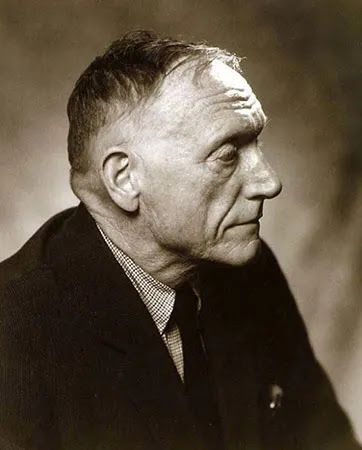


"Band Of Angels" is a 1955 novel by Robert Penn Warren, one of the handful of American writers who was never awarded a Nobel Prize and probably should have been. But he was awarded two Pulitzer Prizes, one for his novel "All The King's Men", and the second for his poetry. He was also a Rhodes Scholar and taught at both Vanderbilt University and Yale. He also worked as a Consultant In Poetry for the Library of Congress. He was an amazingly prolific writer and produced 12 novels, 15 non-fiction books on a variety of subjects, 3 children's books, 2 major dramatic versions of his novel "All The King's Men", 1 short story collection, and 21 collections of poetry.

"Band Of Angels" was made into a 1957 movie which starred Clark Gable, Sidney Poitier, and Yvonne de Carlo. The heroine and narrator of the book is Amantha "Manty" Starr, a woman who was raised by her father on a Central Kentucky plantation in the years preceding the Civil War. Her mother is dead and buried near the house instead of in the plantation cemetery some distance farther away. Her father who pampers her, apparently loves her deeply, and regularly takes her to Cincinnati to meet his friends there. He also enrolls her in Oberlin College in Oberlin, Ohio. But he never tells her much about her mother, and the primary female influence in her childhood is an older slave woman. The father dies suddenly while Manty is still in college and, when she returns to the plantation just in time to see the end of his funeral proceedings in the cemetery, she learns that her mother was a slave, that she was never freed by her father, and is seized, as part of his personal property, at the graveside by a local loan shark who has loaned her father large sums of money. She is shipped to New Orleans to be sold as a slave in the slave market there and bought by an older man who pays $2,000 for her to keep her from falling into the hands of a young southern ne'er do well. She becomes the mistress of her owner who turns out to be a former slave trading ship's captain. He also owns a unique male slave who is the actual overseer of his plantations but has been raised much like his son and holds a great deal of power over the other slaves.
This book is full of one surprise twist after another and flows with wonderful prose which is the trademark of Robert Penn Warren. Modern readers, especially readers of color, are likely to be deeply offended to the prolific use of racial slurs in the book which are not just limited to the "N" word. But it is an accurate book for the times which it describes in the slave holding south both before and after the Civil War. Manty is eventually set free, marries a former Union Army captain, and lives for a time in New Orleans high society. She also eventually joins her husband in a long westward migration as he seeks a career as a lawyer but finds one reason after another to fail in town after town. There is a great deal to love in this book along with a somewhat sizeable portion of things some readers will hate. But it has survived, as every word Robert Penn Warren published has and should have survived. It's arguable weaknesses are clearly overcome by its powerful strengths. Put aside any negative emotions you might have for Warren's broad usage of language which is historically accurate but despised today and read the book. In fact, I would say that any reader who likes to read broadly of the best writers in the world would be remiss to avoid reading Warren as broadly as possible. He is one of America's great masters of literature.

When this novel was first released a reviewer in "The Harvard Crimson" had this to say about it:
"In his latest novel, Robert Penn Warren combines a Southern preoccupation with the past with a typically modern concern with selfhood and alienation. His protagonist literally revels in his aloneness, his rootlessness, his inability to love. Nor is he content with a mere demonstration of his problems; instead, he explains them to us, over and over again, in a style that mixes the lofty literary references of academic--Jed is a medievalist at the University of Chicago--with Faulknerian neologisms and strings of appositives." (Julia Klein, "Harvard Crimson", April 23, 1977)
In the end, Ms. Klein did not write a positive review of Robert Penn Warren's novel and I firmly believe she erred by doing so. While this novel is not another "All The King's Men", Warren's best novel, it is a markedly good novel by a great writer and deserves to be read and appreciated just as much as anything else Warren ever wrote. But, I suppose when you have won three Pulitzer Prizes, one for "All The King's Men" and two for a pair of his books of poetry, you are expected to write stupendously great literature even if your intent was only to produce a grocery list. It seems to me that simply because Robert Penn Warren was never invited to join the group of American winners of the Nobel Prize for Literature some critics and general readers think he can be forgotten, left by the wayside of mass marketed literature, and ignored. The list of American Nobel winners which includes Saul Bellow, Isaac Bashevis Singer, Joseph Brodsky, Sinclair Lewis, Eugene O'Neill, Pearl S. Buck, William Faulkner, Ernest Hemingway, John Steinbeck, and now even Bob Dylan, is a prodigious list and I do not mean to belittle or question the credentials of Bob Dylan by adding him to list as the last person. But I do believe that Robert Penn Warren was just as deserving of a Nobel Prize as any American writer who was ever awarded one and a bit more than a few on that list. When I make a list of the greatest American writers, the names I put on that list are Hemingway, Steinbeck, Faulkner, Buck, Warren, and Flannery O'Connor who also never lived long enough to accumulate a body of literature sufficient to earn the Nobel. I also find it interesting that three of those writers are southern writers, Warren, Faulkner, and O'Connor.
And that last statement brings me to one of the most important misconceptions about Robert Penn Warren. He is sometimes thought of as an Appalachian writer and he definitely was not. He was indisputably a Southern writer. He was a self-avowed member of The Fugitives at Vanderbilt and lived much of his life, especially his academic life, at Vanderbilt University and Louisiana State University neither of which is Appalachian. And his retirement was spent in New England. Yes, Robert Penn Warren was born in Kentucky, Western Kentucky, which is not in Appalachia, not even in the ever expanding political definition of Appalachia used by the Appalachian Regional Commission and the congress which is a purely political definition based totally in pork barrel politics and not remotely culturally based. Warren was born and raised in Todd County Kentucky on the Tennessee border in Western Kentucky far outside both the political and cultural boundaries of Appalachia. He never referred to himself as Appalachian and rightly so. He never wrote Appalachian Literature. He wrote Southern Literature and wrote it just as well as Faulkner and O'Connor, even better at times.
Now that I have made one more diligent attempt to murder the myth of Robert Penn Warren as an Appalachian writer, let's talk about this book which is a damn fine novel about a southern college professor, raised in Alabama, living in Nashville and teaching at a college which we can assume is based loosely on Vanderbilt. The writer and professor moves to Chicago to pursue a doctorate, has an affair with a young Jewish woman there, then marries a young woman from the Dakotas who eventualy dies of cancer. He returns her to her homeland to be buried near her relatives and after her death returns to Tennessee to teach. The novel is filled with very unique, very human, very well written characters who move in and out of the protagonists life which is often centered around a group of friends which his wealthy lover and her husband have collected on their southern farm. The protagonist is drifting loosely along in life, attempting to abandon and deny his youth in the deep south and at times filled with ennui. The death of his wife and her burial in the Dakotas where she grew up is part of the source of that rootlessness but the character is much deeper than one source of ennui. He is drifting through a group of friends and acquaintances who ride fancy horses, attend fancy parties with their fancy friends, and also seem to drift from moment to moment without aim or purpose.
But this is a fine novel filled with excellent character development, precise plotting, and tension which must always seek resolution. It is, admittedly, not "All The King's Men" and it was never intended to be. Warren intended this novel to be "A Place To Come To" and it is. He intended this protagonist to be Jed Tewksbury whose father died drunk falling from a wagon box while attempting to urinate on the hindquarters of a mule only to be found graveyard dead on a dirt road in Alabama with his penis out of his pants. That graphic image haunts Jed Tewksbury throughout the novel and a great deal of his ennui can be said to be rooted both in his childhood poverty and his father's ignominious death and drunken lifestyle along with his mother's eventual love for and marriage to a stepfather whom Jed Tewksbury does not really like and, yet, Jed finds in the end that his little hometown in Alabama is "A Place To Come To". The novel is filled with the characteristic, powerful writing of Robert Penn Warren. He moves through the novel like a world champion boxer scattering a combination of literary left hooks, body blows, and precise three and four words jabs into the mind of the astute reader. If you love good to great literature, southern literature, you need to read this book, and remember as you read it that it was never intended to be "All The King's Men".

