Search This Blog

Showing posts with label racism. Show all posts

Thursday, July 3, 2025

"Alligator Acatraz" Is TRAITOR Trump's First Concentration Camp!

The Holocaust Encyclopedia tells us that:
"The first concentration camps in Germany were established soon after Hitler's appointment as chancellor in January 1933. In the weeks after the Nazis came to power, the SA (Sturmabteilung; commonly known as the Storm Troopers), the SS (Schutzstaffel; Protection Squadrons—the elite guard of the Nazi party), the police, and local civilian authorities organized numerous detention camps to incarcerate real and perceived political opponents of Nazi policy."
TRAITOR Trump's first concentation camp, known as "Alligator Alcatraz" was opened in South Florida on July 1, 2025, in South Florida with TRAITOR Trump and Rod DeSantis present and happily touting its existence as if they had just funded an actual day care center, community college, or hospital. The only term I find adequate to describe TRAITOR Trump's emotional response to this concentration camp is "masturbatory glee". This isa term I have used once or twice before in reference to some of his most egregious and criminal acts. When TRAITOR Trump is able to do anything which creates havoc,makes the world a more dangerous place, or worsening the living conditions for a major segment of America's population, his responses are always a public exhibition of strutting like a rooster in a chicken lot in which he is the only male of the species. His face becomes exactly like of the high school bully who has just slapped a non-consenting freshman girl on the hindquartes and gotten away with it. When he stood in front of the press at the opening of this hell hole,his experssion was exactly like that of an insecure 13 year old boy who has suddenly discovered that he has one black hair on his chest or crotch. TRAITOR Trump delights in the suffering of others, especially if he is the perpetrator of that suffering. There is no word or expression in the English language that better describes his reactions in these instances than masturbatory glee.
We are teetering on the edge of the greatest disaster any civilized country can perpetrate or ignore as it is being perpetrated. We are facing the onset of what will become an American Holocaust if TRAITOR Trump is not stopped by the US House, Senate, and Supreme Court. It is unlikelyh at this time that any of the three are willing or morally able to do that. The razor slim margins which votes on his "Big Vicious, Ugly Bill" is being defeated by are not based on strength or moral courage. They are based on the dissent of a small handful of the worst elected officials in America whose oppostion is due to their desire to make that "Big, Vicious, Ugly Bill" even bigger, more visious, and uglier. The United States is sitting at the cusp of being host to a Second Holocaust. More concentration camps are going to be built. More people will be incarcerated unjustly, denied due process, deported, suffer from inhumane treatment, and many of them will die in the process or because of hte long term effects of that process. The question has now become "what will you as an idividual citizen do in response to this sought after Second Holocaust? Will you sit silent or even assist as thousands of German citizens did in World War II? Will you simply stick your head deep within your shell of compliance while blaming other under your breath as many other German citizens did in World War II? Will you ignore this Second Holocaust as much of the so-called civilized world did in World War II? Or will you be a real participant in the resistance to this Tyrann, this Racism, this Second Holocaust? Will you even join TRAITOR Trump in his masturbatory glee?

Wednesday, May 28, 2025

"Wilderness" by Robert Penn Warren, A Novel Of The Civil War and Early American Immigration

"Wilderness" is a 1961 novel by Robert Penn Warren. The protagonist is a Jewish immigrant from Germany who has been born with a club foot but desires to immigrate to America and "fight for freedom". The story begins in his native country where he decides to leave for America after realizing he has little hope for a good future at home. His father was killed in riots in Berlin while fighting against government troops. He has been supported and assisted by an uncle who is also a rabbi. As Adam Rosenzweig prepares to leave, he is given several religious objects by his uncle which he carries, but uses little, during the length of the novel. The uncle also provides Adam with the address of an old friend who had previously emigrated to America and become wealthy as a businessman after beginning his life as a pack trader. Pack traders, many of whom were Jewish, traveled the roads of America carrying and selling a multitude of common household items in large backpacks. In order for Adam to get to America, he signs on with a human trafficker who is providing immigrants to both sides of the Civil War to fight as soldiers. The most important object Adam owns is a very well made leather boot which a cobbler friend made for him to help compensate for is club foot. While on the ship to America, the other men learn of Adam's disability and he becomes the "least of the least"on the ship since he is now known as being very unlikely to be accepted as a soldier. He is now forced to do the most menial chores aboard ship to compensate for his passage and the captain intends to actually prevent him from leaving the ship and retaining his as slave labor for the return voyage to Germany. But one of the crew gives Adam some advice just before the ship comes to port in New York which allows him to escape the vessel. He lands in New York with nothing and a very powerful scene ensues in which Adam, lost, alone, and hungry, finds the body of a black man hanging from a lamp post where he has been lynched in ongoing race riots. Adam finds himself the next day being dragged into one of those riots which is engaged in the murder of another black man. Adam finds himself being pursued by some of the rioters but manages to escape by running into the door of what turns out to be a house in which several black people are hiding. The rioters break in and Adam finds himself in the basement hiding in the dark where no one's race or color can be recognized. The rioters flood the basement and Adam finds himself being pulled above the waterline by a black man who turns out to be an employee of the man Adam was told to seek out when he got to New York. When the rioters disappear, the black man takes Adam, who is very ill, to the home of their benefactor, the rich Jewish trader. The trader has had a son killed in the Civil War and offers to make Adam his adopted son. Adam refuses the offer and is, instead, placed with a very abusive and coarse trader who needs a wagon driver to drive a wagon load of supplies south to sell to whichever troops of either side they might contact. The group consists of Adam, the trader Jed Hawksworth, and his black employee Mose who is actually an escaped slave as the book reveals in the long run. The three characters make a slow trip south to connect with fighting troops and are a truly odd collection of equally damaged characters who have simply fallen into each other's company. Mose, who has been savagely beaten by previous owners, becomes a friend of Adam but eventually kills Hawksworth and runs away. Adam, fearing that he will be blamed for the murder, buries Hawksworth in the woods, takes one of the wagons, and heads out to find Union troops which he can join to live out his dream of "fighting for freedom". I won't spoil the ending for you by fulling disclosing what happens from here on out. I will say that I have read several of Robert Penn Warren's books and this is just as good a novel as any the man who won two Pulitzer Prizes ever wrote. It addresses issues of war, racism, hatred, segregation, immigration, disability, and discrimination as well as any novel I have ever read. It is a powerful book which has fallen by the wayside of American Literature even though it is a fine piece of work by a man who should have been another of America's Novel winners. Robert Penn Warren is, in my opinion, just as great a writer as Hemingway, Steinbeck, Buck, or any other American who has ever been described as great. If you read the book, be forewarned that the novel does use the language of the time in which it was set and you will encounter several of the epithets which are not allowe in polite society today. But the novel is far greater than any of its detractors claim it to be simply because they are prejudiced against the language of America in the 1860's. Read it and you will see that I am correct.

Tuesday, May 13, 2025

"African Short Stories" Edited by Chinua Achebe & C. L. Innes

The short story is, in my opinion, the greatest form of literature in the world. When I make that statement, I understand fully that fans of both the novel and drama will take offense. But consider this, an average short story contains somewhere between about 1,000 to a maximum of about 10,000 words with a lot of room for argument about both minimum and maximum lengths. The average short story contains about 3,000 to 4,000 words. Therefore, the author of a short story must be able to tell a compelling story in less than 10,000 words and still bring into that story all of the necessary elements of a short story: plot, character, setting, and theme. I would argue that a good to great short story must also possess conflict and conflict resolution. There are some literary critics or simply lovers of the short story who also mention the necessity for a short story to contain tone and point of view. Some others who also believe themselves to be experts on the short story mention "want or goal" which I believe is simply a left handed way to say, or avoid saying, plot. These same people mention "decisions" as being necessary in a short story. I would say that "decisions" in a short story are simply part of plot, character development, or conflict resolution. But enough hair splitting about what a short story is required to contain. A simpler way to put it is that a short story must tell a story which contains at least 4 or 5 elements and reach a conclusion about what has happened in the intervening few thousand words. A short story is the greatest form of literature because it has so little room for error on the part of an author. Most of the stories in this little collection from Africa achieve that rather confining goal. The book is edited by Chinua Achebe and C. L. Innes and contains twenty stories from African writers which are divided into four geographical groups for the four points of the compass on the continent. The book was originally published in 1985. I won't go so far as to say all of the stories impressed me to the point that I would have included them with the remaining majority. But one or two of the stories are truly impressive feats of writing and at least a half dozen are better than average when compared with the better short stories found in other parts of the world. Most of them can be defended as being clearly African in nature. Some of them are addressing what can be called universal themes from all the world over. My personal choice as the best story in the book is called "The Will of Allah" by David Owoyele which is a masteful telling of an unusual story which clearly contains all those key elements. There are two characters who are professional thieves who make a living together robbing the homes and perhaps businesses of the people around them. They don't particularly like each other and are simply what could be called business associates who make a living in the dead of the night by victimizing the innocents around them. They go out together to rob someone and randomly choose a home in which they find a large basket similar to those in which the local people are known to keep their most important possessions. One enters the home and passes the basket and its unknown contents out a window to his partner who goes to their meeting place and opens to the basket to find that it contains a cobra belonging to a person who apparently practices as a a snake charmer. He is immediately bitten and knows he will die. He puts the lid back on the basket and when his partner catches up with him allows the partner to also open the basket and be bitten by the cobra. Then he uses the last of his life strength to reach inside the basket and kill the cobra while being bitten several more times. Naturally, both men die and the will of Allah has been carried to its logical conclusion. With the death of the two protagonists, it is amazing that the story also contains some better than average humor. In the middle of the story, I laughed out loud at least a couple of times as the two men who dislike each other carry out their plan and the necessary conversation to bring it to a conclusion. If I were ever to be asked (which will not happen in this world) to put together a collection of my favorite stories in all the world, I would include "The Will of Allah". It is truly great story. There are several other better than average stories in the book including selections from former Kenyan President Jomo Kenyatta whose story is a fine piece of writing about the nature of politics; Bessie Head who died young and is still recognized as one of Africa's best writers; and Nobel Prize Winner Nadine Gordimer. This little book is well worth reading.

Tuesday, March 25, 2025

March 19, 2025, An Interesting And Informative Day In Prestonsburg, Kentucky

On March 19, 2025, my wife Candice and I took a trip to Prestonsburg, Kentucky, to complete a variety of intended actions including a minor amount of shopping, eating out for lunch, and a hike for me at Jenny Wiley State Park where I often hike when we are in Floyd County. Our first stop was at Wal Mart to do a minor amount of shopping, and then off to Jenny Wiley State Park where one of my favorite hiking trails starts near the lodge and has about 4 miles of linked trails around the mountain, over and along the ridge, and a connecting trail which can take you off the mountain to the site of the former Jenny Wiley Amphitheater which still exists as a building but is, sadly, no longer in use due to the demise of the Jenny Wiley Summer Music Theater which functioned there for several decades. When we got to the park, I left Candice reading in the van as I often do and headed out to hike toward the trailhead near the lodge. As I approached the trailhead, I could see yellow construction barrier tape across the start of the trail with a printed message taped to a post. The message stated that this portion of the trail was closed due to a mudslide, and that the remaining portions of the trail could be accessed at the amphitheater spur. I started back in that direction, stopped for a few minutes to read the names and text on a monument to the children and bus driver who died in the 1958 Floyd County School Bus Wreck, and then headed on toward the amphitheater which is situated near the convention center which is used for a variety of purposes including state employee training sessions, weddings, banquets, and other public events. I have even once seen a rained out performance of the Roger Miller written musical "Big River" in the convention center. As I approached the convention center parking lot, I realized that several vehicles including a group of travel trailers, several cars from various othet states, and one or two vehicles actually marked with signs for the American Red Cross were in the parking lot. I realized the convention center must be in use as the stationary site for the Red Cross Disaster Response to the recent flooding in Eastern Kentucky which had devestated larger portions of Eastern Kentucky and Floyd County in particular. I also remembered that the Jenny Wiley State Park Lodge was once again in use as emergency housing for flood victims as it has been used on at least one other occasion under the incredibly effective and compassionate leadership of Governor Andy Beshear. I had to walk past the rear entrance of the convention center to get to the trail and when I turned that corner I saw two people sitting at a table outside the rear entrance. I suspected they were Red Cross volunteers and stopped to verify that and thank them for their work. We introduced ourselves and my hike turned into a long conversation with these two people and a third who showed up a bit later. They were from three different locations in the country, all long term Red Cross workers, one with ten years of service, one with sixteen years of service, and the third with an amazing forty-one years of work with the American Red Cross and on their third deployment to Eastern Kentucky in disasters. Our conversation quickly turned political and they opened up to me about their fears for the future of FEMA and the likelihood that TRAITOR Trump will destroy that agency and further worsen the disaster response to upcoming hurricanes, floods, forest fires, and other disasters. I expressed my own identical opinions and they reassured me that the Red Cross will always continue to provide disaster services since it is a private non-profit agency. But we all agreed that the future response from the federal government to disasters in the next four years, if TRAITOR Trump is not removed from the White House, will be slipshod at best with any federal funding likely to come to the states in block grants which will be pillaged on two or three levels before any of it actually reaches victims themselves. One of these Red Cross workers had actually been part of the response to the most recent Puerto Rican hurricane disaster when TRAITOR Trump was living in White House the first time and sent almost nothing to the people of Puerto Rico for a variety of reasons including his racism, ignorance, TREASON, and total lack of compassion and empathy. It was very refreshing to have this conversation with people who have traveled the world doing good works for the betterment of the human race, who understand the dire straits our country has been in since January 20 2025, and who can speak as openly as I do about the danger which is presented to the country by TRAITOR Trump and his Criminal Syndicate. I never finished my hike due to the length of that conversation but I have put in about a half hour between my parking location at the parking lot of the old golf course, the lodge, the closed trailhead, and the convention center. I also got a second half hour afterward at the Big Sandy Community and Technical College walking track and campus. As I walked across the campus, I encountered the sign at the top of this blog post, realized immediately that it would be considered a violation of TRAITOR Trump's malicious executive order against Diversity, Equity, and Inclusion, and decided to document these signs for my readers before the Right Wing Radical Repugnican head of the state community college system in Kentucky can force these signs to be removed from the campus, and order that racism, sexism, and mysogny be practiced in the community college system across the commonwealth. Below is the seond sign which was available on the BSCTC campus and all the other community colleges in Kentucky.

Sunday, October 20, 2024

"Band Of Angels" by Robert Penn Warren, A Wonderful Old Novel And Still Worth Reading!


"Band Of Angels" is a 1955 novel by Robert Penn Warren, one of the handful of American writers who was never awarded a Nobel Prize and probably should have been.  But he was awarded two Pulitzer Prizes, one for his novel "All The King's Men", and the second for his poetry.  He was also a Rhodes Scholar and taught at both Vanderbilt University and Yale.  He also worked as a Consultant In Poetry for the Library of Congress.  He was an amazingly prolific writer and produced 12 novels, 15 non-fiction books on a variety of subjects, 3 children's books, 2 major dramatic versions of his novel "All The King's Men", 1 short story collection, and 21 collections of poetry.  


"Band Of Angels" was made into a 1957 movie which starred Clark Gable, Sidney Poitier, and Yvonne de Carlo.  The heroine and narrator of the book is Amantha "Manty" Starr, a woman who was raised by her father on a Central Kentucky plantation in the years preceding the Civil War.  Her mother is dead and buried near the house instead of in the plantation cemetery some distance farther away.  Her father who pampers her, apparently loves her deeply, and regularly takes her to Cincinnati to meet his friends there.  He also enrolls her in Oberlin College in Oberlin, Ohio.  But he never tells her much about her mother, and the primary female influence in her childhood is an older slave woman.  The father dies suddenly while Manty is still in college and, when she returns to the plantation just in time to see the end of his funeral proceedings in the cemetery, she learns that her mother was a slave, that she was never freed by her father, and is seized, as part of his personal property, at the graveside by a local loan shark who has loaned her father large sums of money.  She is shipped to New Orleans to be sold as a slave in the slave market there and bought by an older man who pays $2,000 for her to keep her from falling into the hands of a young southern ne'er do well.  She becomes the mistress of her owner who turns out to be a former slave trading ship's captain.  He also owns a unique male slave who is the actual overseer of his plantations but has been raised much like his son and holds a great deal of power over the other slaves.  

This book is full of one surprise twist after another and flows with wonderful prose which is the trademark of Robert Penn Warren.  Modern readers, especially readers of color, are likely to be deeply offended to the prolific use of racial slurs in the book which are not just limited to the "N" word.  But it is an accurate book for the times which it describes in the slave holding south both before and after the Civil War.  Manty is eventually set free, marries a former Union Army captain, and lives for a time in New Orleans high society.  She also eventually joins her husband in a long westward migration as he seeks a career as a lawyer but finds one reason after another to fail in town after town.  There is a great deal to love in this book along with a somewhat sizeable portion of things some readers will hate.  But it has survived, as every word Robert Penn Warren published has and should have survived.  It's arguable weaknesses are clearly overcome by its powerful strengths.  Put aside any negative emotions you might have for Warren's broad usage of language which is historically accurate but despised today and read the book.  In fact, I would say that any reader who likes to read broadly of the best writers in the world would be remiss to avoid reading Warren as broadly as possible.  He is one of America's great masters of literature.  


Wednesday, December 2, 2020

"Hillbilly" Is A Cultural And Ethnic Epithet

 I suppose that with a title like the one above the first thing I should do is give you a definition for the word "epithet".  The website dictionary.com gives this definition of "epithet" which I believe is the most appropriate for our purposes here: "a word, phrase, or expression used invectively as a term of abuse or contempt, to express hostility, etc." And, as bad as I hate to have to, I suspect I should also give a definition for the word "invective".  The website dictionary.com gives this definition of "invective": vehement or violent denunciation, censure, or reproach;  a railing accusation; vituperation; an insulting or abusive word or expression."  While it might still be fairly common for natives of Central and Southern Appalachia as well as the Ozark Region to sometimes use the term "hillbilly" about themselves, it is also generally understood that the use of the word of the word to refer to such residents will usually result in its being interpreted as being insulting, abusive, a reproach, a censure, or an accusation. Other cultural, ethnic, or racial epithets are also sometimes used by members of the groups they denigrate and defame but, just like "hillbilly", those words are rarely accepted by members of those groups when use by outsiders and they should never be accepted or even used by members of those groups.  In my mind, the word "hillbilly" is no different from, just as defamatory, and just as damaging as any of those other words: the "k" word, the "q" word, the "n"word, the "f" word, or the "c" word.  These words all fall within a class of language which should never be used any more than the more common, but less defamatory, curse words should be used.  Being a member of the particular group in question does not make it any more acceptable for you to use those words than it does for a stranger.  

I have recently located a nineteen year old doctoral dissertation from Lousiana State University by Dr. Laura Grace Patillo entitled Appalachia on Stage: the *Southern Mountaineer in American Drama which due to its length (379 pages) I have not completed.  But the dissertation is intriguing for its content and intention to address the "scripting of America's hillbilly other" as well as for its dedication to "a strong Appalachian woman of faith, patience, and wisdom".  I firmly believe that if more native Appalachians such as Dr. Patillo, myself, and the mentors who taught us to seek positive self image instead of accepting cultural epithets and assumptions about us all natives of Central and Southern Appalachia would have benefited both directly and indirectly.  Without having ever known Dr. Patillo or her work, it is obvious to me that she was raised and mentored by the kind of Appalachian people who sought to emulate our strong, ambitious, and self-sufficient forbears and to pass those qualities on to every person they met in some direct or indirect fashion.  

I have also been able to locate a second refreshingly positively entitled doctoral dissertation by Dr. Casey R. White at South Dakota State University which states its intentions in the title:  "REDNECKS AND HILLBILLIES: A THEMATIC ANALYSIS OF THE CONSTRUCTION OF PRIDE AND HIGH SELF-ESTEEM EXHIBITED BY SOUTHERN CHARACTERS".   Its stated intent to examine the "construction of pride and self-esteem exhibited by southern characters" is exactly what I hoped to engender with this blog post.  I hope to be able to read both these dissertations fully and to report on them succinctly in later blog posts.  

I have also frequently directed others interested in the public image of native Appalachians to watch the AppalShop movie "Strangers And Kin: A History Of The Hillbilly Image".  It is an excellent and timeless examination of the creation and proliferation of the negative image of Appalachian people as "hillbillies".  In a sidelight to this discussion, I am also reminded of a former supervisor I worked under as a mental health therapist in a juvenile treatment facility.  This person was a native of Mount Sterling, Kentucky, and I will never forget the conversation in which he informed that he did not believe that there was such a thing as an Appalachian Culture.  When we consider the Appalachian Culture in the light of the commonly recognized elements of culture, it is strikingly clear that few cultures anywhere more clearly meet those elements.  Religion, Art, Politics, Language, Economy, Customs, Society, and Geography are listed among those key factors in culture on the website Quizlet.  As we examine each of those listed elements we learn that religion in Appalachia is strikingly unique with Old Regular Baptists, Freewill Baptists, Holiness, Primitive Baptists, and Serpent Handlers all being key segments of religion in Appalachia.  Appalachia is also the home of a truly unique group of folk artists including Edgar and Donny Tolson, Minnie Adkins, and Tim Lewis.  The language of Appalachia is also incredibly unique and traces its roots directly to the British Isles of the 15th and 16th centuries.  

If you are a native Appalachian, be proud of your heritage.  Do not allow anyone to denigrate, defame, or demoralize you because you are Appalachian.  Speak out both verbally and in writing in defense of the Appalachian Culture and history.  


Wednesday, August 28, 2019

Reading And Defending "Tom Sawyer" and "Huckleberry Finn"


I have written more than once on this blog about reading banned books, both those previously banned and those currently banned or being threatened with banning.  Many of the greatest books in the world have been or are still banned in many countries and smaller jurisdictions ranging from nations down to tiny school districts.  Both of Mark Twain's incredibly well written and well loved novels about growing up as a boy on the Mississippi River have been banned at times and many school districts in America today still refuse to allow them to be taught in their public schools.  There is no more important organ of democracy in the world than a free and unfettered press which is why the Founding Fathers in their infinite wisdom guaranteed it in the US Constitution.  The very reasons they guaranteed it are the same reasons that are being used today to attack that constitutionally guaranteed free press.  Despots, tyrants, zealots, and idiots are likely to attempt to ban books for as long as they are printed and to move on, as they are today, to also attacking and banning all other forms of mass communication.  Nothing scares tyrants, despots, zealots, and idiots more than the truth and the free expression of it.  I have stated at times in writings on this blog that it is likely that one of these two books in discussion in this blog post was probably the first book I ever read which had been banned.  So with the need to preserve a free press in mind, I have recently reread both of these masterpieces from Mark Twain.  

I fully realize that there are many reasons these two books were banned and that many of those reasons are legitimate on their face.  Much of the content in the books which refers to African Americans can be considered to be racist.  But when we read any book, we should examine the date of the original copyright and attempt to determine if the book in question was an accurate portrayal of the people, places, and times which they are depicting at the time of their original publication.  There can be absolutely no doubt that Mark Twain understood the Mississippi River, Missouri, and the people who resided there in the late 1800's as well or better than any other human alive at that point.  He also understood the institution of slavery and he did not endorse it as any intelligent reader of the two books can tell you.  These books were much more stories about friendships between unique and very different individuals who were living at the margins of Missouri society in the later years of the 19th century.  Two white boys, one the heavily abused son of the town drunk, and the other raised by an aunt after being orphaned befriend and have that friendship returned by an African American slave.  Throughout the books, at no time do these three persons ever treat each other as less than equal.  They never fail to reciprocate with the same loyalty and trust which is offered to them.  They take turn about standing up for, fighting in support of, and rescuing each other from one peril after another ranging from murderers, con men, and fugitive slave hunters, to a highly dangerous and deadly Big Muddy.  Along the 800 or so pages contained in the two books, each of the three faces opportunities to take the easy road out without being forced to suffer and they all always stand up, grit their teeth, and take the road less traveled in support of their friends.  At various times in the manuscripts, each of them is hailed as a hero when the easier route would have been for them to accept their own personal villiany and walk quietly away without losing any skin off their nose.  They never do that.  They stick by each other from start to finish and never flinch.  

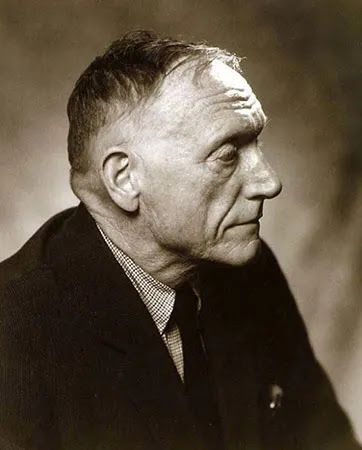
Mark Twain--Photo by Ebay
Yes, I know that the language in the books, especially that in "The Adventures of Huckleberry Finn" is racist.  But it was the common language of the day among all the groups whose dialects Twain was writing.  Mark Twain wrote in the original foreword to "The Adventures of Huckleberry Finn" that he would be writing the book using three dialects of three different groups of people in the area of his fictional town on the river.  Here is what he said: "the Missouri negro dialect; the extremest form of the backwoods South-Western dialect; the ordinary Pike County dialect; and four modified varieties of this last."  And that is exactly what he did.  I am not always a fan of writing in dialect and that aversion is deeply rooted in the fact that I grew up speaking and still speak my own version of one of the most maligned and vilified dialects in the country, the Southern Appalachian dialect.  When Mark Twain wrote in those various dialects of Missouri, he was required to use their verbiage, vocabulary, accents, and idiosyncrasies.  And he did a damn fine job of it.  He has ever since been pilloried by his detractors for having used the singular, and sometimes singularly repulsive, vocabulary of Missouri slave holders and poor whites.  And if we, in our self-appointed "wisdom" (translate ignorance) attempt to edit those words out of the books, we are doing a great disservice to the average reader who had no idea how poor slaves were spoken of and treated at the time of the books.  

I have little doubt that some of my readers here will accuse me of racism for having taken this position in defense of two of the greatest American novels ever written.  So let me tell you a little about my life history.  I have spent twenty years living and working in settings, both in agriculture and the human services, in which the employees and clientele were roughly 80% African American.  I have performed home visits in the ghettos of Pittsburgh, Philadelphia, Erie, Southern New Jersey, and Lexington, Kentucky.  I know whereof I speak when I speak of the downtrodden since 8 of those years were spent working with a homeless population who were primarily African American.  But if you choose be well rounded in the area of American Literature or to produce children who are well rounded, you need to read and you need to assure that those children read the work of Mark Twain, and if possible, to read all of his works.  Do not in your self-appointed righteousness refuse to read two of the best American novels ever written. 

Friday, June 1, 2018

Hate Literature In West Liberty Kentucky

Yesterday, during my daily walk at out local park, I stopped to straighten the books in a Little Free Library which is located there.  Someone, or perhaps several someones, had recently put a large number of children's books in the box.  Nearly every day I stop to check it out the books will have been examined and left in a pile of one sort or another and I reorganize them in an orderly manner to make them easier to see and read the titles.  During this time, I also check for anything of interest to me which I might not have read, sometimes take a book to read which I always return after reading or replace with another, and regularly leave books from my own large collection.  But, yesterday, the first thing to catch my eye was a book entitled "The Holocause Hoax Exposed" by someone named Victor Thorn.  I recognized the title instantly as hate literature and, sadly, was not totally shocked to find it there.  Our county has been the home of an avowed KKK leader for several years as described in the annual reports of the Southern Poverty Law Center to which I make regular contributions and whose work I support wholeheartedly. Let me suggest here that all my readers also learn about the highly important work of the SPLC and encourage you to also financially support that work. Upon further inspection of the books in the Little Free Library, I found three other hate books including one entitled "From The Temple To The Talmud" authored by someone named Dr. Harrell Rhome.  This book is an attempt to dispute the entire documented history of Judaism. It is truly sad that there are people who would read such hate literature, believe it, and join forces with the author and his Alt Right friends.   Those two books, along with another entitled "Fountain Of Fairy Tales A Scholarly Romp Through The Old Testament" by someone named John Tiffany, were all published by The Barnes Review in Washington, DC. A fourth book entitled "The Six Million Fact Or Fiction Sixth Edition" by someone named Peter Winter was published by something called Revisionist Books which a Google Search revealed to have been a short lived company in NY city. The conspiracy theorists in the Alt Right sometimes believe that Revisionist Books was actually a federally funded front group whose real purpose was to monitor the Alt Right.  I removed all four books from the Little Free Library, might read them, or at least, scan them quickly since the Chinese warrior philosopher Sun Tzu once said "If you know the enemy and know yourself, you need not fear the result of a hundred battles.  If you know yourself but not the enemy, for every victory gained you will also suffer a defeat.  If you know neither the enemy nor yourself, you will succumb in every battle." The law abiding citizens of the USA have no choice except to continue to fight and win the battle against all these hate mongers as long as they continue to pop up in the public eye much like Johnson Grass in a cow pasture or Canadian Thistles in a garden.

I will not return these books to the Little Free Library but will place other accurate historical books there so that anyone can find them and gain accurate historical and humanitarian political beliefs about the Holocaust. The best book I know about the Holocaust, "Black Earth The Holocaust As History And Warning" by Timothy Snyder is reviewed at this link.   It is not even likely that I would ever choose to keep these outrageous, racist, and hate filled books in my own collection.  I am most likely to burn them when I have no further use for them in studying their authors, publishers, and likely readers.  While I realize that this action does constitute a form of censorship, it is my belief that it is censorship in the best interest of the gullible persons who could find, read, and be negatively influenced by such writings. I also believe that this is one of less than a handful of legitimate uses of censorship.  As I said earlier in this blog post, I am not totally surprised to find hate literature in that location in this community.  This county voted overwhelmingly for TRAITOR & International Terrorist Trump in 2016 and his tacit, at best, support of hate groups has encouraged their members to proselytize all over the country.  This county has also been the residence for several years of at least one KKK advocate who shall remain nameless in this blog post since any mention of such hate mongers simply helps them add to their list of victims and supporters.  Gullible, ignorant, hate filled, and poverty stricken people will often accept radical ideas which they might not if they were more intelligent, better educated, widely read, and financially stable.  Historically, hate groups and radical political contingents of all types have sought to fuel their membership drives among the poor and poorly educated.  All of us, at all times, must be vigilant against the further spread of hatred, ignorance, and violence which has been fueled by TRAITOR & International Terrorist Trump and his radical supporters of all stripes.  We must take positive, consistent, and educational actions against such ideas and their perpetrators,  We must always confront ignorance wherever and whenever we find it.  We must propagate and disseminate the ideas of others who are also confronting hatred and ignorance whenever and wherever we can.  We must always work to assist positive ideas in being exposed to the very same people these hate mongers are spreading their garbage to on a daily basis.