

Several months ago, I bought a fairly large collection of books from the estate of a retired school principal and this book was in that pile. It is actually the second book I have read and written about in that purchase. The other was "The Play Pretty Book", an Appalachian children's book which was produced by a Kentucky based educational non-profit and illustrated by Appalachian artist Tom Whitaker. I read many different genres of literature and high quality children's literature is one of them. This book, "The Keeping Quilt" was a winner of the Sydney Taylor Book Award from the Association of Jewish Libraries. It was also a Carnegie Medal Honor Book. This book is about a Russian Jewish family which immigrated to the United States with a little girl named Anna who is the great-grandmother of the narrator. Anna has a much beloved babushka and dress which, naturally, become too small for her in time. Her mother decided to invite the neighbor women in to hold a quilting bee and make a quilt from the babushka and dress so that Anna can keep something made from her treasured items. The quilt gets passed down from one little girl to another through several generations of the family throughout the life of the book.
Since my real academic specialty is Appalachian Studies, let me say that this is a wonderful book to be used with Appalachian children since quilts and quilting hold such a special place in Appalachian Culture. I grew up sleeping under what is called a "tacked quilt" which, instead of being sewn in regular stitches, has yarn "tacks" all over the body of the quilt. The creator of such a quilt uses a darning needle and a skein of yarn and at uniform distances of about 4 inches in each direction passes the needle through the quilt twice at about the distance of a regular stitch, cuts off the yarn at about 3 inches and ties the two ends in a knot to make a "tack". As I fell asleep at night, I would doze off holding and playing with the "tacks" on my quilt. I have known many other Appalachian children who grew up the same way with "tacked quilts". Thousands of Appalachian children grew up sleeping under regular patchwork quilts also. The story of a quilt in this book will make a connection in the hearts and minds of most Appalachian children. It is a great book for use in teaching Multi-cultural Education and Tolerance to young Appalachian children.

Yes, this book is a bit aged having been published in 1988. But it is also a timeless book about family, cultural traditions, expressions of love by elders doing things for young children, and quietly makes the point that the family are Jewish. The book is published in 8 1/2" x 11" format, both written and illustrated by the author who actually wrote more than 50 children's books, and is a wonderful illustrator. Her illustration style is unique in that most of the page areas are in black and white with only key areas or items in color. I have included a page or two from the book here to demonstrate the illustration style which serves to strongly emphasize the importance of the key item in each page of the book. If you are a parent or teacher of kindergarten or first grade children, this is an excellent book to begin the discussion of religious tolerance with.

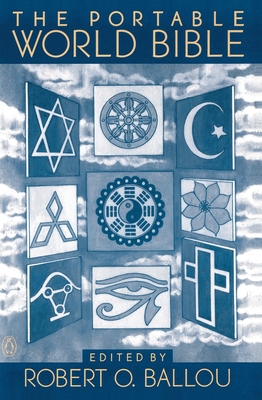
Many years ago, I was blessed to take an Introduction To World History course at Alice Lloyd College in Pippa Passes, Kentucky, under a man named Dr. Billy Rojas, Ph. D., who had come to ALC from the Chicago area as I recall. Billy, as he preferred to known by everyone he knew, required that students in all his history courses buy, and actually read sections of this book. Billy taught history from a viewpoint which was strongly focused on how religion and, particularly how differences in religion had influenced the flow of history over time. This book is edited by Robert O. Ballou, according to his publisher, Penguin Random House, brought to countless contemporary readers much of the world’s religious thought, which he selected, interpreted, and arranged in view of modern man’s quest for ultimate truths and values. His book, "The Portable World Bible" which has been in constant publication since its original publication in 1944, and is constantly relied on by students in many disciplines along with thousands of ministers, rabbis, imams, and priests. The book is broken into seven sections with each being composed of many of the key scriptures from most of the world's leading religions. It is an excellent resource for anyone who is interested in world religious beliefs, conflicts between believers in two or more of those beliefs, or simply anyone who wants to learn more about any particular major religion.
The sections are labeled The Hindu, The Buddhist, The Parsi, The Jew And The Christian, The Moslem, The Confucianist, and The Taoist.The book actually begins with a General Introduction and each of the sections begins with a specific introduction of about 10 to 15 pages. While a detractor could make the arguments that the book is a bit aged for today's world, or that it omits a few religions which have significant numbers of adherents worldwide, it is still a wonderful book for anyone who wants to actually understand how the religions of the world interact, conflict, and, oftentimes, agree. I have depended on it for some fast answers ever since the first time I ever read it in Billy Rojas' history class. I also have a friend of twenty years who is a minister in a rather conservative form of Christianity and a graduate of a seminary who also depends on it. For me, it is just as productive as any other book I can find when I need fast answers about key texts in any of the religions it discusses. Rarely will anyone write or edit a book which will still be in print more than 75 years after its initial publication. And I believe that this book will still be in use and publication in another 75 years. It is especially useful when we consider the perpetual, and currently volatile conflicts in the Middle East which are rooted almost entirely in religious differences based on three major religions whose most sacred sites are in a markedly small geographic territory in which their claimed sites often overlap. If you don't know about this book, at least look at a copy in a book store or library and decide if it is useful to you.

