
Showing posts with label education. Show all posts
Showing posts with label education. Show all posts
Saturday, January 17, 2026
"The Patron Saint Of Ugly" by Marie Manilla


Tuesday, July 15, 2025
"The Time Bike" by Jane Langton


Sunday, October 13, 2024
Appalachia Day Homecoming, AliceLloyd College, October 12, 2024

Yesterday, October 12, 2024, I attended Appalachia Day Homecoming at Alice Lloyd College with my wife Candice, our friend Eugenia "Genia" DeCoursey Hall, and her friend Sharon White who is the wife of John White with whom I worked nearly fifty years ago as cooks at Kentucky Fried Chicken in Prestonsburg, Kentucky. Genia, Sharon, and I had all attended ALC many years ago and Genia and I have been friends for over fifty years. My wife Candice is actually an alumnus of the University of Wisconsin-Platteville, in Platteville, Wisconsin. But over the last 32 years, she has become a lover of Appalachia and Appalachian Culture. Candice and I left our home at about 8:30am in an attempt to arrive by no later than 10am since it is about a 70 mile drive from our house and somewhere near 30 miles of the trip is over two lane roads including US 460 from our house to Salyersville, Kentucky, Kentucky 7 from Garrett, Kentucky to the Floyd/Knott county line, and Kentucky 899 from there to Pippa Passes where the college is located. Amazingly, we got there in time to get the last handicapped parking space on the highway on campus instead of having to park half a mile away. Most of the various vendors were already set up selling a large variety of arts, crafts, food, and books. The crowd was comfortably large but not overwhelming. The main highway or street through campus was shut down totally and vendors were actually set up in parts of the road where visitors wandered around or stopped to listen to local musicians and the Alice Lloyd College Choir, The Voices of Appalachia.

Candice and I had driven together, naturally, and Genia and Sharon had driven in Genia's car but arrived a couple of hours after us. Candice and I had naturally worn our Kamala Harris shirts and, since it was a fairly cool early fall morning, we had chosen to wear Harris/Walz shirts on the outside and Harris/Walz tee shirts underneath so we could change our outer layer when the sun warmed up to about 75 or 80 degrees. The photo above is of my Harris tee shirt which my regular readers have seen before. I had not been on the property very long when I encountered a man who approached me and said he liked my shirt. We had a fairly long conversation about politics on which we agreed fully, learned that we hadfew friends in common from the ALC days. Then to my surprise, he asked me to take a selfie with me and actually used both our phones to get the photo below. I told him of the death of a good friend of both of us a few years ago due primarily to a tragic accident in which our friend had been asleep in a recliner in the living room of his ground level apartment and was hit when an impaired driver literally drove into his living room. Then we parted ways. The photo below is of the two of us at Appalachia Day.

Then Candice and I wandered around, sometimes together, sometimes separately, looking at the things which interested us, talking to a few people here and there, getting registered, etc. Candice also decided she wanted to order a sweatshirt which ALC was selling which is Appalachian in nature. The people who were selling the shirts for the college could only provide a few tee shirts on the spot, could not take credit or debit cards, and Candice had to pay in advance for the shirt with cash, fill out an order card, and wait some undetermined time to receive the shirt. I am certain that more of the shirts would have been bought if all those issues had not been part of the deal. The photo below is of Candice's Harris/Walz tee shirt.

I saw an older Mennonite woman selling books at a table next to some male author whom I did not immediately recognize. Since I have numerous Mennonite friends in our home county and also have known a few members of the Mennonite congregation in Knott County where Alice Lloyd College is located, I moved over to her table and struck up a conversation with her. It turned out that we did have a few friends in common and I bought a copy of one of her books, "Flooded...Yet Not Alone" by Miriam Moyer, which is an oral history type book about survivors of the 2022 Eastern Kentucky Flood in Knott County which is the county of my birth and childhood.

While I was talking to Miriam Moyer, the man next to her approached us and said, "You are Roger Hicks aren't you?" At that point, I recognized him as Dr. Dennis Campbell, a psychiatrist from Campton, Kentucky, with whom I had worked for about three years in my other career as a mental health and substance abuse therapist. We had a fairly long talk and I did not immediately buy any of his books, of which he has written about a half dozen since he retired a few years ago. Eventually, I did return and buy two of his books after I was assured that Candice didn't want to buy anything else from other vendors. I knew and told Dennis that since he lives not far from me that I could always get in touch with him and buy his books later. The books I bought from Dennis are "Tales From The Red River Gorge" which was actually published under the pseudonym Maribeth Wagner, and "To Conquer Eternal Summer" which was published under the pseudonym B. Camp. "Tales From The Red River Gorge" contains two fairly long stories, one of which is described as "A Romantic Suspense Thriller". The other is described as "A Tale Of Wilderness Survival". I always enjoyed working with Dennis and trusted his skills absolutely as a psychiatrist when we were working together in an environment where most of our clients were dually diagnosed and suffering from serious mental health issues in one of the poorest counties in Kentucky.

I knew that my friend Genia had also been a nurse in the medical practice where Dennis worked for several years as a general practice medical doctor before returning to the University of Kentucky to complete training as a psychiatrist because, as he puts it, "I realized that a very high percentage of the clients I was treating as an M. D. were also suffering from mental health problems." I can't wait to read his books. When Genia and Sharon arrived, Genia and I returned to Dennis' table to have another conversation with him together since he knew us both but had never known that we are nearly lifelong friends. I also introduced him to Candice. The second of his books, "To Conquer Eternal Summer", is described as "A Cultivation Trilogy" which is within the field of Fantasy Literature. Dennis' books are all available from Amazon.

During the course of the day, I was approached at various times by two more couples who also gave me compliments about my shirt(s) and briefly talked politics with all of them. One couple was a retired high school history teacher and his wife from Carter County Kentucky who described TRAITOR Trump as "very dangerous". I gave him the titles of a few books which also describe that same trait of TRAITOR Trump the same way in more lengthy and accurate words. Another couple were ALC students, a male senior communications major and his girl friend who also felt very strongly that America and American Democracy are in danger from TRAITOR Trump. Another couple, perhaps in their thirties, were from Marion County Kentucky and approached about the shirt and expressed their fears about the upcoming election and the dire possibility that TRAITOR Trump could actually be elected for the first time in his life. Candice and I ate lunch from a food trailer specializing in some Anglicized "Mexican food". Candice didn't eat much there and I had a steak fajita which was bland but fairly good. Then we checked in again with Genia who had somehow gotten separated from Sharon White, tried to help her locate her, and eventually gave up to leave in time to get back home at a reasonable hour. It was good day and wonderful to spend time with friends, both old and new, and to receive some new reading material.

Thursday, August 29, 2024
"The Keeping Quilt" by Patricia Polacco, A Great Children's Book For Multi-cultural Education

Several months ago, I bought a fairly large collection of books from the estate of a retired school principal and this book was in that pile. It is actually the second book I have read and written about in that purchase. The other was "The Play Pretty Book", an Appalachian children's book which was produced by a Kentucky based educational non-profit and illustrated by Appalachian artist Tom Whitaker. I read many different genres of literature and high quality children's literature is one of them. This book, "The Keeping Quilt" was a winner of the Sydney Taylor Book Award from the Association of Jewish Libraries. It was also a Carnegie Medal Honor Book. This book is about a Russian Jewish family which immigrated to the United States with a little girl named Anna who is the great-grandmother of the narrator. Anna has a much beloved babushka and dress which, naturally, become too small for her in time. Her mother decided to invite the neighbor women in to hold a quilting bee and make a quilt from the babushka and dress so that Anna can keep something made from her treasured items. The quilt gets passed down from one little girl to another through several generations of the family throughout the life of the book.
Since my real academic specialty is Appalachian Studies, let me say that this is a wonderful book to be used with Appalachian children since quilts and quilting hold such a special place in Appalachian Culture. I grew up sleeping under what is called a "tacked quilt" which, instead of being sewn in regular stitches, has yarn "tacks" all over the body of the quilt. The creator of such a quilt uses a darning needle and a skein of yarn and at uniform distances of about 4 inches in each direction passes the needle through the quilt twice at about the distance of a regular stitch, cuts off the yarn at about 3 inches and ties the two ends in a knot to make a "tack". As I fell asleep at night, I would doze off holding and playing with the "tacks" on my quilt. I have known many other Appalachian children who grew up the same way with "tacked quilts". Thousands of Appalachian children grew up sleeping under regular patchwork quilts also. The story of a quilt in this book will make a connection in the hearts and minds of most Appalachian children. It is a great book for use in teaching Multi-cultural Education and Tolerance to young Appalachian children.

Yes, this book is a bit aged having been published in 1988. But it is also a timeless book about family, cultural traditions, expressions of love by elders doing things for young children, and quietly makes the point that the family are Jewish. The book is published in 8 1/2" x 11" format, both written and illustrated by the author who actually wrote more than 50 children's books, and is a wonderful illustrator. Her illustration style is unique in that most of the page areas are in black and white with only key areas or items in color. I have included a page or two from the book here to demonstrate the illustration style which serves to strongly emphasize the importance of the key item in each page of the book. If you are a parent or teacher of kindergarten or first grade children, this is an excellent book to begin the discussion of religious tolerance with.

Wednesday, July 31, 2024
"The Play Pretty Book" by the Kentucky Youth Research Center & Illustrated by Tom Whitaker

The title of this book uses an old Appalachian expression for children's toys, Play Pretty, and was produced by the Kentucky Youth Research Center and illustrated by the renowned Kentucky artist Tom Whitaker of Magoffin County who also taught art at what is now known as the Big Sandy Community and Technical College for many years. It is subtitled, and further described on the flyleaf as "An Appalachian Curriculum Handbook for Teachers of Preschool Children". It is an interesting piece of work and in some ways difficult to describe in a few words. It was produced by a committee of at least 8 or 9 people from the counties of Breathitt, Clay, Elliott, Floyd, Jackson, Knott, Lee, Leslie, Letcher, Magoffin, Morgan, Owsley, Perry, and Wolfe. The book was funded by a "special grant from the Kentucky Social Welfare Foundation." I have extensive experience in nearly all of the 14 counties from which the committee was selected from professionals working with preschool children. For the first 6 years of my life, I lived in Floyd County within a mile of one of the hundreds of Appalachian coal camp towns, Wayland, which is still today one of the most physically intact of such towns. For the next 14 years of my life, I lived and was educated in Knott County but still only three miles from the Floyd County line and the town of Wayland where on August 31, 2024, I will be attending the Wayland Homecoming. I was actually born just across the county line in Lackey, Kentucky, in Knott County; and, ever since at least 1790 my extended family and ancestors have lived in Knott and Floyd counties. For the past 32 years, I have lived in Morgan County. I have also worked as a social worker, mental health and substance abuse therapist in Magoffin, Breathitt, Jackson, and Wolfe counties. I have worked as an auctioneer holding both estate and consignment auctions in Floyd, Letcher, Johnson, Magoffin, and Morgan counties. At the risk of appearing a bit overly impressed with my own resume, I believe I can state that I am an expert on Appalachian Culture. I believe that I can state unequivocally that I am qualified to discuss the many aspects of culture, education, mental health, and most other aspects of life in any of these counties on that list of 14 since I have also spent large amounts of time in all the other counties on the list. I have also coauthored two articles about culturally appropriate human services and culturally apprroprate supervision of counselors in Appalachia which are on the permanent data base for counseling professionals of The American Counseling Association Therefore, I am proud to say that this is a book which was and still is well suited to be used in early childhood education for the children of Appalachia. Admittedly, the book is a bit aged, having been published in 1975, but it contains a small fortune of great cultural information which deserves to be preserved and passed on to the children whose predecessors have lived it.
The book is described in the introduction in this manner:
"We sent a call out over the mountains and into the hollers. "Tell us about your Play Pretties, the ones you make and do at home with your children and grandchildren, and those you make and do at the centers where you teach." Mountain Folk took time to remember Play Pretties made for them when they were children, Play Pretties they make right now...It was our great, great grandparents who came to the mountains...They didn't have toy stores in those days to buy us toys so they made Play Pretties out of what was at hand, corn stalks, buttons saved from the store bought clothes, leaves, twigs, seeds, and nuts."
The book is spiral bound, 8 1/2 x 11 inches, and 96 pages broken into six sections entitled, "Introduction, Play Pretties, Let's Go Play, Fixin' Vittles, Jist Lookin', and Frolickin'." It is illustrated throughout with black and white line drawings by Tom Whitaker who is best known for his many paintings and prints of life in Appalachia during both his own lifetime from 1945 to 2020, and the Appalachia of his ancestors who lived in the region for several generations before he was born. The various sections address numerous kinds of Appalachian Play Pretties, how they are made complete with instructions, how they are utilized, and also includes some recipes and songs from the region. I had strayed into a few apparently unused copies of the book in a sizeable purchase of books from the estate of a former Morgan County principal and teacher. If you teach young children in Appalachia or are simply committed to the preservation of Appalachian Culture and can find a copy of the book it is well worth buying and utilizing either in a preschool classroom or with your own young children and grandchildren. It's a fun and truly unique little book.
Thursday, March 21, 2024
The Glorification Of Cold Blooded Murder At Western Kentucky University On March 27, 2024

Because of righteous outrage in the state of Kentucky and the larger surrounding area, law enforcement agencies serving the state of Kentucky, Warren County, Bowling Green, and Western Kentucky University are being called on to divert their resources on March 27, 2024, to monitor protests on the campus of the university and the city which are being held to protest the outrageous decision of the university administration to allow Kyle Rittenhouse to speak at the university in an event which is sponsored by the Right Wing Radical campus organization Turning Point USA which is described as "part of a national organization that advocates for right-wing causes on high school, college, and university campuses." This is an organization which should never have been granted a charter on the campus of any university. This is an event which should never have been scheduled and granted the use of campus property in any building owned by a legitimate university. This is a speaker who should never be allowed to speak on any public property in any state in the union. This entire event is a travesty and a manifest failure of the university management.
Kyle Rittenhouse shot three men, two fatally, during public protests in Kenosha, Wisconsin in August 2020, when he was aged 17. Rittenhouse was acquitted at his trial in November 2021, after testifying that he had acted in self-defense. But the facts of the matter are that he was transported across state lines from the Chicago area by his mother while they were transporting the fully automatic rifle he used to commit the murders. He was acquitted of all charges and his mother was never charged for any crimes related to contributing to the delinquency of a minor or federal firearms laws regarding the transportation of the weapon across state lines. Since the trial, Rittenhouse has sought to make himself a public hero in the eyes of those who mistakenly believe the Second Amendment allows anyone to own any kind of weapon they choose in America and to use those weapons in such blatantly illegal and murderous ways.
The university administration insists that this is a matter of free speech despite the fact that the United States Supreme Court has ruled a few categories of speech are not protected from government restrictions. The main such categories are incitement, defamation, fraud, obscenity, child pornography, fighting words, and threats. As the Supreme Court held in Brandenburg v. Ohio (1969), the government may forbid “incitement”—speech “directed at inciting or producing lawless action” and “likely to incite or produce such action”. While I admit that it is unlikely that Rittenhouse or the organization sponsoring the event will directly call for lawless actions, the very fact that a person is speaking in a public forum who killed two men in cold blood with an automatic rifle and escaped any form of legal consequences is likely to incite illegal action. The university administration and a few at other universities have been too spineless to stand up to these groups and Rittenhouse. Their stated reason, protection of the right to free speech, does not hold water. Their refusal to stand up to a student organization which promotes such events is detrimental to the university community and the greater community surrounding that university. Several other student organizations, local groups, and even national groups have spoken out against this event to no avail. Western Kentucky Public Radio has published an editorial piece by writer Jacob Martin which speaks strongly about the issues involved in this event. But the administration holds strongly to the view that it is about free speech not the glorification of cold blooded murder. The entire administration at this university needs to be removed. Such irrational decision making on the part of a university administration can never be acceptable. I am asking everyone of my readers to make a call to Western Kentucky University at this number (270-745-0111) and register your opposition to this event and the decision making process which has allowed it to take place.
Sunday, February 11, 2024
The Sad State Of Both Education And Politics In America And Appalachia Today
An Update To Two Earlier Blog Posts

In two other blog posts from the last few days, I wrote about my decision to buy and publicly wear a baseball cap with the caption "Jack Smith Making America Great Again". I had written about the fact that I had worn it to several businesses on this past Friday, February 9, 2024, and had not had a single person speak to me about the baseball cap either to thank me for wearing it or attempt to convince me that I was an idiot and had made a terrible mistake to support the work of Jack Smith, the Special Prosecutor who will, if there is a God in Heaven, send TRAITOR Trump to the federal penitentiary for the rest of his slimy, treasonous life. I also wrote another blog post yesterday, February 10, 2024, about the absolutely dangerous and destructive Right Wing Radical Repugnican majority in the Kentucky state legislature and, in particular, a pending Kentucky State Senate bill (Senate Bill #4) which is intended to stop Kentucky school teachers from using their unused sick days to add to their service time upon retirement which has been a standing benefit provided to Kentucky teachers and other state employees for many years. This is an absolutely asinine bill which will further exacerbate the state's ability to hire and retain competent teachers especially in light of the fact that their pay and benefit structure is already well below those of most other states. In that particular post about the state legislature, I had also provided a link to the Kentucky State Senate Regular Session Record website from the Kentucky State Legislative Research Commision which provides complete information about every pending piece of legislation during the session. I sincerely hope that every concerned citizen of Kentucky or anyone else with a vested interest in the state will choose to visit and study that website, use it to inform and refine your beliefs and opinions about pending actions of the legislature, and then choose to speak out about, propagate, and vigorously defend those beliefs and opinions.

Now, I am betting that most of my regular readers are wondering what all this writing about Kentucky Senate Bill #4 and the Right Wing Radical Repugnican majority in the state legislature has to do with wearing a baseball cap supporting the incredible work of Jack Smith and his investigative and prosecutorial team. This is the story of that connection. Yesterday, Saturday, February 10, 2024, I went as I usually do to my local Saturday hangout where I customarily eat lunch and spend time with two friends, one of which owns the hangout and the other who is a lifelong friend of that owner and my friend from several years. It is also pertinent that the owner is a local business person with two businesses in the this county and has served almost twenty years in two separate terms on the county Board of Education. I had spent probably an hour talking with my two friends when the owner's liberal son-in-law came downstairs from where he had been working without my knowledge. This liberal son-in-law is also a friend of mine and we love to talk politics and other topics when we have the time together. I called him over to show him my baseball cap which he appreciated greatly and we had a good laugh about it. His father-in-law, the long term Board of Education member, then asked me, seriously, "Who is Jack Smith?" I told him, "the Special Prosecutor" and he never said a word further. It is now pertinent for me to say that a Facebook friend of mine who is a retired college English professor had mentioned to me earlier that the reason I had not had anyone ask me about the baseball cap was because the people who customarily support TRAITOR Trump can't read. I now have to admit that this friend was correct.
My Board of Education member friend and I then continued our conversation in which I asked him what he thought about Kentucky Senate Bill #4 and the fact that the majority in the state legislature was attempting to take away the right of Kentucky teachers to use their unused sick days to extend their time of service upon retirement. To my surprise he said that the bill is a good idea and gave me a rambling justification that "when people retire the Boards of Education where they worked have to pay for that sick time at their current rate of pay instead of the rate of pay they were earning at the time they earned the sick time". I asked what he thought about the probability that the bill, if it becomes law, will make it more difficult to hire and retain teachers in Kentucky. He said,"Yes, it might but it's a good idea to pass that bill." I was, to say the least, surprised if not shocked to hear that from a sitting Board of Education member in a county where I personally know that at least one teacher has been hired in the last year or two who did not have an education degree and all her prior work history had been in a variety of public sales positions. Hence, she was hired under a special provision in the law which allows people with unrelated degrees and experience to be hired as teachers because of a hardship waiver if qualified teachers are not applying for the available jobs I have no idea if it is relevant that the teacher to which I am referring is related to a member of my friend's extended family. But it is very relevant that he has a great niece who is a teacher and has chosen to work in another county located about two hours from this county where most of her close relativee live. The county in which she works is one of the best counties in the state in terms of teacher pay and benefits.

But the most relevant aspect of all this for me is that I know a member of the local Board of Education who had no idea who Jack Smith is until I told him and is not concerned that every teacher in this state stands to lose a great deal of accumulated sick time, and therefore time of service which will lower their retirement pay when it has been a long standing aspect of employment in education in Kentucky. And you can bet your sweet ass that if the Right Wing Radical Repugnican majority in the Kentucky State Legislature get away with taking that sick time feature of retirement away from teachers, their next move will be to take it away from every other employee of the Commonwealth of Kentucky. If Kentucky teachers don't Stand Up, Speak Up, and Speak Out strongly in their entire numbers against this legislation it will become law at a time when the current lieutenant governor is a former educator and she and the governor have fought tooth and nail for their entire time in office to try to force the legislature to give teachers a sizeable raise which would make them more equitably paid in comparison to their peers in other states. And, due to the veto proof majorities in both houses of the legislature any veto from the governor can only be a public statement of disagreement with the bill. In fact, every state employee, both current and retired needs to be fighting to defend the teachers of Kentucky in this effort to stop this asinine bill from becoming law. If every state employee stood up with the teachers and expressed their intent to vote against any legislator who votes in support of this bill, it would never pass into law. We should all be fighting to make Kentucky teachers the best paid and best compensated via other benefits in the nation. When teachers are given excellent pay and benefits in this state, better qualified and more dedicated persons will strive to become teachers and to fulfill their careers until retirement. Better teachers produce better educated citizens and those citizens produce better lifetime output than lesser educated citizens. If we want a great state, we must hire and retain great teachers and pay them what they are worth in every other state in the nation.

Saturday, February 10, 2024
The Most Unjustifiably Ambitious State Legislature In America!

The Kentucky state legislature convened on January 2, 2024, to begin the 2024 regular session which will last until April 15, 2024, which will be a sine die day, or the date of adjournment. They have set aside 10 days from March 29, 2024, to April 9, 2024, as days to deal with any vetoes which Governor Andy Beshear might sign. However, sadly, very sadly, the Right Wing Radical Repugnican party has a veto proof majority in both houses and any vetoes which the governor will sign are likely to be only on bills which are so abhorrent to both the governor and common sense that he feels that it is necessary to take a public position against them. At two links below, I will post the individual links to both the legislature's schedule and the link to the link to the page labeled 2024 Regular Session Record. That page is operated by the Kentucky Legislative Research Commission and is updated every day if necessary. It will contain every bill being considered by the legislature, every bill passed into law, and a great deal of other information. The schedule page will tell you every day the legislature is in session and, for those of you who are willing to travel to Frankfort, it will let you plan to be there on a day when you have a possible opportunity to publicly express your opinions to the legislature by either seeking to contact a legislator, leave a message face to face with a legislative employee, or engage in public protest by exercising your right to free speech. I urge all of my readers who live in Kentucky or have a vested interest in what happens in the state to spend time on both links to learn what is being considered by the legislature and to familiarize yourself with the legislative process. This is going to be a very destructive legislative session and will do a great deal to destroy individual constitutional rights in the state; destroy a multitude of programs intended to provide health care, education, free speech, environmental protections, and virtually any program intended to assist the lower echelons of society.
At this time, it is too complicated a process to attempt to address every legislative bill in the session. But I will speak out here for the first time about a bill which I just learned about yesterday, February 9, 2024, which is intended to take away the right of Kentucky teachers to keep unused sick days throughout their careers and add them to their time for retirement purposes which has been a standing perk for all full time state employees for many years. This bill is labeled as Senate Bill 4. This bill will pass the state legislature, will go to the governor's desk, and, I suspect, will be vetoed as a public moral, ethical, and political statement by the governor who is deeply committed to education in the state but, incredibly sadly, unable to prevent this attempt to further incentivize every good educator to consider either never applying for a job in Kentucky or leaving the state early in their careers to seek better jobs in states with a genuine commitment to high quality education. I repeat, the Right Wing Radical Repugnican majority in the legislature has a veto proof majority in both houses of the legislature and all Andy Beshear, the best governor can do is speak out and take a rational public position by refusing to sign such damaging laws into the state code. We must support the governor and lieutenant governor, who is a former educator, in their effort to save public education in Kentucky.
As I have time to read, research, and understand other bills being proposed in this legislative session, I will post other blog posts to this blog, may modify this particular post, and will do my best to keep my regular readers in Kentucky informed about the most dangerous bills being proposed by the legislature as they continue their effort to become the worst state legislature in the nation.

Monday, September 27, 2021
Aphorisms, Quips, and Non-sequiturs From Roger Hicks
I have contemplated for quite some time to post a list of some of my favorite aphorisms, quips, and pithy statements as aphorism is sometimes defined. You will be likely to like a few of these, hate others, and possibly even accuse me of being unfairly prejudiced against one or several groups of people, but very unlikely to accuse me of being prejudiced against any race or ethnicity. Here we go!
- No Republican in the country is fit to hold any position of public trust unless they first and foremost call for the indictment, prosecution, and conviction of the TRAITOR Donald Trump for all of his many crimes up to and including TREASON! Now that about half of you are awake and unjustifiably angry let's go on.
- The most frequently used word in the English language is "Lady"! As my dear old Daddy used to say, "Not everyone who squats to pee is a lady! For hundreds of years, the primary definition of "Lady" was "a woman who is polite and well educated, has excellent manners, and always behaves well". That should still be the primary definition of the word.
- The second most frequently misused word in the English language is "fiancee". For hundreds of years, the primary definition of the word "fiancee" was "the woman that somebody is engaged to". That should still be the primary definition. Nowadays, the word "fiancee" is generally used to mean "the person with whom I cohabit" or "the person with whom I am publicly known be having sex regularly." The prevalent current usages of the word are generally a very weak defense against anyone whose morals are offended by sex outside of marriage, cohabitation, or any form of casual sex. If you want to test my theory about the current use of the word "fiancee" and see two people grimace openly, the next time anyone introduces their current sex partner to you as their "fiancee", smile broadly, say "Congratulations, when is the wedding?"
- The third most frequently, misused word in the English language is "gentleman". For hundreds of years, the primary definition of the word "gentleman" was "a chivalrous, courteous, or honorable man". That should still be the primary definition and usage. You will actually see and hear witnesses or victims of crimes such as robbery or assault say into a television camera or radio microphone "the gentleman stuck a gun in my face" or "the gentleman was beating his wife when I began recording". You can rest assured such people are not gentlemen. You can also rest assured that I can not now be accused of being unfair to either women or men as a group since I have now written about the misuse of both words of reference to the genders.
- No one should be able to gain and hold a job in any white collar setting who cannot write in cursive, do math in their head without any form of electronic device or pencil and paper, or who cannot tell the difference between all the words on a list of the most frequently misused homonyms. Just this week, I saw on a news graphic on a CBS station in my area, "they're" being used as "their" on the 6pm evening news in a city of 300,000 people. In a metropolitan area with something in the neighborhood of a quarter to a half million people, a major network television affiliate should be able to hire someone with a college education who can write, spell, and add. I have said for many years now that if I were still hiring people I would have the secretary in my office give each applicant who came in for an interview a yellow legal pad and a ball point pen with these instructions: "Please leave all your electronic devices on the corner of my desk, take a seat at the desk on the other side of the room and write in cursive a complete paragraph, composed of complete sentences with correct spelling, grammar, syntax, and sentence structure to explain why you are the best candidate for this job. The interviewer will be with you in about fifteen minutes."
- No well constructed sentence begins or ends with the word "So". Today, it is far too common to hear people begin every sentence with "So..." as if they believe it is necessary for them to explain what they are saying in advance. And no well constructed sentence ever ends with "So..." which is the word "So" followed by an ellipsis as if the person either believed they really had more to say or that they finally realized they had nothing more they could think of to add.
- If you cannot carry on a conversation without using "Like" in the middle of every description without every saying which two things you believe are alike you have no business using the word ever. "Like" is intended to be an indicator of a comparison between two similar things and is never an appropriate filler word. When you use it in that manner, what you are actually saying is "I don't know what else to say."
- The frequent use of the phrase "You know" in the middle of sentences is just as bad, if not worse, than the aforementioned use of the words "Like" and "So". I can assure if I actually knew what you are trying to tell me I would not need you to tell me, "you know".
- Never trust a church or a funeral home which uses a neon sign to attract business.
- Never trust a church with the words "community", "independent", or "non-denominational" in their name. The use of such words to deliver the message that the church stands alone also deliver the message to me that the founders of that church did not choose to bound by any denominational oversight or constraints. It also tells me that the leadership mistakenly consider themselves to be somewhat flawless in their doctrine and judgment since they will not allow the leadership of other churches and/or denominations the right to inspect, oversee, or criticize them.
- A Drug Is A Drug Is A Drug! No drug of abuse should ever be legalized and marijuana is a drug of abuse and a classic gateway drug just as is alcohol.
- Never listen to a preacher who tells you how to vote or a politician who tells you how to pray!
- Puerto Rico should be a US state. Washington, D. C., should not be a US state. If you don't understand that, study the history of how all native Puero Ricans, born as US citizens, are deprived of many of the rights and governmental services afforded to all other US citizens and also read the history of how and why the District of Columbia was created.
- Every American citizen should be afforded a free public education either for a four year college degree or a two year vocational degree whichever is most appropriate to the individual.
- All students in every public school in America should be denied access to all electronic devices until they prove they can read, write, and do basic math at the first grade level.
- Every American citizen should be eligible to receive all necessary medical care under a nationwide government run health care system such as those used in the most civilized countries in the world. This system, along with all government expenses should be paid by a graduated income tax with the richest individuals and corporations paying taxes proportionate to the income they receive.
- No doctor or other prescriptive level medical professional and no member of their immediate family should ever be allowed to own any interest in a pharmacy.
- Physical Education should be a requirement for one hour each day in every grade in every public school in America all the way from K to 12. You would be amazed at how much lower the negative disciplinary and behavioral problems would be and how much obesity would drop.
- Civics should be taught in every American school at the 4th and 9th grade levels.
- Always Vote Democratic! If
you don't understand that one, go back and closely read a good college
freshman level American history book.
Wednesday, September 23, 2020
Requiem For A Mentor: George M. "Mac" Luckey
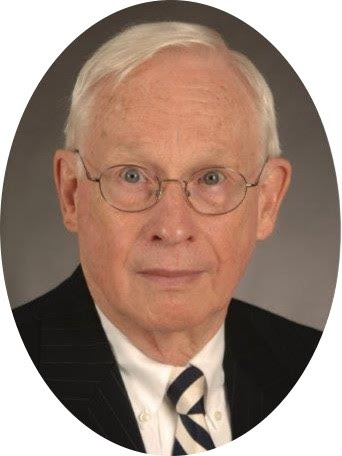
I learned on Friday, September 18, 2020, that Dr. George McFarland "Mac" Luckey had died the previous Tuesday, September 15, 2020, at the age of 85 at his home in Morehead, Kentucky. He had been born on March 21, 1935, in Paris, Tennessee, where he grew up in the family hardware store. Mac, as he was known by everyone who knew him was the retired Director of the Morehead State University Academic Honors Program which had previously been eponymously named in his honor as The George M. Luckey Academic Honors Program. He had been employed by Morehead State since 1961and had been the director of the honors program from 1990 until his retirement in 2004. Mac had also served for many years as a professor of philosophy and chairman of the philosophy department at Morehead. Mac was many things, a brilliant and compassionate professor, a loyal supporter of the university across many areas, a nationally respected professor of philosophy and an equally respected expert on academic honors programs and their administration. After his retirement, he and his beloved wife Sue Luckey wrote a textbook entitled College Portfolio for Success, a textbook for freshman seminars. It is truly a shame that Mac did not write and publish more books in a variety of areas including philosophy, education, and honors education in particular. He was a genuinely brilliant man, yet he was also very low key and humble in his interactions with everyone he met. Mac and Sue married after they met at Morehead and had no children. But because of their devotion to their academic careers and their students, Mac is mourned by hundreds of those who took his courses, completed the Academic Honors Program, or simply knew him as a person who helped them in other ways. He literally spent his life making the world a better place, both through his own work, and through the works of hundreds of people he influenced in his 85 years.
I entered Morehead State University as a non-traditional freshman student in the fall of 1995 at the age of 44. In my first semester on campus, I was selected to carry the Olympic Torch in 1996, was elected as the incoming president of the campus non-traditional students' organization, and managed to achieve a perfect 4.0 on my grade sheet. As a result, I received a letter from Mac inviting me to interview for the Academic Honors Program just as did every other freshman who was not already a member of the program and who had achieved a first semester 4.0. Unlike nearly every other non-traditional student, I set up an interview with Mac and actually attended it. As a result, I was admitted to the Academic Honors Program beginning in the fall semester of my sophomore year. Despite the fact that I was involved rather heavily in the non-traditional students' organization as an officer, I realized rather quickly that I was much more at home in the company of the students and professors in the honors program which required the completion of four required courses and two seminars for successful completion. The courses were sequential and Mac always taught Honors 101 which was focused on Greek and Roman philosophy and literature. The other students in the program were about 19 or 20 in average age and I was old enough to be their father. But in that program, both from the students and professors, I was always treated as just another student in the program and it was the best thing that happened to me in my five years at Morehead. Classes in the program were taught in what was nearly always a seminar style and open, active, vibrant discussion was encouraged. It was a "no holds barred" kind of education among a group of students most of whom had come to college after spending 12 years in public education at the top of their classes. Many, if not most, of the students were on full scholarships and would attend some form of graduate school. Many of those I knew are now doctors, lawyers, professors, and scientists. It was not education for the timid. I was working 40 hours a week in Lexington, Kentucky, as a second shift detox counselor at the Hope Center, carrying a full academic load including one honors course each semester, living in West Liberty, Kentucky, and driving a thousand miles a week. Somehow I survived and completed both my degree in social work as the outstanding student in that department and also completed the academic honors program. But it took me five years to do that. I never asked for special consideration in the program and none would have been given. I repeat that it was the best thing that happened to me at Morehead State University.
I got to know Mac Luckey quite well as a student in the program and actually delivered 4 papers at Kentucky Academic Honors Round Tables, 2 papers at Southern Regional Honors Council Conferences, and 1 paper at the National Honors Council Conference. And this was not exceptional work in the program. Nearly every student in the program did as much and often more. The year I participated in the National Honors Council Conference 16 students and professors at Morehead State participated. The program prepared me for nearly every other future success I have achieved in the 20 years since I graduated. I might have achieved as much without having been a member of that program but it would not have been nearly as easy without the preparation the program, Mac, the other professors, and the students of the program gave me for both graduate school and life.
The last time I saw Mac Luckey, I bumped into him and Sue at Wal Mart in Morehead and found Mac sitting in a bench at the front of the store waiting for Sue to check out. I stopped to talk to him and learned that he was fighting the rare disease which would eventually bring about his death. He was not all morbid, sad, or self-piteous in our conversation. He was taking just as he had taken everything in his life, head on, fearlessly, and with no holds barred. We had a good conversation and I knew as I left Mac that day that it might well be the last time I ever saw him. But I was not sad. I felt blessed, just as I always had been, to know that I had been given a few more minutes in the company of Mac Luckey.
Thursday, March 19, 2020
"The Abolition Of Man" by C. S. Lewis--Book Review
After having spent more than a week remaining at home, avoiding face to face contacts with anyone other than my FedEx man this morning, I am tired of thinking about the Corona Virus pandemic, the possibility of becoming randomly infected, and the possibility of dying from a virus

which has been poorly, treasonously, and inadequately dealt with by the TRAITOR who illegally occupies the White House based on his TREASON with Russia, I was ready for a break. I decided a few days ago to read a book by C. S. Lewis which I had not remembered ever being aware of, "The Abolition Of Man". Most of you probably remember Lewis as having the author of "The Chronicles of Narnia" and "The Space Trilogy" which are some of the best and best known writing in the field of science fiction and fantasy. But Lewis was a prolific writer in the fields of philosophy and theology and he is considered to be a major thinker in the area of christian apologetics. His book of essays, "Mere Christianity" is considered to be a classic in the field of christian apologetics just as "The Chronicles of Narnia" and "The Space Trilogy" are classics in their field of fantasy and science fiction. But this book, "The Abolition Of Man" is not in either of those areas. The official C. S. Lewis website to which I have provided the link above files this book under the heading "Literary Criticism". I would not necessarily agree with that label and think of the book as being much more appropriately placed in the field of educational philosophy. Another anonymous writer has said that the book is "...a starting point for a defense of objective value and natural law
as well as a warning of the consequences of doing away with or
"debunking" those things. It defends science as something worth pursuing
but criticizes using it to debunk values, the value of science itself
being among them, or defining it to exclude such values." In all honesty, after reading it, I have to say that I'll be damned if I'm sure exactly what it is other than educational philosophy. I am not a philosopher or a student of philosophy. Like most other American undergraduate students, I suffered through "Introduction To Philosphy" because it was a requirement of my university. But I also read a lot of other philosophy during that undergraduate program because I was a member of the Morehead State University Academic Honors Program which was chaired at that time by Dr. George M. "Mac" Luckey who had also served for a few years as the chairman of the philosophy department. The program, at least during Mac's tenure as its chair was strongly based in philosophy and literature. Six courses comprised the program and were restricted to attendance by only members of the program who were competitively admitted based on academic qualifications. Those courses began with a course which was based in the Greek and Roman classics including the works of Plato and three other courses followed which took us through the other major periods of greater philosophical and literary progress in the world. Those four courses were also accompanied by two seminars which varied from year to year in both subject matter and professors. The one which impressed me most was based in scientific progress including the works of Charles Darwin and Stephen Hawking. But none of those courses and none of the philosophical content I read, understood at the time well enough to receive an "A", and tried desperately to absorb was enough to make me want to change my major to philosophy. Neither did this book, "The Abolition Of Man" by C. S. Lewis. Maybe I am just getting old, but this was a very boring little book to read. But I have enough respect for C. S. Lewis and his other works to still come away willing to bore my readers on this blog with my discussion of the experience.
The book contains three chapters or essays and is only fifty-eight pages long. But it was still more than I was looking for when I paid a former part employee fifty cents for it along a pile of other books at the same price all of which I am convinced will excite me more. But I do not want to leave my readers with the impression that I do not respect C. S. Lewis and his works. He was a close friend of J. R. R. Tolkein of "Lord Of The Rings" fame and the two of them were key members of the famous group of friends known as "The Inklings". The two of them were the two best known members and most prolific writers among this group which also included the writer Owen Barfield who was also quite prolific by ordinary standards. The group was composed of at least fifteen members, all associated with Oxford University, over the years and always met weekly at an Oxford pub named The Eagle And Child but known around London at The Bird And Baby. I have often wished I could have been a fly on the wall at one of their meetings to hear what future great literature they were discussing. But I repeat I am not a philosopher.
And that last preceding sentence is interesting since just last night I told my cousin, more like a brother, Jack Terry, that the three greatest influences on my writing and thinking in academic world were all philosphers, Robert "Bob" Snyder, P. J. Laska, and Mac Luckey. But none of them was capable of making a philosopher of me and I suspect that all three often attempted to remodel other sow's ears into silk purses. If you have already read "The Chronicles Of Narnia", "The Space Trilogy", and "Mere Christianity" and want to tackle a rarely read book by C. S. Lewis, this is the one for you and I hope you are able to find a copy as cheaply as I did. I suppose I must have gotten my half dollar out of it since it did motivate me to write another blog post.
Monday, May 6, 2019
"Public Health In Appalachia Essays From The Clinic And The Field" Edited by Wendy Welch--Book Review
Welch, Wendy, Editor: Public Health In Appalachia Essays From The Clinic And The Field (Jefferson, North Carolina, McFarland And Company, 2014)

This book is one work in a series of books from McFarland and Company in Jefferson, North Carolina, called the Contributions To Southern Appalachian Studies series which in the last twenty years has produced roughly forty books. It is a book I should have read and written about promptly after it was published in 2014 since one article in the book quotes substantially from an article which I co-authored in 2005 with Dr. Heather Ambrose, Ph.D. on the topic of "Culturally Appropriate Counseling and Human Services in Appalachia: The Need and How to Address It" which was published online by the American Counseling Association and which we delivered in a presentation at the 2005 National Conference of the ACA. However, that quotation and citation is not the best reason for me or anyone else to read this book. The real reason you should read it is that it is a compilation of ten very cogent and informative essays written by more than a dozen human services and/or education professionals in the Central and Southern Appalachian region. The subtitle, "Essays From The Clinic And The Field", explains very aptly why I consider this book to be a fine resource for human services and education professionals working in the region. It is taken directly from the mouths of more a dozen of the "horses" who have been pulling the load in some very tough professions in the region and who clearly demonstrate their professional skills and cultural competence in their writing.
In the opening paragraph of the Foreword, John Dreyzehner addresses one of my pet peeves for nearly all my life which I have always confronted in the header to this blog. Mr. Dreyzehner has begun his introduction to the book by saying:
I cannot think of a finer way for any non-native resident of Appalachia to begin a discussion of the region. My own aforementioned header to this blog uses nearly identical words to address the same topic:"Many years ago a young college student from Chicago signed up for a brief Catholic mission experience deep in rural Appalachia. One of the first things the ignorant young man noticed was that the locals and the host clergy didn't pronounce "Appalachia" right. What they said sounded more like "apple-AT-cha". Fortunately, he did not try to correct them, nor they, more kindly, he in saying "app-a-LAY-cha". That was the beginning of an education in cultural sensitivity and cultural literacy. There was a lot to learn." (Dreyzehner, Public Health In Appalachia Essays from the Clinic and the Field, p. 1)
"An ever growing site of non-fiction,flotsam, fiction,memoir,autobiography,literature,history, ethnography, and book reviews about Appalachia, Appalachian Culture, and how to keep it alive!!! Also,how to pronounce the word: Ap-uh-latch-uh. Billy Ed Wheeler said that his mother always said,"Billy, if you don't quit, I'm going to throw this APPLE AT CHA" Those two ways are correct. All The Others Are Wrong." (Roger D. Hicks, see above)
This book makes a meritorious attempt in several of the articles to address that need for cultural competency and the same article which quotes my work, written by Bob Franko, also quotes and cites the work of my friend and mentor Loyal Jones from his book "Appalachian Values" on which I have based much of my writings about the need for cultural competence in writing about or working in Central and Southern Appalachia. It was quite refreshing to see anyone directly addressing the widespread and deliberate mispronunciation of the name of our homeland. One of my very early blog posts, and I am proud to say one of the most frequently read on this blog, directly addressed this issue. I also frequently mention the excellent, early Appal Shop movie "Strangers and Kin: A History of the Hillbilly Image", which is one of finest attempts ever made to address the negative attacks on Appalachia and Appalachians. Those of us who have fought this battle for most of our lives can truly appreciate the effort by Franko and Dreyzehner.
But there are numerous other reasons to appreciate this book and the greater series from McFarland and Company. Nearly every article in the book has direct applications for both professionals working in the region and native Appalachian who simply want to be understood by the greater America around us as an unappreciated and frequently maligned minority which are generally denied minority status. The first section of the book contains four articles which address a quartet of the most serious problems facing the region today: cancer, diabetes, drug addiction, and inadequate dental care. The second section is comprised of three articles about culturally appropriate health care delivery systems. All three of these articles are well written by individuals who understand exactly what they are talking about. Steve North, M. D. wrote a very good article about telehealth in Appalachia. But I must take offense with the general need for telehealth in Appalachia or anywhere else in a country which mistakenly claims to be the most advanced in the world. I am still offended that in America we have reached a time where it is necessary for people in any part of the country to participate in telehealth in order to participate in the health care system. I also take offense when I am seen at one of the best hospitals in the entire southeast and I am unable to see a person who is actually a medical doctor. I have worked with and know several highly qualified nurse practitioners and physicians assistants but I will never believe that this country could not, if politicians and health care administrators would allow it, produce a health care system in which every patient would meet with a physician at the moment of initial contact. Such a system would require us, as a nation, to actually create new systems of taxation, education, and healthcare delivery. Such a system would allow every qualified applicant to be accepted into a medical school without fear of losing their future freedom of choice because of paying off education loans. Other countries with far less average gross domestic product pay for a college education for every qualified applicant. We should also. If those applicants choose to become nurse practitioners or physicians assistants instead of becoming doctors, we should support them just the same. A free public college education for every qualified applicant in America would vastly increase our gross domestic product, average income, and general effectiveness as a nation. But for the time being, I do admit that the current system of using medical practitioners who are less qualified than full medical doctors does give us the ability to delivery minimally effective health care to the greatest number of patients especially in remote areas of Appalachia, the Deep South, and the far west. But it should never be accepted as the best or most widely used system.
The third section of the book contains three articles on cultural theory and clinical policy. One of those articles written by Tauna Gulley, RN, on fatalism and its effects on Appalachian youth. Fatalism is one of the old topics which has been repeatedly used as a club with which to beat Appalachia and Appalachians. In my opinion, this article could have been left on the cutting room floor and the overall book would have been better. Fatalism is an easy place to fall back on if an author is attempting to continue the denigration, defamation, and defeat of Appalachia. It is not nearly as prevalent or important as some people believe. At the time of publication of this book, Ms Gulley was a professor of nursing at the University of Virginia College at Wise. Today, she is the coordinator of a nursing program at the University of Pikeville and apparently now holds a doctoral degree. I do not know her or her educational or personal background. But it has generally been my experience that the topics of fatalism, familism, and internecine squabbles, when used in reference to Appalachia are most generally used by non-natives of the region as a way to justify what they mistakenly believe to be our shortcomings as a people and a region.
Do not allow the couple of negative assessments I have made of individual articles to overly color your opinions of this book. The strengths of the work strongly overcome any weaknesses a couple of articles may exhibit. Read the book and benefit from it. Read it with a critical eye and use the parts of it you are willing to accept at face value. Use the parts with which you disagree to broaden your own knowledge base about how to overcome or counterbalance the alleged weaknesses those authors may discuss. And realize that the opinions of any particular author may well not represent those of the editor or the other authors. This is a book from which to learn. It is a tool. Use it wisely!
The third section of the book contains three articles on cultural theory and clinical policy. One of those articles written by Tauna Gulley, RN, on fatalism and its effects on Appalachian youth. Fatalism is one of the old topics which has been repeatedly used as a club with which to beat Appalachia and Appalachians. In my opinion, this article could have been left on the cutting room floor and the overall book would have been better. Fatalism is an easy place to fall back on if an author is attempting to continue the denigration, defamation, and defeat of Appalachia. It is not nearly as prevalent or important as some people believe. At the time of publication of this book, Ms Gulley was a professor of nursing at the University of Virginia College at Wise. Today, she is the coordinator of a nursing program at the University of Pikeville and apparently now holds a doctoral degree. I do not know her or her educational or personal background. But it has generally been my experience that the topics of fatalism, familism, and internecine squabbles, when used in reference to Appalachia are most generally used by non-natives of the region as a way to justify what they mistakenly believe to be our shortcomings as a people and a region.
Do not allow the couple of negative assessments I have made of individual articles to overly color your opinions of this book. The strengths of the work strongly overcome any weaknesses a couple of articles may exhibit. Read the book and benefit from it. Read it with a critical eye and use the parts of it you are willing to accept at face value. Use the parts with which you disagree to broaden your own knowledge base about how to overcome or counterbalance the alleged weaknesses those authors may discuss. And realize that the opinions of any particular author may well not represent those of the editor or the other authors. This is a book from which to learn. It is a tool. Use it wisely!
Wednesday, October 17, 2018
Knott County High School Class of 1968 Fiftieth Reunion

On Saturday, October 13, 2018, I attended a small, but nice fiftieth reunion get together for my high school graduating class of 1968 from Knott County High School in Pippa Passes, Kentucky. I was responsible for putting the event together during Appalachia Day at Alice Lloyd College which is located adjoining the site where our high school used to be. Many of that graduating class had also attended ALC and/or Upward Bound on the ALC campus. ALC Alumni Association Director Teresa Grender worked with us gladly, professionally, and productively. ALC provided lunch for all of us which was appreciated. The turnout for this event was dismally low and I am certain that part of the reason for that is that I did not manage to personally contact each person in the class. But that would have been unrealistic for me in the best of times. Only four former students, including myself showed up. We were Sandra Kaye Hall Huff, Larry Huff, Kenneth Sparkman, and me. My cousin Charlotte Hicks Caudill who writes part time for the Troublesome Creek Times also showed up with her husband and took photos for the paper which had graciously run an announcement about the event each week for a month. Our former teacher, Mary Lois Jacobs, was also on the grounds of ALC volunteering for Caney Baptist Church and we were able to speak with her but she was unable to get away from her duties to join us. She did bring a bag of prints of the photo above of the old school, a few photos of a painting her daughter had done based on the photo, and a list of the information she had about the alumni. I had also been in contact with Jean Francis, whom we believe to be the only other living teacher from that period, but she was unable to attend due to the ongoing health problems of her only son. We met in Hunger Den, the college dining hall for a couple of hours and shared stories, tried to remember every member of the class since none of us had a yearbook, and also tried to remember just how many of the class have died since graduation. That is an inordinately high number somewhere near twenty. If you are reading this and are an alumnus of Knott County High School, please get in contact with me and pass on information about who and what you know from that time.
 |
| Roger D. Hicks, Larry Huff, Sandra Kaye Hall Huff, Kenneth Sparkman Photo by Charlotte Hicks Caudill |
We talked about how successful that 1968 class from KCHS had been despite having had nearly a fifty percent dropout rate. We had entered high school as the largest freshman class in KCHS history with more than one hundred students and graduated with only fifty-eight. But nearly a dozen of those fifty-eight received graduate degrees in our lifetimes and quite a few worked as teachers, mental health professionals, and other human services positions. We had a wonderful get together, caught up on old times, and discussed the possibility of trying to have another get together at Sandra Kaye's house in the spring of 2019. Stay in touch if you are a KCHS alumnus and let us know where you are and provide up to date contact information.
 |
| KCHS Painting by Daughter of Mary Lois & Burnis Jacobs |
Subscribe to:
Posts (Atom)